

Electrical Apparatus for Explosive Atmospheres: Essential Standards for Safety, Productivity, and Scalability
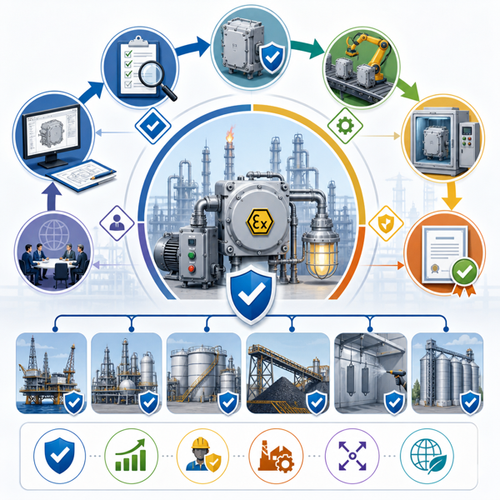
Electrical apparatus operating in explosive atmospheres pose unique safety, performance, and regulatory challenges for industries worldwide. For sectors such as oil and gas, chemicals, energy, mining, and manufacturing, even minor lapses in equipment specification or area classification can result in catastrophic incidents. That is why international standards for explosive atmospheres are more than just technical rules—they're foundational for modern industrial operations. In this article, we guide you through four cornerstone IEC standards in this domain, explaining their scope, importance, specifications, and how they empower organizations to innovate safely, increase productivity, and scale operations with confidence.
Overview / Introduction
As industries rapidly adopt automation, Industry 4.0 solutions, and smarter electrical systems, their interaction with hazardous environments intensifies. Explosive atmospheres—areas where combustible gases, vapors, or dust may be present—require specialized engineering controls and carefully selected electrical apparatus to avoid unintended ignition. This risk is especially pronounced in sectors like pharmaceuticals, food processing, mining, energy generation, and petrochemical production.
Why do standards matter?
- They provide precise requirements for equipment construction, area classification, and performance verification, ensuring not just compliance but real-world safety.
- Most regulatory authorities globally mandate compliance with IEC 60079 series for installations in potentially explosive atmospheres.
- With technological innovations such as fiber optics, advanced gas detection, and smart sensors being integrated into hazardous zones, these standards are a must-have for businesses seeking to boost productivity, minimize risk, and prepare for future scaling.
What you'll learn:
- The scope and practical details of four crucial IEC standards for explosive atmospheres
- Who needs to comply and why these standards are especially relevant today
- Steps to implement them effectively for increased security and efficiency
Detailed Standards Coverage
IEC 60079-0:2026 – General Requirements for Ex Equipment
Explosive atmospheres – Part 0: Equipment – General requirements
IEC 60079-0:2026 sets out the fundamental design, construction, testing, and marking requirements for electrical equipment ("Ex Equipment") intended for use in or associated with explosive atmospheres. It covers all industries where flammable gases, vapors, or dusts may create an explosive mixture with air. This standard defines the 'baseline' for all components, ensuring universal safety and compatibility.
Scope and Key Requirements:
- Specifies general requirements for Ex Equipment and Ex Components, including mandatory environmental and performance criteria
- Covers standard atmospheric conditions: −20 °C to +60 °C, 80 kPa to 110 kPa pressure, with 21% oxygen content
- Integrates technical updates and clarifies requirements for equipment operating outside standard atmospheres (e.g., extended temperature ranges, unique pressure or oxygen conditions)
- Addresses protection methods like flameproof enclosures "d" (IEC 60079-1) and intrinsic safety "i" (IEC 60079-11)
- Introduces updated testing, mechanical strength rules, marking, documentation, and certification protocols
Who needs compliance:
- Manufacturers of Ex electrical equipment and components
- Designers and engineers specifying apparatus for hazardous locations
- Facilities in industries such as oil & gas, chemicals, pharmaceuticals, energy, and food processing
Practical Implications:
- Ensures all devices in explosive environments meet an internationally recognized benchmark
- Supports interoperability and traceability through unified marking
- Mandates regular testing and comprehensive documentation for certification
Key highlights:
- Universal requirements for construction, marking, and testing of Ex Equipment
- Extended consideration for non-standard atmospheres and protection types
- Foundation for compliance with all other IEC 60079 series parts
Access the full standard:View IEC 60079-0:2026 on iTeh Standards
IEC 60079-10-2:2026 – Classification of Areas: Explosive Dust Atmospheres
Explosive atmospheres – Part 10-2: Classification of areas – Explosive dust atmospheres
IEC 60079-10-2:2026 addresses the crucial task of determining and classifying areas where explosive dust atmospheres may occur. Proper area classification is fundamental: it informs the selection and installation of safe electrical equipment and helps reduce ignition risks dramatically.
Scope and Key Requirements:
- Provides detailed criteria and methodology for identifying and zoning dust-hazardous areas
- Treats explosive dust clouds and combustible dust layers as separate but related risks
- Details zoning (Zones 20, 21, 22) based on the likelihood and persistence of hazardous dust atmospheres
- Directs on documentation and periodic review of area classification
- Excludes specific scenarios such as underground mining, explosive dusts not needing atmospheric oxygen, and rare catastrophic failures
- Recommends effective housekeeping to control dust layer accumulation
Who needs compliance:
- Industrial facilities with dust-generating processes (e.g., food, grain, textile, metal finishing, chemical plants)
- Safety engineers, plant managers, and electrical installers
- Anyone responsible for risk assessment in facilities with airborne or settled combustible dust
Practical Implications:
- Systematic area classification reduces both accident risk and downtime
- Guides optimal equipment selection to match real-world dust hazards
- Supports ongoing safety through review and change management procedures
Key highlights:
- Clear methodology for classifying dust-hazardous areas
- Focuses on both explosive dust atmospheres and dust layers
- Strong emphasis on documentation, training, and regular review
Access the full standard:View IEC 60079-10-2:2026 on iTeh Standards
IEC 60079-28:2025 – Protection Using Optical Radiation
Explosive atmospheres – Part 28: Protection of equipment and transmission systems using optical radiation
IEC 60079-28:2025 addresses the quickly expanding field of optical technology in hazardous areas—including lasers, optical fibers, and systems where intense light could become a source of ignition.
Scope and Key Requirements:
- Sets additional requirements for Ex Equipment emitting optical radiation (wavelengths 380 nm to 10 µm)
- Addresses hazards from light absorption by particles/surfaces (heating/ignition) and rare direct gas breakdown from focused beams
- Applies to laser equipment, fiber optic communications, and any optical system with focal points in hazardous areas
- Specifies design, performance, and verification requirements, as well as safe power/irradiance thresholds
- Exempts certain systems, such as Class 1 lasers and fiber cables fully protected by enclosures or additional protective means
- Supplements base requirements of IEC 60079-0
Who needs compliance:
- Businesses deploying optical sensors, communications, or laser-based measurement in Ex zones
- Designers of OT/IT infrastructure for plants and refineries
- Safety integrators and equipment manufacturers
Practical Implications:
- Protects against new classes of ignition risks introduced by modern optical and laser equipment
- Empowers innovation (e.g., remote SCADA, real-time monitoring) while maintaining safety
- Ensures safe integration of new tech with legacy Ex infrastructure
Key highlights:
- Covers design, testing, marking, and documentation for optical Ex Equipment
- Specifies safe operating conditions for lasers and optical systems
- Ensures latest optical technologies can be safely deployed in hazardous industrial environments
Access the full standard:View IEC 60079-28:2025 on iTeh Standards
IEC 60079-29-0:2025 – Gas Detection Equipment: General Requirements and Test Methods
Explosive atmospheres – Part 29-0: Gas detection equipment – General requirements and test methods
IEC 60079-29-0:2025 is the definitive global standard for detection of flammable, oxygen, and toxic gases or vapours in industrial sites. Effective gas detection is the front line in preventing explosions, as leaks can rapidly create a hazardous environment.
Scope and Key Requirements:
- Specifies requirements, test methods, and acceptance criteria for various types of gas detection equipment:
- Type FL (flammable gases)
- Type O2 (oxygen deficiency/enrichment)
- Type TX (toxic gases)
- Open path detection variants for both flammable and toxic gases
- Dictates performance, durability, accuracy, alarm functionality, environmental resistance, and response time benchmarks
- Applies to both fixed and portable systems in industrial and commercial settings
- Excludes domestic, medical, and environmental monitoring-only cases (focused strictly on safety and explosion prevention)
Who needs compliance:
- Industrial plants handling or storing flammable substances
- Facilities with exposure risks to toxic or oxygen-deficient atmospheres
- Plant engineers, safety managers, and equipment specifiers
Practical Implications:
- Provides assurance that detection systems will reliably alert staff and protective systems when hazardous conditions arise
- Reduces false alarms and ensures rapid, accurate detection for maximum personnel and asset safety
- Supports smooth scaling and integration with advanced monitoring and automation technologies
Key highlights:
- Universal, harmonized design and test requirements for Ex gas detection
- Supports diverse equipment types and detection methods (point, open path, etc.)
- Mandates robust performance criteria, including environmental and operational durability
Access the full standard:View IEC 60079-29-0:2025 on iTeh Standards
Industry Impact & Compliance
How Explosive Atmosphere Standards Shape Business Success
As businesses implement new technology in hazardous environments—such as IoT sensors, remote monitoring, robotics, and advanced gas detection—compliance with IEC 60079 standards is not simply a regulatory obligation but a major strategic advantage. Here's why:
1. Uncompromised Safety
- Ensures that all electrical apparatus, detection systems, and communications devices are built and maintained to minimize ignition risk
- Reduces the likelihood of fire, explosion, injuries, and environmental damage
2. Regulatory Compliance and Legal Protection
- Satisfies global regulatory and insurance requirements, enabling lawful operation and reduced liability
- Adoption of these international standards is often a condition of plant licensing, insurance, and audits
3. Productivity and Uptime
- Standardized equipment and area classification simplify maintenance, inspection, and upgrades
- Minimizes unplanned downtime due to hazardous incidents or non-compliance shutdowns
4. Support for Innovation and Scaling
- Allows organizations to confidently integrate and expand new technologies (e.g., optical fiber communication, advanced analytics, smart gas detectors) in Ex zones
- Standards-based infrastructure is easier and more cost-effective to scale across sites and markets
Risks of Non-Compliance:
- Increased likelihood of accidents, legal penalties, and unplanned outages
- Higher insurance costs and loss of reputation
- Barriers to future expansion and technology adoption
Implementation Guidance
Adopting IEC 60079 Standards: Steps and Best Practices
Implementing these standards requires a structured, integrated approach across your organization:
- Initial Assessment
- Conduct a risk analysis for hazardous locations including explosive gas and dust atmospheres
- Map all Ex zones according to the latest IEC 60079-10-1/10-2 methodologies
- Equipment Selection and Design
- Specify only certified Ex Equipment (IEC 60079-0 and other relevant parts)
- Ensure area classification informs all installation, maintenance, and procurement decisions
- For new technologies (lasers/fiber optics), cross-check against IEC 60079-28
- Select compliant gas detection systems per IEC 60079-29-0
- Installation, Documentation, and Testing
- Use qualified personnel for installations to meet IEC “competence” requirements
- Maintain robust records, marking, and periodic certification audits
- Test and commission all equipment per type-specific and area requirements
- Ongoing Operation and Review
- Schedule periodic maintenance and review of area classifications, particularly after major facility changes
- Train staff on Ex hazards, emergency protocols, and regular safety drills
- Monitor for new standards updates, best practices, and emerging risks (e.g., as new industrial technologies are deployed)
Resources for your organization:
- Regular updates and guidance can be found at iTeh Standards
- Utilize training programs and certification from recognized Ex safety organizations
- Reference manufacturer documentation and periodic compliance audits
Conclusion / Next Steps
Electrical apparatus for explosive atmospheres is an area where best-in-class engineering, safety, and compliance converge. As new technologies reshape manufacturing, energy, and processing industries, standards like IEC 60079-0:2026, IEC 60079-10-2:2026, IEC 60079-28:2025, and IEC 60079-29-0:2025 form the backbone for modern, scalable, and future-proof operations.
Key takeaways:
- Adhering to these standards minimizes risk, unlocks doors to innovation, and positions businesses for sustainable scaling
- Standards compliance boosts productivity, simplifies global market access, and eliminates legal and technical uncertainties
- Implementation is an ongoing journey—periodic reviews, staff training, and adaptation to technological shifts are essential
Recommendations:
- Whether planning a new build, upgrading legacy systems, or integrating next-generation sensors and communications, begin every project with a review of the applicable IEC 60079 standards
- Stay proactive: Follow standards updates and leverage reputable sources like iTeh Standards for access to the authoritative documents
- Invest in your team’s competence and emphasize a culture of safety and productivity
Ready to build a safer, smarter, and more resilient operation? Explore the standards, stay updated, and lead the way in explosion protection technology.
Categories
- Latest News
- New Arrivals
- Generalities
- Services and Management
- Natural Sciences
- Health Care
- Environment
- Metrology and Measurement
- Testing
- Mechanical Systems
- Fluid Systems
- Manufacturing
- Energy and Heat
- Electrical Engineering
- Electronics
- Telecommunications
- Information Technology
- Image Technology
- Precision Mechanics
- Road Vehicles
- Railway Engineering
- Shipbuilding
- Aircraft and Space
- Materials Handling
- Packaging
- Textile and Leather
- Clothing
- Agriculture
- Food technology
- Chemical Technology
- Mining and Minerals
- Petroleum
- Metallurgy
- Wood technology
- Glass and Ceramics
- Rubber and Plastics
- Paper Technology
- Paint Industries
- Construction
- Civil Engineering
- Military Engineering
- Entertainment