


Fuses and Overcurrent Protection: Essential Standards for Modern Electrical Systems
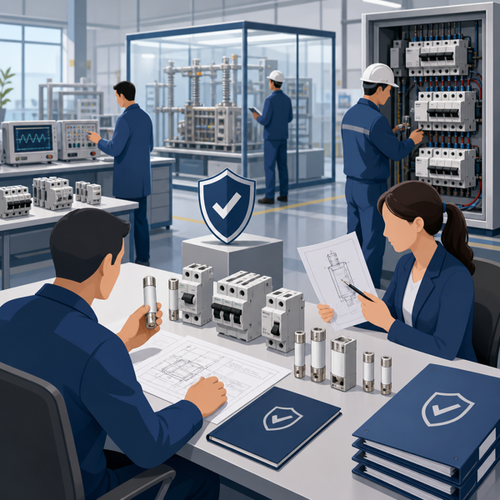
Electricity powers modern business and everyday life, but with this power comes the responsibility to manage and mitigate electrical risks. Overcurrents—whether caused by short circuits, equipment faults, or overloads—pose significant hazards to people, property, and production. That's why international standards for fuses and overcurrent protection devices are vital in the electrical engineering sector. This article provides an accessible, in-depth overview of four authoritative standards: IEC 60127-4:2026, IEC 60127-7:2026, IEC 60691:2023, and IEC 63508:2026. Together, these standards cover universal modular fuse-links, miniature fuses for special applications, thermal-links (for over-temperature protection), and circuit-breaker data structuring for digital ecosystems. Understanding and implementing these specifications is a must for any organization seeking to increase safety, security, productivity, and scalable engineering solutions—especially when adopting new technologies in homes, offices, factories, or infrastructure.
Overview / Introduction
Almost every electrical or electronic device relies on overcurrent protection. In smart homes, industrial controls, renewable energy systems, or data centers, protective devices like fuses, thermal-links, and circuit-breakers prevent fires, equipment damage, and downtime. As product complexity and energy demands rise, so does the need for rigor and consistency in protection strategies.
International standards bring harmony to design, testing, and usage. For businesses, compliance assures regulators, insurers, manufacturers, and end-users alike. More than ever, adhering to global benchmarks like IEC 60127-4 (universal miniature fuses), IEC 60127-7 (fuse-links for special applications), IEC 60691 (thermal-links), and IEC 63508 (digital data structuring for circuit-breakers) is essential—not only for regulatory reasons, but for enabling digital transformation, automation, and robust, scalable architectures.
By the end of this article, you'll understand:
- What each standard covers
- How each enhances safety, reliability, and product compatibility
- Where and how to comply, and the steps for effective implementation
- The transformative benefits for productivity, security, and scaling
Detailed Standards Coverage
IEC 60127-4:2026 – Universal Modular Fuse-Links (UMF): Through-Hole and Surface Mount Types
Miniature fuses – Part 4: Universal modular fuse-links (UMF) – Through-hole and surface mount types
This standard defines the requirements, characteristics, and testing methods for universal modular fuse-links (UMF) designed for printed circuits and other electronic substrates, predominantly for indoor applications.
What the Standard Covers:IEC 60127-4:2026 focuses on fuse-links that provide overcurrent protection for electronic and electrical appliances, ranging from consumer electronics to industrial controllers. It specifically addresses both through-hole and surface mount devices (SMDs), making it relevant for modern PCB-based systems. This standard supplements the general framework in IEC 60127-1, adding requirements for non-interchangeability (critical to prevent accidental mismatching in sensitive circuits).
Key Requirements & Specifications:
- Enhanced rated current for UMFs up to 100A, broadening application scope
- Specifications for maximum allowed voltage drop and sustained dissipation, ensuring low power loss and heat generation
- Detailed marking requirements: breaking capacity symbols (H, I, L), voltage/current markings, and unique UMF symbols
- Construction mandates: Enclosed fuse-element, robust termination security, and heat/chemical resistance for soldering and environmental exposure
- Rigorous testing procedures for reliability under both AC and DC, with detailed schedules for endurance, voltage drop, and breaking capacity
- Updated drawings and references to align with the latest technology and IEC requirements
Target Industries/Applications:
- Electronics manufacturing (PCBs, consumer goods, industrial equipment)
- Appliance OEMs
- Service and repair organizations
- Environments requiring PCB-level, replaceable overcurrent protection
Practical Implications: Complying with IEC 60127-4 simplifies component selection, streamlines product qualification, and ensures compatibility with automated assembly. Non-interchangeability minimizes service errors, while current/voltage ratings ensure safety margins. These requirements are particularly relevant as device miniaturization accelerates and SMD adoption increases.
Key highlights:
- Applies to both through-hole and surface mount modular fuses
- Enhanced ratings (up to 100A) with stringent testing
- Comprehensive marking and documentation to prevent substitution errors
Access the full standard:View IEC 60127-4:2026 on iTeh Standards
IEC 60127-7:2026 – Miniature Fuse-Links for Special Applications
Miniature fuses – Part 7: Miniature fuse-links for special applications
Scope and Coverage: IEC 60127-7 specifies the requirements for miniature fuse-links designed for special or niche applications—not covered by general fuse standards. This includes fuse-links with rated voltages up to 1000V, currents up to 125A, and breaking capacities up to 50kA. The key focus is flexibility: accommodating unique configurations or operational needs not met by standard fuses (e.g., unusual form factors, mounting methods, or electrical characteristics).
Key Requirements & Features:
- Tailored for fuse-links outside typical consumer/industrial norms (e.g., custom industrial control, special power electronics)
- Explicit limitation to non-replaceable by end-users; only qualified personnel may install or replace
- Enforces uniform testing for breaking capacity, melting time, and manufacturer-declared characteristics
- Marking must include type designation and breaking capacity, along with packaging and technical documentation
- Forbids color band coding (to avert confusion with standardized miniature fuses), but allows unique manufacturer markings
Target Users/Industries:
- Industrial designers & OEMs producing unique or high-spec equipment
- Sectors needing application-specific overcurrent protection (railway, defense, medical devices, industrial automation)
- Installers and maintainers responsible for specialized equipment
Implementation Implications: Uniform testing allows manufacturers to substantiate product performance claims, while clear marking and paperwork reduce lifecycle risk. This is crucial for sectors with elevated technical or safety requirements and when integrating bespoke solutions. As new technologies emerge, this standard ensures that overcurrent protection adapts rapidly and safely.
Key highlights:
- Applies to specialized fuse-links (not covered elsewhere in IEC 60127)
- Up to 1000V, 125A, 50kA—serves demanding or unique applications
- Stringent controls on marking, documentation, and end-user access
Access the full standard:View IEC 60127-7:2026 on iTeh Standards
IEC 60691:2023 – Thermal-Links: Requirements and Application Guide
Thermal-links – Requirements and application guide
What the Standard Covers: IEC 60691 defines requirements, testing, and guidance for thermal-links: non-resettable temperature-sensitive devices that interrupt current flow if excessive temperature occurs. Unlike fuses, which respond primarily to overcurrent, thermal-links are triggered by ambient or component overheating—providing critical fire and safety protection, particularly in small appliances and electronics.
Key Requirements & Specifications:
- Applies to devices rated up to 690V and 63A
- Mandates strong construction: Enclosed non-resettable links, robust terminals, reliable insulation, and resistance to rusting
- Detailed classification by electrical and thermal conditions—ensuring suitability for various environments
- Stringent mechanical and electrical testing for dielectric strength, insulation resistance, holding/functioning temperatures, and overload conditions
- Comprehensive marking, documentation, and lot validation requirements
- Guidance for use in packaged assemblies and specifics for high-temperature or high-demand contexts
Industries & Scenarios:
- Appliance OEMs (coffee makers, hair dryers, irons, HVAC controls)
- Electronic device designers and makers
- Industrial automation and process engineers
- Fire safety and consumer protection bodies
Practical Impact: Proper selection and placement of thermal-links, in compliance with IEC 60691, virtually eliminate catastrophic failures from overheating—even in the era of miniaturization and energy density. As spaces get smaller and circuits more crowded, this standard’s guidance is more crucial than ever for ensuring safe, scalable device design.
Key highlights:
- Thermal over-temperature protection for devices and appliances
- Safeguards include rigorous tests for mechanical and high-voltage stability
- Covers standalone and packaged assemblies for broad application
Access the full standard:View IEC 60691:2023 on iTeh Standards
IEC 63508:2026 – CDD Database – Circuit-Breakers and Similar Equipment for Household Use
CDD Database – Circuit-breakers and similar equipment for household use
Scope and Purpose: IEC 63508 isn't a product design or testing standard, but instead provides a digital data structure and dictionary for representing circuit-breakers and similar overcurrent protection devices. It's foundational for digital transformation in the electrical sector, enabling databases, software, catalogues, and electronic commerce systems to accurately reference and exchange data about protection devices—especially miniature circuit-breakers (MCBs)—in a standardized fashion.
Key Requirements & Features:
- Defines product classes, attributes, property blocks, and data formats for MCBs and similar equipment, integrating with IEC’s Common Data Dictionary (IEC CDD)
- Supports semantic interoperability for selection, engineering, purchasing, and lifecycle management
- Facilitates e-catalogues, asset management, inventory reduction, and automation of specification compliance
- Lays out future extensions for arc detection devices, residual current monitors, and protection systems
Industries & Applications:
- Electrical product manufacturers and supply chains
- BIM (Building Information Modeling), CAD, PLM systems
- Installers and maintainers of household, commercial, and industrial electrical infrastructure
Business Value: Standardized data structure cuts costs and errors in data exchange, speeds up specification checks, and enables rapid integration with smart infrastructure. As electrical systems and commerce become increasingly digital, this standard is a cornerstone for efficiency, interoperability, and global scaling.
Key highlights:
- Establishes a common digital language for protection devices
- Reduces data errors/costs in B2B and B2C ecosystems
- Enables interoperability for modern, connected infrastructure
Access the full standard:View IEC 63508:2026 on iTeh Standards
Industry Impact & Compliance
Implementing internationally recognized standards for overcurrent protection is no longer optional for forward-thinking organizations. Here’s why:
Safety and Liability
Fuses, thermal-links, and circuit-breakers guard against fires, electric shock, equipment loss, and extended downtime. Standards ensure each device performs as claimed, minimizing business and public safety risks.
Regulatory Compliance
Increasingly, laws and codes mandate compliance with IEC, ISO, and regional derivatives. Certification assures regulators and insurers, easing market entry, reducing audit headaches, and avoiding costly recalls.
Productivity and Efficiency
Modern standards streamline product selection, reduce rework, minimize downtime, and simplify training and supply chain logistics. Digital standards like IEC 63508 help companies go paperless, accelerating electronic transactions and scalable building management.
Security and Resilience
Reliable overcurrent protection thwarts catastrophic failures—including those exploited by cyber-physical attacks or operational misuse. Standardized components are easier to monitor, swap, and upgrade.
Scaling and Future-Proofing
As organizations embrace digitalization, automation, and the Internet of Things (IoT), standards make it possible to add, upgrade, or replace protection devices without hours of redesign. Data-driven infrastructures depend on digital dictionaries like IEC 63508 for seamless, error-free growth.
Risks of Non-Compliance
- Increased risk of fire, injury, and property loss
- Product recalls, liability suits, and reputational damage
- Market exclusion and penalties during audits or regulatory reviews
- Higher costs in procurement and operations due to incompatible or substandard components
Implementation Guidance
Common Approaches
- Gap Analysis: Audit your current products, processes, or documentation against the relevant IEC standards.
- Training: Ensure technical and engineering staff understand the intent and requirements of each standard.
- Documentation: Maintain meticulous records of fuse/circuit-breaker ratings, specifications, test data, and end-use applications.
- Certification & Testing: Work with accredited laboratories or in-house QA to confirm compliance through regular testing based on the IEC protocols.
- Digital Integration: Adopt tools and ERP platforms capable of handling IEC CDD concepts for procurement, asset management, and supply chain integration.
- Update & Maintenance: Regularly monitor standard updates (as many are revised every 5–10 years), and adjust practices accordingly.
Best Practices
- Design for the highest applicable standard for your device or component
- Choose parts with clear, permanent, and complete markings (per IEC guidelines)
- Avoid substitutions—use only standardized, compatible fuse-links, thermal-links, or breakers
- Leverage digital product data for purchasing, BIM modeling, and inventory
- Document all installation, maintenance, and replacement work
- Engage with expert consultants or training providers as needed
Resources
- iTeh Standards online catalogue (standards.iteh.ai) for authoritative, up-to-date standards
- Labs, product certifications, and accredited trainers
- Industry forums and technical working groups for best practice sharing
Conclusion / Next Steps
As electrical systems underpin every aspect of our connected world, the importance of fuse and overcurrent protection standards cannot be overstated. Whether your business designs complex electronics, manages a smart factory, or maintains critical infrastructure, compliance with IEC 60127-4, IEC 60127-7, IEC 60691, and IEC 63508 is vital for safety, compliance, and operational excellence.
Key takeaways:
- These standards aren’t just about “ticking boxes”—they’re foundational to safe, scalable, and efficient operations in modern electrical engineering.
- Implementing them boosts protection, ensures legal compliance, supports digital transformation, and provides a competitive edge.
- The digital and technical rigor they bring is a springboard for innovation, resilience, and world-class productivity.
Next steps:
- Review your product lines and infrastructural designs for compliance gaps
- Access the full text of each standard via iTeh Standards’ online platform
- Integrate relevant requirements into your procurement, engineering, and operational best practices
- Stay ahead by keeping up-to-date as standards evolve along with new technology and market demands
The right standards help build a safer, smarter, and more trustworthy electrical world. To explore more, visit standards.iteh.ai and keep your engineering practices at the highest international benchmark.
Categories
- Latest News
- New Arrivals
- Generalities
- Services and Management
- Natural Sciences
- Health Care
- Environment
- Metrology and Measurement
- Testing
- Mechanical Systems
- Fluid Systems
- Manufacturing
- Energy and Heat
- Electrical Engineering
- Electronics
- Telecommunications
- Information Technology
- Image Technology
- Precision Mechanics
- Road Vehicles
- Railway Engineering
- Shipbuilding
- Aircraft and Space
- Materials Handling
- Packaging
- Textile and Leather
- Clothing
- Agriculture
- Food technology
- Chemical Technology
- Mining and Minerals
- Petroleum
- Metallurgy
- Wood technology
- Glass and Ceramics
- Rubber and Plastics
- Paper Technology
- Paint Industries
- Construction
- Civil Engineering
- Military Engineering
- Entertainment