

Low Voltage Switchgear and Controlgear Standards: Enhancing Safety, Productivity, and Digitalization
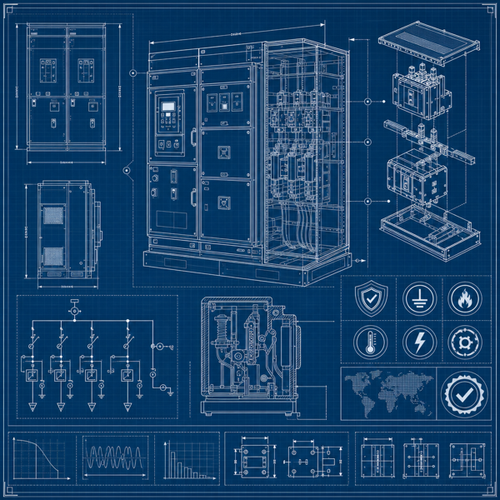
Low Voltage Switchgear and Controlgear Standards: Enhancing Safety, Productivity, and Digitalization
The electrical engineering landscape is rapidly evolving, with businesses increasingly relying on advanced low voltage switchgear and controlgear solutions to support digital transformation, high-efficiency operations, and renewable energy integration. Central to these advances are robust international standards that define safety, performance, information management, and compatibility requirements for electrical equipment and assemblies. Covering four critical international standards—including specifications for semiconductor circuit-breakers, photovoltaic assemblies, product data for digitalization, and building information modeling—this guide demystifies complex topics while showing why compliance is now paramount for organizations seeking to drive productivity, security, and scalability.
Overview: The Power Behind Modern Electrical Infrastructures
Low voltage switchgear and controlgear systems form the backbone of safe electrical distribution in industries such as manufacturing, infrastructure, commercial buildings, and renewable energy projects. As technology adoption accelerates—think automation, data-driven energy management, and smart grids—standards ensure that new solutions are safe, interoperable, and future-ready.
Why do standards matter?
- They define universal requirements for product safety, performance, and information exchange.
- Adopting standards mitigates risk during implementation and operation, streamlines compliance, and demonstrates due diligence.
- Standards facilitate efficient integration of new technologies (like photovoltaic systems and BIM workflows), enabling organizations to scale with confidence.
This article will walk you through four essential standards in the realm of low voltage switchgear and controlgear. You’ll learn what each standard is about, the unique requirements it addresses, and the concrete business benefits of staying ahead with compliance.
Detailed Standards Coverage
IEC 60947-10:2026 – Semiconductor Circuit-Breakers
Low-voltage switchgear and controlgear – Part 10: Semiconductor circuit-breakers
The IEC 60947-10:2026 standard introduces an essential framework for semiconductor circuit-breakers (SCCBs) and semiconductor hybrid circuit-breakers (SCHCBs) operating up to 1,000 V AC or 1,500 V DC. These smart protection devices are crucial in modern electrical installations, offering rapid fault interruption, arc-free operation, and advanced integration potential for digital systems.
Scope & Key Requirements
- Applies to SCCBs featuring semiconductor switching elements and mechanical isolation contacts, as well as SCHCBs with parallel arrangements.
- Covers all types and methods of construction and intended applications, ensuring flexibility across industrial and commercial settings.
- Lays out requirements for:
- Operating behavior under normal and abnormal (overload, short-circuit) conditions
- Electromagnetic compatibility (EMC), dielectric properties, and safety marking
- Testing protocols for confirming compliance
- Specifies critical information for installation, operation, maintenance, and labeling for end users and maintainers.
Who Needs to Comply?
Electrical equipment manufacturers, panel builders, facility operators, design consultants, and maintenance professionals must adhere to IEC 60947-10, especially when integrating advanced protection devices in complex installations (industrial controls, data centers, transport systems, and renewables).
Practical Implications and Highlights
- Enhanced electrical protection: SCCBs detect and interrupt faults faster than mechanical breakers, protecting sensitive equipment and reducing downtime.
- Digitalization enabler: Features such as remote monitoring, adjustable settings, and self-diagnostics align with Industry 4.0 objectives.
- Productivity boost: Faster restoration after faults and reduced risk of arc energy lower maintenance costs and accident rates.
Key highlights:
- Comprehensive definition and classification of SCCBs for universal interoperability
- Electromagnetic compatibility (EMC) and dielectric test benchmarks ensure robustness
- Requirements on marking, user instructions, and maintenance boost long-term safety
Access the full standard:View IEC 60947-10:2026 on iTeh Standards
IEC 61439-8:2026 – Photovoltaic Switchgear Assemblies
Low-voltage switchgear and controlgear assemblies – Part 8: Assemblies for use in photovoltaic installations
IEC 61439-8:2026 addresses the unique requirements for low voltage switchgear assemblies (PVAs) deployed in photovoltaic (solar energy) applications. As the renewable energy sector grows, these assemblies are vital to safely combine and distribute DC electricity from solar panels up to 1,500 V DC.
Scope & Key Requirements
- Applies to stationary PVAs with enclosures for indoor or outdoor use, handling input/output up to 1,500 V DC (PV strings and arrays) and up to 1,000 V AC for auxiliary circuits.
- Defines construction, safety, technical characteristics, marking, and verification processes specific to PV integration.
- Covers product service conditions, mechanical strength, and environmental resilience (e.g., resistance to solar radiation, heat, and mechanical stress).
- Sets out exclusion criteria for stand-alone components (like fuses, circuit-breakers) covered by other standards, focusing on their integration within PVAs.
Who Needs to Comply?
Solar farm developers, EPC contractors, electrical panel manufacturers, renewable project engineers, and facility managers operating photovoltaic systems are primary stakeholders.
Practical Implications and Highlights
- Safety and reliability: Ensures assemblies can operate safely under high DC voltages and environmental extremes typical in solar farms.
- Scalability: Standardizes PV assembly integration, allowing modular expansion and efficient rollouts of new installations.
- Operational efficiency: Streamlined product categorization and verified assembly procedures reduce risk, warranty claims, and downtime.
Key highlights:
- Performance verification aligned with leading global best practices
- Clearly defined mounting, environmental, and servicing requirements for field reliability
- Provisions for integrating signaling, control, and distribution devices in solar arrays
Access the full standard:View IEC 61439-8:2026 on iTeh Standards
IEC 62683-1:2026 – Catalogue Data for Switchgear and Controlgear
Switchgear, controlgear and their assemblies for low-voltage – Product data and properties for information exchange – Part 1: Catalogue data
The IEC 62683-1:2026 standard is pivotal for digital transformation in the electrical sector. It establishes a universal reference dictionary for describing all low voltage switchgear and controlgear products, assemblies, and accessories. This supports accurate product selection, electronic cataloguing, and seamless information exchange across digital supply chains.
Scope & Key Requirements
- Defines classes of devices and a set of standardized properties for cataloguing electrical products.
- Provides structured attributes—name, format, value lists, units—for each property, ensuring clarity in selection and procurement.
- Facilitates data harmonization for electronic commerce, design automation, BIM integration, and compliance management.
- Latest edition includes expanded device class descriptions and assembly structures, aligned with recent updates in the IEC Common Data Dictionary (CDD).
Who Needs to Comply?
Electrical product manufacturers, procurement specialists, database managers, software vendors (BIM/CAD/CAE), and systems integrators benefit directly from this standard.
Practical Implications and Highlights
- Reduces duplication and errors: Employing a standard product dictionary simplifies communication between partners, clients, and software platforms.
- Speeds up digital workflows: Accurate attribute definitions support automation in design, documentation, and logistics.
- Foundation for smart supply chains: Enables plug-and-play compatibility and quick product identification in multi-vendor projects.
Key highlights:
- Expanded range of device and assembly class definitions, reflecting latest practice
- Unambiguous property naming and structure for reliability in data-driven projects
- Direct alignment with IEC CDD and leading international e-catalogue standards
Access the full standard:View IEC 62683-1:2026 on iTeh Standards
IEC 62683-2-2:2025 – BIM Data for Electrical Assemblies
Low-voltage switchgear and controlgear – Product data and properties for information exchange – Engineering data – Part 2-2: Switchgear and controlgear assembly objects for building information modelling (BIM)
IEC 62683-2-2:2025 sets the foundation for integrating electrical assemblies within Building Information Modeling (BIM) processes across the construction and operations phases. It details how to model, classify, and exchange engineering data for all assemblies covered by the IEC 61439 series within digital building ecosystems.
Scope & Key Requirements
- Focuses on digital representations (BIM objects) of low-voltage switchgear assemblies for design, construction, and facility management.
- Defines physical and technical attributes for assemblies to be included in models (excluding in-depth details of internal components, machinery safety systems, and logistic information).
- Leverages the IEC Common Data Dictionary for standardized digital object identification.
- Aligns closely with ISO standards for BIM, fostering interoperability and robust data exchange between multiple software tools and stakeholders.
Who Needs to Comply?
Building designers, MEP consultants, architects, digital construction managers, and facility operators working in BIM-centric environments—especially those involved with smart buildings, infrastructure projects, and digital twins.
Practical Implications and Highlights
- Future-proof design: Standardized BIM objects improve collaboration, simulation, and accuracy in digital construction workflows.
- Streamlined operations: Facility managers gain easy access to up-to-date, standardized assembly data for maintenance, upgrades, and audits.
- Smarter asset management: Rich data models enable predictive planning and integration with smart building management systems.
Key highlights:
- Enables richer, interoperable BIM data for electrical infrastructure
- Established framework for digital object modeling based on the latest international BIM and data standards
- Supports efficient lifecycle management, from design through operation
Access the full standard:View IEC 62683-2-2:2025 on iTeh Standards
Industry Impact and Compliance
Staying current with low voltage switchgear and controlgear standards is now a business imperative, not just a technical one. As organizations expand their use of renewable energy, smart automation, and digital project delivery, compliance offers key benefits:
- Regulatory security: Standards provide the benchmarks for legal compliance and best industry practices.
- Risk mitigation: Adoption reduces liability due to equipment failure, electrical hazards, or operational disruptions.
- Enhanced productivity: Standardized data and workflows speed up engineering, procurement, and on-site commissioning.
- Optimized scaling: Modular, standards-based solutions are easily scalable across multiple locations and projects.
- Reputation and trust: Demonstrable compliance supports business credibility, customer confidence, and easier access to insurance and financing.
Risks of non-compliance include increased accident rates, costly downtime, legal penalties, and lost business due to subpar project execution or product incompatibility.
Implementation Guidance
Implementing these standards does not require overwhelming technical expertise, but it does benefit from a structured approach:
Common Implementation Approaches:
- Gap analysis: Audit existing systems and workflows against current standards; identify areas needing upgrades.
- Staff training: Invest in training for engineers, technicians, and procurement teams on updated standards and best practices.
- Collaborative design: Engage manufacturers, software vendors, and supply chain partners who adhere to these standards.
- Digital documentation: Leverage software tools that integrate with standard product datasets, especially for BIM and catalog management.
- Continuous compliance: Regularly review standards updates, leveraging resources such as iTeh Standards for latest publications and commentary.
Best Practices for Adoption:
- Establish an internal standards coordinator or champion
- Utilize certification and testing services aligned with IEC guidelines
- Build digital libraries of compliant products and components
- Engage with industry forums and training workshops
Resources for Organizations:
- iTeh Standards online platform for global access to official standards and implementation guidance
- Professional networks in electrical engineering, renewable energy, and BIM communities
- Manufacturer-led seminars, webinars, and technical support
Conclusion and Next Steps
Modern infrastructures and advancing technologies require a robust foundation of safety, clarity, and interoperability. The suite of standards for low voltage switchgear and controlgear discussed here—IEC 60947-10:2026, IEC 61439-8:2026, IEC 62683-1:2026, and IEC 62683-2-2:2025—provide organizations with concrete solutions for building safe, digital, future-ready systems.
Key takeaways:
- Standards are no longer optional—they are fundamental to productivity, security, and digital scalability.
- Integrating safety compliance, digital product data, and interoperability into company DNA is the surest path to success as new technologies emerge.
- Staying informed and proactive enables organizations to turn compliance into a competitive advantage.
Recommendation: Whether you are an electrical engineer, facility manager, or business leader, make standards adoption a priority. Begin by exploring each relevant standard in detail and review your organization’s current state against these global benchmarks.
Start your journey to a safer, smarter electrical infrastructure. Explore the full suite of standards on iTeh Standards and get expert support for your next project.
Categories
- Latest News
- New Arrivals
- Generalities
- Services and Management
- Natural Sciences
- Health Care
- Environment
- Metrology and Measurement
- Testing
- Mechanical Systems
- Fluid Systems
- Manufacturing
- Energy and Heat
- Electrical Engineering
- Electronics
- Telecommunications
- Information Technology
- Image Technology
- Precision Mechanics
- Road Vehicles
- Railway Engineering
- Shipbuilding
- Aircraft and Space
- Materials Handling
- Packaging
- Textile and Leather
- Clothing
- Agriculture
- Food technology
- Chemical Technology
- Mining and Minerals
- Petroleum
- Metallurgy
- Wood technology
- Glass and Ceramics
- Rubber and Plastics
- Paper Technology
- Paint Industries
- Construction
- Civil Engineering
- Military Engineering
- Entertainment