


Modern Cable Standards: Essential Guidelines for Safety, Performance, and Business Innovation
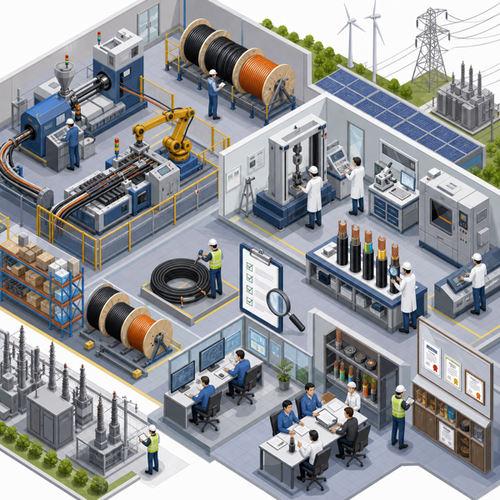
Choosing the right cables is a foundational step for any successful electrical system—no matter the industry. As businesses and public spaces rapidly adopt new technologies, cables have evolved beyond simple conductors, becoming pivotal for power delivery, data transmission, heating solutions, and integrated network infrastructure. The four international standards covered here—IEC 60092-352:2025, IEC 60245-4:2026, IEC 60800:2021, and IEC 62807-2:2026—define best practices and safety requirements for different cable applications, from ship installations to smart buildings. Complying with these standards is not only about regulatory needs but also about maximizing productivity, scalability, and security as demands grow and systems get more complex.
Overview / Introduction
Cables are the veins of our modern electrical and digital ecosystems. They power operations, connect devices, and ensure the safe transport of electricity and data. From sophisticated shipboard networks to flexible connections in industrial automation, adhering to international cable standards determines the long-term reliability, safety, and scalability of any installation. As industries accelerate digitalization and energy efficiency initiatives, the role of standards has never been more crucial. In this guide, you will discover:
- The unique focus of each IEC cable standard
- Practical requirements for installation, performance, and quality
- Who must comply, and why compliance is critical
- How standards support business growth, safety, and future technologies
By understanding and implementing these key standards, organizations can minimize downtime, protect investments, and support cutting-edge innovation.
Detailed Standards Coverage
IEC 60092-352:2025 – Shipboard Cable Selection and Installation
Electrical Installations in Ships – Part 352: Selection, Installation, and Operating Conditions of Cables
IEC 60092-352:2025 sets out comprehensive guidelines for the selection, installation, and safe operation of electrical cables on ships, for voltages up to 18/30 (36) kV. This includes cables subject to vibrations and movement—common aboard ships—while excluding cables meant for frequent flexing (handled by other standards).
Scope and Key Requirements
- Applicability: Fixed electrical systems on ships, covering both traditional and modern digital shipboard infrastructure, including symmetrical category cables and fibre optic cables.
- Installation: Requirements for installation in challenging maritime conditions, fire safety, mechanical protection, cable grouping, and dealing with electromagnetic interference.
- New Additions: Enhanced definitions, integration with other standards (IEC 60092-350 to -379), requirements for fibre optic installation, and guidance for installation between safe and explosive atmospheres.
- Compliance: Essential for shipyards, ship owners, engineers, and contractors managing marine installations.
Notable Features and Practical Implications
- Improved fire safety and performance criteria, aligned with SOLAS (Safety of Life at Sea) conventions.
- Detailed guidelines for accurate cable selection, maximum current capacities, and correction factors for ambient conditions.
- Special rules for symmetrical cables (used in high-speed digital networks) and fibre optics, reflecting current technology needs.
- Specific requirements for cable installation passing through bulkheads, decks, refrigeration spaces, and hazardous zones.
Key highlights:
- Updated for compatibility with digital and fibre optic systems
- Extended requirements for explosive and hazardous zones
- Critical safety upgrades for fire, electromagnetic interference, and mechanical protection
Access the full standard:View IEC 60092-352:2025 on iTeh Standards
IEC 60245-4:2026 – Rubber Insulated Flexible Cables
Rubber Insulated Cables – Rated Voltages up to and including 450/750 V – Part 4: Cords and Flexible Cables
IEC 60245-4:2026 addresses the essential properties and test methods for rubber insulated and synthetic sheathed flexible cables—widely used in both commercial and domestic settings, especially where high flexibility, robustness, and safety are key.
Scope and Key Requirements
- Applicability: Flexible power cords and cables in machinery, appliances, automation systems, and temporary installations where cables move or bend during use.
- Construction: Prescribes materials (rubber or synthetic sheath), conductor classes, insulation thicknesses, and mechanical properties.
- Testing: References updated test protocols, ensuring each batch meets flexibility, endurance, and electrical safety standards.
- Compatibility: Use in synergy with IEC 60245-1 for general requirements and updated reference to IEC 63294 for testing.
Notable Features and Practical Implications
- Improved robustness to flexing, making them ideal for moving machinery, tools, stage equipment, and temporary site power.
- Enhanced insulation and sheathing to handle temperature variances and mechanical stress (maximum operating temperature 60 °C).
- Updated construction rules (e.g., separator usage, assembly of cores) for increased product safety and lifespan.
Key highlights:
- Strict dimensional tolerances for insulation and sheath
- Comprehensive endurance, flex, and electrical testing
- Fully updated normative references for testing best practices
Access the full standard:View IEC 60245-4:2026 on iTeh Standards
IEC 60800:2021 – Heating Cables for Comfort & Ice Prevention
Heating Cables with a Rated Voltage up to and including 300/500 V for Comfort Heating and Prevention of Ice Formation
IEC 60800:2021 is the global reference for resistive heating cables used in underfloor heating, snow melting, roof and gutter de-icing, and similar applications. It defines not only performance requirements but also covers stringent safety, installation, and durability criteria for low-voltage heating cables.
Scope and Key Requirements
- Applicability: Suitable for comfort heating in floors and surfaces, direct and storage heating, and frost protection of roofs, gutters, and pipes.
- Construction: Specifies conductor types, insulation, armouring, sheathing, and moisture resistance for heating cables—whether factory pre-assembled or customized on site.
- Testing: Comprehensive suite of mechanical (crush, impact, bend), electrical (resistance, voltage), and environmental (UV, water, heat cycle) endurance tests.
- Installation: Detailed marking, documentation, and installation instructions to ensure performance and safety.
Notable Features and Practical Implications
- Ensures long-term reliability in harsh environments (e.g., outdoor snow melting or moist interiors).
- Mandatory compatibility with protective earth and fault current devices for electric safety.
- Installation requirements ensure cables are only used within temperature limitations (sheath temperature below 100 °C).
Key highlights:
- Wide suitability for residential, commercial, and public buildings
- Comprehensive durability and environmental testing
- Ensures electrical safety in sensitive and high-risk locations
Access the full standard:View IEC 60800:2021 on iTeh Standards
IEC 62807-2:2026 – Hybrid Indoor Communication Cables
Hybrid Communication Cables – Part 2: Indoor Hybrid Cables – Sectional Specification
IEC 62807-2:2026 defines the construction, performance, and testing of hybrid cables used for indoor data networks and power-over-data applications. These cables combine optical fibre, copper (coaxial, twisted pair, or quad), and power conductors into a single unit for converged data and power delivery.
Scope and Key Requirements
- Applicability: Structured cabling for smart buildings, offices, industrial PLCs, and customer premises requiring both high-speed data transfer and remote device powering (such as wireless access points, CCTV, IoT devices).
- Design: Sets requirements for each constituent (optical, copper, current-carrying), their combinations, and overall cable unit integration.
- Performance: Strict mechanical (tensile, crush, impact, repeated bending), environmental (temperature, flame, smoke), and electrical testing, also referencing the MICE classification for environmental conditions (Mechanical, Ingress, Climatic, Electromagnetic).
- Testing/Assurance: Coherent test plan for all cable elements to ensure network reliability and compliance in complex environments.
Notable Features and Practical Implications
- Provides unified installation and performance standards for hybrid cables reducing infrastructure complexity in modern intelligent buildings.
- Supports network topologies that integrate data, control, and low-power delivery (Power over Ethernet, or PoE-like solutions).
- Test protocols validated by both customer and supplier for tailored specifications.
Key highlights:
- Supports converged networks for smart buildings and campuses
- Integrates fibre, copper, and power within a single cable solution
- End-to-end quality assurance for scalable and future-ready networks
Access the full standard:View IEC 62807-2:2026 on iTeh Standards
Industry Impact & Compliance
As global industries digitalize and infrastructure becomes ever more complex, the importance of robust cable standards grows. Compliance with these standards is non-negotiable for organizations seeking to ensure:
- Safety: Minimized fire, shock, and mechanical hazards under all operating and emergency conditions
- Productivity: Reliable operations with minimized downtime, thanks to reduced failures and maintenance needs
- Scalability: Future-proofing systems for new technologies and higher data/energy demands
- Cost Efficiency: Fewer replacement needs and lower insurance premiums by having documented compliance
- Regulatory alignment: Meeting local and international legal requirements—essential for market access and avoiding fines
Risks of Non-Compliance:
- Increased fire and electrical hazards, environmental and safety violations
- Potential downtime, equipment loss, and reputational damage
- Legal actions, fines, or voided insurance in case of accidents
Implementation Guidance
Adopting international cable standards is more than just meeting paperwork requirements; it is about future-ready, low-risk, and high-performance operations. Here’s how companies can proceed:
Assessment & Planning
- Map all current and planned electrical and network installations.
- Identify which standards apply based on use cases (shipboard, flexible, heating, hybrid networks).
Design Stage
- Specify cables and components aligned with the standards.
- Integrate cable specifications early in infrastructure and building plans.
Supplier Engagement
- Source compliant cables from reputable vendors.
- Request certification and test reports for delivered products.
Installation
- Train staff and contractors on proper installation and safety practices per the standards.
- Ensure installers follow documentation and validated procedures (e.g., correct bend radius, grouping, fire-stopping).
Testing & Documentation
- Conduct pre-commissioning and periodic testing using specified protocols.
- Maintain installation records and cable test certificates.
Continuous Improvement
- Monitor for updates and revisions to standards
- Regularly audit installations for ongoing compliance
- Use lessons learned to enhance future projects
Resources:
- iTeh Standards (https://standards.iteh.ai) for up-to-date standards, interpretations, and technical support
- Professional associations and accredited training providers for ongoing education
Conclusion / Next Steps
International cable standards are an essential element not only for meeting regulatory obligations but for enabling safe, productive, and future-oriented business operations. The standards reviewed here—IEC 60092-352:2025, IEC 60245-4:2026, IEC 60800:2021, and IEC 62807-2:2026—represent the latest state-of-the-art in cable specification, installation, and quality assurance for a wide range of critical applications.
Key Takeaways:
- Standard-compliant cable selection and installation are foundational for safety, performance, and scalability
- Each standard addresses a unique set of industry needs—from shipboard power systems to flexible machinery, heating for comfort and safety, and smart building communications
- Implementing these standards means fewer risks, better performance, and future-ready systems flexible enough for evolving technology
Recommendations:
- Review your facility’s cable infrastructure against the latest standards
- Invest in ongoing staff training and supplier validation
- Stay connected with standards updates through platforms like iTeh Standards
For leaders, engineers, contractors, and stakeholders committed to operational excellence, making cable standards part of your core process is the surest route to safety, competitiveness, and uninterrupted growth.
Categories
- Latest News
- New Arrivals
- Generalities
- Services and Management
- Natural Sciences
- Health Care
- Environment
- Metrology and Measurement
- Testing
- Mechanical Systems
- Fluid Systems
- Manufacturing
- Energy and Heat
- Electrical Engineering
- Electronics
- Telecommunications
- Information Technology
- Image Technology
- Precision Mechanics
- Road Vehicles
- Railway Engineering
- Shipbuilding
- Aircraft and Space
- Materials Handling
- Packaging
- Textile and Leather
- Clothing
- Agriculture
- Food technology
- Chemical Technology
- Mining and Minerals
- Petroleum
- Metallurgy
- Wood technology
- Glass and Ceramics
- Rubber and Plastics
- Paper Technology
- Paint Industries
- Construction
- Civil Engineering
- Military Engineering
- Entertainment