

Variable Speed Drive Standards: Ecodesign, Energy Efficiency, and Rating Specifications Explained
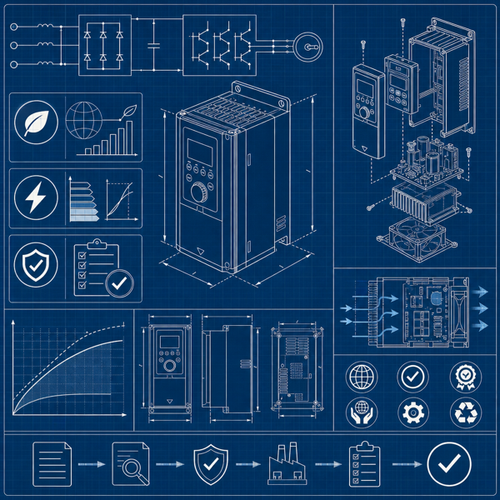
Variable Speed Drive Standards: Ecodesign, Energy Efficiency, and Rating Specifications Explained
Efficient control of electric motors is at the heart of modern industry. Variable speed drives (VSDs)—also called adjustable speed drives—are central to automation, manufacturing, and infrastructure, providing precise, energy-saving motor operation. With the rapid adoption of digitalization, Industry 4.0, and ecodesign strategies, applying international variable speed drive standards is now a business necessity for productivity, regulatory compliance, and competitive edge.
This guide explores four key IEC standards—IEC 61800-1, IEC 61800-2, IEC 61800-9-1, and IEC 61800-9-2—clarifying their roles in rating specifications, ecodesign, and energy efficiency classes. Whether you’re an electrical engineer, facility manager, or business leader, understanding these frameworks will help future-proof your operations, drive sustainable growth, and scale technology investments securely.
Overview / Introduction
Variable speed drives form the backbone of energy-efficient motor control across countless applications, from manufacturing lines and HVAC to water treatment and transportation. As operational demands grow and sustainability goals become non-negotiable, global standards for drive systems have evolved to ensure consistency in safety, performance, and energy consumption.
International standards—especially those developed by the International Electrotechnical Commission (IEC)—are more than technical checklists. They offer clear guidelines and test methods, harmonize requirements internationally, and support innovation by providing a common foundation. This article unpacks four pivotal standards that define how variable speed drive systems and their energy efficiency are specified, tested, and classified:
- IEC 61800-1:2021: Ratings and general requirements for low-voltage, adjustable speed DC drive systems.
- IEC 61800-2:2021: Ratings and general requirements for adjustable speed AC drive systems.
- IEC 61800-9-1:2026: Ecodesign framework for setting energy efficiency standards for motor systems.
- IEC 61800-9-2:2023: Methods for determining and classifying energy efficiency in power drive systems.
By the end of this guide, you’ll understand:
- The scope and structure of each standard
- Key rating, performance, and energy efficiency requirements
- Practical impacts for businesses and technology deployments
- Guidelines for implementation and compliance
Detailed Standards Coverage
IEC 61800-1:2021 – General Requirements for Low Voltage Adjustable Speed DC Power Drive Systems
Adjustable Speed Electrical Power Drive Systems – Part 1: General Requirements – Rating Specifications for Low Voltage Adjustable Speed DC Power Drive Systems
What It Covers: IEC 61800-1:2021 sets out the essential requirements for adjustable speed electrical power drive systems (PDS) used with DC motors at low voltages (up to 1 kV AC, 50/60 Hz, or 1.5 kV DC input side). It addresses every principal element of a modern variable speed DC drive: the semiconductor power conversion, control and monitoring functions, protection mechanisms, measurement, and interaction with the driven DC motor.
The standard bring clarity and consistency to:
- The classification and topology of DC power drive systems (BDM, CDM, and PDS)
- Performance and operational requirements
- Safety (general and functional), electromagnetic compatibility (EMC), and marking/documentation
- Influence of ecodesign and support for explosive environments
- Environmental requirements—not only operation, but also storage and transport
- Harmonized testing procedures to ensure systems perform as designed
Key Requirements and Specification Highlights:
- Updates the structure and terminology to harmonize with AC drive standards (IEC 61800-2)
- Details for input and output ratings, load profiles, and operational quadrants
- Prescribes fault detection, protection, I/O, and minimum status indication
- Introduces comprehensive energy efficiency and ecodesign expectations
- Addresses marking, user documentation, and compliance with related IEC standards for EMC, safety, and communication
- Covers requirements for operation in hazardous (explosive) atmospheres
Who Needs to Comply:
- Manufacturers and integrators of DC drive systems
- Industrial users specifying or upgrading automated equipment using DC motors
- OEMs supplying machinery in regulated and international markets
Implementation Implications: Adhering to IEC 61800-1 ensures that adjustable speed DC drives are specified, installed, and operated safely and efficiently, fully considering international ecodesign and environmental expectations. The standard is often referenced in procurement and compliance documents, helping businesses avoid costly rework or market exclusions.
Key highlights:
- Harmonizes DC drive requirements with latest AC drive standards
- Defines safety, EMC, functional, and environmental obligations
- Directly connects energy efficiency to DC drive system design and operation
Access the full standard:View IEC 61800-1:2021 on iTeh Standards
IEC 61800-2:2021 – General Requirements for Adjustable Speed AC Power Drive Systems
Adjustable Speed Electrical Power Drive Systems – Part 2: General Requirements – Rating Specifications for Adjustable Speed AC Power Drive Systems
What It Covers: IEC 61800-2:2021 defines the main requirements for adjustable speed AC drive systems (up to 35 kV AC or 1.5 kV DC input side). Like its DC-focused counterpart, this standard encompasses all major system components, from semiconductor power conversion to control, supervision, protection, and performance characteristics for AC motors.
It is the reference for both low-voltage and high-voltage AC variable speed drives, guiding how systems are:
- Architected (topologies, BDMs/CDMs/PDS)
- Rated and tested for both input and output capabilities
- Evaluated for environmental suitability and safety
- Designed for operational flexibility and robustness
Key Requirements and Specification Highlights:
- Integrates formerly separate requirements for high-voltage drive systems
- Establishes methodologies for verifying compliance both with and without direct customer input
- Supplies comprehensive categories for system features: control topologies, bypass/redundant configurations, cooling modes
- Demands rigorous environmental, safety, and EMC compliance
- Mandates explicit performance, fault supervision, and diagnostic standards
- Strongly supports energy efficiency and ecodesign integration
Who Needs to Comply:
- Manufacturers of AC power drive systems across industries
- OEMs for motor-driven equipment requiring precise speed control
- Large-scale commercial, utility, or infrastructure projects (e.g., water pumping, HVAC, material handling)
- Organizations operating in markets with strict compliance requirements
Implementation Implications: Complying with IEC 61800-2 gives equipment suppliers and users assurance that their AC variable speed drive installations are globally recognized for performance, safety, and energy management. Specifying in line with this standard is now routine for facilities upgrading to smart, scalable, and sustainable systems.
Key highlights:
- Covers low and high-voltage AC drive systems in one standard
- Outlines explicit methods for compliance and performance validation
- Embeds energy efficiency and ecodesign as core criteria
Access the full standard:View IEC 61800-2:2021 on iTeh Standards
IEC 61800-9-1:2026 – Ecodesign for Motor Systems: Setting Energy Efficiency Standards
Adjustable Speed Electrical Power Drive Systems – Part 9-1: Ecodesign for Motor Systems – General Requirements for Setting Energy Efficiency Standards
What It Covers: IEC 61800-9-1:2026 establishes the general ecodesign methodology for setting and evaluating energy efficiency standards of motor-driven systems, using what is known as the extended product approach (EPA). Rather than focusing purely on component performance, this standard enables end-to-end energy efficiency calculation for an entire system, bridging gaps between equipment, drives, and application profiles.
It defines how product committees, manufacturers, and regulators should:
- Structure efficiency indices for different types of equipment (the “extended product”)
- Apply calculation models for typical speed/load/duty profiles
- Evaluate relative power losses of the entire motor-drive chain
Key Requirements and Specification Highlights:
- Provides a versatile, system-level methodology aligned with IEC Guide 118
- Details how to build semi-analytical models (SAM) for energy performance
- Supplies requirements on how energy performance comparisons should be structured for various applications
- Supplements—not duplicates—environmental impact declarations
- Focuses primarily on AC (not DC) motor systems driven by starters or converters
- Extensible to future technology and market needs (e.g., variable duty, new motor types)
Who Needs to Comply:
- Standards developers, regulatory agencies, product committees
- Manufacturers seeking consistent energy efficiency benchmarking
- Any organization needing to harmonize their drive system efficiency evaluation across multiple product types
Implementation Implications: Adopting IEC 61800-9-1 allows organizations and product groups to compare and improve the energy performance of extended motor systems, supporting compliance with global ecodesign initiatives and helping drive meaningful energy savings in real-world operational profiles.
Key highlights:
- System-level, application-specific energy efficiency methodology
- Supports cross-product benchmarking and standardization
- Required for global ecodesign, regulatory, and procurement alignment
Access the full standard:View IEC 61800-9-1:2026 on iTeh Standards
IEC 61800-9-2:2023 – Ecodesign for Motor Systems: Energy Efficiency Determination and Classification
Adjustable Speed Electrical Power Drive Systems (PDS) – Part 9-2: Ecodesign for Motor Systems – Energy Efficiency Determination and Classification
What It Covers: IEC 61800-9-2:2023 specifies test methods, indicators, and classification schemes for the energy efficiency of drive components and whole power drive systems—essentially, the rigorous tools by which the industry benchmarks and improves energy usage of motor-driven equipment.
The scope extends to:
- Complete drive modules (CDM)
- Sub drive modules (input and output)
- Power drive systems (PDS)
- Motor starters and their integration in driven equipment
This standard defines the comprehensive IE (International Efficiency), IES (International Efficiency for Systems), and limit class structures for drives, motors, and combinations, ensuring apples-to-apples comparisons for procurement, regulatory, and energy-saving programs.
Key Requirements and Specification Highlights:
- Test methods and calculation procedures for determining efficiency classes
- Limit values for IE and IES classes (now extended to IES5)
- Mathematical models for losses under different conditions and topologies
- Direct references to harmonized motor loss data (now linking to IEC 60034-30-2)
- Workflow guidance for complete energy efficiency solutions based on real application conditions (load/duty profiles, system architecture)
- Detailed guidance for documentation, labeling, and communication of energy efficiency attributes
Who Needs to Comply:
- Drive system and component manufacturers
- Facility managers, energy managers, and procurement professionals
- Systems engineers responsible for retrofit or new build projects
Implementation Implications: Utilizing IEC 61800-9-2 allows businesses to achieve recognized efficiency labels (IE/IES), ensure regulatory alignment, and document their energy-saving potential accurately. It’s foundational for sustainable procurement and measurable, reportable energy management.
Key highlights:
- Defines global IE and IES energy efficiency classes for drives, motors, and systems
- Lays out rigorous, harmonized testing and classification methods
- Central to achieving energy savings, sustainability, and compliance goals
Access the full standard:View IEC 61800-9-2:2023 on iTeh Standards
Industry Impact & Compliance
Why Are These Standards Critical for Business?
Implementing variable speed drive standards is not just a matter of regulatory box-ticking—it's a strategic move that directly impacts productivity, security, and growth. With increasing focus on energy efficiency, scalable automation, and connected operations, these standards underpin:
- Regulatory compliance: Many markets require compliance with the latest IEC standards, especially for energy-using products.
- Productivity gains: Precise drive specification and advanced energy management facilitate flexible manufacturing and lower downtime.
- Energy and cost savings: Global energy efficiency classes help firms target optimal systems, reducing operational costs and environmental impact.
- Future proofing: As digitalization and industry 4.0 take center stage, having IEC-compliant drives and documentation ensures easy integration with the latest smart technologies.
- Risk management: Robust standards mean safer installations, fewer failures, and better performance in challenging environments (including explosive atmospheres or harsh process conditions).
- Market access: IEC standards are widely referenced in public and private procurement, making them prerequisite for export or participation in global supply chains.
Risks of Non-Compliance:
- Legal and regulatory penalties
- Exclusion from public or regulated private tenders
- Increased operational costs due to inefficiency or excessive downtime
- Reputational harm from unsafe or underperforming installations
- Inability to update, scale, or secure systems in the face of new technology trends
Implementation Guidance
Approach to Implementing IEC 61800 Variable Speed Drive Standards
1. Conduct a Standards Gap Assessment
- Review current drive system specifications, installations, and documentation
- Map requirements from IEC 61800 series against existing policies and procurement standards
2. Develop or Update Policies and Procurement Specs
- Specify compliance with IEC 61800-1 for DC drives and IEC 61800-2 for AC drives
- Mandate energy efficiency classifications per IEC 61800-9-2
- Integrate ecodesign evaluations as outlined in IEC 61800-9-1
3. Engage Stakeholders (Engineering, Operations, Procurement)
- Train relevant staff on new requirements and test procedures
- Incorporate standards into project planning, RFPs, and supplier evaluations
4. Perform Testing and Compliance Verification
- Follow harmonized test requirements for performance, energy efficiency, and safety as delineated in the standards
- Confirm documentation and marking are complete and compliant
5. Continuous Improvement and Review
- Track regulatory developments and standard revisions
- Monitor drive system performance for opportunities to optimize or upgrade
Best Practices for Standards Implementation
- Leverage cross-functional teams (engineering, quality, procurement)
- Use harmonized documentation for all equipment and system purchases
- Adopt a lifecycle view—evaluate standards not just at purchase, but throughout deployment and into decommissioning
- Support internal training and awareness for all relevant stakeholders
- Engage with leading standards platforms (like iTeh Standards) for up-to-date documents and practical implementation resources
Resources for Implementation
- IEC 61800 Series on iTeh Standards
- Energy management and monitoring tools supporting IE/IES class tracking
- Consultancy and training partners experienced in drive system compliance
- Official IEC guides and national transpositions of the covered standards
Conclusion / Next Steps
Today’s electrical engineering landscape demands more than basic motor control—it insists on scalable, secure, and energy-efficient systems built to recognized international standards. The IEC 61800 series detailed in this guide forms the global backbone for those requirements, providing structure, clarity, and actionable frameworks for organizations of all sizes.
Key Takeaways:
- IEC 61800-1 and IEC 61800-2 set the bar for DC and AC drive specification, safety, and performance
- IEC 61800-9-1 and IEC 61800-9-2 are essential for benchmarking, documenting, and continually improving energy efficiency, enabling compliance with global legislation and sustainability demands
- Compliance is now integral to business competitiveness—not just a regulatory burden
- Early adoption ensures smoother integration, reduced risk, and ongoing operational savings
Recommendations for Organizations:
- Audit your current drive system portfolio and identify upgrade needs
- Engage engineers and procurement to specify drives according to these standards
- Stay updated with standard revisions and best practicesto remain ahead of regulatory and market trends
- Use authoritative resources like iTeh Standards to access the latest documents and expert guidance
Explore these critical standards, invest in technology that meets their requirements, and position your organization at the forefront of energy-efficient, future-ready operations.
Categories
- Latest News
- New Arrivals
- Generalities
- Services and Management
- Natural Sciences
- Health Care
- Environment
- Metrology and Measurement
- Testing
- Mechanical Systems
- Fluid Systems
- Manufacturing
- Energy and Heat
- Electrical Engineering
- Electronics
- Telecommunications
- Information Technology
- Image Technology
- Precision Mechanics
- Road Vehicles
- Railway Engineering
- Shipbuilding
- Aircraft and Space
- Materials Handling
- Packaging
- Textile and Leather
- Clothing
- Agriculture
- Food technology
- Chemical Technology
- Mining and Minerals
- Petroleum
- Metallurgy
- Wood technology
- Glass and Ceramics
- Rubber and Plastics
- Paper Technology
- Paint Industries
- Construction
- Civil Engineering
- Military Engineering
- Entertainment