


Semiconductor Device Standards: Ensuring Quality, Reliability, and Innovation in Electronics
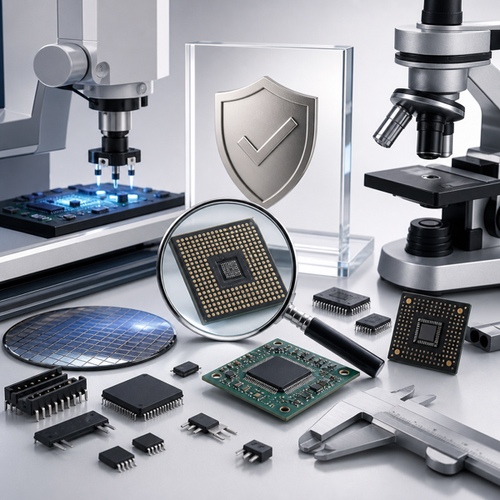
In the fast-paced world of electronics manufacturing and design, deploying the latest advancements in semiconductor technology requires more than cutting-edge innovation – it demands unwavering reliability, robust processes, and international alignment. Whether launching next-generation devices or scaling production lines, adherence to the latest semiconductor device standards is paramount. This article demystifies four essential standards: IEC 60749-21:2025 (solderability), IEC 60749-23:2025 (high temperature operating life), IEC 60749-26:2025 (ESD sensitivity testing), and IEC 63378-6:2026 (thermal modeling). Together, these standards safeguard quality, enable rapid scaling, protect against costly failures, and boost the security and lifespan of electronic assemblies – all while making regulatory compliance seamless and supporting global market access.
Overview / Introduction
The electronics industry sits at the heart of today’s digital transformation, powering everything from smartphones to medical equipment, electric vehicles, and critical infrastructure. As demand for sophisticated semiconductors rises, so do expectations for performance, reliability, and interoperability. International standards for semiconductor devices are evolving rapidly to address these challenges, offering frameworks that help manufacturers, engineers, and businesses stay ahead.
Why are semiconductor device standards crucial today?
- Reliability: Standards provide rigorous test methods for solderability, operating life, ESD sensitivity, and thermal management, ensuring only robust devices reach the market.
- Productivity and Scaling: Standardized methods streamline design, production, and quality assurance, facilitating smooth scaling and integration of new technologies.
- Security and Risk Reduction: By enforcing best practices for device handling and operation, these standards mitigate risks such as early-life failures or catastrophic ESD events.
- Global Market Access: Compliance with IEC standards demonstrates commitment to excellence, enables regulatory approvals, and wins customer trust worldwide.
In this guide, you’ll explore:
- The scope and requirements of each featured standard
- How these standards shape business practices in electronics
- Concrete benefits and practical tips for implementation
- Strategic steps for maintaining compliance and driving innovation
Detailed Standards Coverage
IEC 60749-21:2025 – Solderability Test Methods
Semiconductor devices – Mechanical and climatic test methods – Part 21: Solderability
What does this standard cover? IEC 60749-21:2025 specifies standardized procedures to assess the solderability of semiconductor device package terminations. Solderability is critical for ensuring reliable electrical and mechanical connections during manufacturing and over a device’s life. The standard outlines both “dip and look” solderability testing for through-hole, axial, and surface-mount devices (SMDs), as well as optional procedures simulating board-mounting with reflow soldering, including aging conditions.
Key requirements and specifications:
- Comprehensive test apparatus specifications for solder baths, dipping devices, and aging equipment
- Standardized solder compositions and flux types for both tin-lead (SnPb) and lead-free processes
- Procedures for accelerated aging, steam aging, and preconditioning
- Visual inspection and acceptance criteria for solder coverage after dip tests
- Updated operating conditions to align with modern manufacturing practices
Who needs to comply? Manufacturers, contract assemblers, and quality assurance teams in the semiconductor supply chain, especially those working with SMDs, through-hole, or hybrid packages intended for solder attachment.
Practical implications:
- Reduces likelihood of solder joint failures, improving product durability
- Enhances process consistency, reducing manufacturing fallout
- Ensures compatibility between device suppliers and contract manufacturers
Key highlights:
- Dip and look and board-mounting solderability tests
- Backward compatibility guidelines for SnPb and Pb-free terminations
- Revisions reflecting current best practices in device manufacturing
Access the full standard:View IEC 60749-21:2025 on iTeh Standards
IEC 60749-23:2025 – High Temperature Operating Life (HTOL)
Semiconductor devices – Mechanical and climatic test methods – Part 23: High temperature operating life
What does this standard cover? IEC 60749-23:2025 provides essential procedures for high temperature operating life (HTOL) testing, simulating real-world bias and temperature stresses on solid-state devices over accelerated periods. This is a cornerstone for qualifying and monitoring semiconductor reliability, revealing potential aging, degradation, or infant mortality issues.
Key requirements and specifications:
- Stress tests combine maximum-rated operating voltage with elevated temperatures (typically 125°C for 1,000 hours)
- Configurations for static and dynamic biasing, including forward bias (HTFB), reverse bias (HTRB), and gate bias (HTGB)
- Duration and stress conditions supporting field-lifetime equivalence via acceleration factors
- Explicit cool-down, interim measurement, and failure criteria
- Updated definitions and test durations in line with current reliability research
Who needs to comply? Semiconductor device manufacturers (logic/memory, power devices, integrated circuits), reliability labs, and electronics businesses qualifying components for mission-critical applications.
Practical implications:
- Enables detection of latent or early-life device failures before products reach the market
- Critical for markets where reliability is life- or safety-critical (medtech, automotive, aerospace)
- Reduces costly recalls and warranty issues by verifying ruggedness
Key highlights:
- Direct simulation of long-term usage at elevated stresses
- Detailed procedures for multiple device architectures (discrete, ICs, power semiconductors)
- Immediate feedback for yield and reliability improvement
Access the full standard:View IEC 60749-23:2025 on iTeh Standards
IEC 60749-26:2025 – Electrostatic Discharge (ESD) Sensitivity Testing – Human Body Model
Semiconductor devices – Mechanical and climatic test methods – Part 26: Electrostatic discharge (ESD) sensitivity testing – Human body model (HBM)
What does this standard cover? IEC 60749-26:2025 defines test methods for evaluating and classifying the sensitivity of semiconductor components and microcircuits to damage from electrostatic discharge (ESD) using the Human Body Model (HBM). ESD events are major causes of semiconductor failure during handling, assembly, and real-world operation.
Key requirements and specifications:
- Standardized apparatus and waveform specifications for generating controlled ESD pulses
- Comprehensive classification procedures for determining the withstand voltage of devices
- Guidelines for pin combination stressing, supply/non-supply pin groupings, and sampling methods for complex ICs
- Revised criteria for “low parasitics” and updated device pin maximums per test procedure
- Extensive safety and equipment verification steps to ensure data repeatability
Who needs to comply? Device manufacturers, IC designers, assembly facilities, and quality assurance teams focused on mitigating ESD-related failures.
Practical implications:
- Reduces catastrophic and latent device failures during production, shipment, and field use
- Ensures safe handling instructions and robust ESD protection design for end customers
- Supports marketing claims and regulatory requirements regarding device ESD ratings
Key highlights:
- Portable, repeatable HBM ESD test methodology
- Data-driven classification of ESD sensitivity for all types of semiconductor devices
- Clarifications on test equipment and low-parasitic configurations
Access the full standard:View IEC 60749-26:2025 on iTeh Standards
IEC 63378-6:2026 – Thermal Resistance and Capacitance Model for Transient Temperature Prediction
Thermal standardization on semiconductor packages – Part 6: Thermal resistance and capacitance model for transient temperature prediction at junction and measurement points
What does this standard cover? IEC 63378-6:2026 introduces the Digital Transformation using thermal Resistance and Capacitance (DXRC) model—a new, compact method for accurately predicting transient temperatures in semiconductor devices. The DXRC model ensures that real-world thermal behavior at both the chip junction and various measurement points is captured under dynamic operating conditions.
Key requirements and specifications:
- Model topology for representing both junction and external package surfaces
- Calculation and optimization of thermal resistance and capacitance values for widely used packages like TO-252, TO-263, and HSOP
- Benchmarking via computational fluid dynamics (CFD) modeling and data measurements
- Support for PCB influence analysis and multiple environmental scenarios
Who needs to comply? Package designers, electronics thermal engineers, simulation/modeling teams, and manufacturing process developers involved with high-power or thermally sensitive semiconductors.
Practical implications:
- Improves device reliability by enabling accurate temperature prediction under real-world conditions
- Reduces development time through effective thermal simulation and design validation
- Essential for developing power electronics where heat dissipation is a limiting factor
Key highlights:
- Standardized model for portable, scalable thermal simulation
- Validation across popular package types ensures industry-wide applicability
- Facilitates “digital twin” approaches for predictive maintenance and smart manufacturing
Access the full standard:View IEC 63378-6:2026 on iTeh Standards
Industry Impact & Compliance
How These Standards Affect Businesses
Adopting international standards in semiconductor devices drives transformation at every step of the electronics value chain. Compliance delivers:
- Enhanced product reliability, lowering warranty and field support costs
- Shortened time-to-market for new technology introductions
- Easier cross-border trade and market access
- Consistent, reproducible manufacturing quality
Compliance Considerations
- Regulatory Obligations: Many markets and customers now require compliance with IEC standards as a minimum entry barrier.
- Customer Confidence: Certification signals commitment to quality, safety, and continuous improvement.
- Auditable Processes: Clear documentation and repeatable methods make internal audits and third-party evaluations straightforward.
Benefits of Adopting These Standards
- Minimizes supply chain disruptions due to non-conforming parts
- Reduces the risks of product recalls and insurance claims
- Enables integration into advanced manufacturing environments
- Shields the brand against quality and safety incidents
Risks of Non-Compliance
- Device field failures, leading to brand damage and costly recalls
- Rejected batches or line stoppages at contract manufacturers
- Lost opportunities in high-reliability applications (e.g., automotive or healthcare)
- Legal and compliance penalties in sensitive markets
Implementation Guidance
Common Implementation Approaches
- Gap Assessment: Review internal policies and test setups against each standard’s requirements.
- Training & Competence: Upskill engineering, quality, and production teams on new or revised procedures (e.g., solderability testing, ESD protocols).
- Equipment Calibration: Invest in or verify test setups – solder baths, bias stress chambers, ESD simulators, and thermal modeling tools – to match IEC specifications.
- Process Documentation: Establish SOPs aligned with standard clauses and document evidence of compliance.
- Continuous Monitoring: Implement control charts, audit trails, and feedback loops to ensure process resilience.
- Certification: Where possible, obtain third-party certification to IEC standards (helps with customer qualification and market entry).
Best Practices for Adopting These Standards
- Early Standard Integration: Integrate requirements at the design stage—not just in manufacturing or QA
- Supplier Collaboration: Audit and align suppliers on material and process compatibility (especially for solder and PCB partners)
- ESD Safe Facilities: Ensure production areas and test labs meet ESD safety standards, with regular audits and ESD event monitoring
- Digital Simulation: Use standardized thermal models (like DXRC) to optimize layout before hardware build, reducing costly design spins
Resources for Organizations
- Training courses from standard organizations and accredited labs
- Sample procedures/templates for testing and reporting
- Reference data sets for equipment performance and pass/fail thresholds
- Consultancy services from specialized engineering organizations for smooth transition and certification
Conclusion / Next Steps
Key Takeaways:
- Adopting standards like IEC 60749-21:2025, IEC 60749-23:2025, IEC 60749-26:2025, and IEC 63378-6:2026 is now foundational to quality, safety, and competitiveness in electronics.
- These standards define the critical path to consistent solder joints, robust operating life, ESD resilience, and accurate thermal simulation.
- Compliance boosts productivity and scales business by minimizing defects and associated costs, and accelerates global market entry.
For organizations seeking to lead in the electronics domain:
- Audit current practices against the standards above.
- Prioritize closing gaps with investments in equipment, training, and process control.
- Use iTeh Standards (https://standards.iteh.ai) as your trusted source for up-to-date documents and compliance pathways.
- Create a culture of standards-driven excellence that empowers staff, delights customers, and future-proofs your operations.
Explore the full collection of semiconductor device standards and stay ahead in technology, reliability, and business growth by visiting iTeh Standards.
Categories
- Latest News
- New Arrivals
- Generalities
- Services and Management
- Natural Sciences
- Health Care
- Environment
- Metrology and Measurement
- Testing
- Mechanical Systems
- Fluid Systems
- Manufacturing
- Energy and Heat
- Electrical Engineering
- Electronics
- Telecommunications
- Information Technology
- Image Technology
- Precision Mechanics
- Road Vehicles
- Railway Engineering
- Shipbuilding
- Aircraft and Space
- Materials Handling
- Packaging
- Textile and Leather
- Clothing
- Agriculture
- Food technology
- Chemical Technology
- Mining and Minerals
- Petroleum
- Metallurgy
- Wood technology
- Glass and Ceramics
- Rubber and Plastics
- Paper Technology
- Paint Industries
- Construction
- Civil Engineering
- Military Engineering
- Entertainment