


August 2026: New Standards Shape Solar Collector Field Performance and Hydrogen Vessel Reliability
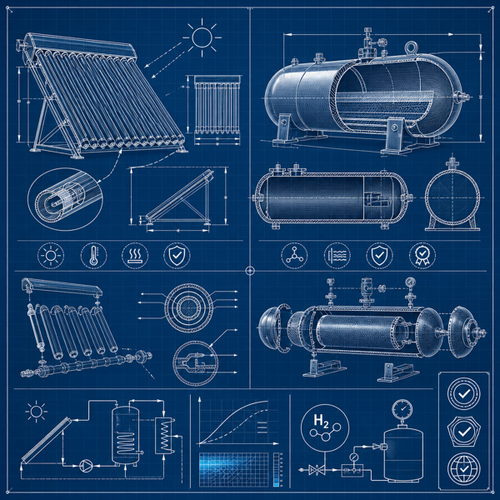
In August 2026, the field of energy and heat transfer engineering saw the publication of two pivotal international standards. These address critical quality, safety, and performance aspects for both solar energy collector fields and hydrogen pressure vessels—technologies at the heart of the energy transition and advanced engineering systems. With these updates, stakeholders get improved frameworks to ensure systems achieve optimal output, deliver on environmental targets, and maintain reliability for decades of service. This article provides a deep dive into the scope, requirements, and practical implications of the two new standards, offering must-know insights for industry professionals, engineers, quality managers, and compliance specialists poised to implement or specify such solutions.
Overview
The energy and heat transfer sector is evolving rapidly, with greater emphasis on renewable integration, operational reliability, and lifecycle sustainability. In this context, standards serve as the backbone of interoperability, quality assurance, and continuous improvement. The two newly published standards—FprEN ISO 24194 for solar collector field performance checks, and ISO/TR 19884-3:2026 for hydrogen pressure vessel cycle life testing—address key industry challenges:
- Verification of large-scale solar collector performance to ensure energy yield, operational efficiency, and climate adaptation.
- Enhancing hydrogen storage reliability by standardized evaluation of partial pressure cycling for long-term safety.
Professionals will learn how these standards shape compliance requirements, influence system design and maintenance, and support best practices for environmental stewardship and operational excellence.
Detailed Standards Coverage
FprEN ISO 24194 – Performance Checks for Solar Collector Fields
Full Title: Solar energy – Collector fields – Check of performance (ISO/FDIS 24194:2026)
What It Covers & Scope:FprEN ISO 24194 specifies comprehensive methodologies for evaluating the in-situ performance of solar thermal collector fields. Applicable to glazed flat plate collectors, evacuated tube collectors, as well as tracking and concentrating types, it supports installations ranging from small commercial arrays to megascale district heating plants. The focus is on systems using liquid heating collectors per ISO 9806, which are central to modern heating, industrial process, and renewable power generation systems.
The standard provides three specialized procedures:
- Power Check: Estimation and validation of real-time thermal power output.
- Daily Yield Check: Assessment of energy delivered daily, considering fluctuating solar conditions.
- Annual Yield Check: Holistic approach for verifying annual energy output, accounting for weather patterns, operational schedules, and maintenance.
Key Requirements and Specifications:
- Systematic comparison of measured output versus calculated (modelled) performance.
- Flexible accuracy levels: Level I (high accuracy, intensive measurement) to Level III (lower accuracy, reduced measurement).
- Incorporates mandatory measurement protocols for irradiance, temperature, flow rates, and environmental data, with specific criteria for sensor accuracy and data logging.
- Takes into account various loss factors: soiling, shading, heat losses, and operational control strategies.
- Explicit formulas and procedures tailored for different collector technologies and climate-related stresses.
- In-depth guidance on reporting valid measurement periods and recommended reporting formats.
Target Audience for Compliance:
- EPC contractors and operators of solar district heating or industrial solar thermal fields
- Quality managers overseeing solar heating installations
- System integrators, commissioning agents, and energy auditors
- Public utilities and independent power producers
Implementation Implications: Adopting this standard ensures transparent, repeatable verification of field performance, which is invaluable for contract acceptance, warranty enforcement, and predicting returns on investment. Utilities and facility operators can leverage standardized approaches to monitor system health, plan maintenance, and benchmark environmental impact—critical as regulatory and ESG reporting intensifies globally.
Notable Changes from Previous Editions:
- Broader scope clarified for liquid heating collectors
- New chapters harmonizing procedures and input data handling
- Correction and unification of formulas for different collector types
- Extended examples and case studies for real-world application
Key highlights:
- Validation methods for all collector field sizes, including district-scale plants
- Defined safety and uncertainty factors for measurement approaches
- Supports power checks, daily and annual yield checks for robust lifecycle monitoring
Access the full standard:View FprEN ISO 24194 on iTeh Standards
ISO/TR 19884-3:2026 – Pressure Cycle Test Data for Hydrogen Vessel Reliability
Full Title: Gaseous hydrogen — Pressure vessels for stationary storage — Part 3: Pressure cycle test data to demonstrate partial pressure cycle estimation methods
What It Covers & Scope:ISO/TR 19884-3:2026 delivers detailed test methods and supporting data for determining the real-world fatigue life of stationary hydrogen pressure vessels by means of partial pressure cycling. Modern hydrogen infrastructure, including filling stations and industrial storage, increasingly relies on accurate predictions of vessel durability under variable pressure regimes. Existing approaches based solely on full pressure cycles are often overly conservative for actual use scenarios, where pressures rarely drop to zero—and lifecycle extension is both feasible and economically critical.
The standard outlines:
- Two estimation approaches for cycle life extension under partial pressure cycles:
- Goodman diagram-based method (using S-N curves for metallic and composite materials)
- Exponential formula-based method (empirical fatigue life modeling from test data)
- Data acquisition and pressure cycling test protocols, including vessel specification, hydraulic cycling, index determination, and application of finite element analysis for stress evaluation.
- Considerations for different vessel types (Type 1, 2, 3, and 4), materials, and critical failure modes.
Key Requirements and Specifications:
- S-N diagram creation and application for vessel-specific fatigue assessment
- Standardized hydraulic cycling tests to characterize vessel endurance
- Calculation of fatigue life indices and cycle life extension factors
- Integrates test approaches for both metallic and composite vessels, supporting innovation
- Emphasizes the use of test data rather than purely theoretical fracture mechanics
Target Audience for Compliance:
- Manufacturers of hydrogen pressure vessels and storage systems
- Hydrogen infrastructure operators and safety engineers
- Regulatory authorities and certifying bodies
- R&D groups developing advanced vessel materials and designs
Implementation Implications: For operators and manufacturers, this guidance enables more accurate and less conservative lifecycle estimates, supporting longer asset life and optimization of inspection and replacement schedules. Adopting standardized test approaches may also expedite regulatory approvals and boost confidence in hydrogen infrastructure projects.
Notable Features:
- Example test data with conditions supporting direct application
- Compatible with performance-based safety regulations (referencing ISO 19884-1)
- Supports extension of vessel design lives under real-use partial cycling
Key highlights:
- Two independent, validated partial-cycle estimation methods
- Empirical, test-data-based approach for better reliability predictions
- Supports safe, efficient operation of hydrogen storage across all vessel types
Access the full standard:View ISO/TR 19884-3:2026 on iTeh Standards
Industry Impact & Compliance
The publication of these two standards signals a maturing approach to lifecycle management in renewable and hydrogen energy infrastructure. Organizations embracing the new guidance will realize several benefits:
- Improved quality assurance: Clear, repeatable procedures help verify that systems perform as designed, aiding early fault detection and minimizing costly downtime.
- Enhanced regulatory compliance: Both standards support best-in-class demonstration of due diligence toward safety, reliability, and environmental impacts—front-of-mind for investors, regulators, and the broader public.
- Optimized asset management: Structured monitoring via standard protocols enhances predictive maintenance, boosting both system uptime and return on investment.
- Futureproofing: Adoption supports easier alignment with evolving policy frameworks and international best practices, simplifying future upgrades or expansions.
Compliance Considerations and Timelines:
- Stakeholders should review procurement, commissioning, and O&M specifications to incorporate new measurement and data protocols.
- Training for on-site personnel and quality teams in the application of the new test and validation procedures is recommended.
- Early adoption may be phased, with pilot projects used to establish local best practices and reporting templates.
- Documentation and data retention policies should explicitly address requirements for gap analysis and performance reporting against the new standards.
Risks of Non-Compliance:
- Loss of warranty claims or contract payments due to inadequate verification protocols.
- Potential regulatory penalties, operational shutdowns, or asset write-offs in the event of failure or incident investigation.
- Reduced competitiveness in global markets as major buyers shift toward specified, certifiable performance criteria.
Technical Insights
Common Technical Requirements:
- Rigorous data collection—combining sensor accuracy, calibration, and robust data management—is central to compliance with both standards.
- Both documents encourage integration between performance modelling, empirical data, and modern digital monitoring solutions for continual verification.
- Testing protocols are harmonized with base standards (e.g., ISO 9806 for collector testing, ISO 19884-1 for pressure cycling), facilitating streamlined procurement and certification.
Best Practices for Implementation:
- Document and calibrate instrumentation: Ensure all critical measurements (irradiance, temperature, pressure, flow, etc.) meet or exceed specified accuracy.
- Align supplier and operational criteria: Confirm that design assumptions regarding cleaning, maintenance, or cycling match site realities.
- Develop reporting formats: Follow the recommended templates to enhance traceability, repeatability, and auditability.
- Train teams on variability and impact factors: Ensure personnel understand how operational deviations, climate extremes, or unexpected loadings might influence performance or fatigue.
- Leverage standard-based digital twins and asset management platforms: Digitalization amplifies the impact of adherence, supporting automated monitoring and reporting.
Testing and Certification Considerations:
- Prioritize third-party and supplier-independent data sources for key environmental and operational metrics.
- Coordinate with certification bodies early in new project development or when retrofitting legacy systems.
- Use the standards’ recommended approaches for partial pressure testing and power/yield validation as benchmarks during audits and asset turnover events.
Conclusion & Next Steps
The August 2026 cohort of standards for energy and heat transfer engineering introduces significant advances for both solar thermal and hydrogen systems, supporting higher performance, reliability, and transparency. By integrating these requirements into design, commissioning, and operational processes, organizations can:
- Demonstrate leadership in compliance, safety, and sustainability
- Mitigate technical and regulatory risks
- Enhance long-term profitability and asset resilience
Recommendations:
- Review the full texts of the new standards to identify action points relevant to your operations or procurement activities.
- Engage internal and external stakeholders—including technology suppliers, auditor teams, and engineering partners—to align on implementation.
- Participate in industry training or standards workshops to stay abreast of reporting tools, digitalization, and certification updates.
- Bookmark iTeh Standards (standards.iteh.ai) as a resource for the latest standards news and authoritative documentation.
Explore these standards in full and stay ahead of evolving best practices in the energy transition era.
Categories
- Latest News
- New Arrivals
- Generalities
- Services and Management
- Natural Sciences
- Health Care
- Environment
- Metrology and Measurement
- Testing
- Mechanical Systems
- Fluid Systems
- Manufacturing
- Energy and Heat
- Electrical Engineering
- Electronics
- Telecommunications
- Information Technology
- Image Technology
- Precision Mechanics
- Road Vehicles
- Railway Engineering
- Shipbuilding
- Aircraft and Space
- Materials Handling
- Packaging
- Textile and Leather
- Clothing
- Agriculture
- Food technology
- Chemical Technology
- Mining and Minerals
- Petroleum
- Metallurgy
- Wood technology
- Glass and Ceramics
- Rubber and Plastics
- Paper Technology
- Paint Industries
- Construction
- Civil Engineering
- Military Engineering
- Entertainment