


Nuclear Power Plant Safety: Essential Standards for Modern Instrumentation, Control, and Operator Support
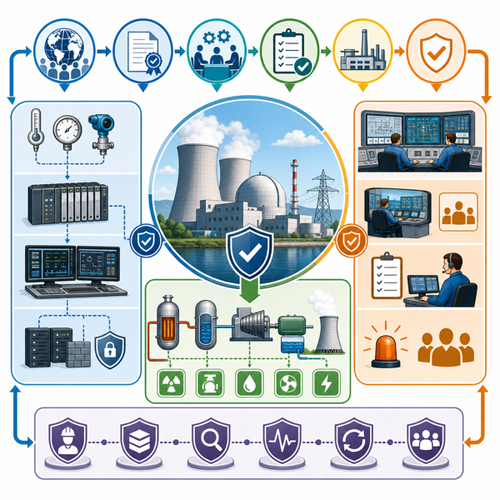
Ensuring the safety, security, and efficiency of nuclear power plants is a top priority in the energy and heat sector. As the industry embraces advanced technologies, robust safety protocols and internationally recognized standards become indispensable. This article explores four of the most critical standards governing nuclear power plant safety—covering instrumentation and control systems, platform qualification, cable connector assemblies for harsh environments, and operator support systems. Understanding these standards is not only vital for compliance but also essential for harnessing modern technologies to improve productivity, security, and operational scale.
Overview / Introduction
Nuclear power forms a backbone of the global low-carbon energy strategy, but its operation hinges upon rigorous safety and quality management. Instrumentation, control, and human-machine interfaces within nuclear facilities are sophisticated systems requiring a harmonized framework of standards to ensure reliability under normal and emergency conditions. Adoption of best-in-class international standards isn’t just a regulatory requirement—it’s a competitive advantage. It enables organizations to innovate safely, reduce incident risk, maintain public trust, and demonstrate due diligence to regulators and stakeholders.
In this guide, we demystify four cornerstone standards:
- IEC 61513:2026 – General requirements for instrumentation and control (I&C) systems important to nuclear safety
- IEC 63413:2026 – Qualification framework for I&C platforms
- IEC 63423:2026 – Requirements for cable connector assemblies in harsh environments
- IEC 63435:2025 – Guidelines for human-machine interfaces and operator support systems
You’ll gain insight into the scope, key requirements, applications, and real-world implications of each standard—as well as practical steps for implementation.
Detailed Standards Coverage
IEC 61513:2026 – General Requirements for Instrumentation and Control Important to Safety
Nuclear power plants – Instrumentation and control important to safety – General requirements for systems
IEC 61513:2026 is the foundational safety standard for nuclear power plant instrumentation and control (I&C) systems. It details comprehensive requirements and recommendations for the design, implementation, upgrading, and lifecycle management of I&C systems crucial to plant safety—spanning both new builds and retrofits.
This standard introduces the concept of a safety lifecycle for both overall plant I&C architectures and individual subsystems. It emphasizes that all requirements for I&C must be systematically derived from plant safety goals, ensuring complete and precise documentation. The framework ensures traceability from the highest-level nuclear safety objectives down to the technical configuration of I&C systems.
Compliance is crucial for nuclear plant designers, operators, system integrators, and maintenance teams who must demonstrate to regulators that safety-critical functions are robustly implemented. Notably, the 2026 edition aligns with recent IAEA standards (SSR-2/1 and SSG-39) and incorporates updated terminology and cross-references to key standards such as IEC 62566, IEC 61226, and IEC 63046.
Key requirements include:
- Derivation of I&C requirements from plant safety design bases
- Specification of architectural, software, hardware, and human-machine interface (HMI) aspects
- Integration of cybersecurity risk management with I&C system design
- Full documentation throughout system definition, design, commissioning, operation, and maintenance
- Detailed quality assurance and lifecycle management plans
Who needs to comply?
- Nuclear power plant architects and engineers
- System integrators and I&C technology providers
- Operators and safety compliance teams
Practical implications: Adhering to IEC 61513:2026 ensures plant safety systems are designed, tested, and maintained with the highest level of rigor, helping organizations meet licensing conditions, decrease system failure risks, and simplify future technology upgrades.
Key highlights:
- Integrates plant safety goals with I&C lifecycle management
- Covers both new and existing nuclear power plants
- Aligns with latest international IAEA safety requirements
Access the full standard:View IEC 61513:2026 on iTeh Standards
IEC 63413:2026 – Platform Qualification for I&C Systems Important to Safety
Nuclear power plants – Instrumentation and control systems important to safety – Platform qualification
IEC 63413:2026 provides a unified approach for qualifying I&C platforms—a critical step before deploying these platforms in plant-specific safety systems. Platform qualification (sometimes termed pre-qualification or generic qualification) addresses all aspects of the I&C platform—hardware, software, programmable logic devices (HPD), engineering tools, and environmental resilience—examined outside the context of any specific plant project.
The standard facilitates a two-stage licensing model: first qualifying the platform for general suitability, then assessing specific implementations at the plant level. This improves efficiency, reduces duplication of effort, and aligns with modern safety regulatory expectations. Detailed guidance is provided to differentiate between requirements that apply at the platform level versus the application (system-specific) level, reducing ambiguity in qualification processes.
Requirements and considerations under IEC 63413:2026 include:
- Systematic lifecycle support for I&C platform development, testing, and verification
- Qualification of hardware (referencing IEC 60987), software (referencing IEC 60880/IEC 62138), and HPDs (referencing IEC 62566)
- Environmental and seismic qualification using referenced standards
- Documentation and processes to ensure traceability and regulatory acceptance
- Cybersecurity measures for programmable digital platforms
Who needs to comply?
- I&C platform developers and technology providers
- Nuclear facilities engineering and procurement teams
- Regulatory and licensing authorities
Practical implications: Implementing IEC 63413:2026 streamlines the path to safety compliance for vendors and utilities, facilitates use of advanced and pre-qualified digital platforms, and builds confidence among regulators and stakeholders in the integrity of installed I&C systems.
Key highlights:
- Establishes stepwise, consistent platform qualification methodology
- Integrates hardware, software, environmental, and cybersecurity criteria
- Supports innovation by providing flexibility to assess new technologies
Access the full standard:View IEC 63413:2026 on iTeh Standards
IEC 63423:2026 – Cable Connector Assemblies for Harsh Environment Purposes
Nuclear power plants – Instrumentation and control systems important to safety – Cable connector assemblies for harsh environment purposes
IEC 63423:2026 is a focused standard dealing with the safety requirements for cable connector assemblies crucial to both normal and accident conditions. These assemblies play a pivotal role in signal transmission and power delivery to safety-critical devices within nuclear power plants—often under harsh environmental stresses such as high temperature, radiation, or seismic events.
It specifies engineering and safety requirements for the design, qualification, manufacturing, testing, and on-site installation of cable assemblies. Supported cable types include both polymer-based and mineral-insulated options, with connector designs suitable for multi-conductor and coaxial arrangements. Particular attention is given to ensuring survivability and continued function under design basis and severe accident conditions.
Requirements span:
- Mechanical, electrical, and environmental criteria for the complete assembly
- Qualification and test procedures simulating normal, extreme, and accident conditions
- Quality assurance, documentation, assembly labelling, and traceability
- Field installation procedures for both mechanical and electrical integrity
- Production testing, including dielectric strength, insulation resistance, continuity, and signal transmission checks
Who needs to comply?
- Manufacturers of I&C cable assemblies and connectors
- System integrators and nuclear facility engineers
- Plant operators and maintenance personnel
Practical implications: Adherence to IEC 63423:2026 ensures that vital communication and power circuits withstand the most challenging plant environments, directly contributing to plant safety, reliability, and post-incident recovery.
Key highlights:
- Addresses both design and field installation of cable assemblies
- Ensures qualified performance during and after severe accidents
- Incorporates comprehensive mechanical and environmental testing
Access the full standard:View IEC 63423:2026 on iTeh Standards
IEC 63435:2025 – Human Machine Interfaces and Operator Support Systems
Nuclear facilities – Human machine interfaces – Operator support systems
IEC 63435:2025 defines expectations for operator support systems (OSS) and advanced human-machine interfaces to maximize safety, situation awareness, and operational efficiency in nuclear facilities. These systems are essential not only for control room operators but also for maintenance engineers and emergency teams—providing enhanced monitoring, diagnostics, and intelligent decision-support tools.
The standard organizes requirements around the entire OSS lifecycle, from project organization, needs and task analysis, through system and functional design guided by human factors engineering (HFE) principles, to comprehensive verification and validation of OSS effectiveness. It also specifies guidelines for display design, operator interaction, control of cognitive workload, collaboration, and response time—ensuring that OSS enhance, rather than hinder, the human element in nuclear safety.
Requirements include:
- Analysis of operator tasks and situation assessment needs
- Definition of OSS functional scope and user interface design, per HFE best practices
- Independence and reliability of critical OSS functions
- Verification and validation processes ensuring OSS meet operational and safety goals
- Provisions for integration into both new and retrofit nuclear facilities
Who needs to comply?
- Nuclear facility operators and control room designers
- I&C managers and OSS developers
- Safety and human factors engineers
Practical implications: By following IEC 63435:2025, organizations can ensure that digital operator aids and advanced analytics do not introduce new sources of error or overload, but rather support effective and safe responses under all operating modes—including emergencies.
Key highlights:
- Comprehensive OSS lifecycle and HFE focus
- Applicable to new builds and modernization projects
- Supports verification, validation, and regulatory acceptance
Access the full standard:View IEC 63435:2025 on iTeh Standards
Industry Impact & Compliance
Adopting these standards transforms how nuclear facilities design, implement, and manage critical I&C infrastructure. Compliance brings a range of direct and indirect benefits:
- Safety and Security: Robust, standardized I&C and OSS frameworks greatly reduce the risk of accidents, system failures, and cyber threats.
- Regulatory Readiness: Internationally recognized standards facilitate smoother licensing and inspections, reassuring regulators and the public.
- Operational Efficiency: Unified approaches to lifecycle management and platform qualification minimize rework, reduce downtime, and enable more rapid adoption of new technologies.
- Scalability: Facilities using qualified platforms and assemblies find it easier to expand, retrofit, or modernize their plant infrastructure—supporting long-term sustainability.
- Reputation and Trust: Demonstrating compliance with the latest IEC nuclear safety standards helps earn stakeholder confidence and strengthens business credibility in international markets.
- Risk Management: Systematic documentation and traceability make incident response and root-cause analysis more effective.
- Cybersecurity Integration: Modern standards require built-in consideration for defending vital control systems from digital threats.
Risks of non-compliance include: regulatory penalties, licensing delays, increased vulnerability to operational incidents, higher maintenance and modernization costs, and reputational damage.
Implementation Guidance
For organizations moving toward compliance with IEC safety standards for nuclear I&C and OSS, a systematic approach is recommended:
- Gap Assessment: Begin by comparing current systems, processes, and documentation against the detailed requirements of each standard. Identify gaps and prioritize remediation.
- Stakeholder Engagement: Involve all relevant internal and external parties—including engineers, operators, vendors, and regulatory experts—early in the process.
- Documentation and Traceability: Ensure that all design, qualification, and lifecycle management documents are created, maintained, and easily retrievable.
- Platform and Assembly Pre-qualification: When possible, select hardware and software platforms that are pre-qualified or can be qualified according to IEC 63413.
- Functional Design Reviews: Incorporate best practices from human factors engineering and OSS design (IEC 63435) at all stages of system upgrades and new builds.
- Testing and Validation: Execute mechanical, electrical, and environmental tests as required by IEC 63423 and IEC 63413. Include simulation of accident and harsh environment scenarios.
- Cybersecurity Integration: Address security early in the I&C system and OSS design life cycle—not as an afterthought.
- Continuous Training: Invest in operator, engineer, and maintenance staff training to keep pace with new procedures and technologies.
- Ongoing Review: Regularly review and update compliance as standards evolve and new editions are published.
Useful resources:
- Engage with standardization bodies and technical committees.
- Use the iTeh Standards platform for the latest editions and updates.
- Leverage industry forums and workshops dedicated to nuclear I&C and human factors engineering.
Conclusion / Next Steps
The adoption and effective implementation of IEC 61513:2026, IEC 63413:2026, IEC 63423:2026, and IEC 63435:2025 is essential for ensuring modern nuclear power plants are safe, reliable, and equipped to handle both routine and extraordinary challenges. These standards—covering I&C general requirements, platform qualification, cable assemblies, and operator support—provide the framework for actionable compliance, operational excellence, and technology-enabled scaling.
Whether you are an engineer, facility manager, system integrator, or regulatory advisor, staying informed and compliant not only builds resilience but also supports innovation and competitiveness in the evolving nuclear energy landscape.
Recommendations:
- Begin gap assessments and align your processes with the latest versions of these IEC standards.
- Incorporate international best practices and stay engaged with evolving regulatory and technological trends.
- Explore the full texts and updates of each standard via iTeh Standards to maintain a leadership position in nuclear safety and compliance.
Stay ahead in nuclear safety—make these IEC standards a cornerstone of your operational strategy.
Categories
- Latest News
- New Arrivals
- Generalities
- Services and Management
- Natural Sciences
- Health Care
- Environment
- Metrology and Measurement
- Testing
- Mechanical Systems
- Fluid Systems
- Manufacturing
- Energy and Heat
- Electrical Engineering
- Electronics
- Telecommunications
- Information Technology
- Image Technology
- Precision Mechanics
- Road Vehicles
- Railway Engineering
- Shipbuilding
- Aircraft and Space
- Materials Handling
- Packaging
- Textile and Leather
- Clothing
- Agriculture
- Food technology
- Chemical Technology
- Mining and Minerals
- Petroleum
- Metallurgy
- Wood technology
- Glass and Ceramics
- Rubber and Plastics
- Paper Technology
- Paint Industries
- Construction
- Civil Engineering
- Military Engineering
- Entertainment