


Solar Energy Engineering Standards: Key Requirements for Modern Renewable Projects
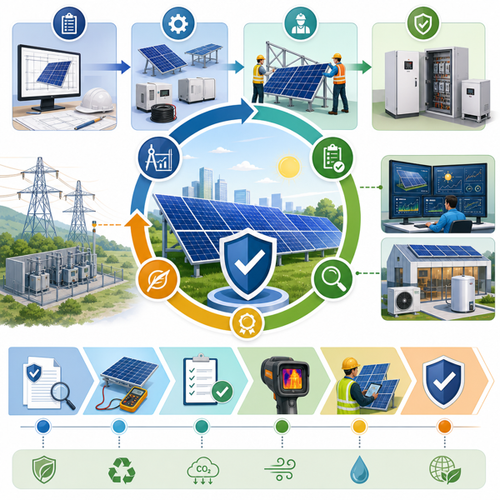
Harnessing solar energy effectively and safely is both a technical and strategic imperative for today’s energy sector. In an age of rapid innovation, robust solar energy engineering standards are vital—not just for compliance, but for boosting productivity, security, and the scalability of renewable energy projects. This guide introduces four key international standards that provide backbone specifications for solar tower plants, photovoltaic system safety, accurate device testing, and off-grid system design. Understanding and implementing these standards is no longer optional: it’s a must for modern businesses aiming to thrive with sustainable and competitive solar technologies.
Overview / Introduction
Solar energy engineering is pivotal in the transformation toward cleaner, more efficient power systems worldwide. As solar technologies like power towers, photovoltaic (PV) systems, and off-grid renewables advance, so does the need for rigorous international standards. These documents address essential aspects such as system control, safety, testing accuracy, communication protocols, and comprehensive system design.
Why do these standards matter? For businesses and stakeholders—from developers to technology providers—solar energy standards:
- Reduce risks and operational disruptions
- Enable proven, repeatable processes
- Foster interoperability between equipment and systems
- Ensure alignment with regulatory and safety requirements
- Offer a foundation for innovation, efficient scaling, and competitive advantage
This article covers four cornerstone standards in solar energy engineering:
- Heliostat field control systems for solar tower plants
- Power line communications for PV DC shutdown (safety-critical)
- Reliable measurement of bifacial PV device parameters
- Design and selection for renewable off-grid electrification systems
By understanding and leveraging these standards, professionals in the energy and heat sector can optimize system performance, improve safety, and assure compliance, ultimately fueling sustainable business growth.
Detailed Standards Coverage
IEC 62862-4-2:2026 - Heliostat Field Control System for Solar Tower Plants
Solar thermal electric plants – Part 4-2: Heliostat field control system of solar tower plants
IEC 62862-4-2:2026 sets rigorous technical requirements and test methods for the heliostat field control systems (HFCS) that form the heart of solar tower plants. The HFCS ensures that large arrays of sun-following mirrors (heliostats) precisely track and reflect sunlight to a central receiver, maximizing energy capture and plant efficiency. This standard covers the control system’s architecture, redundancy, scalability, security, environmental tolerance, real-time communications, and safety functions.
Key requirements include robust data acquisition, accurate tracking, multiple operating modes (such as standby, calibration, windproof, maintenance), and comprehensive safety protection—spanning software safeguards, electrical interlocks, hail and wind protection, and electromagnetic compatibility. The document details specific test procedures, conditions, and instruments required to certify performance and safety.
Target audience includes solar plant designers, system integrators, technology vendors, and operators who need to ensure optimal functionality and minimize downtime through a resilient, standards-based control infrastructure.
Key highlights:
- Mandatory system redundancy and availability measures for reliable operation
- Advanced safety features, including environmental and control interlocks
- Structured testing protocols for every core function, from tracking accuracy to electromagnetic compatibility
Access the full standard:View IEC 62862-4-2:2026 on iTeh Standards
IEC 63257:2026 - Power Line Communication for DC Shutdown Equipment
Power line communication for DC shutdown equipment – Communication signal, physical layer
With expanding solar PV installations, safety in emergency scenarios is paramount. IEC 63257:2026 enables efficient, reliable communication between DC shutdown equipment and the rest of the PV system using existing power lines—eliminating the complexity and cost of extra wiring. This standard specifies communication protocols at the physical layer, requirements for operational signaling (normal vs. shutdown state), and rigorous test criteria.
A central focus is on propagating shutdown signals rapidly to every PV module in the field, allowing voltage to be reduced during emergencies (such as firefighting) to protect first responders and system integrity. The document discusses signal coupling, crosstalk attenuation, transmitter and receiver specifications, and detailed interoperability and performance testing for robust field installations.
This standard is crucial for PV array manufacturers, system designers, emergency planners, and safety authorities seeking to integrate reliable PV shutdown systems that meet the latest safety codes and facilitate compliance with fire safety regulations.
Key highlights:
- Clear signal propagation protocols over DC power lines for full-system shutdown
- Physical layer requirements tailored for PV installation resilience
- Extensive performance and interoperability testing criteria
Access the full standard:View IEC 63257:2026 on iTeh Standards
IEC TS 60904-1-2:2024 - Measurement of Bifacial Photovoltaic Devices
Photovoltaic devices – Part 1-2: Measurement of current-voltage characteristics of bifacial photovoltaic (PV) devices
As bifacial PV modules—devices that generate power from both sides—gain market share, standardized measurement procedures are critical for accurate performance assessment and fair product comparison. IEC TS 60904-1-2:2024 offers a complete methodology for measuring the current-voltage (I-V) characteristics of single-junction bifacial PV devices under both natural sunlight and simulated conditions.
It outlines equipment specifications, irradiance uniformity, non-irradiated background (to ensure accurate rear-side measurements), and revised procedures for determining bifaciality and rear irradiance power gain. The document updates legacy approaches, addressing issues such as spectral mismatch and uncertainty calculations, so results can be trusted by manufacturers, test labs, and buyers alike.
This standard targets PV manufacturers, research labs, independent test agencies, and EPC contractors who must demonstrate module performance reliably—whether for warranty, certification, or bankability purposes.
Key highlights:
- Robust, updated protocols for measuring I-V characteristics of bifacial modules
- Guidance on equipment setups for single and double-side illumination
- Refined definitions and procedures for accurate bifaciality assessment
Access the full standard:View IEC TS 60904-1-2:2024 on iTeh Standards
IEC TS 62257-200:2026 - Renewable Energy Off-Grid Systems: System Selection and Design
Renewable energy off-grid systems – Part 200: System selection and design
Bringing reliable electricity to remote or isolated communities demands a structured approach to off-grid renewable system design. IEC TS 62257-200:2026 provides a framework for matching user needs with technical solutions across the full spectrum of microgrids, hybrid systems, and stand-alone renewable energy installations.
This technical specification assists in assessing energy needs, selecting compatible power system architectures, specifying production and distribution subsystems, and embedding flexibility for future upgrades or scaling. It covers a broad range of variables: power quality, availability, battery integration, environmental factors, cost, warranties, and monitoring requirements—helping stakeholders from designers to financiers develop robust, fit-for-purpose electrification projects.
The standard is essential for project developers, rural electrification agencies, humanitarian organizations, and equipment vendors aiming to deliver sustainable, cost-effective energy solutions for off-grid users.
Key highlights:
- Methodical approach to system selection and sizing for off-grid renewables
- Alignment of user needs with technical and economic criteria
- Guidance for end-to-end system specification, from generation to distribution and user interface
Access the full standard:View IEC TS 62257-200:2026 on iTeh Standards
Industry Impact & Compliance
Adoption of these solar energy engineering standards is transforming how modern energy projects are planned, deployed, and sustained:
- Regulatory compliance: Adhering to recognized standards ensures conformity with local and international laws, reduces certification barriers, and simplifies market entry across regions.
- Operational efficiency: Clear procedural guidance, robust testing, and interoperable system designs reduce errors, expedite commissioning, and minimize costly rework.
- Risk management: Safety functions and control redundancy minimize hazards for personnel and assets, especially during emergencies or adverse conditions.
- Productivity & scaling: Standardized processes allow organizations to scale solutions efficiently, innovate with modular components, and manage complex, multi-vendor projects seamlessly.
- Security: Integrated cybersecurity and functional safety provisions—essential for digital and automated solar infrastructures—are increasingly embedded into new standards.
Failure to comply can result in legal penalties, reputational damage, unreliable system output, or increased safety incidents—making standards adoption an essential part of responsible solar project development.
Implementation Guidance
Common approaches and best practices include:
- Gap analysis: Audit current systems against the latest standards to identify areas for remediation or upgrade.
- Stakeholder integration: Involve all project participants—from technology partners to end-users—in reviewing relevant requirements early in the design process.
- Documentation & training: Maintain up-to-date records, operator manuals, and continuous staff training to ensure adherence and facilitate inspections or certifications.
- Simulation and testing: Establish thorough laboratory and field-testing regimens—covering control system functionality, PV module certification, or off-grid performance—using certified equipment and protocols.
- Third-party audits: Engage accredited testing labs or certification bodies for independent conformity assessment, strengthening stakeholder confidence and bankability.
- Lifecycle approach: Plan for periodic standard revisions, long-term asset management, and continuous system monitoring—especially as technology and regulations evolve.
Useful resources:
- iTeh Standards for the latest international solar energy standards
- National and regional regulatory agencies
- Accredited laboratories and training providers specializing in solar project certification and compliance
Conclusion / Next Steps
As the renewable energy landscape evolves, the role of solar energy engineering standards only grows in importance. By internalizing these IEC standards—across heliostat control, PV system communications, device testing, and off-grid design—businesses not only ensure compliance and safety, but unlock systematic productivity gains, security, and scalability.
Key takeaways:
- Proactively adopting these standards safeguards investments and positions your organization for future growth
- Integrated, interoperable solutions built on global standards ensure swift adaptation to new technologies and regulatory shifts
- Accessing and implementing the full texts via iTeh Standards is the next logical step for any serious stakeholder in solar energy engineering
Recommendation: Don’t treat standards as a checkbox—make them the foundation of your solar technology strategy. Explore the latest standards, invest in training, and engage with certification processes early to maximize your competitive edge in the energy and heat sector.
Categories
- Latest News
- New Arrivals
- Generalities
- Services and Management
- Natural Sciences
- Health Care
- Environment
- Metrology and Measurement
- Testing
- Mechanical Systems
- Fluid Systems
- Manufacturing
- Energy and Heat
- Electrical Engineering
- Electronics
- Telecommunications
- Information Technology
- Image Technology
- Precision Mechanics
- Road Vehicles
- Railway Engineering
- Shipbuilding
- Aircraft and Space
- Materials Handling
- Packaging
- Textile and Leather
- Clothing
- Agriculture
- Food technology
- Chemical Technology
- Mining and Minerals
- Petroleum
- Metallurgy
- Wood technology
- Glass and Ceramics
- Rubber and Plastics
- Paper Technology
- Paint Industries
- Construction
- Civil Engineering
- Military Engineering
- Entertainment