


May 2026: New Standards Advance Environmental Protection and Safety
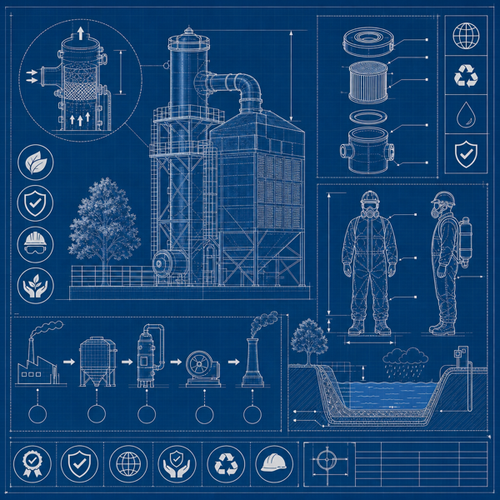
The landscape of Environmental Protection and Safety continues to evolve with the release of five pivotal new standards in May 2026. Covering algae product testing, environmental labelling, and textile safety, these international standards introduce precise methodologies and clearer requirements designed to enhance health, sustainability, and operational safety across a broad range of industries. Professionals involved in quality management, compliance, product development, or procurement will find these changes especially important for meeting regulatory demands, improving product reliability, and demonstrating commitment to responsible business practices.
Overview
Environmental Protection and Safety is an essential field spanning industries from food production and textiles to chemical manufacturing and bioeconomy. International standards in this area provide critical guidance to maintain product safety, consumer confidence, and regulatory compliance. The May 2026 updates address both emerging trends (such as the growth of algae-based products and bio-based materials) and traditional concerns (like textile fire safety and environmental certification). This article delivers a detailed look at what’s new, why these standards matter, and how you can leverage them to improve product quality and compliance.
Detailed Standards Coverage
EN 18198:2026 - Nitrogen Measurement and Protein Calculation in Algae
Algae and algae products - Nitrogen content measurement and protein content calculation for micro- and microalgae
This standard specifies validated protocols for determining nitrogen content using the Kjeldahl and Dumas methods in algae and algae-based products. Accurately quantifying nitrogen is essential for calculating protein content — a critical metric in food, feed, biotechnology, and agriculture. EN 18198:2026 applies to both microalgae (like Nannochloropsis sp.) and macroalgae (like Palmaria palmata), but is suitable for other species as well.
The standard also outlines calculation of crude protein content and provides clear guidance on selecting the proper nitrogen-to-protein conversion factor based on total amino acid analyses. With the growing market for algae in foods, feedstocks, cosmetics, textile fibers, and biofuels, reproducible and industry-accepted analytical methods are crucial for trade, labelling, and regulatory compliance.
Key highlights:
- Two validated methods: Kjeldahl (wet digestion) and Dumas (combustion)
- Guidance on conversion factors to calculate protein content from nitrogen
- Coverage of sampling, reporting, repeatability, and inter-lab validation
Access the full standard:View EN 18198:2026 on iTeh Standards
EN 18204:2026 - Phycocyanin Content Determination in Spirulina
Algae and algae products - Determination of the phycocyanin content in Arthrospira (Spirulina)
As demand for natural colorants and bioactive compounds rises, standardized quantification of key pigments like phycocyanin is vital. EN 18204:2026 introduces a robust protocol for extracting, measuring, and reporting C-phycocyanin (C-PC) and allophycocyanin (APC) from dry samples of Arthrospira (also known as Spirulina).
The method uses phosphate buffer extraction and precise spectrophotometric readings to ensure reproducibility. Intended for laboratories, producers, and buyers of spirulina extracts or products, following this standard improves data comparability and product consistency in the food, nutraceutical, and cosmetics industries.
Key highlights:
- Clear, repeatable process for pigment extraction and quantification
- Detailed guidance on sample handling, buffer preparation, and purity criteria
- Includes calculation methods and inter-lab reproducibility requirements
Access the full standard:View EN 18204:2026 on iTeh Standards
EN 18207:2026 - Uronic Acids Quantification in Brown Seaweed/Alginates
Algae and algae products - Determination of the uronic acids content of brown seaweed and alginate products
This new standard defines the use of High Performance Anion Exchange Chromatography with Pulsed Amperometric Detection (HPAEC-PAD) to accurately measure mannuronic, guluronic, and glucuronic acids. Accurate uronic acid quantification is particularly significant for the production of alginate-derived food additives, pharma thickeners, and bio-based packaging.
Specific hydrolysis conditions and chromatographic methods are prescribed for both brown seaweed biomasses and purified alginate products. Detailed calibration, validation, and calculation procedures ensure consistency across labs and jurisdictions.
Key highlights:
- Standardized method for total and individual uronic acid measurement
- Guidance on hydrolysis, dilution, and chromatography set-up
- Safety, performance, and calibration protocols to ensure reliability
Access the full standard:View EN 18207:2026 on iTeh Standards
EN ISO 14024:2026 - Environmental Ecolabel Principles and Programmes
Environmental statements and programmes for products - Ecolabels (ISO 14024:2026)
EN ISO 14024:2026 is a cornerstone standard for Type I environmental labels (ecolabels). It details the essential principles, requirements, and best practices for creating, running, and certifying ecolabelling programmes, including their development, product category criteria, certification process, and ongoing management.
Organizations seeking or managing ecolabels (such as product manufacturers, certification bodies, and compliance officers) will find clear guidance on mutual recognition, interested party participation, certification procedures, and how to differentiate genuine ecolabels from other environmental statements. The 2026 revision addresses updates for harmonization within the ISO 14020 family, transparent criteria development, and robust data quality for certification.
Key highlights:
- Describes how to structure and manage Type I ecolabelling programmes
- Criteria for product inclusion, data quality, stakeholder engagement, and conformity assessment
- Distinguishes legitimate ecolabels from non-certified claims
Access the full standard:View EN ISO 14024:2026 on iTeh Standards
ISO 6940:2026 - Burning Behaviour of Vertically Oriented Textile Fabrics
Textile fabrics — Burning behaviour — Determination of ease of ignition of vertically oriented specimens
Safety in textiles is paramount, especially for materials used in public spaces, transportation, and protective equipment. ISO 6940:2026 provides a standardized protocol to measure the ease of ignition for vertically oriented textile samples when exposed to a defined small flame. Manufacturers, quality specialists, and product safety engineers can rely on this standard for compliance assessment and risk management.
The procedure specifies test specimen preparation, apparatus requirements, test conditions (such as sample orientation and flame exposure time), and reporting of ignition results, including afterflame time and sustained combustion criteria.
Key highlights:
- Comprehensive testing method for ignition of textile materials
- Includes apparatus specifications, safety guidelines, and test reporting requirements
- Applicable to single and multi-component structures and industrial products
Access the full standard:View ISO 6940:2026 on iTeh Standards
Industry Impact & Compliance
Adopting these new standards presents both opportunities and challenges for industry stakeholders. For organizations operating in algae production, food processing, textiles, and sustainability-focused sectors, the changes offer:
- Greater clarity and confidence in analytical results, supporting fair trade and accurate product labelling.
- Enhanced regulatory compliance, especially in regions with stringent environmental, food safety, or product safety legislation.
- Improved product quality, reliability, and consumer trust through standardized testing and documentation.
To remain compliant, businesses should:
- Update internal quality management systems to incorporate the new standard procedures
- Train laboratory and technical staff on methodological changes
- Review and revise procurement or supplier specifications according to updated standards
- Engage with certification bodies for ecolabels and environmental claims
Failure to adopt these updates can lead to product recalls, regulatory penalties, lost certifications, or disputes in trade markets due to non-aligned testing data.
Technical Insights
Across these standards, certain technical requirements recur:
- Sample preparation and method validation: Ensuring sample homogeneity and protocol adherence is crucial for repeatability (EN 18198:2026, EN 18204:2026, EN 18207:2026).
- Calibration and measurement control: Systems like HPAEC-PAD and precise spectrophotometry require regular calibration for reliable results.
- Data quality and reporting: Consistent documentation of testing protocols (including method chosen, factors used, and raw data) is required by many of these standards.
- Health and safety for personnel: Particularly for tests involving chemicals or ignition (ISO 6940:2026), risk controls must be strictly observed.
- Certification and ecolabelling procedures: EN ISO 14024:2026 emphasizes impartiality, transparency, and ongoing surveillance in certification.
Best Practices for Implementation:
- Use only accredited laboratories or validated in-house procedures.
- Maintain traceable records for audits or client review.
- Participate in inter-laboratory studies if possible to benchmark performance.
- Monitor for updates or amendments, as standards may evolve with advancing technologies.
Conclusion and Next Steps
Staying current with international standards is foundational for sustained market access and operational excellence in environmental protection and safety. The five standards released in May 2026 advance industry best practices in testing, certification, and product quality for bio-based materials, textiles, and environmental labelling.
Key takeaways:
- Updated standards deliver improved methods and harmonized requirements
- Early compliance ensures regulatory alignment and customer trust
- Training and communication are critical for successful adoption
Recommendations:
- Review your organization’s existing standards inventory
- Update policies and technical procedures as needed
- Engage with supplier and certification networks for shared best practices
- Explore the full text of each new standard via iTeh Standards and subscribe for future updates
Explore the latest standards, implementation guides, and compliance resources at iTeh Standards to ensure your business remains at the forefront of Environmental Protection and Safety.
Categories
- Latest News
- New Arrivals
- Generalities
- Services and Management
- Natural Sciences
- Health Care
- Environment
- Metrology and Measurement
- Testing
- Mechanical Systems
- Fluid Systems
- Manufacturing
- Energy and Heat
- Electrical Engineering
- Electronics
- Telecommunications
- Information Technology
- Image Technology
- Precision Mechanics
- Road Vehicles
- Railway Engineering
- Shipbuilding
- Aircraft and Space
- Materials Handling
- Packaging
- Textile and Leather
- Clothing
- Agriculture
- Food technology
- Chemical Technology
- Mining and Minerals
- Petroleum
- Metallurgy
- Wood technology
- Glass and Ceramics
- Rubber and Plastics
- Paper Technology
- Paint Industries
- Construction
- Civil Engineering
- Military Engineering
- Entertainment