

Water Sampling and Microplastics Standards: A Practical Guide to Sludge Sample Preservation, Microplastic Analysis, and Measurement Uncertainty
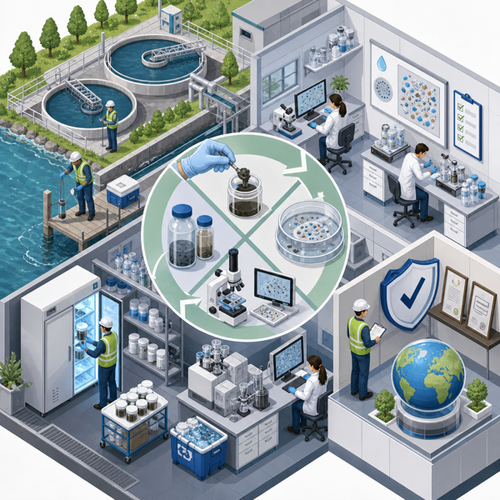
In today's world, water quality management faces new and escalating challenges, from emerging contaminants like microplastics to the technical demands of precise environmental measurement. The implementation of robust standards has become not only a regulatory expectation but a powerful driver for better business performance and environmental stewardship. In this article, we’ll explore four essential international standards governing water sampling, sludge and sediment preservation, microplastic detection, and measurement uncertainty. These standards—ISO 11352:2025, ISO 16094-2:2025, ISO 5667-15:2026, and ISO 5667-27:2025—are critical for any modern organization seeking to remain competitive, safe, and sustainable, particularly as water quality technologies evolve.
Overview / Introduction
Water quality standards are the backbone of reliable environmental monitoring and management. Whether it’s a water utility, an environmental laboratory, a manufacturing facility, or a research institute, adherence to industry-standard protocols ensures that sampling, analysis, and data reporting are universally trusted and comparable.
The rise of microplastics as a global pollutant, increasing public scrutiny, and regulatory focus make the correct implementation of these standards more important than ever. By following internationally recognized specifications, organizations can:
- Achieve consistent and reliable measurement results.
- Minimize risks of contamination and data bias.
- Scale technical solutions across regions and regulatory frameworks.
- Enhance security, safety, and environmental performance.
In this article, we break down what each standard covers, who should apply it, and how following these best practices can enhance day-to-day business operations and long-term sustainability.
Detailed Standards Coverage
ISO 11352:2025 - Measurement Uncertainty in Water Analysis
Water quality — Estimation of measurement uncertainty based on validation and quality control data
Measuring water quality accurately is fundamental to environmental protection and public health. But every measurement has a degree of uncertainty—an unavoidable margin of error that, if left unaccounted for, can undermine trust in lab results.
ISO 11352:2025 provides a systematic approach to estimate measurement uncertainty when analyzing chemical and physicochemical properties of water. The standard helps laboratories use validation and internal/external quality control data to determine the uncertainty associated with their test results. Designed for single laboratories and broadly applicable to other chemical analyses, it aligns with the principles of ISO/IEC Guide 98-3 and international best practices.
What It Covers
- Procedures for estimating measurement uncertainty in water analysis
- Use of statistical data from method validation and routine quality control
- Calculation techniques for combining random and systematic errors (precision and bias)
- Guidance on reporting uncertainty in test reports
Who Needs It
- Environmental testing laboratories
- Utilities and water treatment plants
- Organizations subject to regulatory water quality monitoring
- Research institutions and consultancy firms
Practical Implementation
Laboratories use real-world performance data—such as reproducibility and reference material testing—to quantify uncertainty. This standard empowers labs to express confidence in results, meet accreditation requirements (ISO/IEC 17025), and assure clients of data integrity.
Notable Features
- Step-by-step principles based on established validation approaches (Nordtest, QUAM, Eurolab TR 1)
- Focus on quantifying uncertainty only for quantitative (not qualitative) procedures
- Easily adaptable to a wide range of chemical analyses beyond water
Key highlights:
- Comprehensive statistical methodology for uncertainty estimation
- Supports regulatory and accreditation compliance
- Impacts quality assurance, risk assessment, and decision-making
Access the full standard:View ISO 11352:2025 on iTeh Standards
ISO 16094-2:2025 - Vibrational Spectroscopy Methods for Microplastics in Water
Water quality — Analysis of microplastic in water — Part 2: Vibrational spectroscopy methods for waters with low content of suspended solids including drinking water
The rapid growth in microplastics research highlights the need for highly reliable, repeatable analysis. Microplastics—tiny synthetic particles between 1 μm and 5 mm—pose risks to ecosystems, drinking water safety, and human health. Accurate identification and quantification support risk management, regulatory compliance, and environmental remediation efforts.
ISO 16094-2:2025 sets the standard for microplastic analysis in water with a low content of suspended solids, including drinking water and ultrapure water. The standard describes how to use microscopy techniques with vibrational spectroscopy (e.g. Raman, Infrared) to detect, count, and chemically classify individual microplastic particles.
What It Covers
- Procedures for detecting and sizing individual microplastic particles (1–5000 μm)
- Chemical identification of common plastic polymers (PE, PP, PET, etc.)
- Spectroscopic analysis workflows, equipment requirements, and data interpretation
- Guidance on avoiding sample contamination
- Reporting and documentation requirements
Who Needs It
- Drinking water suppliers and facilities
- Environmental laboratories specializing in microplastics
- Regulatory authorities
- Research and public health organizations
Practical Implementation
Laboratories employ sensitive, calibrated microscopes linked with spectroscopy systems to identify microplastics in samples with very low background solids. The protocol improves consistency, enables automated particle processing, and removes much of the subjectivity from microplastics detection.
Notable Features
- Applicable to very low-organic and low-suspended-matter waters
- Addresses automatic particle identification and analysis
- Details critical controls to minimize contamination and false positives
- Extensible for identification of other particulate matter like minerals or pigments
Key highlights:
- Enables reliable microplastic monitoring in drinking and ultrapure waters
- Foundational for emerging regulations regarding microplastics contamination
- Supports large-scale and automated particle analysis
Access the full standard:View ISO 16094-2:2025 on iTeh Standards
ISO 5667-15:2026 - Sludge, Sediment, and Suspended Matter Preservation
Water quality — Sampling — Part 15: Preservation and handling of samples of sludge, sediment and suspended matter
Correctly preserving and handling samples of sludge, sediment, and suspended matter is fundamental for obtaining meaningful analytical results. Chemical, biological, and physical changes can occur rapidly once a sample is collected, potentially leading to inaccurate or non-representative results.
ISO 5667-15:2026 specifies detailed requirements for the preservation, handling, and storage of samples destined for chemical, physical, radiochemical, hydrobiological, or microbiological analysis. The standard covers sewage sludge, waterworks sludge, marine and freshwater sediments, and suspended matter.
What It Covers
- Procedures and materials for effective sample preservation
- Handling best practices to maintain integrity and representativeness
- Guidelines for containers, labeling, chain of custody, and documentation
- Maximum storage times and recommended conditions for different analyses (chemical, physical, etc.)
Who Needs It
- Laboratories and field teams conducting water quality assessments
- Wastewater facilities and utilities
- Environmental monitoring agencies
- Contractors and consultants managing site assessments
Practical Implementation
Following the standard’s recommendations, practitioners immediately apply preservation techniques at the sampling site, select proper containers, and follow strict labeling and transport protocols. The guidance helps organizations avoid sample degradation and maintain regulatory compliance.
Notable Features
- Applies across various matrices and intended analyses
- Aligned with international preservation validation research
- Includes informative tables with validated storage conditions and best practices
Key highlights:
- Minimizes risk of sample alteration and loss of representativeness
- Builds credibility and traceability into environmental sampling
- Supports multi-disciplinary examinations (chemical, biological, etc.)
Access the full standard:View ISO 5667-15:2026 on iTeh Standards
ISO 5667-27:2025 - Microplastic Sampling Guidance
Water quality — Sampling — Part 27: Guidance on sampling for microplastics in water
The increasing recognition of microplastics as ubiquitous water contaminants has generated a crucial need for harmonized sampling methods. Without standardized procedures, results from different studies, regions, and laboratories are difficult to compare or reconcile.
ISO 5667-27:2025 provides basic but comprehensive methodologies for sampling suspended microplastics in all types of water—domestic, freshwater, seawater, treated and untreated wastewater. The standard includes both grab and net sampling methods, along with cascade filtration for different levels of suspended solids.
What It Covers
- Definitions and major types of microplastics and sample matrices
- Step-by-step procedures for grab sampling, cascade filtration, and net sampling
- Suitability for water samples with low, medium, and high suspended solid content
- Recommendations on sample handling, container materials, blank controls, and documentation
Who Needs It
- Water sampling technicians and laboratories
- Utilities and water treatment operations
- National and regional regulators
- Environmental research and compliance organizations
Practical Implementation
Technicians follow standardized protocols to reduce sampling errors, avoid cross-contamination, and ensure that sampled microplastics accurately represent the water body studied. The standard provides clarity for sample volume, container selection, field blanks, and cascade filtration setups.
Notable Features
- Addresses challenges unique to sampling microplastics (e.g., cross-contamination, non-uniform distribution)
- Accommodates a range of water types and suspended solid loads
- Designed for compatibility with subsequent characterization and analysis methods
Key highlights:
- Essential for reliable microplastic monitoring and research
- Enables meaningful environmental risk assessment and regulatory response
- Reduces bias, variability, and false positive/negative detections
Access the full standard:View ISO 5667-27:2025 on iTeh Standards
Industry Impact & Compliance
The adoption of these standards delivers far-reaching benefits across environmental management, regulatory compliance, and business outcomes:
- Enhances Data Reliability: Standardized procedures mean data can be trusted for regulatory reporting, research, and decision-making. This reduces disputes and ensures fair comparison across regions and time.
- Supports Legal and Regulatory Compliance: Many jurisdictions require adherence to ISO and related standards. Non-compliance risks fines, shutdowns, and reputational damage.
- Facilitates International Collaboration: Consistent standards allow for meaningful data exchange between countries, agencies, and within multinational organizations.
- Reduces Risk of Measurement Bias and Error: Structured methods reduce sampling and analysis errors that could lead to incorrect decisions or missed contamination events.
- Enables Novel Technologies: New water quality monitoring and treatment technologies rely on precise data. Robust standards enable their accurate deployment and scaling.
- Drives Productivity and Quality Assurance: Streamlined, validated protocols cut redundant work, speed up operations, and empower staff with clear guidance.
Conversely, ignoring these standards increases the risks of data rejection, regulatory non-compliance, and the failure to detect critical environmental issues—any of which can harm public health and business continuity.
Implementation Guidance
Implementing water sampling, preservation, microplastics measurement, and uncertainty estimation standards may appear daunting, but with the right approach, organizations can transform compliance into operational excellence.
Best Practices for Implementation:
Staff Training: Ensure all personnel involved in sampling and analysis are thoroughly trained on current versions of the standards. Encourage a culture of continual learning, given the rapid evolution of techniques and regulatory requirements.
Documentation and Traceability: Maintain complete records for each sampling event, including sample IDs, locations, preservation details, chain of custody logs, and analytical results. Good documentation is non-negotiable for audits and robust quality management.
Invest in Proper Equipment: Use laboratory and sampling equipment that meets or exceeds the technical requirements described in the standards (e.g., certified containers, spectroscopic analysis tools).
Routine Quality Control: Integrate regular quality control testing—use field blanks, reference materials, and interlaboratory comparisons to identify errors and maintain credibility.
Continuous Process Optimization: Review standard revisions, monitor field/lab method performance, and update in-house procedures to match the latest best practices and regulatory updates.
Leverage Accreditation: Consider laboratory accreditation (e.g., ISO/IEC 17025) as both a compliance tool and a differentiator when offering services or partnering internationally.
Stakeholder Engagement: Involve regulatory authorities, clients, and the local community in discussions of water quality monitoring outcomes. Transparency boosts trust and supports collaborative problem-solving.
Resources for Organizations:
- Full text of current standards (see iTeh Standards links above)
- Training workshops or e-learning modules in water sampling and analysis
- Professional networks and working groups (ISO, CEN, regional water authorities)
- Laboratory accreditation bodies and consultancy services
Conclusion / Next Steps
Water quality management and microplastics analysis are moving targets—subject to rapid changes in scientific understanding, public expectations, and technology. The four standards detailed in this guide—ISO 11352:2025, ISO 16094-2:2025, ISO 5667-15:2026, and ISO 5667-27:2025—provide proven frameworks for tackling measurement uncertainty, preserving sludge and sediment integrity, sampling for microplastics, and conducting sophisticated particle analysis.
Organizations embracing these standards gain reliable results, operational efficiency, and regulatory peace of mind. As water quality regulations and monitoring needs become stricter and more nuanced, implementing and staying current with these standards will be a key differentiator for businesses, public authorities, and analytic laboratories.
To keep your operations ahead of the curve:
- Regularly review and update your protocols to match the latest international standards.
- Invest in team training and continuous quality improvement.
- Explore the full text and supporting materials for each standard featured (see above for direct links).
The future of water management is standards-driven, transparent, and technologically advanced. Stay informed and empowered by leveraging the best the international standards community has to offer.
Categories
- Latest News
- New Arrivals
- Generalities
- Services and Management
- Natural Sciences
- Health Care
- Environment
- Metrology and Measurement
- Testing
- Mechanical Systems
- Fluid Systems
- Manufacturing
- Energy and Heat
- Electrical Engineering
- Electronics
- Telecommunications
- Information Technology
- Image Technology
- Precision Mechanics
- Road Vehicles
- Railway Engineering
- Shipbuilding
- Aircraft and Space
- Materials Handling
- Packaging
- Textile and Leather
- Clothing
- Agriculture
- Food technology
- Chemical Technology
- Mining and Minerals
- Petroleum
- Metallurgy
- Wood technology
- Glass and Ceramics
- Rubber and Plastics
- Paper Technology
- Paint Industries
- Construction
- Civil Engineering
- Military Engineering
- Entertainment