


August 2026 Standards Update: Key Test Methods for Fluid System Components
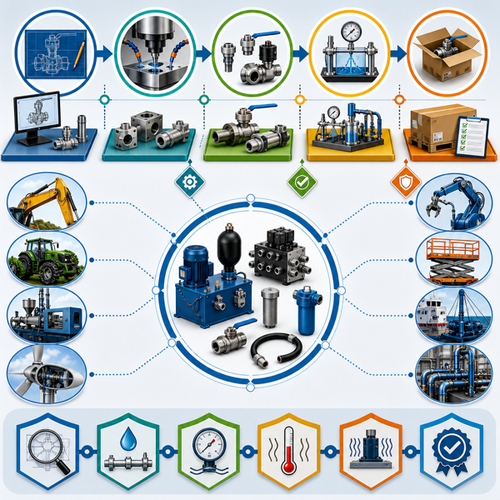
In August 2026, two significant international standards for fluid systems and allied components were released, delivering much-anticipated updates to testing protocols and product performance evaluation. These standards—one for industrial intelligent valve positioners, the other for household electrical air cleaning appliances—establish comprehensive methodologies to ensure safer, more reliable systems, and improved lifecycle performance. Every manufacturer, laboratory, and engineering team working with process control equipment or air purification should be aware of the latest requirements to sustain compliance and competitive advantage.
Overview
Fluid systems and components are critical across diverse sectors, including manufacturing, process automation, energy, and indoor air quality management. International standards in this field are designed to promote interoperable, dependable, and safe system performance, while supporting efficiency and sustainability. By adopting the latest standards, organizations can enhance their quality assurance processes, reduce operational risks, and align their systems with global benchmarks.
In this article, you'll discover:
- The scope and application of the newly published August 2026 standards
- Key technical requirements and updates
- How these standards affect design, testing, and compliance
- Practical strategies for adoption and best practices for implementation
Detailed Standards Coverage
IEC 61514-2:2026 - Test Methods for Intelligent Valve Positioners
Industrial process control systems — Methods of evaluating the performance of valve positioners with pneumatic outputs — Part 2: Test Methods for intelligent positioners mounted on an actuator valve assembly
This comprehensive standard provides the latest framework for evaluating the performance of single-acting and double-acting intelligent valve positioners in industrial process control applications. Emphasizing both static and dynamic performance, IEC 61514-2:2026 covers devices utilizing digital techniques for data processing, bi-directional communication (such as Fieldbus), and advanced self-diagnostic capabilities.
The standard specifies:
- Design review procedures, including hardware and software architecture
- Structured checklists for evaluating physical and functional features
- Rigorous test methods to assess performance under varying environmental and operational conditions
- Detailed requirements for mounting, calibration, and configuration
- Methods for verifying cyber-security measures and reporting performance
Scope and Application
IEC 61514-2:2026 is applicable to:
- Intelligent pneumatic valve positioners that receive analogue (per IEC 60381 series) and/or digital control signals
- Both single-acting and double-acting actuator/valve assemblies
- Non-intelligent, microprocessor-based positioners (performance evaluation is limited accordingly)
Target organizations: Industrial automation manufacturers, testing laboratories, and process plant operators responsible for instrumentation and control system reliability.
Key Technical Requirements & Updates
Key changes and requirements in this edition include:
- Reference update: All references now point to IEC 61514:2026 and IEC 62828-1:2026 for influence quantity measurement
- Cyber-security: New clauses (4.2.7 and 4.2.9) add requirements for cyber-security, reflecting the increasing connectivity and smart capabilities of positioners
- Evaluation process: Stepwise procedures for design review (hardware identification, sensors, data processing, communication interfaces)
- Performance testing: Standardized mounting and configuration protocols, influence quantity testing, environmental resilience, and diagnostics
- Fail-safe behaviour and dependability: Specification of safety behaviours under various fault and failure scenarios
Practical Implications
Adopting IEC 61514-2:2026 gives instrument suppliers and end-users:
- Concrete protocols for reporting and evidence generation
- Transparent, globally recognized performance benchmarks
- Structured approaches for integrating intelligent diagnostics and cyber-resilience
- Decision frameworks for repair strategies, redundancy, and preventive maintenance
Key highlights:
- Comprehensive checklist for intelligent positioner functionality, configuration, and diagnostics
- Coverage of Fieldbus and other communication interfaces
- Introduction of cyber-security testing and reporting
Access the full standard:View IEC 61514-2:2026 on iTeh Standards
IEC TS 63086-2-5:2026 - Particle Loading Test for Air Cleaners
Household and similar electrical air cleaning appliances — Methods for measuring the performance — Part 2-5: Particular requirements for determination of the performance change by loading with particles
This technical specification defines standardized methods for assessing how exposure to particles affects the performance of household or similar air cleaning appliances. Manufacturers of air purifiers must understand how their products’ performance changes when filters and air-cleaning modules are loaded over time—crucial for safety, efficacy, and honest communication to end-users.
Scope and Application
IEC TS 63086-2-5:2026 applies to:
- Electrically powered household and similar air cleaning appliances
- Evaluation of performance drop using particle loading (i.e., build-up on filters)
Testing is designed to allow fair, repeatable comparison across products under controlled conditions, although results may not mirror all real-world situations due to variability in household particle types and concentrations.
Target organizations: Appliance manufacturers, filtration material suppliers, testing labs, indoor air quality consultants.
Key Technical Requirements & Testing Protocol
This specification covers:
- Definitive methods for applying and measuring particle loads (aerosols, dust, cigarette smoke, salt, or specified mixes)
- Use of precision equipment such as optical particle counters and analytical balances
- Steps for determining the Cumulative Clean Mass (CCM)—the filter mass loading at which the Clean Air Delivery Rate (CADR) drops by 50%
- Calculation protocols and interpolation steps for accurate reporting
- Requirements for clear documentation of test conditions, aerosol types, and results
Practical Implications
IEC TS 63086-2-5:2026 enables product developers to:
- Provide valid, comparable data for device certification and consumer labeling
- Better estimate filter replacement intervals and overall air cleaner lifecycle
- Innovate in filter technology based on robust, reproducible performance metrics
- Ensure readiness for regulatory and retail requirements in markets favoring standardized test results
Key highlights:
- Detailed procedures for calculating cumulative clean mass (CCM)
- Flexible protocols for different aerosol types (salt, dust, smoke)
- Guidance for reporting and documenting all influencing test variables
Access the full standard:View IEC TS 63086-2-5:2026 on iTeh Standards
Industry Impact & Compliance
Adhering to these new standards directly influences product development, market acceptance, and operational safety. For industrial automation sectors, IEC 61514-2:2026 helps ensure that smart valve positioners meet demanding operational and cyber-security requirements, reducing lifecycle risk and boosting reliability. For consumer appliances and indoor air quality, IEC TS 63086-2-5:2026 provides transparent benchmarks for performance consistency, helping organizations differentiate themselves via scientifically validated claims.
Compliance Considerations
- Timeline: Organizations should begin transition planning immediately, as new procurements and tenders may specify compliance within 12-24 months
- Testing and Documentation: Early engagement with accredited laboratories is advisable to verify and document conformity
- Risk Management: Non-compliance can result in market access limitations, increased liability, and the risk of process failures or customer complaints
Benefits
- Enhanced performance visibility and product comparability
- Streamlined global market access and reduced compliance complexity
- Improved resilience against cyber incidents (for process automation)
- Better predictive maintenance scheduling and lifecycle management
Technical Insights
Common Requirements
- Both standards emphasize reproducible test conditions, robust reporting, and documentation clarity
- Attention to the impact of operational and environmental factors is central in both domains—be it actuator friction and supply pressure or filter cake buildup
Implementation Best Practices
- Gap Analysis: Review current protocols against the latest standards to identify discrepancies
- Training: Educate engineering and quality teams on new procedures and record-keeping requirements
- Supplier Engagement: Work closely with technology and filter material vendors to ensure upstream compliance
- Accredited Testing: Partner with certified laboratories for unbiased results
- Continuous Monitoring: Incorporate feedback from testing into product design cycles and maintenance schedules
Testing and Certification
- Utilize manufacturer-provided checklists and design documentation for evaluation
- Conduct both in-house and third-party performance testing under reference conditions
- Maintain comprehensive, auditable records for each device or system evaluated
- Consider cyber-security requirements not only for device communication, but also for data storage and remote access tools
Conclusion and Next Steps
The August 2026 publication of IEC 61514-2 and IEC TS 63086-2-5 marks a significant advance in test methodologies for both industrial and household fluid system components. To remain competitive and compliant, organizations are encouraged to:
- Obtain and thoroughly review the full texts of the new standards
- Update internal processes to align with the latest testing and reporting regimes
- Engage with accredited labs early for conformity assessments
- Stay alert for related updates in supporting standards
By proactively integrating these requirements, industry players ensure robust product performance, regulatory alignment, and enhanced end-user trust.
Stay informed and explore the full suite of standards at iTeh Standards to maintain your edge in reliability, quality, and compliance.
Categories
- Latest News
- New Arrivals
- Generalities
- Services and Management
- Natural Sciences
- Health Care
- Environment
- Metrology and Measurement
- Testing
- Mechanical Systems
- Fluid Systems
- Manufacturing
- Energy and Heat
- Electrical Engineering
- Electronics
- Telecommunications
- Information Technology
- Image Technology
- Precision Mechanics
- Road Vehicles
- Railway Engineering
- Shipbuilding
- Aircraft and Space
- Materials Handling
- Packaging
- Textile and Leather
- Clothing
- Agriculture
- Food technology
- Chemical Technology
- Mining and Minerals
- Petroleum
- Metallurgy
- Wood technology
- Glass and Ceramics
- Rubber and Plastics
- Paper Technology
- Paint Industries
- Construction
- Civil Engineering
- Military Engineering
- Entertainment