

Whole Grain and Wheat Flour Quality Standards: Definition, Gluten, Dough Rheology & Mycotoxin Analysis
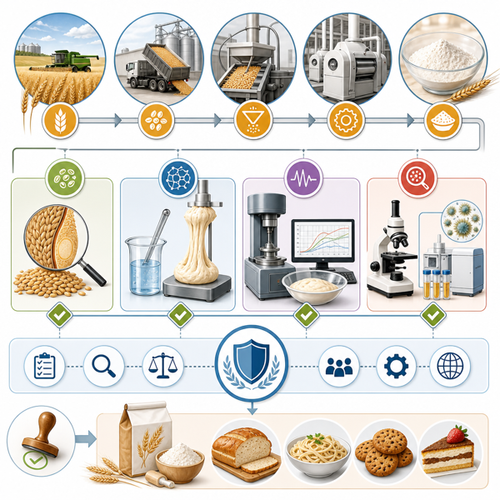
Whole Grain and Wheat Flour Quality Standards: Definition, Gluten, Dough Rheology & Mycotoxin Analysis
Ensuring the quality, safety, and marketability of whole grain and wheat flour products is more important today than ever before. With the rise of global supply chains, automated processing technologies, and growing consumer demand for wholesome food, businesses must implement consistent, internationally recognized standards. In this in-depth guide, we’ll explore four fundamental ISO standards that define what constitutes whole grain, outline gluten testing methods, detail dough rheological analysis, and specify best practices for detecting harmful mycotoxins. Whether you’re a food producer adapting to new technologies, a quality manager, or involved in food labeling and trade, mastering these food technology standards can help you boost productivity, food safety, compliance, and growth at scale.
Overview / Introduction
Whole grain and wheat flour products are core staples for billions worldwide, forming the foundation of bread, cereals, snacks, and numerous processed foods. Globalization, digitalization, and food innovation continually raise the bar for quality management, regulatory compliance, and transparency. Today’s stakeholders—consumers, food manufacturers, retailers, and regulators—demand robust proof that products are safe, nutritious, and truthfully labeled.
International standards in food technology, especially those published by ISO, serve as unified blueprints for:
- Defining product categories (e.g., what is “whole grain”?)
- Ensuring analytical methods are accurate, repeatable, and efficient
- Addressing risks like gluten inconsistencies or contamination with hazardous mycotoxins
- Guiding food labeling and product claims and supporting fair international trade
In this article, you’ll learn:
- The harmonized definition and criteria for whole grain as an ingredient
- State-of-the-art methods for gluten content testing in wheat and wheat flour
- How dough rheology is characterized and why it matters for baking
- How mycotoxin analysis keeps food safe and marketable
- Practical steps for implementation, compliance, and scaling your operations
Detailed Standards Coverage
ISO 20810:2026 - Whole Grain: Definition and Technical Criteria
Whole grain — Definition and technical criteria
This standard offers the first consensus-based, harmonized definition of whole grain as a food ingredient and describes technical specifications for labeling and claims on whole-grain foods made from cereals and selected pseudocereals. ISO 20810:2026 aims to resolve global variation and confusion by providing a clear framework for what constitutes “whole grain,” ensuring all market actors—from growers to retailers—operate with transparent, comparable criteria.
What This Standard Covers and Its Scope
ISO 20810:2026 specifies:
- A universal definition of whole grain after post-harvest/collection
- Technical criteria for what qualifies as whole grain (including reference to consensus scientific definitions)
- Requisites for whole-grain labeling and claims, valid for both B2B and B2C communication
- Requirements for all cereals and certain pseudocereals (like quinoa, buckwheat), not specific to one variety
- Guidance applicable throughout international trade, labelling, and supply chains
Key Requirements and Specifications
- Ingredient-level Definition: Whole grain is defined based on retention of all anatomical components (bran, germ, endosperm) after post-harvest processing
- Technical Criteria: Provides minimum requirements for physical integrity and processing methods permitted to retain “whole grain” status
- Labeling and Claims: Technical guidance for how much whole grain a food must contain to be labeled or claimed as such
- Communication: Applies to export, import, retail labelling, and B2B documents like specifications and contracts
Who Needs to Comply
- Food and beverage producers sourcing or selling whole grain ingredients
- Packaging and labeling teams designing consumer and trade-facing materials
- Supply chain and procurement managers involved in international grain trade
- Quality and compliance managers tracking adherence to global food claims policies
Practical Implications for Implementation
- Uniform criteria facilitate easier sourcing and trade
- Eliminates ambiguity, reducing legal risk in labeling and marketing
- Supports processing and automation by standardizing accept/reject decisions for incoming raw material
- Supports fair competition by preventing misleading whole grain claims
Notable Features
- Applicable to all organization sizes, from SMEs to multinationals
- Scientific basis drawn from international consensus bodies (ICC, Cereals & Grains Association, Health Grain Forum)
- Emphasizes transparency for global supply chains and exports
Key highlights:
- Provides a single, internationally accepted definition of whole grain post-harvest
- Sets minimum technical and labeling/claiming criteria for all grain-based foods
- Supports global market access, food labeling integrity, and fair trade
Access the full standard:View ISO 20810:2026 on iTeh Standards
ISO 21415-2:2026 - Gluten Content in Wheat and Wheat Flour (Wet Gluten, Gluten Index)
Wheat and wheat flour — Gluten content — Part 2: Determination of wet gluten and gluten index by mechanical means
Gluten content dramatically influences the baking quality, dough behavior, and final texture of wheat-based goods. ISO 21415-2:2026 details a precise mechanical procedure for determining both the amount of wet gluten and the gluten index in wheat flours made from soft and durum wheat varieties. By ensuring accuracy and reproducibility across global laboratories and production sites, it allows for tighter quality assurance and helps food companies standardize input specifications.
What This Standard Covers and Its Scope
- Defines the laboratory method for measuring wet gluten content and gluten index using automatic/mechanical equipment (such as a Glutomatic)
- Applies directly to wheat flours and—if milled appropriately—to whole wheat samples
- Aligns with established laboratory methods (ICC 137/1, ICC 155, AACC 38-12.02)
Key Requirements and Specifications
- Sampling & Preparation: Representative, homogenized flour or ground wheat samples. Controlled temperature during sample and solution preparation (22°C ± 2°C)
- Reagent Use: Standardized sodium chloride (NaCl) solution
- Automatic Procedures: Paste preparation, washing, centrifugation to extract wet gluten
- Calculation: Wet gluten measured as the mass of residue after centrifugation. Gluten index calculated as the percentage of wet gluten remaining on a sieve after further centrifugation
- Reporting: Must state the technique used (manual vs. mechanical), especially for high-gluten flours
Who Needs to Comply
- Wheat millers and flour manufacturers
- Baking and food ingredient companies monitoring flour quality
- Analytical laboratories and grain grading facilities
- R&D teams optimizing recipes for product performance (bread, pasta, etc.)
Practical Implications for Implementation
- Enhances consistency and repeatability in testing across facilities
- Facilitates process control in automated milling and baking operations
- Supports precise product formulation and specification drafting
Notable Features
- Instrument-based method reduces subjective operator bias
- Gluten index (strength/quality) measured alongside wet gluten content (quantity)
- Suitable for ingredient qualifications, process verification, and product certification
Key highlights:
- Enables objective and reliable gluten content assessment using validated, harmonized methods
- Used for both incoming raw material checks and end-product QA/QC
- Essential for compliance in regulated and export-driven markets
Access the full standard:View ISO 21415-2:2026 on iTeh Standards
ISO 23719:2025 - Determination of 17 Mycotoxins in Cereals and Cereal Products (UHPLC-MS/MS)
Cereals and cereal products — Determination of 17 mycotoxins by ultra-high-performance liquid chromatography and tandem mass spectrometry method (UHPLC-MS/MS)
Food safety professionals and grain traders alike are increasingly concerned with mycotoxin contamination—a significant food safety, health, and regulatory risk. ISO 23719:2025 sets out an advanced, sensitive chemical method using ultra-high-performance liquid chromatography and tandem mass spectrometry (UHPLC-MS/MS) to detect and quantify 17 different mycotoxins, including aflatoxins, ochratoxin, fumonisins, and more. This robust multi-mycotoxin method improves both regulatory compliance and public health protection.
What This Standard Covers and Its Scope
- Applies to wheat, maize, rice and their products, and (where validated) to other products such as nuts
- Specifies procedures for sampling, sample preparation, extraction (using acetonitrile-water-acetic acid mix), clean-up, and instrumental analysis/quantification
- Includes coverage of key mycotoxins: aflatoxins B1, B2, G1, G2; deoxynivalenol; nivalenol; zearalenone; ochratoxin A; fumonisins B1, B2, B3; T-2 toxin; HT-2 toxin; sterigmatocystin, and others
- Outlines use of isotope-labelled internal standards for accuracy
Key Requirements and Specifications
- Representative Sampling: Follows ISO sampling references for obtaining testable lab samples
- Extraction and Clean-up: Reagent-grade solvents; methods to minimize cross-contamination and analyte loss
- UHPLC-MS/MS Analysis: Equipment settings, calibration, detection limits, and validation protocols for reproducibility
- Quantitative Reporting: Clear calculation methods and reporting format
- Controls and Blanks: Positive controls and blanks mandatory for every batch
Who Needs to Comply
- Grain processing and milling plants exporting to regions with strict mycotoxin limits (EU, Asia, Americas)
- Food safety testing laboratories and service providers
- Food import/export compliance teams
- Risk management teams in food retail and distribution chains
Practical Implications for Implementation
- Reduces recall and regulatory enforcement risks by early identification of contamination
- Ensures product safety for end-consumers and brand reputation
- Facilitates rapid incident response and root cause analysis in automated QA environments
Notable Features
- Simultaneous detection of multiple mycotoxins saves time, reduces testing costs, and limits sample size
- Harmonized procedure supports international recognition of test results
- Supports due diligence and food safety certifications (HACCP, FSSC 22000, etc.)
Key highlights:
- Detects up to 17 major mycotoxins in cereals using a single, harmonized protocol
- Speeds up response to food safety incidents via reliable quantitative analysis
- Empowers both routine and investigatory food safety monitoring
Access the full standard:View ISO 23719:2025 on iTeh Standards
ISO 5530-1:2026 - Wheat Flour: Dough Water Absorption & Rheological Properties (Farinograph)
Wheat flour — Physical characteristics of doughs — Part 1: Determination of water absorption and rheological properties using a farinograph
The dough’s water absorption and its rheological (flow and deformation) properties significantly impact bread quality, yield, energy usage, and overall process efficiency. ISO 5530-1:2026 outlines the official method using a farinograph—a standardized lab instrument—to measure the mixing behavior of wheat flour doughs, including their water absorption, development time, stability, and softness.
What This Standard Covers and Its Scope
- Applies to experimental and commercial wheat flours
- Provides procedures for both constant-flour-mass and constant-dough-mass methods
- Describes measurement and graphical evaluation using the farinograph (e.g., farinogram)
Key Requirements and Specifications
- Defined Measurement Conditions: Temperature control (30°C ± 0.2°C), moisture content adjustment, and defined mixing equipment
- Water Absorption: Volume of water needed to reach 500 farinograph units (FU) consistency
- Dough Development Time: The time needed to reach maximum consistency after beginning water addition
- Stability: Resistance to overmixing; duration over which dough maintains consistency
- Degree of Softening & Quality Number: Key indicators of dough tolerance, extensibility, and baking performance
Who Needs to Comply
- Flour mills and commercial bakers focused on “bake performance” and product quality
- R&D and product development teams optimizing dough recipes for automated production
- Technical sales and quality assurance professionals in trade and contract milling, bakery supply chains, and purchasing
Practical Implications for Implementation
- Enables specification and acceptance testing of flours for specific end uses (e.g., bread, pastry, noodles)
- Supports process control for automated mixing and baking lines
- Empowers root cause analysis in troubleshooting texture or yield issues
Notable Features
- Official graphical output (farinogram) standardizes communication among suppliers and buyers
- Quality number and other indices match global purchase and product specs
- Directly related to process scalability and reproducibility
Key highlights:
- Allows for objective, reproducible assessment of flour suitability for various applications
- Standardizes flour evaluation and acceptance testing globally
- Direct link between laboratory and large-scale (industrial) process control
Access the full standard:View ISO 5530-1:2026 on iTeh Standards
Industry Impact & Compliance
Adherence to these international standards delivers significant operational, economic, and compliance advantages to food businesses—particularly those rapidly adopting new automated and digital technologies in manufacturing or expanding into global markets.
How These Standards Affect Businesses
- Quality Assurance: Enables comparability across suppliers, facilities, and countries—critical for centralized QA/QC and “right first time” production
- Efficiency Gains: Uniform test methods streamline process setup, validation, and troubleshooting—minimizing downtimes and reducing waste
- Consumer & Regulatory Trust: Consistency in labeling and claims, and harmonized safety testing, reduces risk of brand damage, recalls, or regulatory actions
- Market Access: Internationally harmonized criteria are often prerequisites for access to premium markets or retailers and underpin certifications (ISO 22000, FSSC 22000, BRCGS)
Compliance Considerations
- Must maintain up-to-date procedural documentation and training per ISO protocols
- Sampling and test equipment require routine verification and calibration
- Results should be traceable and suitable for third-party audit or customer review
- Data/results from validated methods are recognized by authorities and major customers globally
Benefits of Adopting These Standards
- Increased Productivity: Process automation is easier with standardized raw material assessment
- Scalability: Enables seamless scale-up from lab to production without inconsistencies
- Food Safety: Early detection of contamination or specification outliers
- Transparency: Clear, objective communication between buyers, sellers, and regulators
- Risk Mitigation: Reduces the impact of product recalls, regulatory fines, or withdrawal from markets
Risks of Non-Compliance
- Rejection or devaluation of shipments in international trade
- Legal action for mislabeling or food safety incidents
- Process inefficiencies, increased waste, batch failures, and consumer complaints
- Loss of access to certification schemes and premium market segments
Implementation Guidance
Common Implementation Approaches
- Gap Assessment: Review current practices, compare them to the standards’ criteria, and identify gaps
- Standard Operating Procedures (SOPs): Document and train staff on new or revised SOPs based on ISO methodology
- Instrumentation & Equipment: Invest in or calibrate the recommended analytical instruments (farinograph, UHPLC-MS/MS, gluten testing units)
- Sampling and Training: Ensure representative sampling and laboratory staff are trained per ISO recommendations
- Traceability Systems: Log testing data, sample metadata, and labelling decisions for audit-readiness
- Internal Audits and Calibration: Schedule periodic internal reviews and recalibrations to guarantee ongoing compliance
- Third-Party Certification: Consider certification for facility food safety management systems that incorporate these ISO technical requirements
Best Practices for Adopting These Standards
- Regular Training: Cross-train QA/QC teams and production staff on the requirements and rationale of each standard
- Collaborative Approach: Work with suppliers, customers, and testing laboratories to harmonize data, interpretations, and acceptability criteria
- Continuous Improvement: Use deviation or non-conformity trends for process improvement, recipe reformulation, or supplier development initiatives
- Digital Integration: Integrate testing protocols and SOPs into digital manufacturing execution systems (MES), LIMS, and automated reporting for real-time decision-making at scale
- Participation in Proficiency Testing: Engage in interlaboratory proficiency testing as referenced within ISO standards to benchmark and verify method reliability
Resources for Organizations
- iTeh Standards: Central portal for acquiring latest versions of relevant ISO standards and related documents
- Training Providers: Accredited organizations and universities offer food technology, analytical method, and standards compliance training
- Laboratory Accreditation Bodies: For third-party method validation and certification (ISO/IEC 17025)
- Industry Groups: Such as the Whole Grain Initiative, ICC, and trade associations, offer best practice forums and networking
Conclusion / Next Steps
The stricter demands of today’s complex, global, and increasingly automated food systems make the adoption of harmonized standards for whole grain, wheat flour, gluten, dough rheology, and mycotoxin analysis absolutely essential. By applying ISO 20810:2026, ISO 21415-2:2026, ISO 23719:2025, and ISO 5530-1:2026, food businesses gain not only regulatory and market access advantages, but also scalable, secure, and high-quality production that meets the needs and expectations of modern consumers.
Key Takeaways
- A single, harmonized definition of whole grain underpins labeling integrity and fair trade
- Robust gluten and dough testing enables recipe optimization and efficient use of technology
- Fast, accurate mycotoxin testing protects both public health and brand reputation
- International standards foster productivity, food safety, security, and growth—even as businesses embrace advanced manufacturing and technology.
Recommendations:
- Review your organization’s approaches against these standards
- Invest in staff training, equipment updates, and digital integration
- Collaborate with your suppliers and customers on quality improvements
- Use iTeh Standards (standards.iteh.ai) to access authoritative guidance and the latest documents
By championing quality and transparency with these cornerstone standards, your organization is poised to meet today’s—and tomorrow’s—demands with confidence.
Categories
- Latest News
- New Arrivals
- Generalities
- Services and Management
- Natural Sciences
- Health Care
- Environment
- Metrology and Measurement
- Testing
- Mechanical Systems
- Fluid Systems
- Manufacturing
- Energy and Heat
- Electrical Engineering
- Electronics
- Telecommunications
- Information Technology
- Image Technology
- Precision Mechanics
- Road Vehicles
- Railway Engineering
- Shipbuilding
- Aircraft and Space
- Materials Handling
- Packaging
- Textile and Leather
- Clothing
- Agriculture
- Food technology
- Chemical Technology
- Mining and Minerals
- Petroleum
- Metallurgy
- Wood technology
- Glass and Ceramics
- Rubber and Plastics
- Paper Technology
- Paint Industries
- Construction
- Civil Engineering
- Military Engineering
- Entertainment