


Modern Organization Management and Circularity: Key Standards for Productivity, Security, and Sustainable Growth
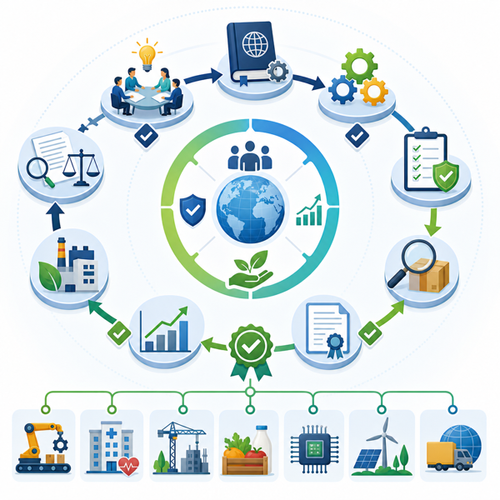
In an era where business complexity, technology adoption, and global expectations are rapidly increasing, international standards provide a critical foundation for company organization, management, and sustainability. For both public and private sectors, having well-structured approaches to managing projects, ensuring community resilience, demonstrating social responsibility, and embracing the circular economy is no longer optional—these are essential strategies for productivity, security, scalability, and future-proofing growth. This article explores four significant standards: ISO 21504:2022 on project, programme, and portfolio management guidance; ISO 22392:2020 for peer reviews in community resilience; ISO 26000:2010 focused on social responsibility; and ISO 59040:2025 outlining circular economy product circularity data sheets. Discover how these frameworks are transforming organizations worldwide, optimizing decision-making, building trust, and supporting businesses through technological change.
Overview / Introduction
Organizational management now finds itself at the intersection of technological innovation, rising stakeholder expectations, and the pressing need for resilience and sustainability. Global business environments demand both adaptability to new challenges and robust structures for managing assets, people, and societal impacts.
International standards in generalities—such as those for organization, management, security, and sustainability—enable companies to:
- Align operations with international best practices
- Integrate new technologies with minimal disruption
- Scale efficiently while managing risk
- Demonstrate reliability and responsibility to stakeholders
This article will provide:
- An accessible summary of key standards guiding modern organization and management
- Insights into requirements and practical implications of each standard
- Clear explanations of how these standards advance productivity, security, and scaling
Detailed Standards Coverage
ISO 21504:2022 - Portfolio Management Guidance
Project, programme and portfolio management — Guidance on portfolio management
What it covers: ISO 21504:2022 offers organizations comprehensive guidance on managing a portfolio of projects and programmes in alignment with strategic objectives. Rather than focusing on individual project or programme management, it looks at principles, frameworks, and processes for managing a holistic portfolio—ensuring projects and programmes collectively deliver value and strategic benefits.
Key requirements and specifications:
- Defines roles and responsibilities for effective portfolio governance
- Outlines portfolio structure and alignment with business strategies
- Addresses resources, capability constraints, and risk management
- Guides on stakeholder identification, engagement, and expectation management
- Details methods for selecting, prioritizing, and balancing portfolio components
- Emphasizes continuous optimization and visibility, ensuring portfolio performance reporting and improvement
Who should comply: Applicable to any organization—public or private, large or small—seeking structured portfolio management to drive strategy and performance. Especially powerful for tech adoption and transformation processes.
Practical implications: By adopting ISO 21504:2022, organizations gain a repeatable methodology for:
- Evaluating and aligning initiatives with core strategic goals
- Prioritizing investments to maximize ROI
- Optimizing use of people and resources
- Managing risk while scaling operations
- Establishing performance baselines for ongoing improvement
Notable features:
- Adaptable for any organizational size or sector
- Aligns with other program/project standards (e.g., ISO 21500, ISO 21502)
- Stresses the need for clear governance and stakeholder engagement
Key highlights:
- Promotes strategic alignment and purposeful decision-making
- Optimizes capabilities and resource allocation
- Enables transparent, objective portfolio performance evaluation
Access the full standard:View ISO 21504:2022 on iTeh Standards
ISO 22392:2020 - Guidelines for Community Resilience Peer Reviews
Security and resilience — Community resilience — Guidelines for conducting peer reviews
What it covers: This standard gives detailed guidance for organizations to design, organize, conduct, and learn from peer reviews focused on disaster risk reduction (DRR) and broader community resilience. It supports systematic assessment and enhancement of resilience-oriented policies and practices, providing a framework for mutual learning and continuous improvement.
Key requirements and specifications:
- Outlines the process for planning a peer review, from defining scope and objectives to selecting analysis areas
- Provides methods for data collection, stakeholder engagement, and analysis
- Details feedback and improvement processes, including both qualitative and quantitative impact assessments
- Offers templates and annexes to support evidence gathering and reviewer preparation
Who should comply: Relevant for any type, size, or structure of organization involved with disaster risk reduction, community safety, policy, and resilience-building—local, regional, and national governments, NGOs, public service providers, and private sector entities involved in community support and preparedness.
Practical implications:
- Enables robust self-assessment and benchmarking of preparedness and resilience
- Facilitates knowledge-sharing and best-practice learning across organizations and jurisdictions
- Supports compliance with frameworks like the Sendai Framework for Disaster Risk Reduction and UN Sustainable Development Goals (especially SDG 11)
Notable features:
- Focuses on voluntary, collaborative improvement (rather than audit or regulatory compliance)
- Encourages both hosts and reviewers to learn and improve processes
- Designed for before/after incidents, and adaptable to changing contexts and risks
Key highlights:
- Promotes cross-border and cross-sector cooperation in resilience
- Supports transparent, evidence-based improvement of DRR practices
- Builds trusted networks and relationships to enhance long-term community resilience
Access the full standard:View ISO 22392:2020 on iTeh Standards
ISO 26000:2010 - Guidance on Social Responsibility
Guidance on social responsibility
What it covers: ISO 26000:2010 is the flagship international guideline for integrating social responsibility into organizational governance, operations, and culture. It outlines concepts, definitions, principles, and actionable recommendations for meaningful, sustainable social responsibility—regardless of an organization’s size, sector, or location.
Key requirements and specifications:
- Introduces principles of accountability, transparency, ethical behavior, stakeholder interests, rule of law, international norms, and human rights
- Covers core subjects: organizational governance, human rights, labor practices, environment, fair operating practices, consumer issues, community involvement, and development
- Provides guidance on stakeholder identification and engagement
- Recommends strategies for communication, performance improvement, and integration of social responsibility in all processes
- Encourages organizations to go beyond legal compliance, recognizing societal and environmental impacts
Who should comply: All types of organizations—private sector, public sector, NGOs, large and small enterprises—looking to strengthen their social, ethical, environmental, and economic performance.
Practical implications:
- Delivers a common framework for social responsibility, cutting through local cultural or legal differences
- Improves reputation, trust, and legitimacy
- Attracts customers, partners, and employees seeking purpose-driven brands
- Reduces legal and reputational risk by systematizing responsible practices
- Enhances stakeholder trust and long-term value creation
Notable features:
- Not a certifiable management system standard (cannot be used for certification)
- Complements—not replaces—other social responsibility tools and initiatives
- Emphasizes tailored, context-sensitive application
Key highlights:
- Outlines seven core subjects spanning all aspects of responsible organizational behavior
- Integrates stakeholder engagement and communication as core components
- Advocates for continual review, improvement, and transparency
Access the full standard:View ISO 26000:2010 on iTeh Standards
ISO 59040:2025 - Circular Economy and Product Circularity Data Sheets
Circular economy — Product circularity data sheet
What it covers: This new standard defines a universal methodology for creating, managing, and exchanging a product circularity data sheet (PCDS), supporting the circular economy. It enables organizations to transparently share information about products’ circular attributes—such as recycled or renewable content, durability, recyclability, and end-of-life scenarios—within supply chains and to stakeholders, while safeguarding confidential information.
Key requirements and specifications:
- Specifies the format and content requirements for a PCDS template, ensuring consistent, interoperable data sharing
- Guidance on product identification, supplier information, product composition, hazardous substances, recycled/renewable material, energy and water use, lifespan, maintenance, upgradability, end-of-life treatment, and environmental benefits
- Defines processes for maintaining, revising, and sharing a PCDS
- Includes risk assessment, agreement structures, conformity assessment, incident management, and digital data management
- Ensures compliance facilitates digitalized product documentation, supporting traceability and supply chain transparency
Who should comply: Any organization (manufacturers, suppliers, or acquirers), regardless of size or sector, aiming to capture and communicate circularity data—especially critical for companies working to meet sustainability goals, regulatory requirements, or customer demand for greener products.
Practical implications:
- Simplifies compliance with circular economy and sustainability regulations
- Boosts credibility with customers, investors, and partners seeking sustainable choices
- Enhances supply chain resilience and transparency
- Supports digital transformation and resource efficiency
Notable features:
- Facilitates standardized product documentation and communication
- Intentionally scalable for both small businesses and multinationals
- Protects sensitive business information while enabling robust data exchange
Key highlights:
- Harmonizes product circularity information across sectors and supply chains
- Strengthens sustainability reporting and procurement processes
- Serves as a cornerstone for broader circular economy implementation
Access the full standard:View ISO 59040:2025 on iTeh Standards
Industry Impact & Compliance
Implementing these standards delivers substantial, tangible benefits for organizations, especially with the growing demand for digitalization, resilience, and sustainable practices. Key industry impacts include:
- Enhanced Productivity: Standardized frameworks streamline decision-making, reduce inefficiencies, and ensure consistent project, portfolio, and operational outcomes.
- Security and Resilience: Frameworks such as ISO 22392:2020 provide robust approaches to risk management and business continuity, essential in volatile times.
- Scalability: Repeatable governance and data processes (e.g., ISO 21504:2022 and ISO 59040:2025) enable businesses to grow and adopt new technologies quickly and safely.
- Stakeholder Trust and Reputation: Social responsibility guidance and transparent reporting (ISO 26000, ISO 59040) help organizations build legitimacy and maintain competitive advantage.
- Regulatory and Customer Compliance: Anticipating and fulfilling ever-higher benchmarks for environmental, social, and governance standards supports access to new markets and mitigates legal/reputational risks.
Risks of Non-compliance:
- Missed opportunities for digital transformation and smarter scaling
- Increased exposure to operational, legal, and reputational hazards
- Difficulty in attracting and retaining talent, customers, and investors
- Reduced resilience to disruptions or disasters
Implementation Guidance
Organizations aiming to implement one or more of these standards should consider the following best practices:
- Gap Analysis: Assess current processes against standard requirements to identify areas for improvement.
- Leadership Buy-in: Secure executive support to integrate standards into corporate governance and strategy
- Stakeholder Engagement: Involve all relevant stakeholders—both internal and external—for feedback, training, and continuous improvement
- Process Integration: Embed standard practices into daily operations, leveraging digital tools where possible
- Training and Resources: Offer regular training, workshops, and guidance materials to staff and managers to ensure standards are understood and followed
- Performance Monitoring: Establish indicators and reporting systems to track progress and measure the impact of standards implementation
- Continuous Review: Schedule regular reviews for potential updates, emerging risks, or new regulations
Additional implementation resources:
- Access detailed standards and supporting documents directly via iTeh Standards
- Seek training partners or consultants familiar with ISO integration
- Join professional or industry networks dedicated to portfolio management, resilience, social responsibility, or circular economy best practices
Conclusion / Next Steps
As companies adapt to new technologies and evolving societal expectations, international standards become invaluable for robust, responsible, and scalable management. ISO 21504:2022, ISO 22392:2020, ISO 26000:2010, and ISO 59040:2025 form a powerful foundation for:
- Strategic alignment and decision-making
- Resilience and risk management in uncertain environments
- Building stakeholder trust and societal legitimacy
- Achieving circular economy and sustainable growth goals
Recommendations for organizations:
- Evaluate which standards are most relevant for your operational context and digitalization priorities
- Begin with gap analyses and develop step-by-step implementation roadmaps
- Use standards as a springboard for future innovation, compliance, and global competitiveness
- Stay updated as standards evolve to address new challenges and stakeholder requirements
Ready to future-proof your organization? Explore the detailed specifications and implementation resources for these essential standards at iTeh Standards, and put your business on the path to secure, scalable, and socially responsible growth.
Categories
- Latest News
- New Arrivals
- Generalities
- Services and Management
- Natural Sciences
- Health Care
- Environment
- Metrology and Measurement
- Testing
- Mechanical Systems
- Fluid Systems
- Manufacturing
- Energy and Heat
- Electrical Engineering
- Electronics
- Telecommunications
- Information Technology
- Image Technology
- Precision Mechanics
- Road Vehicles
- Railway Engineering
- Shipbuilding
- Aircraft and Space
- Materials Handling
- Packaging
- Textile and Leather
- Clothing
- Agriculture
- Food technology
- Chemical Technology
- Mining and Minerals
- Petroleum
- Metallurgy
- Wood technology
- Glass and Ceramics
- Rubber and Plastics
- Paper Technology
- Paint Industries
- Construction
- Civil Engineering
- Military Engineering
- Entertainment