

Anaesthetic, Respiratory and Reanimation Equipment: Key Standards for Modern Healthcare
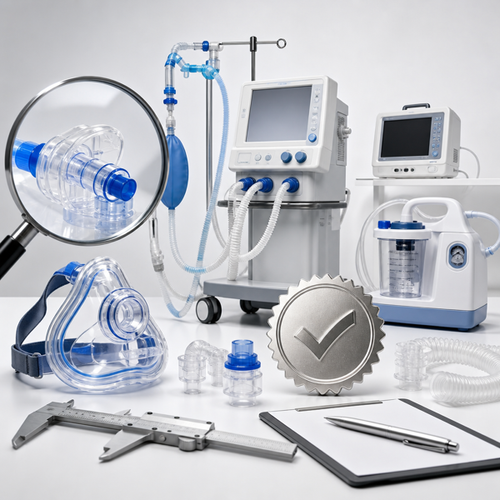
Anaesthetic, Respiratory and Reanimation Equipment: Key Standards for Modern Healthcare
Today’s healthcare industry faces the dual pressures of rapid technological innovation and unwavering demand for patient safety. For businesses, clinics, and manufacturers deploying cutting-edge anaesthetic and respiratory devices, compliance with international standards isn’t optional—it’s essential. This is especially true when integrating new healthcare technologies, where standards drive productivity, scalability, interoperability, and robust security.
This comprehensive guide explores four foundational standards in anaesthetic, respiratory and reanimation equipment—vital for any organization aiming to secure regulatory compliance, maintain best practices, and ensure the highest quality of care. These standards underpin not only device safety and essential performance, but also support seamless integration of smart technologies, enable faster scale-up, and protect patients and operators.
Overview / Introduction
Anaesthetic, respiratory, and reanimation equipment are the backbone of modern healthcare settings—critical in operating rooms, intensive care units, ambulances, home healthcare, and emergency medicine. The deployment and management of these devices comes with a range of complex challenges: patient safety, infection control, life support functionality, intelligent data management, and the need for ongoing reliability.
International standards issued by ISO and IEC set the requirements for device performance, safety and interoperability. They are particularly crucial as healthcare organizations increasingly deploy electronic and smart health solutions. Adopting and implementing these standards:
- Facilitates regulatory approval and market access
- Minimizes operational and security risks
- Supports seamless technology upgrades and scaling
- Increases device interoperability and patient safety
- Streamlines staff training and maintenance
In this guide, you’ll gain a clear understanding of four key standards shaping the healthcare environment, insights into industry impact, and practical tips for smooth implementation.
Detailed Standards Coverage
ISO 5364:2026 – Oropharyngeal Airways for Anaesthetic and Respiratory Equipment
Anaesthetic and respiratory equipment — Oropharyngeal airways
ISO 5364:2026 specifies the requirements for non-metallic oropharyngeal airways, vital devices for maintaining an open airway during anaesthesia and resuscitation. This standard details the design, material, safety, and marking requirements for oropharyngeal airways—the devices placed in the mouth to keep the airway open and prevent tongue-induced obstruction.
Scope and Key Requirements
- Applicability: Focuses on oropharyngeal airways made from polymers or rubbers, excluding metal versions and supralaryngeal airways (covered in ISO 11712).
- Safety: Mandates risk management to minimize trauma to teeth and soft tissues, ensuring patient safety in emergency and routine use.
- Materials and Design: Defines requirements for materials, dimensions, and colour-coded size designation for fast, error-free selection—distinctly beneficial in urgent situations.
- Cleaning, Disinfection, and Sterilization: Covers manufacturer instructions for safe and effective reprocessing, helping prevent cross-contamination.
- Marking: Specifies durable marking for device size and identification on both individual devices and bulk packaging.
- Performance Testing: Includes test methods for collapse resistance, lumen patency, and biocompatibility, enhancing reliability and trust.
Who Needs to Comply
Device manufacturers, hospital supply chains, and clinics providing emergency airway management must comply. Compliance applies to procurement teams, clinical engineering departments, and any organization responsible for specifying oropharyngeal airways.
Practical Implications
- Drives standardized procurement and training
- Reduces risk of incorrect device selection, especially in emergencies
- Supports audit and regulatory compliance for clinical facilities
Key highlights:
- Standardizes oropharyngeal airway design and identification for safety
- Mandates robust testing for performance and reliability
- Requires clear, durable marking and labelling for rapid clinical use
Access the full standard:View ISO 5364:2026 on iTeh Standards
ISO 80601-2-61:2026 – Safety and Performance for Pulse Oximeter Equipment
Medical electrical equipment — Part 2-61: Particular requirements for basic safety and essential performance of pulse oximeter equipment
Pulse oximetry is an indispensable, non-invasive method to estimate arterial oxygen saturation (SpO₂) and pulse rate—applied in surgery, critical care, emergency transport, and home care. ISO 80601-2-61:2026 establishes the safety and essential performance requirements for pulse oximeter equipment, including monitors, probes, and cable extenders.
Scope and Key Requirements
- Wide Applicability: Encompasses all pulse oximeter devices used on humans—both in hospital and home environments—including new, remanufactured, and combined systems.
- Essential Performance: Requires devices to maintain specified accuracy in SpO₂ and pulse rate readings across a diverse patient population, backed by robust clinical trials featuring adequate sample diversity.
- Safety and Hazard Controls: Addresses protection against electrical, mechanical, thermal, and radiation hazards. Device software and network interfaces must fulfill stringent standards for reliability.
- Usability: Requires clarity in user documentation, labelling, and interface usability—especially critical for emergency and home use.
- Environmental Robustness: Establishes performance demands under extreme or uncontrolled conditions, e.g., ambulances, air transport, field emergencies.
- Clinical and Data Requirements: Details protocols for accuracy testing across pigmentation and physiological ranges, reporting for clinical verification, differential bias analysis, and standardized data interfaces.
Who Needs to Comply
Manufacturers, home healthcare providers, hospitals, and ambulance services deploying or maintaining pulse oximetry must comply. Procurement teams and biomedical engineers are key implementers.
Practical Implications
- Ensures device reliability across diverse patient demographics and emergency settings
- Supports digital integration into health records and remote monitoring systems
- Minimizes risk from inaccurate or unreliable oxygen saturation readings
Key highlights:
- Comprehensive safety and essential performance for all pulse oximetry uses
- Diversity and usability requirements for equitable patient care
- Rigorous performance testing, including for challenging environments
Access the full standard:View ISO 80601-2-61:2026 on iTeh Standards
ISO 80601-2-67:2026 – Oxygen-Conserving Equipment Safety and Performance
Medical electrical equipment — Part 2-67: Particular requirements for basic safety and essential performance of oxygen-conserving equipment
For patients with chronic or acute respiratory conditions, efficient and portable oxygen therapy is crucial. ISO 80601-2-67:2026 addresses devices that deliver supplemental oxygen synchronously with a patient’s inspiration, substantially conserving supply compared to continuous-flow systems. These are widely used in home care and, increasingly, in ambulatory and facility settings.
Scope and Key Requirements
- Coverage: Applies to active (electronically or pneumatically controlled) oxygen-conserving devices and their critical accessories, whether standalone or integrated with regulators, concentrators, or liquid oxygen sources.
- Safety and Essential Performance: Design and operation must ensure reliable oxygen delivery in sync with patient breathing, safe controls, and minimized device errors or hazards.
- Patient Usability: Standards prioritize devices intended for lay users—mandating clear instructions, robust fail-safes, and minimal set-up complexity.
- Design and Markings: Requires standardized labelling, connector compatibility, and easily interpretable dose indicators and settings to prevent misuse or confusion with continuous flow systems.
- Accessory Control: Accessories that may influence device performance must meet stringent quality and compatibility tests.
- Testing and Compliance: Devices must pass requirements for reliability, pressure regulation, durability, and environmental resistance.
Who Needs to Comply
Medical device manufacturers (and their suppliers), home healthcare organizations, hospital respiratory therapy teams, and any distributor or service provider supporting oxygen therapy must adhere to this standard.
Practical Implications
- Extends portable oxygen therapy accessibility and mobility for patients
- Drives operational cost savings through efficient oxygen utilization
- Reduces error risk, aids staff and patient training, and ensures consistent clinical outcomes
Key highlights:
- Mandates safe, reliable oxygen delivery and usability for non-professionals
- Standardizes markings and connectors, minimizing user error
- Requires rigorous compatibility and performance testing for all core components
Access the full standard:View ISO 80601-2-67:2026 on iTeh Standards
ISO 80601-2-90:2026 – Respiratory High-Flow Therapy Equipment
Medical electrical equipment — Part 2-90: Particular requirements for basic safety and essential performance of respiratory high-flow therapy equipment
Respiratory high-flow therapy systems have become indispensable tools in treating acute and chronic respiratory distress. These devices provide warm, humidified, high-flow gases to patients with spontaneous breathing, aiding in the management of respiratory failure, improving gas exchange, and reducing work of breathing—especially in COVID-19 and other critical care scenarios.
Scope and Key Requirements
- Applicability: Covers all high-flow therapy equipment used with spontaneously breathing patients in acute care, neonatal, and hospital settings. Future standards will address long-term home care.
- Integrated and Modular Solutions: Addresses both stand-alone and modular (system) configurations, including humidifiers, blenders, connectors, filters, and interfaces.
- Essential Performance & Safety: Ensures reliable delivery of prescribed flow rates, precise oxygen concentration, effective humidification, and robust alarm and fail-safe features.
- Comprehensive Risk Management: Requires manufacturers to control and test for physical, electrical, thermal, infection, and alarm risks—crucially, ensuring devices protect both patients and operators.
- System Interoperability: Covers accessory and module compatibility, cybersecurity requirements, and electromagnetic compatibility, reflecting today’s increasingly digital respiratory care landscape.
- Marking and Usability: Stipulates clear labelling, instructions, and user interfaces adaptable to personal protective equipment and stress-tested for emergency situations.
Who Needs to Comply
Device developers, hospital biomedical engineers, clinical respiratory therapy leaders, and home care providers integrating respiratory high-flow therapy must reference and adhere to this standard.
Practical Implications
- Improves safety for critical and neonatal respiratory support in hospitals
- Facilitates integration of high-flow therapy with other advanced care platforms and monitoring solutions
- Supports robust infection control, cybersecurity, and alarm management
Key highlights:
- Fully addresses essential performance, safety, and digital interoperability for respiratory high-flow therapy
- Mandates infection risk controls, alarms, and user-friendly operation
- Enables responsive, integrated critical and emergency care
Access the full standard:View ISO 80601-2-90:2026 on iTeh Standards
Industry Impact & Compliance
Adherence to these standards transforms how healthcare businesses and institutions deliver safe and effective care:
- Patient Safety: Each standard is engineered to minimize device-related risks, covering aspects from biological compatibility to operational error prevention, and infection control.
- Regulatory Pathways: Demanded by regulators globally for market approval and post-market surveillance; non-compliance can lead to regulatory delays, product recalls, or legal liabilities.
- Cybersecurity & Interoperability: With healthcare’s digital evolution, standards now include guidance on secure data interfaces and device communications—vital for connected care and remote monitoring.
- Cost Efficiency: Standardized, tested equipment reduces clinical incidents, lowers maintenance and training time, and increases operational uptime.
- Scalability & Productivity: Standard-compliant devices are easier to integrate, scale, and update across diverse care settings, enabling fast onboarding of new technologies and protocols.
Risks of Non-Compliance:
- Increased patient injury or adverse events
- Market withdrawal or sales bans
- Failed clinical audits
- Reputational damage and legal action
Implementation Guidance
Adopting these standards in your healthcare organization or device development process brings many benefits. Here are key implementation steps and tips:
- Gap Assessment: Audit current devices, procurement processes, and documentation against relevant standards, identifying shortfalls.
- Stakeholder Training: Educate engineering, clinical, and procurement teams on device selection, safe use, and required documentation.
- Supplier & Manufacturer Engagement: Require all vendors to provide certification and supporting evidence of compliance for products and accessories.
- Device Selection & Procurement: Use standardized selection criteria referencing the latest standards, ensuring easy integration with existing systems.
- Clinical Validation: Conduct in-hospital or simulated evaluations with actual users to verify device usability under normal and emergency conditions.
- Documentation & Recordkeeping: Maintain records demonstrating conformity, including test results, instructions for use (IFU), sterilization protocols, and labelling.
- Continuous Monitoring: Institute a post-market surveillance process to track device performance, report incidents, and ensure continued compliance amidst updates and recalls.
- Leverage Digital Resources: Utilize platforms like iTeh Standards to access current standards, updates, and expert guidance.
Best Practices:
- Integrate standards requirements into procurement policies and Quality Management Systems (QMS)
- Regularly audit devices and update based on the latest editions
- Engage multidisciplinary teams in device evaluation, especially when implementing new therapeutic technologies
Conclusion / Next Steps
International standards for anaesthetic, respiratory and reanimation equipment are the foundation of patient safety, regulatory compliance, and successful implementation of new healthcare technologies. ISO 5364:2026, ISO 80601-2-61:2026, ISO 80601-2-67:2026, and ISO 80601-2-90:2026 collectively address the core requirements for airway management, pulse oximetry, oxygen therapy, and high-flow respiratory support—across all patient populations and care environments.
Forward-thinking organizations and healthcare professionals should:
- Stay up to date and reference the latest editions of applicable standards
- Make compliance a central pillar of procurement, device development, and clinical governance
- Use trusted resources such as iTeh Standards for access, implementation support, and updates
By embracing these standards, healthcare organizations can confidently deploy new technologies, enhance patient outcomes, and ensure resilient, scalable clinical operations in an ever-evolving care environment.
Categories
- Latest News
- New Arrivals
- Generalities
- Services and Management
- Natural Sciences
- Health Care
- Environment
- Metrology and Measurement
- Testing
- Mechanical Systems
- Fluid Systems
- Manufacturing
- Energy and Heat
- Electrical Engineering
- Electronics
- Telecommunications
- Information Technology
- Image Technology
- Precision Mechanics
- Road Vehicles
- Railway Engineering
- Shipbuilding
- Aircraft and Space
- Materials Handling
- Packaging
- Textile and Leather
- Clothing
- Agriculture
- Food technology
- Chemical Technology
- Mining and Minerals
- Petroleum
- Metallurgy
- Wood technology
- Glass and Ceramics
- Rubber and Plastics
- Paper Technology
- Paint Industries
- Construction
- Civil Engineering
- Military Engineering
- Entertainment