


Key Information Technology Standards for Banking Applications: Blockchain, XFS Interfaces, and Device Integration
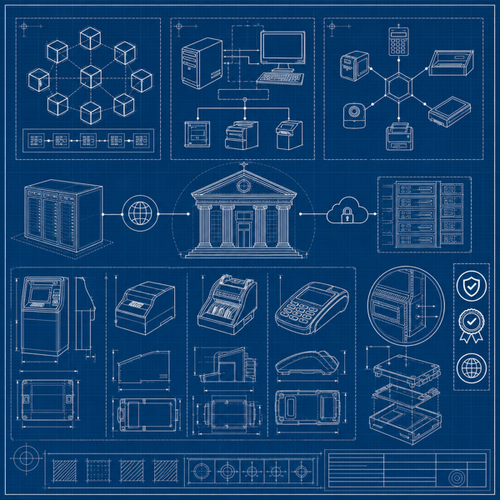
Modern banking relies on fast, secure, and interoperable IT applications. Whether integrating cash dispensers at ATMs, implementing blockchain solutions for transaction transparency, or adopting device interfaces for check scanning, banks and financial institutions must adhere to trusted standards that ensure operational efficiency and security. In this article, we explore three pivotal standards shaping today's IT landscape in banking: SIST EN ISO 22739:2023 (Blockchain vocabulary), SIST-TP CWA 16926-64:2023 (XFS Cash Dispenser Interface), and SIST-TP CWA 16926-66:2023 (XFS Check Reader/Scanner Interface).
These standards, established and maintained by recognized committees, define the vocabulary, compatibility requirements, technical protocols, and migration paths essential for high-stakes financial IT systems. For banks, compliance with these specifications is no longer optional—it's the baseline for productivity, robust security, and future growth in a highly competitive marketplace.
Overview / Introduction
The financial industry is undergoing rapid digital transformation. From blockchain-based ledgers promising transparency to the sophisticated integration of hardware devices like ATMs and check scanners, banking is now deeply intertwined with advanced IT solutions. At the heart of this transformation lies a suite of international standards. These standards are a must for businesses aiming to boost productivity, cement security, and ensure scalability across platforms and regions.
Why Standards Matter in Banking IT
- Security: Protects sensitive financial data from fraud and cyber attacks.
- Interoperability: Enables different systems and devices to communicate and function seamlessly.
- Compliance: Meets regulatory and industry requirements.
- Scalability: Facilitates the scaling of services and infrastructure as business grows.
- Productivity: Streamlines operations and integration, reducing manual intervention and errors.
Understanding and implementing these standards directly contributes to improved business outcomes, customer trust, and operational resilience. In this comprehensive guide, you'll learn how each key standard supports modern banking applications through clear requirements, recommended practices, and proven frameworks.
Detailed Standards Coverage
SIST EN ISO 22739:2023 – The Backbone Vocabulary for Blockchain & Distributed Ledger Technology
Blockchain and Distributed Ledger Technologies – Vocabulary (ISO 22739:2020)
Blockchain technology has revolutionized record-keeping by introducing decentralized, tamper-resistant ledgers with applications ranging from payments and identity management to complex financial products. However, as adoption grows, so does the need for precision and clarity in how these systems are discussed and implemented. SIST EN ISO 22739:2023 tackles this challenge by establishing an authoritative vocabulary for blockchain and distributed ledger technologies (DLT).
This standard provides:
- Clear, consistent terminology for describing blockchain systems, processes, and components.
- Definitions for key concepts such as blocks, consensus mechanisms, cryptography, smart contracts, tokens, and more.
- A common language for all stakeholders, from developers and auditors to regulators and solution architects.
Scope & Key Requirements
- Addresses all forms of blockchain and DLT across public, private, consortium, and hybrid environments.
- Delivers terminology for core concepts: digital assets, block structure, consensus, cryptography, immutability, validators, tokens, and transactions.
- Applies to any organization or individual involved in the blockchain ecosystem—including banks, technology vendors, regulators, and standards developers.
Practical Implications
For financial organizations, using consistent language and understanding the reference concepts is foundational for designing interoperable, regulatory-compliant, and secure blockchain-based services. Clarity in vocabulary aids in:
- Drafting technical and regulatory documentation.
- Integrating distributed ledger systems with legacy banking IT.
- Training and onboarding new staff or partners.
- Facilitating audits, risk assessments, and legal reviews.
Key highlights:
- Unifies terminology for blockchain and DLT worldwide
- Supports legal, technical, and operational interoperability
- Forms the foundation for advanced standards on blockchain security, architecture, and smart contracts
Access the full standard:View SIST EN ISO 22739:2023 on iTeh Standards
SIST-TP CWA 16926-64:2023 – XFS Interface for Cash Dispenser Modules
Extensions for Financial Services (XFS) Interface Specification Release 3.50 – Part 64: Cash Dispenser Module Class Interface – Programmer's Reference – Migration from Version 3.40 (CWA 16926:2020) to Version 3.50 (this CWA)
Automated teller machines (ATMs) and cash dispensers are an integral part of modern banking infrastructure. The evolving landscape of device hardware and software necessitates standards that allow seamless, secure integration. SIST-TP CWA 16926-64:2023 details the device class interface for cash dispenser modules (CDM) under the XFS (eXtensions for Financial Services) protocol, focusing on migrating from version 3.40 to 3.50.
What the Standard Covers
- Defines service-specific commands, data structures, error codes, and device behaviors for cash dispensers.
- Outlines information and execute commands (e.g., status queries, dispensing actions, management operations).
- Details device event handling, authentication, and security protocols—including End-to-End (E2E) security enhancements.
- Prescribes guidelines for both teller-operated and self-service cash dispensers.
Key Requirements and Specifications
- Backward Compatibility: Clear migration path ensuring protection of technical investments as applications move from XFS 3.40 to 3.50.
- E2E Authentication: Strengthened security for dispensing transactions, providing enhanced fraud resistance.
- Comprehensive Command Set: WFSGetInfo, WFSExecute, and related commands to accommodate multi-vendor deployments.
- Persistent Data Management: Guidelines to maintain values through power failures and resets.
- Legislative Support: Note classification procedures to fulfill legal standards, counterfeit detection, and blacklist management.
Who Needs to Comply
- Banks and ATM manufacturers
- Fintech integrators and application developers
- Managed service providers operating ATM networks
Practical Implications
Standardizing on the latest XFS interface ensures that banking environments can:
- Integrate new and legacy cash dispensers efficiently
- Mitigate risks associated with device mismatches or protocol incompatibility
- Offer secure cash handling with up-to-date fraud prevention
- Reduce the cost of custom integrations and accelerate product deployment
Key highlights:
- Robust security with E2E authentication for ATM transactions
- Migration guidance for futureproof, scalable ATM infrastructures
- Broad multi-vendor compatibility and operational efficiency
Access the full standard:View SIST-TP CWA 16926-64:2023 on iTeh Standards
SIST-TP CWA 16926-66:2023 – XFS Interface for Check Reader/Scanner Devices
Extensions for Financial Services (XFS) Interface Specification Release 3.50 – Part 66: Check Reader/Scanner Device Class Interface – Programmer's Reference – Migration from Version 3.40 (CWA 16926:2020) to Version 3.50 (this CWA)
Check processing remains critical for many banking operations, especially in regions where checks are still widely used. Reliable device integration streamlines check reading, image capture, fraud detection, and data extraction. SIST-TP CWA 16926-66:2023 defines the technical interface for check reader and scanner devices for XFS-compliant banking applications—ensuring that both legacy and new systems can work seamlessly together.
What the Standard Covers
- Defines service commands for interacting with check readers and image scanners under the XFS API.
- Outlines status, capability, and field information queries, as well as device control and reset commands.
- Specifies event reporting protocols (e.g., hardware errors, media jams, fraud attempts) for real-time monitoring.
- Details migration requirements from XFS 3.40 to 3.50, ensuring robust device compatibility.
Key Requirements and Specifications
- Device Status & Capabilities: Unified methods for assessing device health, supported media, and functional capabilities (MICR/OCR, image capture, encoding, stamping).
- Fraud Prevention: Anti-fraud module state reporting, including detection of foreign devices or suspected tampering.
- Multi-Vendor Support: Standard data structures, error codes, and commands to enable plug-and-play integration and interoperability.
- User Guidance: Standardized implementation for guidance lights and user prompts, improving end-user experience.
Who Needs to Comply
- Banks deploying or upgrading branch check processing systems
- ATM & kiosk solution developers
- Device manufacturers and systems integrators
Practical Implications
Adopting this standard elevates:
- Device reliability and transparency in check processing
- Speed and accuracy of customer transactions
- Branch productivity and fraud protection
- Vendor agnostic hardware integration, reducing costs and maximizing flexibility
Key highlights:
- Reliable, uniform interface for check reader/scanner devices
- Comprehensive anti-fraud and error detection support
- Promotes rapid deployment and future scalability of branch solutions
Access the full standard:View SIST-TP CWA 16926-66:2023 on iTeh Standards
Industry Impact & Compliance
How These IT Standards Transform Banking Business
- Risk Reduction: Standards minimize security vulnerabilities and assure banks their systems conform to internationally recognized best practices.
- Operational Efficiency: Interoperability across devices and systems reduces maintenance effort, IT overhead, and integration friction.
- Cost Control: Modular, standards-based integration lessens need for costly, custom adjuncts for each hardware or software upgrade.
- Customer Experience: Seamless and secure service delivery improves customer satisfaction and loyalty.
- Regulatory Compliance: Ensures banks meet domestic and global regulatory demands for technology controls and transparency.
Compliance Considerations
- Adhering to these standards is crucial for passing audits, securing certifications, and avoiding penalties.
- Non-compliance can lead to system failures, increased fraud risk, and reputational damage.
- Standards update regularly—continuous monitoring and adaptation are necessary to stay compliant and competitive.
Business Benefits
- Enhanced productivity and throughput in branch, ATM, and back-office operations.
- Scalable platforms ready to adopt innovations like digital currency, biometric authentication, or real-time settlement.
- Strengthened defenses against financial crime through robust authentication and anti-fraud protocols.
Implementation Guidance
- Assessment and Planning
- Inventory all systems and devices; identify legacy hardware requiring upgrades or interface adjustments.
- Map current business processes to standard requirements for vocabulary, device interfaces, and migration controls.
- Stakeholder Engagement
- Involve IT staff, operations, legal, compliance, and vendor partners early in the standards adoption process.
- Training and Documentation
- Utilize the vocabulary standard (SIST EN ISO 22739:2023) to align all documentation and training content.
- Update user and technical manuals based on new commands, error codes, and event definitions in the XFS standards.
- Testing and Validation
- Test device integrations in sandbox environments, using standard command sets and error reporting structures.
- Validate security enhancements (such as E2E authentication) before production rollout.
- Continuous Improvement
- Monitor for new releases of relevant standards and implement updates to ensure ongoing compliance and optimal performance.
- Monitor device events and logs for signs of hardware/software issues, fraud, or integration challenges.
Best Practices
- Embrace a standardized vocabulary to reduce misunderstandings across multinational teams.
- Favor vendor-agnostic solutions wherever possible to future-proof investments.
- Prioritize automation for device monitoring and software upgrades using standardized events and command flows.
- Establish clear communication channels with vendors about support for standard interfaces and migration paths.
Resources
- Obtain the official text of each standard from iTeh Standards to ensure you're working from current references.
- Leverage official Release Notes and online support communities for migration clarifications and implementation examples.
- Participate in industry groups and technical workshops addressing upcoming changes to banking IT standards.
Conclusion / Next Steps
Implementing internationally recognized banking IT standards isn’t just a compliance exercise—it’s a powerful opportunity to secure your business, drive efficiency, and unlock future innovation. SIST EN ISO 22739:2023 anchors your organization’s blockchain journey with precise terminology, while SIST-TP CWA 16926-64:2023 and SIST-TP CWA 16926-66:2023 deliver practical frameworks for integrating cutting-edge cash dispensers and check processing equipment.
Key takeaways:
- International standards lay the foundation for secure, scalable, and productive banking operations.
- Keeping hardware and software aligned with new specifications enables smooth operations and future-proofing.
- The investment in standards compliance delivers dividends through risk mitigation, enhanced service delivery, and regulatory peace-of-mind.
Recommended next steps:
- Review your current devices, software, and documentation for alignment with the latest standards.
- Engage with technology partners and vendors about standardized integration approaches.
- Download and study the official standards from iTeh Standards to equip your IT and compliance teams.
- Stay informed about future standard revisions, and champion ongoing education across your organization.
Take the initiative—align your banking IT landscape with global best practices to remain competitive and secure in today’s fast-changing financial environment.
Categories
- Latest News
- New Arrivals
- Generalities
- Services and Management
- Natural Sciences
- Health Care
- Environment
- Metrology and Measurement
- Testing
- Mechanical Systems
- Fluid Systems
- Manufacturing
- Energy and Heat
- Electrical Engineering
- Electronics
- Telecommunications
- Information Technology
- Image Technology
- Precision Mechanics
- Road Vehicles
- Railway Engineering
- Shipbuilding
- Aircraft and Space
- Materials Handling
- Packaging
- Textile and Leather
- Clothing
- Agriculture
- Food technology
- Chemical Technology
- Mining and Minerals
- Petroleum
- Metallurgy
- Wood technology
- Glass and Ceramics
- Rubber and Plastics
- Paper Technology
- Paint Industries
- Construction
- Civil Engineering
- Military Engineering
- Entertainment