

October 2026 Information Technology Standards: Digital Assets, AI Security, Telehealth, Defense & IT Governance
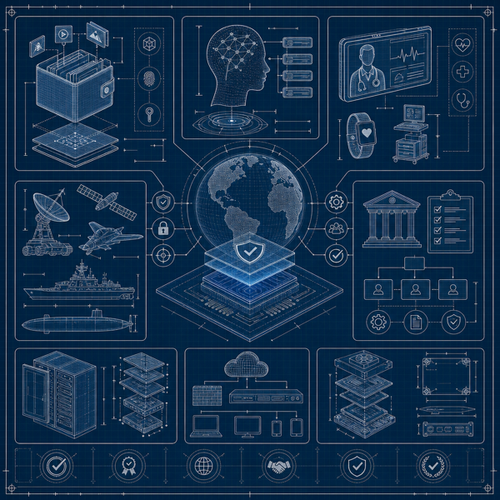
October 2026 Information Technology Standards Update: Digital Assets, AI Security, Telehealth, Defense & IT Governance
The technology landscape is evolving rapidly, and October 2026 marks the release of five high-impact standards in the Information Technology and Office Equipment domain. This article, part three of a four-part series from iTeh Standards, explores new requirements for digital asset representation, AI-specific cybersecurity, telehealth security, defense program audits, and organization-wide IT governance. Whether you oversee compliance, engineering, risk, or procurement, these standards are set to reshape operational, security, and governance practices across the sector.
Overview
Information Technology now forms the backbone of almost every industry, driving efficiency, connectivity, and innovation in organizations worldwide. As reliance on digital systems grows, the need for clear, robust, and future-proof standards becomes ever more critical. Standards don’t just ensure compatibility—they underpin trust, regulatory compliance, resilience, and interoperability.
In this article, you’ll discover:
- New frameworks for representing physical assets digitally
- AI system-specific cybersecurity threat mitigation strategies
- Comprehensive technical reviews for defense programs
- Next-generation cybersecurity controls for telehealth services
- Implementable guidance for effective IT governance
For professionals tasked with maintaining compliance, security, or IT governance, these standards offer essential guidance and practical tools.
Detailed Standards Coverage
ISO 20435:2026 – Framework for Representing Physical Assets Using Tokens
Framework for Representing Physical Assets Using Tokens
This innovative standard provides a digital ledger technology (DLT)-agnostic framework for the representation of physical assets via tokens anchored to Decentralized Identifiers (DIDs). The framework offers:
- A method for generating DIDs from physical asset identifiers (such as serial numbers), ensuring every asset has a unique and immutable digital identity.
- Cryptographic binding of asset data objects to these DIDs using hash tree data structures, guaranteeing the data's integrity and traceability without tying the implementation to any one blockchain or DLT system.
- A DID method scheme supporting registry interoperability—tokens can be stored, resolved, or transferred across different compliant DID registries.
- Off-chain trust anchor processes, allowing organizations to use human or machine-generated events for validating links between physical and digital representations.
Organizations in supply chain management, manufacturing, logistics, asset management, and digital product passport schemes will benefit from this standard. Implementation enhances transparency, traceability, and trust in high-value and regulated assets.
Key highlights:
- Digital asset representation agnostic to platform or DLT
- Standardized method for DID generation from immutable asset IDs
- Supports NFT integration for advanced asset tracking, validation, and transfer
Access the full standard:View ISO 20435:2026 on iTeh Standards
ISO/IEC 27090:2026 – Cybersecurity for Artificial Intelligence Systems
Cybersecurity — Artificial Intelligence (AI) — Addressing Security Threats and Compromises to AI Systems
This pivotal standard delineates comprehensive guidelines for assessing, managing, and mitigating security risks unique to AI systems across their entire lifecycle. It is designed for:
- Organizations developing or deploying AI models and systems
- Product managers, IT and cybersecurity professionals
- Regulatory compliance specialists in public and private sectors
Scope and Requirements:
- Identification and cataloguing of AI-specific threats: data poisoning, model inversion, membership inference, adversarial attacks, prompt injection, and more.
- Threat modelling and zero-trust principles for AI governance
- Best practices for secure AI development, deployment, ongoing monitoring, and incident response
- Guidance for applying robust supply chain controls and defense-in-depth strategies for AI
- Outlines detection and mitigation measures for each threat category, including logging, monitoring, and response planning
With growing regulatory interest and an increase in AI-driven attacks, this standard is an indispensable resource for modern digital enterprises.
Key highlights:
- Detailed taxonomy of AI-specific vulnerabilities and attack vectors
- Recommended mitigations—including red-teaming and supply chain vigilance
- Assurance of AI integrity, security, and compliance throughout the system lifecycle
Access the full standard:View ISO/IEC 27090:2026 on iTeh Standards
ISO/IEC/IEEE 24748-8:2026 – Technical Reviews and Audits on Defense Programs
Systems and Software Engineering — Life Cycle Management — Part 8: Technical Reviews and Audits on Defence Programs
Building on established best practices, this standard provides a structured process for technical reviews and audits across the lifecycle of defense sector projects. Originally tailored for U.S. Department of Defense (DoD) programs, its methodology is highly applicable to other governmental, defense, and security-focused projects that demand rigorous oversight.
Key Provisions:
- Defines entry, exit, and success criteria for technical reviews and audits at each project lifecycle stage
- Detailed coverage of review types: alternative systems reviews (ASR), system requirements reviews (SRR), functional reviews (SFR), preliminary and critical design reviews (PDR/CDR), test readiness, configuration audits, production reviews, and more
- Emphasizes iterative and risk-based audit planning, agile development integration, and stakeholder collaboration between acquirers and suppliers
- Prescribes documentation, traceability, and digital engineering integration for robust assessment
Adoption aids defense contractors, systems integrators, and procurement agencies in ensuring delivery quality, regulatory compliance, and minimized project risk.
Key highlights:
- Complete life cycle audit framework for defense and high-assurance programs
- Standardized review definitions, criteria, and outcomes
- Facilitates supplier-client agreement on expectations and project checkpoints
Access the full standard:View ISO/IEC/IEEE 24748-8:2026 on iTeh Standards
ISO/TS 6268-3:2026 – Cybersecurity Controls for Telehealth
Health Informatics — Cybersecurity Framework for Telehealth Environments — Part 3: Cybersecurity Controls of Telehealth
With telehealth now central to healthcare delivery, this technical specification uniquely addresses the cybersecurity requirements specific to telemedicine, remote consultations, telecare, mHealth, and other ICT-enabled healthcare services. Complementing broader security frameworks like ISO 27799, it provides telehealth organizations, device manufacturers, and service providers with:
- Telehealth-specific organizational, people-based, physical, and technological controls
- Measures to address the diversity of cybersecurity preparedness among staff, patients, and support systems, compensating for potential “cybersecurity gaps.”
- Requirements for secure identification, data protection, device management, and protection against physical/personnel security incidents in distributed environments
- Guidelines for incident management, legal and regulatory compliance, asset management, and secure recordkeeping
- Informative annex mapping controls to general healthcare cybersecurity (ISO 27799:2025)
Critical for health delivery organizations (HDOs), telehealth service providers, technology architects, and data protection officers focused on health ICT.
Key highlights:
- Comprehensive mapping of specialized controls for telehealth
- Addresses people, physical, and technical cybersecurity domains
- Assurance mechanisms for telehealth device and information security, even in non-clinical or remote settings
Access the full standard:View ISO/TS 6268-3:2026 on iTeh Standards
ISO/IEC 38501-1:2026 – Governance of IT Implementation Guidance: General Approach
Information Technology — Governance of IT Implementation Guidance — Part 1: General Approach
Effective IT governance is critical for performance, stewardship, and ethical management of information systems. This standard provides practical guidance on how organizations of any size can implement and strengthen their IT governance in line with the principles of ISO/IEC 38500.
Scope and Implementation Guidance:
- Stepwise guidance for establishing a governance framework: stakeholder engagement, sponsorship, enabling mechanisms, and monitoring
- Assigning clear roles and responsibilities between governing bodies (e.g., boards), executive managers, and support groups
- Continual review mechanisms for governance effectiveness, including feedback loops and improvement cycles
- Emphasis on alignment with strategic goals, legal and regulatory compliance, and IT risk management
CIOs, board members, IT governance and compliance teams, and executives will find actionable pathways for driving digital maturity and organizational trust.
Key highlights:
- Cyclical, iterative approach for sustainable IT governance
- Detailed guidance for engaging stakeholders and initiating change
- Practical tools to differentiate and coordinate management vs. governance roles
Access the full standard:View ISO/IEC 38501-1:2026 on iTeh Standards
Industry Impact & Compliance
Business Benefits and Compliance Considerations
The release of these standards profoundly influences information technology risk management, security, operational assurance, and compliance:
- Competitive advantage: Early adoption demonstrates leadership and digital trust to clients, partners, and regulators.
- Risk reduction: Robust frameworks minimize cybersecurity, regulatory, supply chain, and operational risks.
- Operational excellence: Clear frameworks make implementation, monitoring, and auditing more efficient and repeatable.
- Regulatory alignment: Many of these standards align with regulatory expectations for AI governance, healthcare data protection, and defense supply chain assurance.
Compliance timelines may vary by sector, contract, or regulatory framework, but organizations are strongly advised to:
- Assess readiness and perform a gap analysis against new requirements
- Launch awareness and training programs for stakeholders
- Update policies, controls, and documentation
- Integrate new standard requirements into procurement and vendor management
Failing to comply can expose organizations to operational, legal, and reputational risks—particularly in highly regulated environments or when handling sensitive information.
Technical Insights
Shared Technical Foundations
Across these standards, several technical themes emerge:
- Strong digital identity: From DIDs in asset tokenization to robust authentication in telehealth, the importance of irrefutable, tamper-proof digital identities is clear.
- Cryptographic integrity: Hash trees, supply chain validation, and audit trails reinforce integrity and non-repudiation.
- Risk-based controls: Risk assessment, threat modelling, and control mapping appear in both AI and telehealth security guidance.
- Iterative lifecycle management: Standards emphasize continual improvement, as seen in IT governance, software/defense engineering, and AI security.
Implementation and Certification Tips
- Stakeholder Involvement: Involve cross-functional teams early—business, legal, IT, and operations must be engaged from strategy to execution.
- Testing: Establish test plans aligned with each standard’s prescribed reviews—e.g., penetration testing for telehealth, technical review gates for defense projects, or red-teaming for AI.
- Documentation: Maintain clear records and evidence, from risk assessments to technical review outcomes and governance activities.
- Monitoring and Logging: Design robust logging to track controls, detect anomalies, and provide audit trails across digital assets, AI systems, and healthcare services.
- Certification: Look for schemes or accreditation bodies referencing these standards as benchmarks, particularly for defense contractors, healthcare providers, and regulated entities.
Conclusion & Next Steps
October 2026’s newly published Information Technology standards deliver critical frameworks for digital asset management, AI threat posture, telehealth protection, defense program lifecycle assurance, and organization-wide governance. Forward-looking organizations should immediately assess the implications, educate stakeholders, and integrate the new requirements into their operational and compliance strategies.
Recommendations:
- Review the detailed standard content linked above via iTeh Standards
- Prioritize gap analysis and training
- Update governance and technical processes to align with new expectations
- Subscribe to iTeh Standards for ongoing updates
Staying current with these evolving standards will empower your organization to lead with trust, ensure regulatory compliance, and deliver resilient, innovative IT-enabled services.
Categories
- Latest News
- New Arrivals
- Generalities
- Services and Management
- Natural Sciences
- Health Care
- Environment
- Metrology and Measurement
- Testing
- Mechanical Systems
- Fluid Systems
- Manufacturing
- Energy and Heat
- Electrical Engineering
- Electronics
- Telecommunications
- Information Technology
- Image Technology
- Precision Mechanics
- Road Vehicles
- Railway Engineering
- Shipbuilding
- Aircraft and Space
- Materials Handling
- Packaging
- Textile and Leather
- Clothing
- Agriculture
- Food technology
- Chemical Technology
- Mining and Minerals
- Petroleum
- Metallurgy
- Wood technology
- Glass and Ceramics
- Rubber and Plastics
- Paper Technology
- Paint Industries
- Construction
- Civil Engineering
- Military Engineering
- Entertainment