

Mastering Software Requirements and Lifecycle Documentation Standards: A Practical Guide for Modern IT Success
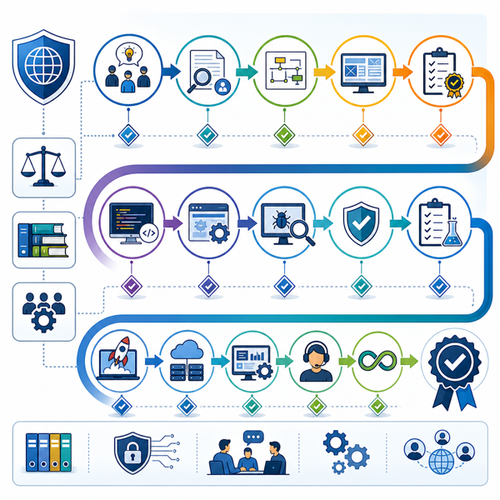
Today’s business world is fiercely competitive, data-driven, and built on technology. When organizations adopt emerging technologies and seek to scale, clarity, consistency, and trustworthiness in software and system processes become business-critical. A robust set of internationally recognized standards on software requirements and lifecycle documentation has emerged as a must-have toolkit for organizations regardless of industry or size. This guide explores four leading ISO/IEC/IEEE standards, breaking down their value, requirements, and practical steps for real-world implementation. If you’re looking to boost productivity, enhance security, and confidently scale your business, these standards are your foundation.
Overview / Introduction
The rise of cloud computing, AI, and digital transformation has made information technology’s heartbeat—software systems—more complex than ever. Poorly defined requirements, incomplete documentation, or inconsistent process management can lead to costly delays, security vulnerabilities, and missed business opportunities. That’s why global standards for software requirements and lifecycle documentation are indispensable, providing clarity, transparency, and predictability to IT projects, whether in agile startups or mature enterprises.
In this article, you will learn:
- The scope and core elements of four major IT standards
- How proper documentation and requirements practices support innovation and compliance
- Practical implementation tips for each standard
- The business value these standards deliver
Detailed Standards Coverage
ISO/IEC/IEEE 15289:2019 – Content of Life-Cycle Information Items (Documentation)
Full Standard Title: Systems and software engineering — Content of life-cycle information items (documentation)
ISO/IEC/IEEE 15289:2019 lays out what should be included in systems and software documentation across the entire project lifecycle. While ISO/IEC/IEEE 12207 and 15288 define what processes organizations should follow, 15289 clarifies what documentation you need to support those processes. It defines generic document types such as plans, policies, procedures, reports, specifications, records, and requests, and maps these to specific software or systems engineering activities. This results in a powerful, repeatable framework for documenting every phase—from requirements capture, through design, deployment, and maintenance, to reporting and support.
The standard is relevant for any organization performing system or software engineering, particularly those leveraging the process models from ISO/IEC/IEEE 12207 or 15288. Whether you are a developer, systems architect, quality manager, or project manager, implementing 15289 helps you ensure the right documentation is produced, maintained, and auditable.
It does not enforce specific formats or media (e.g., paper vs. digital), nor does it cover general business records unrelated to engineering. However, it gives a comprehensive mapping and description of each critical information item—like acceptance plans, configuration management reports, user documentation, and test procedures—vital for process transparency and future audits.
Key highlights:
- Defines exhaustive documentation types for each software/system life-cycle process
- Maps documentation needs directly to engineering tasks
- Supports both traditional and agile, plan-driven, or hybrid process models
Access the full standard:View ISO/IEC/IEEE 15289:2019 on iTeh Standards
ISO/IEC/IEEE 16326:2019 – Life Cycle Processes: Project Management
Full Standard Title: Systems and software engineering — Life cycle processes — Project management
ISO/IEC/IEEE 16326:2019 is the international standard for managing systems and software projects. It delivers an essential reference point for project managers by specifying the required contents of the Project Management Plan (PMP). This standard ties together process requirements from more general lifecycle standards (ISO/IEC/IEEE 15288 and 12207), then delivers detailed guidance for tailoring and managing those processes on real projects.
The standard’s audience includes everyone establishing, driving, or improving project management approaches—be it at the corporate policy level or the project execution level. This also extends to organizations acting as subcontractors or dealing with complex, multi-party projects, so it’s as valuable for internal IT as for software vendors or global consultancies.
ISO/IEC/IEEE 16326:2019 goes beyond static templates: it details dynamic project management practices. This covers project initiation, work breakdown, scheduling, risk management, decision tracking, configuration and information management, and quality assurance. Additionally, it emphasizes the iterative nature of lifecycle management—critical as organizations increasingly blend agile and traditional methods.
Key highlights:
- Required structure and contents of the Project Management Plan (PMP)
- Embedded guidance for requirements, risk, configuration, quality, and information management
- Scales to cover single-team, enterprise, or multi-supplier projects
Access the full standard:View ISO/IEC/IEEE 16326:2019 on iTeh Standards
ISO/IEC/IEEE 26515:2018 – Developing Information for Users in an Agile Environment
Full Standard Title: Systems and software engineering — Developing information for users in an agile environment
ISO/IEC/IEEE 26515:2018 bridges the gap between agile software/systems development and the need for purposeful, clear user documentation. While agile prioritizes quick iterative releases over rigid upfront specification, users and clients still expect high-quality, up-to-date information that aligns with rapidly evolving products. This standard defines how organizations can plan, manage, and deliver user information—often called “user documentation”—without sacrificing the spirit or speed of agile approaches.
It provides requirements for the full process—designing, developing, reviewing, updating, and delivering information for users, mapped directly to the cadence of agile sprints or iterations. It focuses on the roles of information developers, product owners, and project leads, detailing how to incorporate user story-driven changes, customer feedback, and cross-team communication.
ISO/IEC/IEEE 26515 is essential if your organization is deploying software or systems using Scrum, Kanban, Lean, or other agile frameworks. It ensures your user guides, online help, onboarding tutorials, and task-oriented content keep pace with continuous delivery cycles and frequent product updates.
Key highlights:
- Steps for integrating user documentation into fast-paced agile projects
- Best practices for managing information development across distributed teams
- Requirements for reviewing, testing, translating, and continuously delivering information
Access the full standard:View ISO/IEC/IEEE 26515:2018 on iTeh Standards
ISO/IEC/IEEE 29148:2018 – Life Cycle Processes: Requirements Engineering
Full Standard Title: Systems and software engineering — Life cycle processes — Requirements engineering
ISO/IEC/IEEE 29148:2018 is the go-to reference for requirements engineering across the systems and software development life cycles. Precise, actionable requirements are the bedrock of any successful technology project, and this standard codifies the methods and deliverables necessary for high-quality requirements development, management, specification, and validation.
29148 covers the engineering activities that transform business or market needs into clear, testable, and implementable requirements for systems, software, and services. It provides a unified set of requirement process steps, details on all required information items (like business requirements specifications, stakeholder requirements, system and software requirements), and guidance on structuring and formatting these items for maximum utility.
Anyone involved in requirements engineering—from business analysts, system architects, project managers, to consultants or quality engineers—will benefit from this standard. It helps ensure requirements are relevant, unambiguous, complete, and verifiable, reducing project failure rates and improving end-user satisfaction.
Key highlights:
- Comprehensive process model for requirements capture, analysis, documentation, and management
- Guidelines for the contents and structure of all requirements documentation
- Applicability to all project types, from small applications to complex, multi-system enterprises
Access the full standard:View ISO/IEC/IEEE 29148:2018 on iTeh Standards
Industry Impact & Compliance
Adopting internationally recognized standards in IT systems and software projects brings tangible business value. Proper requirements engineering, lifecycle documentation, and effective project management are critical for:
- Reducing risk: Clear documentation and rigorous requirements minimize project overruns and late surprises.
- Improving security: Compliance with standards helps organizations systematically address and document information security, privacy, and risk.
- Enabling scaling: As organizations grow, standardized documentation and practices enable effective onboarding, support handovers, and maintain consistent quality.
- Boosting productivity: Well-defined processes and requirements mean fewer errors, less rework, and faster, more reliable project delivery.
- Easing compliance: Regulatory demands (e.g., data protection, digital safety) are more easily demonstrated with recognized documentation structures.
- Supporting innovation: Team members spend less time resolving ambiguity and more time delivering value.
Failing to comply with these standards can result in failed audits, product recalls, contractual disputes, or catastrophic system failures—all of which undermine business growth and reputation. Conversely, organizations that invest in these standards position themselves as reliable, secure, and future-ready partners.
Implementation Guidance
Implementing standards like ISO/IEC/IEEE 15289, 16326, 26515, and 29148 is a journey. Here’s how successful organizations approach adoption:
- Gap Analysis:
- Assess current documentation, project management, and requirements processes against each standard’s requirements.
- Stakeholder Training:
- Ensure all staff—developers, managers, QA, documentation, product owners—are trained on the relevant standards.
- Process Integration:
- Incorporate standard requirements into your organization’s process models. Update documentation templates and tools accordingly.
- Pilot Projects:
- Test new processes on selected projects. Gather feedback and iterate.
- Continuous Improvement:
- Embed regular reviews and audits to drive long-term compliance and leverage lessons learned.
Best practices:
- Use modular documentation and automation tools to keep records current.
- Partner closely with development teams—especially in agile environments—to ensure documentation keeps pace with releases.
- Maintain clear mapping between processes (e.g., requirements engineering steps) and required documentation artifacts.
- Leverage collaborative platforms for distributed teams.
For specific process and template resources, review each standard’s annexes and seek industry best-practice guides tailored to your sector.
Conclusion / Next Steps
Software requirements and lifecycle documentation standards offer much more than compliance—they are strategic assets for scaling productivity, safeguarding sensitive data, and inspiring customer confidence in today’s digital world. By embracing ISO/IEC/IEEE 15289, 16326, 26515, and 29148, your organization can:
- De-risk technology initiatives
- Enhance agility and innovation capacity
- Meet regulator and customer expectations
- Lay a foundation for secure, predictable, and successful project delivery
Ready to get started?
- Audit your current workflows against these standards
- Select standards-aligned templates for new projects
- Train your teams and set a roadmap for adoption
- Explore the full text of these standards on iTeh Standards to unlock their full value
Stay ahead of the curve—build your IT processes on the world’s most trusted standards.
Categories
- Latest News
- New Arrivals
- Generalities
- Services and Management
- Natural Sciences
- Health Care
- Environment
- Metrology and Measurement
- Testing
- Mechanical Systems
- Fluid Systems
- Manufacturing
- Energy and Heat
- Electrical Engineering
- Electronics
- Telecommunications
- Information Technology
- Image Technology
- Precision Mechanics
- Road Vehicles
- Railway Engineering
- Shipbuilding
- Aircraft and Space
- Materials Handling
- Packaging
- Textile and Leather
- Clothing
- Agriculture
- Food technology
- Chemical Technology
- Mining and Minerals
- Petroleum
- Metallurgy
- Wood technology
- Glass and Ceramics
- Rubber and Plastics
- Paper Technology
- Paint Industries
- Construction
- Civil Engineering
- Military Engineering
- Entertainment