


ISO 12716:2026 Defines Key Terms for Acoustic Emission Testing – May 2026 Update
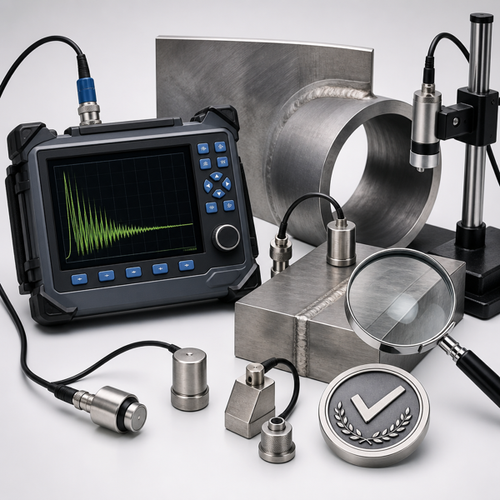
The field of non-destructive testing took a significant step forward in May 2026 with the publication of ISO 12716:2026, a pivotal international standard that brings clarity to the specialized vocabulary of acoustic emission testing. With this comprehensive revision, industry professionals—from engineers to compliance managers—have a single authoritative source for terminology, supporting consistency and improved communication across the global testing community.
Overview / Introduction
Non-destructive testing (NDT) is an essential foundation in modern quality assurance, enabling industries to evaluate materials, components, and structures without causing damage. Within this domain, acoustic emission testing (AET) has emerged as a key technique for detecting faults, monitoring structural integrity, and ensuring safety in real time. The accuracy and acceptance of NDT processes largely depend on standardized terminology, which ensures unambiguous communication among practitioners, suppliers, regulatory authorities, and customers alike.
The newly released ISO 12716:2026 standard meets this need by updating and expanding the vocabulary specific to acoustic emission testing. In this article, you'll learn what the revised standard covers, why these changes matter, key concepts defined, who should comply, and the broader implications for the non-destructive testing industry.
Detailed Standards Coverage
ISO 12716:2026 – Non-destructive Testing Vocabulary for Acoustic Emission
Non-destructive testing — Acoustic emission testing — Vocabulary
ISO 12716:2026 establishes a uniform vocabulary for acoustic emission testing (AET), a non-invasive method that detects transient elastic waves generated by the rapid release of energy in materials—commonly due to plastic deformation, crack propagation, or other forms of stress-induced change. This revision replaces the earlier 2001 edition and reflects significant advances in both theory and practice.
Scope and Structure
Scope: ISO 12716:2026 defines more than 50 terms and definitions related to acoustic emission, from the physics of wave generation to the features of signal acquisition. It covers:
- Fundamental physical phenomena (e.g., acoustic emission event, source, wave, event energy)
- Detection and acquisition terminology (e.g., signal, burst, threshold, duration, energy)
- Equipment and accessories (e.g., sensors, couplants, waveguides, Hsu-Nielsen source)
- Signal analysis (e.g., rise time, amplitude, ring down count)
- Applications and mechanisms (e.g., Kaiser effect, Felicity effect)
Key requirements: The standard is normative for all documentation, calibrations, protocols, and software that refer to or embed AET concepts. By aligning on vocabulary, organizations can facilitate training, avoid misinterpretation, and achieve clear reporting during inter-laboratory testing or audit situations.
Who needs to comply: The standard is crucial for:
- Non-destructive testing laboratories
- Equipment manufacturers
- Structural engineering firms
- Quality and compliance professionals
- Academic and research organizations
- Regulatory bodies and certification agencies
Notable Updates from the Previous Version
- Terms now sorted by scientific and technical characteristics, aiding logical comprehension.
- All definitions updated; obsolete or ambiguous terms have been removed for clarity.
- Enhanced coverage of detection thresholds, event mechanisms, and instrumentation.
- Improved cross-references to key international terminology databases (ISO and IEC platforms).
Practical Implications for Implementation
Using ISO 12716:2026 ensures:
- Consistent use of terms in product specifications, calibration procedures, and technical documentation.
- Easier interpretation of standards across borders, supporting global trade and certifications.
- Reduced risk of errors or miscommunication, especially during audits, data analysis, and regulatory reviews.
Key highlights:
- Comprehensive glossary of acoustic emission testing terms
- Updated to reflect advances in detection and analysis methods
- Essential for training, documentation, and cross-organization protocols
Access the full standard:View ISO 12716:2026 on iTeh Standards
Industry Impact & Compliance
The release of ISO 12716:2026 impacts multiple sectors where structural integrity, reliability, and safety are paramount—construction, aerospace, petrochemical, transportation, and energy. By providing a standardized vocabulary:
- Cross-departmental teams and international stakeholders can synchronize processes and audit findings.
- Training programs and technical documentation can be streamlined, reducing onboarding time for new staff or external partners.
- Product and process certifications will reference this unified glossary, minimizing disputes over definitions during procurement or regulatory review.
- The transition timeline allows organizations to revise in-house materials and retrain staff with the updated terminology, ensuring legacy records don't introduce confusion.
Benefits of adoption:
- Improved accuracy and clarity in testing, reporting, and certification
- Enhanced credibility and acceptance of NDT results
- Reduced non-compliance risk from misapplied or outdated terminology
Risks of non-compliance:
- Increased likelihood of misinterpretation and audit findings
- Potential for costly disputes with suppliers or regulators
- Delayed or failed certifications due to ambiguous test reports
Technical Insights
ISO 12716:2026 encapsulates years of consensus-building among international experts. Common technical requirements and best practices highlighted include:
- Use of standardized terms in data acquisition systems: Software and hardware interfaces for AET must adopt ISO 12716:2026 nomenclature to ensure interoperability.
- Training and certification: Personnel qualifications should reference this vocabulary to benchmark understanding and demonstrate compliance.
- Testing protocols: Written procedures and calibration routines should be reviewed to align with the new definitions, especially concepts like
detection threshold,burst signal, andKaiser effect. - Reporting and documentation: Test reports, manuals, and training presentations benefit from precise and universally recognized terminology, reducing errors and liability exposure.
Implementation tips:
- Review operational documents for outdated or local terminology
- Update procedure manuals and software interfaces with new terms
- Train personnel, especially new engineers or technicians, on the ISO 12716:2026 glossary
- Communicate changes to suppliers and customers to assure alignment
Conclusion / Next Steps
The updated ISO 12716:2026 marks a new chapter in the global harmonization of non-destructive testing procedures, particularly for acoustic emission testing. As terminology forms the foundation of every technical interaction, aligning with the latest standard is not just good practice—it's a strategic imperative.
Recommendations for organizations:
- Immediately review and integrate the updated vocabulary into your training, documentation, and NDT workflows
- Proactively inform staff, clients, and partners about the revision
- Leverage the cross-references to ISO and IEC online platforms for ongoing technical guidance
Stay ahead in non-destructive testing: explore the full ISO 12716:2026 standard on iTeh Standards and ensure your team leads with clarity and confidence as industry requirements evolve.
Categories
- Latest News
- New Arrivals
- Generalities
- Services and Management
- Natural Sciences
- Health Care
- Environment
- Metrology and Measurement
- Testing
- Mechanical Systems
- Fluid Systems
- Manufacturing
- Energy and Heat
- Electrical Engineering
- Electronics
- Telecommunications
- Information Technology
- Image Technology
- Precision Mechanics
- Road Vehicles
- Railway Engineering
- Shipbuilding
- Aircraft and Space
- Materials Handling
- Packaging
- Textile and Leather
- Clothing
- Agriculture
- Food technology
- Chemical Technology
- Mining and Minerals
- Petroleum
- Metallurgy
- Wood technology
- Glass and Ceramics
- Rubber and Plastics
- Paper Technology
- Paint Industries
- Construction
- Civil Engineering
- Military Engineering
- Entertainment