

September 2026: New Standard for Aluminium Roofing and Cladding in Construction
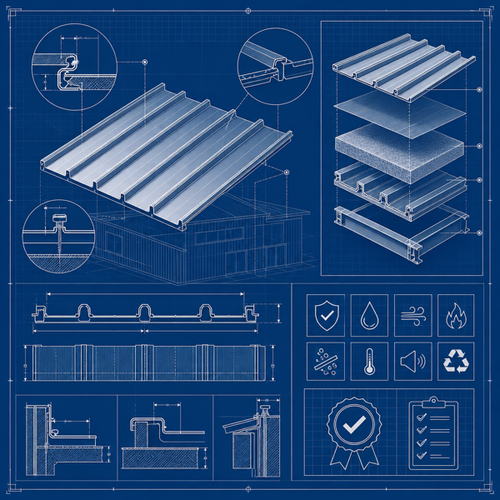
A newly published standard is redefining expectations for professionals working with aluminium roofing and wall cladding products in the construction sector. In September 2026, EN 507:2026, issued by CEN, sets forth rigorous requirements for fully supported products of aluminium sheet in roofing and cladding applications. Addressing both manufacturers and purchasers, this standard ensures consistent quality, durability, and safety for a diverse range of construction projects. This update consolidates the sector’s shift towards higher performance and compliance, covering all discontinuously laid and fully supported aluminium sheet products, whether prefabricated or formed on-site.
Overview
The construction industry consistently evolves to meet demands for quality, durability, and environmental performance. Roofing and cladding serve as the primary barrier against weather, thermal variations, and physical impacts. Adherence to international standards ensures that products not only meet customer expectations but also comply with regulatory requirements, improve installation outcomes, and safeguard building occupants. This article will guide industry stakeholders through the scope, technical details, and practical implications of the newly updated EN 507:2026 standard, highlighting the benefits of early adoption and ongoing compliance.
Detailed Standards Coverage
EN 507:2026 – Specification for Fully Supported Aluminium Sheet Roofing and Cladding Products
Roofing and cladding products from metal sheet – Specification for fully supported products of aluminium sheet
The EN 507:2026 standard is the definitive reference for manufacturers, contractors, and procurement professionals sourcing aluminium sheet materials for roofing, wall claddings, and linings. It specifies comprehensive requirements for materials, manufacturing, labelling, and quality assurance for both prefabricated and site-formed products.
Scope and Applicability
- EN 507:2026 covers all discontinuously laid, fully supported aluminium roof and cladding products with or without organic coatings or anodizing. Applicable products include flat, strip, coil, and semi-formed sheet, used in both pitched roofs and vertical facade applications.
- The standard deliberately excludes self-supporting aluminium sheets (covered by EN 508-2) as well as requirements for supporting construction, roof system design, and execution of connections or flashings.
Key Requirements and Specifications
- Materials: Specifies allowed aluminium alloys, performance criteria (including strength and ductility), and additional treatments (coatings/anodizing). An updated and expanded list of alloys widens manufacturer choice while ensuring quality.
- Product Types: Recognizes both prefabricated and semi-formed elements, as well as requirements for strip, coil, and sheet supplied for on-site forming such as standing seam systems.
- Safety: Addresses fire performance and the mechanical robustness required for typical service conditions in roofing and cladding.
- Labelling and Packaging: Mandates clear product identification, compliant labelling, and suitable packaging for factory dispatch. This ensures traceability and reduces the risk of misapplication.
- Testing and Sampling: Outlines rigorous sampling protocols and test methods for both flat and formed products, safeguarding integrity and uniformity.
Practical Implementation
For manufacturers, EN 507:2026 provides a framework to certify products, manage quality control, and meet market demands for high-performance aluminium roofing components. For procurement professionals and specifiers, it offers a reliable benchmark for product selection and verification, reducing project risk and supporting due diligence.
Notable Changes from Previous Editions
- Updated normative references align requirements with the latest European and international best practices.
- A broader range of eligible aluminium alloys, enhancing flexibility for both suppliers and designers.
- Improved editorial clarity and expanded requirements for coatings and surface finishes.
Key highlights:
- Comprehensive requirements for materials, coatings, and anodising
- Expanded list of permitted aluminium alloys
- Updated labelling, packaging, and traceability protocols
Access the full standard:View EN 507:2026 on iTeh Standards
Industry Impact & Compliance
Adopting the latest standard is critical for ensuring the safety, longevity, and regulatory compliance of building envelopes. For manufacturers, aligning with EN 507:2026 is mandatory for products marketed within the European Union and affiliated regions. Multinational contractors and suppliers benefit from harmonized benchmarks that simplify cross-border procurement and compliance audits.
Compliance Considerations:
- Organizations must transition to the new requirements by March 2027, as conflicting national standards are to be withdrawn
- Early adoption reduces the risk of costly rework or regulatory penalties
- Transparent product identification streamlines site verification and project commissioning
Benefits of Adoption:
- Enhanced quality assurance for roofing and cladding products
- High confidence in fire, weather, and mechanical performance
- Market access and customer trust through verified compliance
Risks of Non-Compliance:
- Potential rejection of noncompliant products at point of use
- Legal and reputational risks for suppliers and contractors
- Increased lifecycle costs due to inferior or nonstandard material performance
Technical Insights
EN 507:2026 introduces several technical benchmarks for the production and specification of aluminium sheet products:
- Material Consistency: Only specified alloys that meet detailed compositional and mechanical requirements are permitted. This uniformity guarantees predictable forming, durability, and compatibility with roofing/cladding systems.
- Surface Treatments: The standard supports both organic coatings and anodising, specifying how each must perform under typical service and environmental conditions.
- Testing Methods: EN 507:2026 prescribes rigorous sampling (random and systematic), laboratory test procedures (for thickness, tensile strength, adhesion of coatings), and reporting protocols.
- Marking & Traceability: All shipments must include compliant labels and documentation, assisting installers and inspectors in verifying authenticity and performance claims on-site.
Implementation Best Practices:
- Integrate EN 507:2026 into purchase specifications and supplier contracts.
- Audit supplier quality management systems to confirm compliance with material and production process requirements.
- Train procurement and installation teams to recognize and verify compliant labelling and packaging.
- Schedule transition reviews to ensure existing product inventory aligns with the new standard before legacy approvals lapse.
Testing and Certification:
- Engage accredited labs for independent type testing and certification.
- Maintain documentation for audit trails and regulatory reviews.
Conclusion and Next Steps
EN 507:2026 stands as a foundational update for all stakeholders using aluminium sheet products in roofing and cladding. By clearly defining requirements for product quality, material selection, labelling, and testing, this standard ensures project excellence, compliance, and user safety. Industry professionals—from quality managers to engineers and procurement officers—should prioritize awareness and early implementation to unlock benefits in quality, sustainability, and project delivery.
Recommendations:
- Review and update procurement policies to include EN 507:2026-compliant materials
- Collaborate with suppliers to confirm conformity and obtain updated documentation
- Leverage iTeh Standards as your primary source for accessing, interpreting, and applying the latest construction materials standards
Stay ahead of regulatory changes and foster project success by embedding these latest requirements in every phase of your construction materials workflow.
Categories
- Latest News
- New Arrivals
- Generalities
- Services and Management
- Natural Sciences
- Health Care
- Environment
- Metrology and Measurement
- Testing
- Mechanical Systems
- Fluid Systems
- Manufacturing
- Energy and Heat
- Electrical Engineering
- Electronics
- Telecommunications
- Information Technology
- Image Technology
- Precision Mechanics
- Road Vehicles
- Railway Engineering
- Shipbuilding
- Aircraft and Space
- Materials Handling
- Packaging
- Textile and Leather
- Clothing
- Agriculture
- Food technology
- Chemical Technology
- Mining and Minerals
- Petroleum
- Metallurgy
- Wood technology
- Glass and Ceramics
- Rubber and Plastics
- Paper Technology
- Paint Industries
- Construction
- Civil Engineering
- Military Engineering
- Entertainment