


New IEC Standard for Appliance Switches Published – July 2026 Electrical Engineering Update
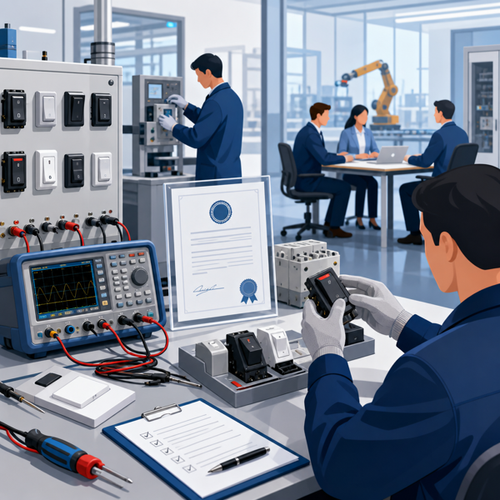
Ensuring the safety and reliability of appliance control components is at the core of modern electrical engineering. In July 2026, a major update was published with the release of IEC 61058-1:2026, introducing critical revisions to the foundational standard for switches in appliances. As a vital resource for engineers, compliance managers, and manufacturers, understanding these updates is essential for product development and regulatory compliance. This article covers the most important changes, technical details, and the practical impact of this new international standard.
Overview / Introduction
Electrical engineering permeates every aspect of modern life, powering the essential devices and appliances we rely on daily. Standards in this sector establish universal benchmarks for safety, performance, and interoperability. For switches used in household and similar appliances, proper functioning and compliance are mandatory to protect users, equipment, and infrastructure from risks such as electric shock, fire, and operational failures.
In July 2026, the International Electrotechnical Commission (IEC) published a new edition of IEC 61058-1:2026 – Switches for appliances – Part 1: General requirements, superseding the previous (2016) version. This comprehensive standard updates definitions, safety requirements, test procedures, and technical parameters for appliance switches used globally.
Industry professionals reading this article will learn about the revised technical requirements, new scope extensions, compliance pathways, and actionable best practices for integrating these standards into design and production.
Detailed Standards Coverage
IEC 61058-1:2026 – Switches for Appliances: General Requirements
Switches for appliances – Part 1: General requirements
IEC 61058-1:2026 sets the foundational requirements for switches and switching devices intended to control electrical appliances for household or similar purposes. The scope now includes switches with a rated voltage up to 600 V and a maximum current of 63 A, reflecting advances in appliance technology and global market needs. It applies to both mechanical and electronic switches, covering actuation methods ranging from manual and indirect actuation to remote-controlled sensing units.
What the Standard Covers & Scope
- Applies to switches used in appliances for household and similar settings
- Covers both mechanical and electronic switches and switching devices
- Rated voltage not exceeding 600 V; rated current not exceeding 63 A
- Includes switches with additional control functions provided by integrated electronics
- Details applications for various environmental classes (pollution, temperature, ingress protection)
- Excludes fixed electrical installation switches (IEC 60669) and automatic controls (IEC 60730)
Key Requirements and Specifications
- Classification by function, environment, and load type (e.g., resistive/motor/capacitive/inductive readiness)
- Detailed marking and documentation for every switch, ensuring traceability for manufacturers and end users
- Safety mechanisms—protection against electric shock, earthing provisions, and insulation requirements
- Enhanced requirements for terminals and terminations, including clear guidance on conductor compatibility and securement
- Resistance to heat and abnormal operation, mechanical strength, and EMC resilience
- Routine, sampling, and type testing procedures for conformance verification
Significant Changes from Previous Editions
This fifth edition introduces a range of technical updates based on the latest research and industry needs:
- Rated voltage extended to 600 V (previously lower), broadening the application range
- Additional requirements for ground-fuse protection to increase operational safety (see Clause 17)
- DC arc extinction testing (Annex P and Clause 17) to address the safety of switches in DC circuits
- Table updates and corrections for test methods, terminal classifications, and values, improving clarity and precision
- X3 capacitor types removed from classification and requirements for capacitors in Table 19
Target Industries and Organizations
- Appliance and equipment manufacturers
- OEM and component suppliers
- Electrical design engineers
- Quality control professionals
- Certification and regulatory compliance bodies
Practical Implementation Implications
Compliance with IEC 61058-1:2026 will affect multiple stages of product design, manufacturing, and certification:
- Recalibration of test plans and quality assurance protocols
- Re-examination of switch selection for new and existing products
- Updates to technical documentation and product labeling
- Coordination with suppliers to ensure compliant subcomponents
Key highlights:
- Scope now covers up to 600 V, supporting higher-powered appliances
- Enhanced fuse and ground-fault protection protocols
- New testing for DC arc extinction ensures safety in modern circuits
Access the full standard:View IEC 61058-1:2026 on iTeh Standards
Industry Impact & Compliance
The release of IEC 61058-1:2026 signals a renewed focus on safety and adaptability in the appliance component market. Organizations must assess current designs, update procurement and quality protocols, and coordinate with supply chains to ensure new and existing switches meet these stricter requirements. Compliance timelines will depend on regulatory adoption, but proactive conformance is recommended for market access and customer assurance.
Business Impacts:
- Early adopters can avoid costly recalls and supply chain disruptions
- Product portfolios that align with the new standard gain easier market acceptance and customer trust
- Manufacturers can leverage updated safety certifications as marketing differentiators
Risks of Non-Compliance:
- Legal liability in the event of safety incidents
- Regulatory barriers in global markets
- Reputational damage and potential product bans/rejects
Benefits of Adopting the New Standard:
- Enhanced product safety and reliability
- Compliance with the latest international electrical appliance requirements
- Streamlined certification and market approval processes
Technical Insights
IEC 61058-1:2026 offers actionable technical guidance for professionals integrating electrical switches into appliances:
Common Technical Requirements:
- Insulation and spacing: Defined creepage and clearance distances, reinforced insulation, and altitude correction factors to reduce risk of electric shock and arcing
- Protection against external hazards: Enhanced ingress protection (IP code assignments) and pollution degree classifications for durable, safe use
- Terminal types: Provisions for prepared/unprepared conductors, screw and screwless types, flat quick-connect, solder, and insulation-piercing designs
- Endurance and heat resistance: Clear guidance on duty cycles, operational sequencing, and mandatory resistance to abnormal heat and ignition
- EMC requirements: Immunity against voltage dips, surges, radiated fields, and emissions control for robust performance in EMI-prone environments
Best Practices for Implementation:
- Audit current switch inventory and designs against the new rated voltage and current ranges
- Update product documentation to fulfill marking, identification, and technical disclosure mandates
- Collaborate with suppliers to ensure all sourced switches are certified to the fifth edition
- Train R&D, testing, and quality teams on the revised test methods and reporting formats
- Set up periodic reviews to track evolving regulatory acceptance in target markets
Testing and Certification Considerations:
- Utilize only accredited laboratories familiar with IEC 61058-1:2026
- Apply representative testing for switch families and combinations as prescribed
- Document all test results as part of a traceable compliance file for audits and certification
Conclusion / Next Steps
The July 2026 release of IEC 61058-1:2026 marks an important advance in the regulatory oversight of appliance switches for the global electrical engineering community. With its expanded scope, updated safety and performance requirements, and attention to the realities of high-voltage and DC-powered applications, this edition delivers significant value for manufacturers and users alike.
Key takeaways:
- All organizations designing, sourcing, or certifying appliance switches must address the new requirements
- Early action—review, retrain, and realign—will ensure minimal disruption and maximum safety
- Staying current with IEC standards ensures ongoing market access and regulatory compliance
Recommendations for Organizations:
- Initiate a gap analysis for all products employing appliance switches
- Refresh compliance programs and supplier requirements
- Consider investment in third-party testing and early certification
For additional details and access to the authoritative international standard, professionals are encouraged to explore the complete publication:
Access the full standard:View IEC 61058-1:2026 on iTeh Standards
Stay informed and competitive—sign up for updates from iTeh Standards to keep ahead of future developments in electrical engineering standards.
Categories
- Latest News
- New Arrivals
- Generalities
- Services and Management
- Natural Sciences
- Health Care
- Environment
- Metrology and Measurement
- Testing
- Mechanical Systems
- Fluid Systems
- Manufacturing
- Energy and Heat
- Electrical Engineering
- Electronics
- Telecommunications
- Information Technology
- Image Technology
- Precision Mechanics
- Road Vehicles
- Railway Engineering
- Shipbuilding
- Aircraft and Space
- Materials Handling
- Packaging
- Textile and Leather
- Clothing
- Agriculture
- Food technology
- Chemical Technology
- Mining and Minerals
- Petroleum
- Metallurgy
- Wood technology
- Glass and Ceramics
- Rubber and Plastics
- Paper Technology
- Paint Industries
- Construction
- Civil Engineering
- Military Engineering
- Entertainment