


Civil Engineering Standards July 2026: New Tunnel Safety and Plastics Drainage Requirements
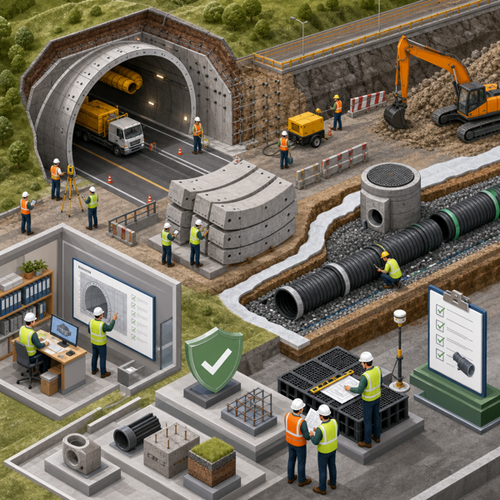
The civil engineering sector sees major advancements this July 2026 with the publication of three pivotal international standards addressing tunnel safety and underground drainage infrastructure. Covering both tunnel boring machinery and plastics piping systems, these standards represent a leap forward in safety, performance, and regulatory compliance for large-scale civil works. Professionals, engineers, compliance officers, and project managers must now adapt to new guidelines to ensure optimal safety and quality on site, and maximize operational efficiency.
Overview
Civil engineering plays a foundational role in creating resilient infrastructure for society—from tunneling for transport and utilities to sustainably managing wastewater through robust drainage systems. Compliance with up-to-date international standards is indispensable to minimize risks, deliver lasting performance, and align with regulatory regimes.
In this article, you'll uncover:
- What the latest standards cover and why they matter
- Key requirements for tunnel boring machines and plastics piping systems
- Who needs to implement these specifications
- Practical insights for compliance and certification
Detailed Standards Coverage
FprEN 12110-2 – Tunnel Boring Machines: Air Locks for Mixed Gas and Saturation
Tunnel boring machines – Air locks – Part 2: Safety requirements for the use of non-air breathing mixtures and saturation techniques in personnel locks and for pressurized transfer shuttles
This newly published European Standard from CEN sets additional, comprehensive safety requirements for personnel air locks and pressurized transfer shuttles used in tunnel boring operations—specifically where mixed gas or saturation techniques are employed. These methods are increasingly used for deep, pressurized tunneling environments where conventional compressed air techniques aren’t sufficient, especially at pressures up to 20 bar(g).
What does this standard cover?
- Supplemental requirements beyond the foundational prEN 12110-1 standard for air locks
- Safety rules for personnel locks that facilitate use of breathable mixed gases (e.g., helium/oxygen) or complete saturation, ensuring worker protection during operation
- Detailed requirements for pressurized transfer shuttles that safely transport personnel between hyperbaric systems
- Interfaces with TBM systems and clear demarcation of responsibilities for mixed gas, air, or oxygen supply
- Exclusion of vibration, noise, and EMC as significant hazards for air locks
Key requirements and specifications:
- Design and construction principles for air locks and shuttles, including protective steel frames, robust pressure vessels, fire suppression systems, and climate control
- Compartment dimensional requirements, ensuring sufficient space for both routine transfer and emergency evacuation (e.g., casualty transfer on stretchers)
- Strict demands on pipework, hoses, gauges, and valves for compatibility with helium, oxygen, or mixed gases
- Integration of gas analysis sampling points and redundant breathing supply manifolds (main, secondary, and emergency) to mitigate single-point failures
- Comprehensive instructions for operational use, signals/markings, and equipment verification/testing
Who is affected?
- Tunnel boring machine manufacturers and their supply chain partners
- Civil engineering contractors using TBMs for pressurized tunnels
- Specialized tunneling and compressed air work safety officers
- Project designers and quality managers overseeing underground construction methods
Practical implications:
- Enhanced worker safety protocols for high-pressure, non-air atmospheres
- Greater confidence in the design and operation of transfer shuttles for personnel transition between compressed environments
- Facilitation of compliance with EU Machinery Directives (see Annex ZA)
- Harmonization with prEN 16191:2023 for better integration into TBM-based worksites
Notable changes from previous EN 12110:2014:
- Complete overhaul of definitions and safety requirements
- Standard split into clear parts with targeted focus on mixed gas and saturation, reflecting best practices and regulatory needs
- Updated and expanded list of significant hazards and risk reduction approaches
Key highlights:
- Additional requirements for mixed-gas and saturation air locks at pressures up to 20 bar(g)
- Comprehensive shuttle equipment and fire suppression standards
- Precise safety, testing, and risk reduction measures for TBM workplaces
Access the full standard:View FprEN 12110-2 on iTeh Standards
FprEN 16191 – Tunnel Boring Machines: Safety Requirements
Tunnel boring machines - Safety requirements
FprEN 16191 sets the essential safety baseline for tunnel boring machines (TBMs) and associated equipment used in the construction of horizontal and inclined underground spaces—including tunnels for transport, utilities, and subterranean structures. It is the central reference for machinery safety in these highly complex working environments.
What does this standard cover?
- Identification and control of all significant hazards associated with TBM operation: mechanical, electrical, dust/gas exposure, fire, hydraulic/pneumatic systems, and more
- Complementary requirements governing monitoring of hazardous atmospheres within the TBM
- Outlines how air lock and pressurized transfer shuttles should be covered via the referenced air lock standards (prEN 12110-1 and 12110-2)
- Does not address hyperbaric operation for the entire machine, explosive atmospheres (see EN ISO/IEC 80079-38), or equipment not integral to TBMs
Key requirements and specifications:
- Enforced use of guards, shields, and fail-safe control systems to mitigate risks from moving parts and pressurized systems
- Fire prevention measures tailored for underground machinery
- Ergonomics (including operator workspace, access walkways, lighting, signal systems, marking, and emergency systems)
- Security and maintenance protocols, including access doors, rescue equipment storage, and minimum requirements for refuge chambers
- Technical specifications for hydraulic and pneumatic lines, electric systems, and noise/vibration mitigation planning
Who needs to comply?
- TBM manufacturers and their design engineers
- Civil engineering contractors and operators of TBMs and backup equipment
- Compliance bodies, procurement teams, and tunnel project stakeholders
Practical implications:
- Safer work environments in tunnel construction—protecting operators from machinery, electrical, and environmental hazards
- Systematic approach for TBM procurement and on-site deployment aligning with legal and industry mandates
- Provides strong documentation for regulatory inspection and accident prevention
Notable changes from EN 16191:2014:
- Modernized definitions, hazard lists, and requirement structure
- Focused approach integrating feedback from real-world tunnel projects
- Revised alignment with EU Machinery Directive 2006/42/EC
Key highlights:
- All-encompassing safety coverage for TBM and associated equipment
- Robust control measures for hazardous atmospheres, fire, electrical, and hydraulic risks
- Updated to support modern tunnel construction practices and regulatory needs
Access the full standard:View FprEN 16191 on iTeh Standards
ISO 13272:2026 – Plastics Piping for Underground Drains and Sewers
Plastics piping systems for non-pressure underground drains and sewers — Unplasticized poly(vinyl chloride) (PVC-U), polypropylene (PP), polypropylene with mineral modifiers (PP-MD) and polyethylene (PE) — Specifications for manholes and inspection chambers in traffic areas and underground installations
ISO 13272:2026 is a critical update for designers, specifiers, and manufacturers of plastics drainage components used in underground non-pressure applications, especially beneath traffic areas where robust performance is paramount.
What does this standard cover?
- Definitions, requirements, and specifications for circular manholes and inspection chambers manufactured from PVC-U, PP, PP-MD, and PE
- Maximum installation depth of 6 meters from ground level (invert of the main channel)
- Application-specific details for installation in vehicle traffic areas and in non-traffic locations outside building structures
- Jointing options such as elastomeric seals, adhesive and welded joints, detailing examples for site assembly and single-unit products
- Distinct guidance for manholes (≥800 mm ID, allowing human entry) and smaller inspection chambers
Key requirements and specifications:
- Material durability, including use of non-virgin/recycled plastics up to 100%, subject to stringent Annex D validation
- Physical characteristics: appearance, color, smoothness, dimensional standards
- Comprehensive geometrical and mechanical requirements, including wall thickness, socket/spigot diameters, access provisions, and fit-for-purpose testing (see referenced ISO standards)
- Performance tests for structural integrity, impact resistance, and groundwater pressure resistance up to declared maximums
- Marking, traceability, and documentation obligations for manufacturers
Who should comply?
- Plastics manhole/chamber manufacturers and civil contractors specifying drainage products
- Designers of underground drain and sewer networks for municipal, commercial, or civil works
- Quality managers, municipal inspectors, and procurement officers
- Utility companies and traffic infrastructure owners
Practical implications:
- Improved long-term reliability and verifiable quality of buried access components
- Facilitates compliance with local/national regulations with internationally harmonized test methods
- Enables sustainable material use and simplified specification for contractors
Notable updates in this revision:
- Scope expansion and updated technical requirements
- Major changes in durability and mechanical characteristic testing
- Complete revision of material, configuration, and assembly guidance
Key highlights:
- Covers PVC-U, PP, PP-MD, PE manholes/chambers for depths up to 6m
- Focus on traffic area durability and underground installation
- Modernized guidance for site-assembled and pre-manufactured units
Access the full standard:View ISO 13272:2026 on iTeh Standards
Industry Impact & Compliance
The publication of these three standards raises the bar for safety, quality, and sustainability in civil engineering projects, particularly those involving tunnel construction and underground drainage. Early and effective adoption means:
- Enhanced safety for workers and the public by rigorously managing risks in tunneling and drainage works
- Reduced likelihood of costly compliance breaches and downtime
- Streamlined procurement with documented, universal requirements
- Stronger alignment with EU directives, ISO frameworks, and local regulatory regimes
Compliance timelines:
- Immediate applicability for new machinery, systems, and installations manufactured post-publication
- Integration into procurement documents, technical specifications, and operations manuals is strongly encouraged for all new projects, with phased retrofits/inclusion as risk assessments dictate
Risks of non-compliance:
- Potential regulatory penalties, work stoppages, and increased liability for accident/incident
- Reduced eligibility for public infrastructure contracts and international project tenders
- Increased repair, maintenance, and lifecycle costs due to sub-standard installations
Technical Insights
Several common technical themes emerge across these standards, shaping best practice in civil engineering:
1. Risk-Based, Layered Safety:
- TBM standards emphasize a systematic risk assessment (EN ISO 12100), engineering out potential hazards and integrating fail-safe controls
- Air locks and transfer shuttles apply multi-redundancy principles—main, secondary, and emergency breathing supply lines; pressure-relief and excess flow technologies
2. Material Advances and Durability Testing:
- Expanded scope for recycled/non-virgin plastics in drainage while maintaining strict testing and traceability
- Mandated structural, impact, and pressure testing for manholes and chambers in traffic/high-load locations
3. System Integration:
- Comprehensive interfaces between TBM, air lock, and gas supply systems
- Standardized documentation, operation manuals, and marking facilitate better training, inspection, and lifecycle management
Best practices for implementation:
- Conduct a gap analysis of your equipment/designs against these new requirements
- Update procurement and design specifications to reference the latest standards
- Train operational teams on new safety, control, and emergency protocols
- Work with certified manufacturers and testing bodies for all critical machinery and plastics drainage products
Testing and certification:
- Leverage ISO and CEN-referenced accredited laboratories for product and system certification
- Maintain rigorous documentation and traceability for compliance audits and quality assurance
Conclusion & Next Steps
The July 2026 publication of FprEN 12110-2, FprEN 16191, and ISO 13272:2026 marks a watershed for safety and quality in tunnel construction and underground installation. Civil engineering firms, machinery manufacturers, and infrastructure managers must act now to integrate these comprehensive standards into their workflows, contracts, and training.
Key takeaways:
- Three major standards update tunnel safety, personnel protection, and plastics drainage product requirements
- Compliance will drive better business outcomes, lower risk, and improve worker safety
- Early engagement with these standards helps secure contracts, meet legal obligations, and deliver lasting infrastructure value
Recommendation: Review each standard's full details on iTeh Standards, update your procedures, and ensure all relevant teams are equipped with the latest guidance. Regularly monitor for further updates and stay ahead in your civil engineering practice.
Categories
- Latest News
- New Arrivals
- Generalities
- Services and Management
- Natural Sciences
- Health Care
- Environment
- Metrology and Measurement
- Testing
- Mechanical Systems
- Fluid Systems
- Manufacturing
- Energy and Heat
- Electrical Engineering
- Electronics
- Telecommunications
- Information Technology
- Image Technology
- Precision Mechanics
- Road Vehicles
- Railway Engineering
- Shipbuilding
- Aircraft and Space
- Materials Handling
- Packaging
- Textile and Leather
- Clothing
- Agriculture
- Food technology
- Chemical Technology
- Mining and Minerals
- Petroleum
- Metallurgy
- Wood technology
- Glass and Ceramics
- Rubber and Plastics
- Paper Technology
- Paint Industries
- Construction
- Civil Engineering
- Military Engineering
- Entertainment