


August 2026 Brings New Climate-Focused Environmental Standard for Organizations
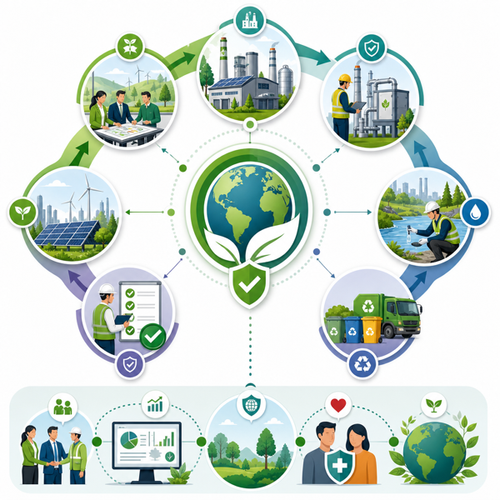
As global urgency around climate change continues to grow, the environmental protection sector is evolving to keep pace. August 2026 marks the publication of ISO 14002-3:2026, a landmark addition to the international standards landscape, specifically targeting climate action within environmental management systems. Designed for professionals across industries, this single standard delivers detailed guidance for organizations seeking to align their operations with cutting-edge climate mitigation and adaptation requirements.
Overview / Introduction
The need for robust guidelines in Environmental Protection and Health Safety has never been more pronounced. With climate impacts felt across sectors—from manufacturing to academia—organizations are under pressure to address both the causes and risks of environmental change. International standards play a critical role by establishing consistent, credible approaches for managing risks, protecting resources, and demonstrating compliance to regulators, investors, and stakeholders.
In this article, you'll find an authoritative summary of the new ISO 14002-3:2026 standard, exploring its relevance, detailed requirements, and the value it brings to organizations aiming to operationalize climate strategies within their existing ISO 14001-based Environmental Management Systems (EMS). Whether you are a quality manager, sustainability professional, or compliance officer, this overview will help you navigate the expectations and opportunities that this pivotal standard introduces.
Detailed Standards Coverage
ISO 14002-3:2026 – Environmental Management Systems Guidelines for Climate
Full Title: Environmental management systems — Guidelines for using ISO 14001 to address environmental aspects and conditions within an environmental topic area — Part 3: Climate
What this standard covers:
ISO 14002-3:2026 is the latest installment in the ISO 14002 series, providing organizations—regardless of size, industry, or geography—with guidance to effectively address climate-related aspects within the framework of ISO 14001 environmental management systems. It takes a dual approach, addressing both climate change mitigation (reducing greenhouse gas emissions) and climate change adaptation (building resilience to climate impacts). The guidance is flexible and designed to support organizations in:
- Managing climate risks and seizing related opportunities
- Integrating climate objectives into corporate strategy and EMS policy
- Demonstrating leadership in sustainable development and social responsibility
Key requirements and specifications:
- Leadership commitment: Top management must demonstrate accountability by integrating climate objectives and actions into EMS and overall strategy, dedicating resources to both mitigation and adaptation.
- Comprehensive risk assessment: Organizations must assess internal and external risks, including acute physical threats (like extreme weather), chronic impacts (such as long-term temperature rise), and transition risks related to policy, market, and technological shifts.
- Setting objectives and KPIs: Clear, measurable climate targets across short, medium, and long-term horizons, using key performance indicators (KPIs) that align with science-based targets and global climate agreements.
- Operational controls: Implementation of specific controls for emissions reduction (e.g., energy efficiency, renewable energy, process changes), and adaptation measures (e.g., infrastructure upgrades, emergency planning).
- Lifecycle perspective: Consideration of climate impacts and dependencies across the full value chain—not just direct organizational activities, but also products, services, supply chain, and end-of-life management.
- Performance evaluation and continual improvement: Regular monitoring, data-driven analysis, and review for effectiveness, with processes for responding to change and improving outcomes over time.
Who needs to comply:
- Any organization using ISO 14001 or aiming for robust environmental stewardship
- Sectors affected by climate regulation, sustainability reporting (including CSRD and expanded non-financial disclosure), and stakeholder scrutiny
- Enterprises with supply chain exposures, critical infrastructure, or significant resource dependencies
Practical implications for implementation:
- Supports alignment with UN Sustainable Development Goals and Paris Agreement commitments
- Increases organizational resilience to both regulatory and physical climate impacts
- Offers a holistic methodology, preventing unintended negative impacts on other environmental aspects (such as water or biodiversity)
- Enhances compliance, risk management, and competitive positioning
Notable changes from previous approaches:
- A formal requirement to address both climate mitigation and adaptation within EMS
- Broader, more sophisticated treatment of indirect (Scope 3) greenhouse gas emissions, lifecycle impacts, and value chain dependencies
- Clear integration with other climate and sustainability standards (e.g., ISO 14090, ISO 14068-1, Greenhouse Gas Protocol)
Key highlights:
- Dual focus on mitigation (GHG reduction) and adaptation (climate resilience)
- Organizational leadership and stakeholder expectations embedded in action planning
- Practical tools for risk assessment, scenario analysis, and performance tracking
Access the full standard:View ISO 14002-3:2026 on iTeh Standards
Industry Impact & Compliance
The publication of ISO 14002-3:2026 marks a new era for proactive environmental management. For organizations, this means:
- Impacts on business: Requirement to embed climate considerations at all levels—from board strategy to operational processes—driving a cultural shift toward climate responsibility.
- Compliance considerations: Organizations subject to environmental, ESG, and sustainability regulations will find this standard an essential resource for meeting and demonstrating legal and voluntary commitments (e.g., climate disclosures, GHG targets, adaptation planning).
- Timelines: Immediate opportunities exist for integrating requirements into current EMS frameworks, while longer-term planning will be needed for full lifecycle and value chain adaptation.
- Benefits of adoption:
- Improved risk management (physical and transition climate risks)
- Enhanced reputation and trust with regulators, customers, and investors
- Access to funding and insurance linked to climate risk mitigation
- Potential cost savings and operational efficiencies
- Competitive advantage in procurement and market positioning
- Risks of non-compliance:
- Vulnerability to climate-induced disruptions
- Regulatory penalties, loss of market access, or reputational damage
- Missed opportunities for innovation and sustainable investment
Technical Insights
While each organization’s context will vary, several technical requirements and best practices emerge from ISO 14002-3:2026:
- Lifecycle Consideration: Quantify and manage climate-related aspects from raw material extraction through end-of-life, using robust greenhouse gas inventories and emissions categories (Scope 1, 2, 3).
- Risk-Based Approach: Regularly update climate risk assessments using both qualitative (e.g., scenario analysis) and quantitative (e.g., emission factor calculations, science-based targets) methods. Consider both acute (extreme weather) and chronic (e.g., resource scarcity, disease vectors) threats.
- Stakeholder Engagement: Integrate feedback from regulators, customers, investors, employees, and community stakeholders into climate risk/opportunity analysis and reporting.
- Objective Setting and KPIs:
- Tie mitigation targets to global frameworks (e.g., <2°C or 1.5°C global temperature rise)
- Use process- and outcome-based adaptation indicators to measure resilience improvements
- Adopt science-based targets and adapt as new research becomes available
- Operational Controls: Select the best mix of engineering (technological), administrative (policy/procedure), and nature-based solutions for both mitigation and adaptation, ensuring flexibility to adjust over time.
- Testing and Certification: Leverage internal audits, third-party assessments, and recognized methodologies (such as GHG Protocol) for verifying performance and outcomes. Employ continual improvement cycles (Plan-Do-Check-Act) to embed climate action into core operations.
Conclusion / Next Steps
With the release of ISO 14002-3:2026, organizations have a powerful, structured tool for making climate action a core part of business as usual. This standard empowers leaders across sectors to not just meet compliance obligations but to build a more resilient, competitive, and responsible enterprise.
Key takeaways:
- ISO 14002-3:2026 is the first standalone international standard dedicated purely to climate guidance within ISO 14001-aligned environmental management frameworks.
- The standard offers practical strategies for both climate mitigation and adaptation, covering the entire product/service lifecycle and supporting comprehensive, stakeholder-driven action plans.
- Early adoption will prepare organizations for evolving regulatory landscapes, market shifts, and stakeholder scrutiny while advancing their own sustainability performance.
Recommendations for organizations:
- Review existing environmental management systems for alignment with the new requirements
- Engage senior leadership early to ensure buy-in and clear climate objectives
- Conduct a current-state assessment using the standard’s risk-based framework
- Set science-based, measurable climate targets for both mitigation and adaptation
- Regularly monitor performance, document improvements, and communicate outcomes to stakeholders
Explore the full standard on iTeh Standards:ISO 14002-3:2026 – Environmental management systems – Climate guidelines
Stay tuned to iTeh Standards for ongoing updates, expert analysis, and guidance on environmental protection standards designed to future-proof organizations and drive meaningful change in a rapidly evolving world.
Categories
- Latest News
- New Arrivals
- Generalities
- Services and Management
- Natural Sciences
- Health Care
- Environment
- Metrology and Measurement
- Testing
- Mechanical Systems
- Fluid Systems
- Manufacturing
- Energy and Heat
- Electrical Engineering
- Electronics
- Telecommunications
- Information Technology
- Image Technology
- Precision Mechanics
- Road Vehicles
- Railway Engineering
- Shipbuilding
- Aircraft and Space
- Materials Handling
- Packaging
- Textile and Leather
- Clothing
- Agriculture
- Food technology
- Chemical Technology
- Mining and Minerals
- Petroleum
- Metallurgy
- Wood technology
- Glass and Ceramics
- Rubber and Plastics
- Paper Technology
- Paint Industries
- Construction
- Civil Engineering
- Military Engineering
- Entertainment