


July 2026 Standards Update: Key Changes in Construction Materials and Building
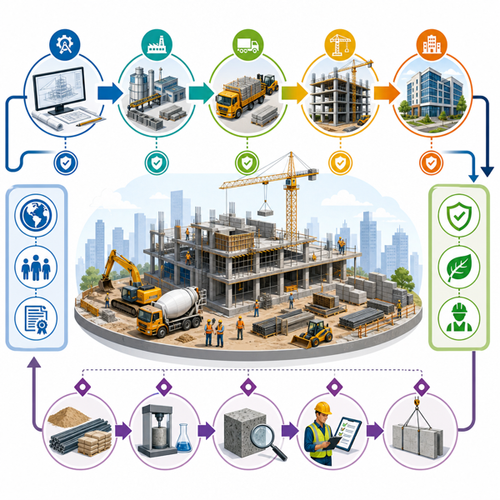
July 2026 Standards Update: Key Changes in Construction Materials and Building
The construction industry is seeing significant updates in July 2026 with the publication of five crucial international standards. Covering topics from tunnel boring machine safety and fire resistance of air transfer grilles to precast lightweight concrete, machinery safety, and potable water installations, these standards are set to elevate quality, safety, and compliance across a broad spectrum of building projects. For professionals across engineering, quality assurance, procurement, and research, staying informed on these changes is critical for operational excellence and regulatory alignment.
Overview
Construction Materials and Building standards form the backbone of quality and safety in the built environment. By specifying requirements for products, machinery, and installations, these standards drive innovation, minimize risk, and ensure regulatory compliance. This July 2026 update introduces new and revised documents developed by CEN and ISO, addressing both emerging industry needs and evolving regulatory expectations.
In this article, you’ll discover:
- The scope and content of five newly published standards
- Key specifications, safety improvements, and compliance requirements
- Practical implications for manufacturers, designers, contractors, and facility managers
- Technical insights and best practices for implementation
Detailed Standards Coverage
FprEN 12110-1 – Tunnel Boring Machines - Air Locks (Part 1)
Tunnel boring machines - Air locks - Part 1: Safety requirements for air locks utilizing compressed air as the pressurizing or breathing medium along with requirements for oxygen breathing systems for decompression purposes
This standard sets out comprehensive safety requirements for air locks integrated into tunnel boring machines, specifically those utilizing compressed air for pressurization or breathing, and those employing oxygen-breathing systems for decompression. Covering the design, construction, equipping, marking, and testing of air locks, it addresses both personnel and material air locks, as well as pressure bulkheads used inside tunnels or shafts.
Key requirements include:
- Safety and risk reduction measures for air locks exposed to pressures and specialized breathing environments
- Integration specifications for control functions, information, and intermediate chamber management
- Decompression systems and oxygen supply safety provisions
- Marking, documentation, and warning devices essential for proper operation
- Interface management with other tunneling and construction equipment (e.g., as addressed in prEN 16191)
This revision (superseding EN 12110:2014) reflects major changes to definitions, safety protocols, and hazard identification, expanding coverage to accommodate new technologies and operational scenarios. The requirements apply to new machinery manufactured post-publication date and must be observed by manufacturers, tunnel constructors, and safety engineers.
Key highlights:
- Complete overhaul of safety and decompression requirements
- Guidance for interface management with related tunneling equipment
- Clear demarcation of responsibilities between manufacturers and end-users
Access the full standard:View FprEN 12110-1 on iTeh Standards
EN 1364-5:2026 – Fire Resistance Tests for Air Transfer Grilles
Fire resistance tests for non-loadbearing elements - Part 5: Air transfer grilles
EN 1364-5:2026 sets out the standardized test procedures for evaluating the fire resistance of air transfer grilles (ATG) designed for installation in walls, floors, or ceilings of buildings. The standard specifies:
- Testing methodology for the behavior of air transfer grilles exposed to fire
- Applicability to both fire-resistant and smoke-control ATGs
- Test conditions including heating and pressure in accordance with EN 1363-1
- Detailed procedures for specimen installation, instrumentation, and post-test reporting
This document is crucial for manufacturers, building designers, certification laboratories, and installers who must ensure compliance with fire safety regulations for ventilation systems and partitioning. Notably, EN 1364-5:2026 excludes testing for ATGs integrated with ducts, fire dampers, or installed in fire doors/windows, which are governed by alternative standards.
Key highlights:
- Standardizes testing scenario for vertical and horizontal ATG installations
- New provisions for grilles facing direct flame impingement at fire onset
- Clarifies boundaries with related standards (e.g., EN 1366-2 for fire dampers)
Access the full standard:View EN 1364-5:2026 on iTeh Standards
EN 1520:2026 – Precast Lightweight Concrete Products With an Open Structure
Precast lightweight concrete products with an open structure
EN 1520:2026 covers the manufacturing and performance of precast concrete elements constructed from lightweight concrete with an open structure—having dry densities between 400 and 2000 kg/m³. The document applies to products used as:
- Structural elements (walls, roofs, floors, beams, piers)
- Non-loadbearing wall elements and claddings
- Noise barrier components and box culverts
Key requirements include:
- Mechanical properties (compressive strength, modulus of elasticity, joint rigidity)
- Fire resistance and reaction to fire
- Thermal and acoustic performance
- Environmental provisions (release of dangerous substances, sustainability)
- Quality control methods for both factory and on-site manufacturing
The standard also recognizes recycled lightweight concrete, setting parameters for its inclusion. This revision consolidates tabulated and test-based criteria for physical performance, providing a unified reference for designers, fabricators, specifiers, and contractors.
Key highlights:
- Harmonizes structural and non-structural element requirements
- Specifies testing and calculation methods for heat, sound, and fire attributes
- Incorporates sustainability and environmental safety provisions
Access the full standard:View EN 1520:2026 on iTeh Standards
prEN ISO 19432-2 – Safety for Abrasive Chain Cutting Machines
Building construction machinery and equipment - Portable, hand-held, internal combustion engine driven abrasive cutting machines - Part 2: Machines for abrasive chains - Safety requirements (ISO/DIS 19432-2:2024)
This standard specifies safety requirements and verification measures for portable, hand-held cutting machines equipped with abrasive chains, primarily designed for construction materials such as concrete, stone, and metal. It covers:
- Design features for preventing accidents from derailed or broken chains
- Water-cooling and dust suppression system requirements
- Guarding and ergonomic handle specifications
- Protective measures for hot and high-voltage parts
- Information, marking, and operator warning protocols
Excluded are machines meant for wood or forestry applications, which are standardized separately.
The document addresses the elimination/reduction of usage hazards, detailing safety verification, operator handbook content, and compliance marking, making it critical for machinery manufacturers, rental companies, site managers, and safety inspectors.
Key highlights:
- Complete safety framework for abrasive chain machinery
- Guidance on user instructions and essential labeling
- Clarifies distinctions from wood/forestry equipment safety standards
Access the full standard:View prEN ISO 19432-2 on iTeh Standards
prEN 806-1 – Potable Water Installations in Buildings (General Requirements)
Specifications for installations inside buildings conveying water intended for human consumption - Part 1: General
prEN 806-1 provides essential requirements and recommendations for the full lifecycle (design, installation, alteration, testing, maintenance, operation) of potable water installations within and adjacent to buildings. Applicable to all pipeline systems, fittings, and connected appliances, it ensures safe water supply from the delivery point to points of use.
Key provisions include:
- Fundamentals of system layout, flow velocity, and pressure management
- Anti-backflow devices and system protection
- Terms and definitions for clarity in project specifications
- Guidance for pipe materials, evacuations, maintenance planning, and leak detection
- Updated terminology and references aligning with current building codes and water regulations
This update supersedes EN 806-1:2000, with expanded editorial coverage and modernized definitions, supporting designers, installers, facility managers, and compliance officers in meeting health and regulatory requirements.
Key highlights:
- Broadened definitions and editorial overhaul for system clarity
- End-to-end guidance from design to commissioning
- Direct relevance to health, hygiene, and public safety mandates
Access the full standard:View prEN 806-1 on iTeh Standards
Industry Impact & Compliance
The July 2026 updates present considerable implications for construction materials and building sector stakeholders:
- Businesses must assess current products and practices for compliance with the new safety, performance, and testing requirements, particularly for tunnel machinery, air transfer grilles, and precast components.
- Machinery manufacturers and rental houses must update equipment and operator manuals to integrate revised standards and implement enhanced markings and safety devices.
- Contractors and facility managers have new protocols for installation, fire safety, and water quality assurance.
- Procurement teams should verify supplier declarations align with the amended standards, mitigating supply chain risk.
Timelines for compliance will be dictated by each country’s adoption of the European or ISO standards, but early adoption is rewarded through improved performance, reduced liability, and enhanced market reputation. Non-compliance may restrict market access, invalidate insurance, and increase project risk.
Technical Insights
Across these standards, several technical themes emerge:
- Safety by Design: Emphasis on risk reduction, proper marking, controls, and the clear allocation of manufacturer versus user responsibilities.
- Testing and Verification: Adoption of harmonized testing methods for fire resistance, mechanical properties, and operational hazards, with clear laboratory and reporting protocols.
- Durability and Sustainability: New criteria covering environmental performance, lifecycle assessments, and safe recycling or disposal—particularly for concrete elements.
- Documentation and Marking: Each standard improves documentation requirements, from operational manuals to labeling, ensuring clarity for end-users and regulatory checks.
- Certification Pathways: Manufacturers and system designers have defined pathways for product and process certification, ensuring smoother adherence to market and regulatory demands.
Conclusion & Next Steps
The July 2026 wave of Construction Materials and Building standards sets a higher bar for safety, quality, and sustainability. Industry professionals are urged to:
- Review and integrate the new or revised standards into design, procurement, and operational processes.
- Engage stakeholders—from suppliers to site engineers—about implications and training needs.
- Update documentation and compliance systems to reflect the enhanced requirements.
- Access and study the full standards through iTeh Standards for up-to-date, official texts and interpretations.
Stay informed, ensure compliance, and lead the way in quality construction by leveraging these essential new standards. Visit iTeh Standards to access the full documents and be ready for the evolving regulatory landscape.
Categories
- Latest News
- New Arrivals
- Generalities
- Services and Management
- Natural Sciences
- Health Care
- Environment
- Metrology and Measurement
- Testing
- Mechanical Systems
- Fluid Systems
- Manufacturing
- Energy and Heat
- Electrical Engineering
- Electronics
- Telecommunications
- Information Technology
- Image Technology
- Precision Mechanics
- Road Vehicles
- Railway Engineering
- Shipbuilding
- Aircraft and Space
- Materials Handling
- Packaging
- Textile and Leather
- Clothing
- Agriculture
- Food technology
- Chemical Technology
- Mining and Minerals
- Petroleum
- Metallurgy
- Wood technology
- Glass and Ceramics
- Rubber and Plastics
- Paper Technology
- Paint Industries
- Construction
- Civil Engineering
- Military Engineering
- Entertainment