

October 2026 Construction Materials Standards: Essential Updates for Building Professionals
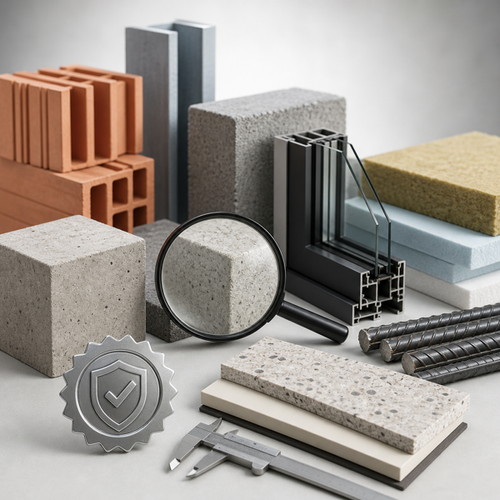
October 2026 Construction Materials Standards: Essential Updates for Building Professionals
The landscape of construction materials and building practice evolves rapidly, and October 2026 is no exception. This month, five significant standards have been published and revised, shaping the way the industry approaches external and internal finishes, sprayed concrete, ventilative cooling, and environmentally responsible panel products. Whether you’re an engineer, project manager, or compliance officer, understanding these updates is crucial for staying up-to-date and ensuring quality, performance, and regulatory conformity on all your projects.
Overview of the Construction Materials Standards Released in October 2026
The construction industry relies on a foundation of trusted standards to ensure quality, safety, durability, and sustainability. In an era of changing regulations, rising performance demands, and a growing emphasis on lifecycle and environmental impact, the need for up-to-date and actionable information is critical.
This article—covering the first half of October’s standards releases for construction materials—brings together:
- New requirements for external rendering and internal plastering
- Test methods advancing the reliability of sprayed concrete
- Guidelines improving indoor comfort and resilience through ventilative cooling
- Environmental product declaration protocols for roofing and cladding panels
Professionals will gain insights into essential technical updates, compliance risks and opportunities, and best practices for implementation in new and renovated buildings alike.
Detailed Standards Coverage
prEN 13914-1:2026 – External Rendering: Design, Preparation, and Application
Design, preparation and application of external rendering and internal plastering – Part 1: External rendering
This revised European Standard from CEN provides a comprehensive framework for the design, material selection, and application of external rendering systems. It addresses renders based on cement, lime, mineral binders, masonry cement, polymer-modified binders, and organic binders as specified in EN 998-1 and EN 15824.
The scope covers rendering on both new and existing backgrounds and includes recommendations for maintenance and repair of previous work. Site, factory, and semi-finished factory-made renders are all covered, reflecting the diversity of modern construction sites. However, it does not apply to renders for liquid-retaining structures, ETICS, historic monuments, or concrete structural repairs.
Key requirements emphasize:
- Selection of materials and background suitability
- Durability, weather resistance, and exposure conditions
- Application methods, curing, and protection of adjoining surfaces
- Evaluation and minimization of cracks, water ingress, thermal performance, and decorative finishes
Stakeholders such as building designers, render manufacturers, contractors, and quality assurance professionals must align with these detailed provisions to deliver robust and lasting external render solutions.
Practical implications include refined background assessment, mandatory control of render properties relative to exposure and climate, and obligatory compliance with national building codes where they supersede European standards.
Key highlights:
- Guidance on cement, lime, and organic binder renders for all common substrates
- Updates on exposure, cracking control, and background preparation
- Detailed protocols for mix design, site application, and finishing techniques
Access the full standard:View prEN 13914-1 on iTeh Standards
prEN 13914-2:2026 – Internal Plastering: Design, Preparation, and Application
Design, preparation and application of external rendering and internal plastering – Part 2: Internal plastering
This standard details the design and essential principles for internal plastering, supporting the creation of durable, high-performing wall and ceiling finishes in new builds and renovations. The specification covers a wide spectrum of plaster types, including gypsum plasters, lime-gypsum, cement-lime, lightweight, polymer-modified, clay, silicate, and organic plasters for diverse internal applications.
The document lays out methodical recommendations for:
- Detailing and background compatibility
- Selection and mixing of plasters based on substrate, occupancy, and expected performance
- Achieving required flatness, smoothness, thermal and acoustic properties
- Air-tightness, condensation resistance, and durability against impact or salt exposure
Professionals—including specifiers, interior contractors, and quality controllers—will benefit from clarity on choosing the right plaster for each scenario, optimizing multi-coat vs. single-coat systems, and ensuring compliance with industry best practices. While gypsums and renovation plasters receive special mention, the document specifically excludes external finishes and prefabricated elements, keeping its focus clear.
Key highlights:
- Covers gypsum, lime, cement-based, clay, organic, and hybrid plasters
- Emphasis on substrate compatibility, adhesion, and finish quality
- Recommendations for maintenance, repair, and crack prevention
Access the full standard:View prEN 13914-2 on iTeh Standards
ISO 23945-2:2026 – Sampling Sprayed Concrete: Fresh and Hardened States
Test methods for sprayed concrete — Part 2: Sampling fresh and hardened concrete
As sprayed concrete becomes increasingly vital for tunnel linings, structural repairs, recertification, and new builds, robust and repeatable testing methods are essential. ISO 23945-2:2026 delivers a harmonized approach for sampling both fresh and hardened sprayed concrete and mortar, whether in-lab or on-site (in situ).
This standard provides procedures for:
- Collecting representative fresh samples before and after spraying
- Producing and sampling from test panels, cores, or in situ sprayed sections
- Preparing samples for different laboratory tests (such as compressive strength, durability, and workability)
- Recording sample identity and associated characteristics
Applicable to contractors, testing laboratories, and quality assurance personnel, adherence ensures accurate and reliable test results to support design validation, compliance certifications, and troubleshooting of sprayed concrete works. The standard cautions users to consider relevant safety measures alongside the recommended sampling procedures.
Key highlights:
- Standardized techniques for collecting fresh and hardened sprayed concrete specimens
- Detailed sampling from both laboratory and in situ environments
- Assures comparability and quality of test results across projects
Access the full standard:View ISO 23945-2:2026 on iTeh Standards
CEN/TS 18335:2026 – Ventilative Cooling Systems for Buildings: Design Guidance
Ventilation for buildings – Ventilative cooling systems – Design
In response to global warming and a growing focus on energy efficiency, CEN/TS 18335:2026 guides the design of ventilative cooling systems for all building types—including new builds and retrofits—where indoor environmental quality for human occupancy is paramount.
The technical specification addresses:
- Mechanical, natural, and hybrid ventilation approaches for passive and supplemental building cooling
- Strategic frameworks for the feasibility, design, and integration of ventilative cooling at every project stage
- Considerations for supplementary free cooling, system interface, and resilience in the event of power outages
The document is particularly valuable for architects, MEP designers, sustainability consultants, and facility managers tasked with balancing occupant comfort, decarbonization, and operational efficiency. It recommends methods for assessing thermal resilience, sizing openings and ducts, and integrating new systems with existing structures and other building services.
Key highlights:
- Strategies for passive, mechanical, and hybrid cooling in residential and non-residential buildings
- Stepwise guidance from feasibility to detailed design
- Aligns ventilative cooling design with energy, safety, and user acceptance goals
Access the full standard:View CEN/TS 18335:2026 on iTeh Standards
EN 18159:2026 – Environmental Declarations for Double Skin Insulating Sandwich Panels
Double skin metal faced insulating sandwich panels for roofing and cladding - Environmental product declarations - Product category rules complementary to EN 15804 for double skin metal faced insulating sandwich panels for roofing and cladding
EN 18159:2026 strengthens environmental transparency for double skin metal faced insulating sandwich panels as used in walls, roofs, ceilings, and cladding within building envelopes. This standard offers complementary product category rules (c-PCR) linked to EN 15804, facilitating comparable Type III environmental product declarations (EPD) for these critical building components.
Designed for manufacturers, environmental officers, building owners, and procurement specialists, the standard covers:
- Declaring impacts via life cycle assessment (LCA) modules A1-A3 (product stage), C1-C4 (end of life), and D (beyond system boundaries)
- Application to panels with diverse core materials, perforated faces, and both structural and non-structural roles
- Guidelines for including additional technical and environmental information, biogenic content, reuse rates, and waste scenarios
With emphasis on cradle-to-grave assessment, the standard empowers users to make and compare environmentally responsible choices for building envelopes, accommodating increasing market and regulatory demand for sustainability in construction products.
Key highlights:
- Aligns sandwich panel EPDs with EN 15804:2012+A2:2019
- Details scenario planning for reuse, recycling, and end-of-life impacts
- Expands product scope to core material and format diversity
Access the full standard:View EN 18159:2026 on iTeh Standards
Industry Impact & Compliance
How These Standards Affect the Construction Sector
These October 2026 standards releases mark an important evolution for industry professionals involved in material specification, design, construction, testing, and sustainability reporting.
Compliance Considerations:
- Many projects, especially those in Europe or with international partners, must align with the latest CEN and ISO references for rendering, plastering, concrete, and panel systems.
- Updated test methods and environmental product declaration rules will become integral to project documentation, supplier selection, and certification processes.
- Key compliance timelines may depend on adoption by regulatory bodies or inclusion in updated project specifications.
Benefits of Adopting New Standards:
- Improved durability and performance of rendered and plastered surfaces
- Enhanced project quality and fewer costly remedial works due to cracking or moisture ingress
- Reliable, standardized testing and product reporting, streamlining global procurement
- Better environmental accountability, supporting green building certification and client requirements
Risks of Non-Compliance:
- Delays in regulatory approvals or tender eligibility
- Higher long-term maintenance or litigation risks
- Loss of market access where up-to-date environmental declarations are mandatory
Technical Insights
Common Technical Themes
- Background and substrate assessment: Both rendering and plastering standards stress evaluating substrate conditions and compatibility before application to prevent failures.
- Mix design and application precision: Recommendations on binder selection, mixing protocols, and installation practices are emphasized in all material specifications.
- Ventilation as passive climate control: Guidance on integrating ventilative cooling supports resilience and energy savings beyond typical HVAC design.
- Lifecycle and environmental assessment: Environmental declarations are now more detailed, offering high-value data for sustainability planning and procurement.
Implementation Best Practices
- Review updated standards against existing company and project specifications.
- Train project teams on new requirements for material selection, surface treatment, and QA/QC procedures.
- Consult with accredited laboratories for alignment with new concrete testing protocols.
- Engage environmental consultants early for EPDs and panel product documentation.
Testing and Certification
- Adhere to ISO 23945-2:2026 for all in situ or lab-based sprayed concrete sampling
- Ensure rendering and plastering works cite or reference the latest EN 13914 parts in technical submittals
- Adopt EN 18159:2026 for sandwich panels in tenders, especially where green building certification is pursued
Conclusion and Next Steps
The October 2026 release of these five pivotal standards demonstrates the sector’s ongoing commitment to quality, durability, and sustainability for construction materials and building practices. From rendering and plastering to ventilative cooling and eco-conscious panels, the details in these standards underpin better buildings for occupants, owners, and the environment.
Key Takeaways:
- Review and integrate the newest requirements into your specifications and workflows
- Train your teams and partners on significant technical changes
- Use iTeh Standards to access and implement these documents directly, ensuring your practices remain compliant and competitive
Explore these standards in depth, stay ahead of regulatory trends, and safeguard your projects’ success—visit iTeh Standards for the full documentation and continuous updates.
Categories
- Latest News
- New Arrivals
- Generalities
- Services and Management
- Natural Sciences
- Health Care
- Environment
- Metrology and Measurement
- Testing
- Mechanical Systems
- Fluid Systems
- Manufacturing
- Energy and Heat
- Electrical Engineering
- Electronics
- Telecommunications
- Information Technology
- Image Technology
- Precision Mechanics
- Road Vehicles
- Railway Engineering
- Shipbuilding
- Aircraft and Space
- Materials Handling
- Packaging
- Textile and Leather
- Clothing
- Agriculture
- Food technology
- Chemical Technology
- Mining and Minerals
- Petroleum
- Metallurgy
- Wood technology
- Glass and Ceramics
- Rubber and Plastics
- Paper Technology
- Paint Industries
- Construction
- Civil Engineering
- Military Engineering
- Entertainment