


Construction Materials Standards Spotlight: May 2026 Brings Important Updates
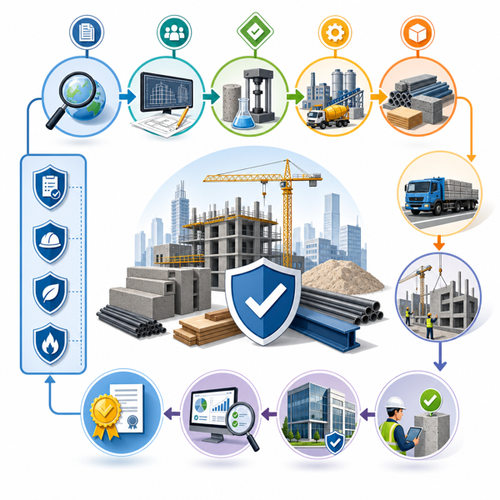
In May 2026, the construction materials and building sector sees pivotal progress with the release of five significant standards. These updates strengthen quality, safety, and energy efficiency norms across acoustics, metering, security hardware, structural connections, and building energy systems. With increased regulatory requirements and technological innovation, these standards are vital for professionals seeking excellence and compliance in construction projects.
Overview / Introduction
The construction materials and building industry constantly evolves, driven by advances in engineering, sustainability goals, and heightened safety demands. International and European standards play a crucial role in this evolution, providing consistent frameworks for design, manufacturing, and performance evaluation.
This article reviews five newly published standards from ISO and CEN that directly impact acoustics, gas metering, lock security, structural steelwork, and energy efficiency. Readers will learn about the scope, requirements, and implications of each standard—and how they collectively raise the bar for construction sector quality and performance.
Detailed Standards Coverage
ISO 9053-1:2026 – Acoustics: Static Method for Measuring Airflow Resistance
Acoustics — Determination of airflow resistance — Part 1: Static method
This updated ISO standard specifies the methodology for determining static airflow resistance in porous materials used for acoustical applications, an essential property for materials intended to manage sound and vibration in building environments. The standard describes a testing regime under laminar airflow, ensuring measurements are repeatable and reliable across various material types and sample dimensions.
Key technical requirements include:
- Defined test setup: measurement cell, flow generation, and pressure measurement systems
- Calibration of devices every 2 years to maintain precision
- Specific specimen shapes, dimensions, and quantity to ensure validity
- Test report requirements, including raw data and calculated airflow resistivity
The standard is essential for:
- Acoustic engineers
- Quality control laboratories
- Manufacturers of sound-absorbing materials and products
Implementation of ISO 9053-1:2026 ensures consistent product performance and supports compliance in building projects with stringent acoustic specifications. Notable changes from the 2018 edition include revised illustrations (Figure 1) and expanded guidance on calibration test specimens.
Key highlights:
- Standardizes measurement of static airflow resistance in building acoustics
- Enhances test accuracy and repeatability for porous materials
- Provides updated technical illustrations and guidance
Access the full standard:View ISO 9053-1:2026 on iTeh Standards
prEN 14236 – Ultrasonic Domestic Gas Meters
Ultrasonic domestic gas meters
This draft European standard defines comprehensive requirements and testing protocols for battery-powered ultrasonic gas meters used in residential and light industrial contexts. The standard targets class 1.0 and 1.5 meters designed to accurately and safely measure distributed fuel gases under maximum working pressures up to 0.5 bar and flow rates up to 40 m³/h.
Scope and application:
- Installation flexibility: accommodates indoor/outdoor use, varying humidity, and vibration profiles
- Comprehensive performance specs: defines permissible error margins, temperature sensitivities, flow disturbance tolerances, and immunity to contaminants
- Safety and suitability: covers construction robustness, leak tightness, flame resistance, and protection against unauthorized interference
This standard is critical for:
- Gas meter manufacturers
- Utilities and installation contractors
- Certification and compliance bodies
prEN 14236:2026 introduces clarified definitions, expanded normative references, refined performance and safety criteria, and alignment with EU Measuring Instruments Directive. Notably, this edition details new robustness and electronic requirements for meters with integrated temperature compensation and communication features.
Key highlights:
- Addresses safety, construction, and metrological performance of domestic ultrasonic gas meters
- Enhanced electromagnetic and environmental resistance requirements
- Broad applicability in evolving gas infrastructure and smart metering contexts
Access the full standard:View prEN 14236 on iTeh Standards
EN 1303:2026 – Building Hardware: Cylinders and Master-Key Systems
Building hardware - Cylinders and Master-Key-Systems (MKS) for locks - Requirements and test methods
EN 1303:2026 provides a robust performance and testing framework for lock cylinders and their keys, including master-key systems, widely used in commercial, residential, and institutional buildings. The standard sets stringent criteria for:
- Strength, mechanical durability, and corrosion resistance—including direct referencing of EN 1670 for corrosion testing
- Security grading: 13 grades for key-related security, 5 grades simulating physical attack, and specific manipulative resistance
- Suitability for use in fire- and smoke-resistant doors, with referenced testing in Annex A
The scope has expanded from previous editions to cover master-key systems and introduces a new annex for cylinders in complex locking systems. The revised classification system now includes two grades for mechanical coding and increases the focus on attack and manipulation resistance.
Intended for:
- Building hardware designers and manufacturers
- Security consultants and specifiers
- Facility managers
Using EN 1303:2026 improves security, compliance with fire/smoke door requirements, and product longevity—key elements for modern building safety and access management.
Key highlights:
- Extended scope to master-key systems, with updated testing regimes
- New manipulation and attack resistance criteria
- Streamlined and expanded classification methodology
Access the full standard:View EN 1303:2026 on iTeh Standards
ISO 18954:2026 – Steel Structures: Bolting Tightening Procedures
Steel structures — Structural bolting — Test method to determine parameters of bolt tightening procedures
ISO 18954:2026 sets out a universally applicable test method for determining parameters of bolt tightening procedures in steel structures. This is particularly important for assemblies lacking pre-existing, approved tightening protocols—such as those using unconventional fasteners, alternate materials (e.g., stainless steel), or non-standard lubrication.
The Bolt Tightening Qualification Procedure (BTQP) presented in the standard:
- Covers pretensioned, load-bearing bolted joints using a defined lot of bolts, nuts, and washers
- Requires 20 or more tightening tests per configuration, capturing force, torque, and rotation data
- Specifies fitness-for-purpose validation, with analytical criteria for bolt force and angle characteristics
Users, including structural engineers, quality managers, and contractors, can now qualify unique connection configurations with demonstrable, documented precision—supporting both design and execution phases under international best practices.
Key highlights:
- Provides the definitive qualification methodology for unique structural bolted connections
- Promotes reliability in critical load-bearing steelwork
- Detailed reporting and validation ensure traceability and compliance
Access the full standard:View ISO 18954:2026 on iTeh Standards
prEN 15316-7-1 – Building Energy Performance: Instantaneous DHW Heat Recovery
Energy performance of buildings - Method for calculation of system energy requirements and system efficiencies - Part 7-1: DHW instantaneous heat recovery- Module M8-13
This European standard module introduces a rigorous calculation methodology for assessing energy recovery from instantaneous domestic hot water (DHW) systems using counter-flow heat exchangers (e.g., from shower drains). It standardizes calculations within the overarching EPB (Energy Performance of Buildings) framework, driving energy efficiency improvements in new and retrofitted buildings alike.
Core features include:
- Established input requirements, calculation procedures, and reporting methods for recovered heat
- Integration with whole-building calculation models, ensuring consistency with EN ISO 52000-1
- Consideration of external conditions and system controls that influence outcomes
The standard does not cover storage heat recovery, heat pumps, or sizing/inspection of recovery devices—focusing purely on the energy calculation process for policy, design, and certification use.
Beneficiaries include:
- Building designers and energy consultants
- Mechanical contractors
- Regulators and certification bodies focused on national or European energy performance mandates
Key highlights:
- Standardizes methods for quantifying DHW drain heat recovery
- Enhances accuracy of building energy simulations and compliance assessments
- Supports advancement of near-zero energy buildings and renovation strategies
Access the full standard:View prEN 15316-7-1 on iTeh Standards
Industry Impact & Compliance
These new and revised standards set a higher benchmark for product performance, safety, and sustainability:
- Business Impact: Organizations adopting these standards are positioned for leading-edge compliance, risk management, and market differentiation. Ensuring that construction products, systems, and processes meet or exceed these requirements reduces liability and fosters trust among clients and regulators.
- Implementation Timelines: Check the official publication and national adoption dates for mandated compliance. Proactive adoption facilitates early market access and lessens the risk of delays at project approval or certification phases.
- Benefits:
- Improved building quality, safety, and occupant comfort
- Streamlined regulatory compliance
- Future-proofing against updates in national and international building codes
- Risks of Non-Compliance: Failure to align with these standards can lead to project delays, failed inspections, and increased costs due to rework or unplanned retrofits.
Technical Insights
Many of the featured standards share technical themes relevant to the broader construction sector:
- Standardized Testing & Reporting: Across acoustical materials, gas metering, and steel bolting, repeatability and traceability in test and performance data are emphasized.
- Integration with Modern Building Systems: Gas meters and energy performance calculations accommodate emerging technologies (e.g., smart meters, heat recovery units), reflecting evolving energy and safety landscapes.
- Focus on Durability & Resistance: Whether in lock cylinders’ security or meters’ environmental protection, these standards demand rigorous resistance to corrosion, humidity, attack, and vibration.
- Best Practices for Certification: Early engagement with accredited test labs and notified bodies is advised. Maintain all calibration and test records in line with standard-specific reporting requirements.
Conclusion / Next Steps
May 2026’s suite of construction materials and building standards demonstrates a significant leap forward across technical, safety, and sustainability domains. Key takeaways include:
- Up-to-date specifications and test methods for acoustic materials, gas meters, building hardware, structural bolting, and energy efficiency
- Enhanced frameworks for product evaluation and regulatory compliance
- Forward-looking solutions to support energy transition, occupant safety, and lifecycle resilience
Recommendations for Organizations:
- Review and update procurement, testing, and design processes to align with these standards
- Train technical teams and quality managers on key changes and reporting requirements
- Engage with notified bodies for product or system certification where necessary
- Stay connected to the iTeh Standards platform for the latest releases and compliance resources
Explore more standards and stay competitive—visit iTeh Standards to access the full catalogue and detailed specifications for your next project.
Categories
- Latest News
- New Arrivals
- Generalities
- Services and Management
- Natural Sciences
- Health Care
- Environment
- Metrology and Measurement
- Testing
- Mechanical Systems
- Fluid Systems
- Manufacturing
- Energy and Heat
- Electrical Engineering
- Electronics
- Telecommunications
- Information Technology
- Image Technology
- Precision Mechanics
- Road Vehicles
- Railway Engineering
- Shipbuilding
- Aircraft and Space
- Materials Handling
- Packaging
- Textile and Leather
- Clothing
- Agriculture
- Food technology
- Chemical Technology
- Mining and Minerals
- Petroleum
- Metallurgy
- Wood technology
- Glass and Ceramics
- Rubber and Plastics
- Paper Technology
- Paint Industries
- Construction
- Civil Engineering
- Military Engineering
- Entertainment