

New Standards for Cooking Fume Extractors: September 2026 Update
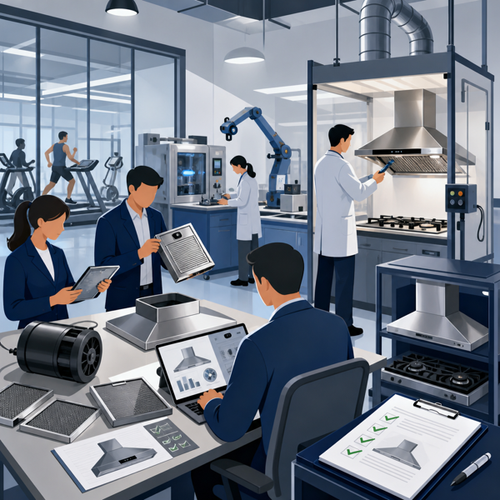
Efficient removal of cooking fumes has become a priority for both domestic and commercial kitchens worldwide. In September 2026, a significant advancement arrived with the publication of prEN IEC/ASTM 63470:2025, introducing rigorous, uniform methods for measuring the capture efficiency of cooking fume extractors. This new international standard underpins safer air quality, ensures consistent product performance, and provides much-needed clarity for industry professionals. Whether you manage compliance, oversee quality, or engineer kitchen appliances, this new guideline will impact how you measure, document, and validate extractor efficiency.
Overview
The domestic and commercial kitchen equipment sector is always evolving to respond to technological innovation, energy efficiency imperatives, and rising consumer expectations for healthier indoor environments. Cooking fume extractors (also known as range hoods, downdraft systems, and integrated ventilation solutions) are essential for maintaining air quality and user safety in both households and commercial establishments.
Standards are critical in this field—they offer:
- Verified benchmarks for product safety and performance
- Clear criteria for testing, certification, and market compliance
- Tools for protecting consumer health and building trust
In this article, we break down the new standard’s meaning, technical depth, influence on industry practices, and actionable steps for compliance in 2026 and beyond.
Detailed Standards Coverage
prEN IEC/ASTM 63470:2025 – Cooking Fume Extractors: Measuring Capture Efficiency
Full Title: Cooking fume extractors – Methods for measuring the capture efficiency
What it covers and its scope:
This international standard establishes a laboratory method to determine and quantify the capture efficiency of cooking fume extractors. Capture efficiency is defined as the fraction of cooking fumes that are directly captured by the extractor without mixing with room air. The standard applies to a wide range of extractors, including wall-mounted, island, ceiling, built-in, and down-draft variants. It sets a controlled framework for comparing different designs, technologies, and operational modes within airflows up to 720 m³/h.
The document precisely describes:
- Measurement techniques using CO₂ tracer gas
- Normative references and calibrated instrumentation (temperature sensors, flowmeters)
- Test chamber design, installation distances, and airflow setups
- Coverage of extractor types: range hoods, microwave-hood combos, down-draft systems
- Stepwise test setup, data collection, and reporting
Key requirements and specifications:
- Standardized test chamber dimensions (height, width, length with tolerances)
- Use of tracer gas (CO₂) for measurable and repeatable results
- Accurate temperature control (23°C ± 2°C) and instrumentation with specified accuracy
- Detailed procedures for chamber air leakage measurements and exhaust system setup
- Calculation and documentation of Air Changes per Hour (ACH), gas concentrations, pressure, and airflow
- Special annexed requirements for complex extractor types (island, ceiling, down-draft systems)
Who needs to comply: Primarily impacting manufacturers and designers of kitchen ventilation appliances—including suppliers of domestic kitchens and commercial catering equipment. Additionally, certification bodies, testing laboratories, and procurement teams in residential and commercial real estate sectors will use these benchmarks for assessment and procurement.
Practical implications for implementation: Organizations will now require:
- Access to accredited test chambers and calibrated instrumentation
- Adjusted product development processes to account for capture efficiency parameters
- Updated technical documentation for conformity assessment and market entry
Notable changes from previous practices:
- Unified international methodology bridging IEC and ASTM guidelines
- Enhanced comparability across extractor categories and manufacturers
- Greater emphasis on realistic kitchen environments and various installation types
- Stricter threshold and reporting for test reproducibility, traceability, and result accuracy
Key highlights:
- Mandates precise temperature and tracer gas measurement protocols
- Encompasses wall, island, ceiling, built-in, microwave hood, and down-draft systems
- Applies to airflows up to 720 m³/h, covering most domestic and light commercial use
Access the full standard:View prEN IEC/ASTM 63470:2025 on iTeh Standards
Industry Impact & Compliance
How These Standards Affect Businesses
prEN IEC/ASTM 63470:2025 introduces clear, comparable benchmarks for assessing how well cooking fume extractors remove airborne contaminants. For appliance manufacturers, these requirements:
- Define minimum efficiency baselines to design toward
- Establish new foundations for product differentiation
- Influence R&D investments in technologies such as high-efficiency fans and filters
For commercial kitchens, building owners, and facility managers, adoption brings credible assurance that ventilation investments meet international best practice. Better indoor air quality translates to healthier spaces, fewer complaints, and easier compliance with occupational health regulations.
Compliance Considerations and Timelines
With the publication in September 2026, a typical transition period is anticipated for manufacturers and certification agencies to:
- Update internal testing procedures to conform with the new methodology
- Revalidate existing product ranges and technical documentation
- Coordinate with supply chains, installers, and quality control on the new efficiency criteria
Regulatory agencies and market surveillance authorities will likely require proof of conformity to the new standard for product approvals and market access.
Benefits of Adopting the Standard
- Enhanced safety and quality assurance for consumers
- Streamlined product certifications worldwide using a single methodology
- Opportunities to distinguish energy-efficient, high-performing designs
- Reduced health liabilities from poor indoor air quality
Risks of Non-Compliance
- Regulatory non-conformity leading to sales restrictions or recalls
- Reduced competitiveness as markets coalesce around international best practice
- Diminished brand reputation and customer trust
Technical Insights
Common Technical Requirements Across Cooking Fume Extractors
The standard enforces rigorous, repeatable measurement procedures:
- Use of calibrated sensors and flowmeters
- Maintenance of stable test conditions (temperature, pressure)
- Correct use and documentation of CO₂ tracer gas emissions
Instrumentation requirements: Devices must offer:
- Precision (e.g., temperature sensors ±1.5°C, flowmeters ±9 m³/h or 2%)
- Compliance with referenced IEC and ISO documentation (e.g., IEC 60584-3, IEC 60751, ISO 80000-1)
- Accurate calculation and reporting of all key variables
Implementation Best Practices
- Establish accredited laboratory partnerships or invest in compliant test chambers
- Train staff on new test setups and capture efficiency calculations
- Rigorously maintain and calibrate measurement equipment per manufacturer and standard specifications
Testing and Certification Considerations
- Prepare for increased scrutiny on testing reproducibility and traceability
- Document and archive all test data for later verification and regulatory review
- Collaborate with product certifiers and market access agencies early in the development process
Conclusion & Next Steps
The introduction of prEN IEC/ASTM 63470:2025 marks a pivotal shift in how the kitchen appliance sector assures product efficiency and protects consumer welfare. By adopting this standard, organizations can future-proof their products, streamline certifications, and offer buyers rigorous guarantees for indoor air quality and appliance performance.
Key takeaways:
- The new standard sets out unified, global measurement methods for cooking fume extractor performance
- Manufacturers, certification agencies, and facilities managers must align internal processes and product evaluation to comply
- Early adoption is a competitive advantage—providing product distinction, market approval, and long-term trust
Recommendations:
- Review and integrate the new test methods into design, QA, and certification cycles
- Work with accredited labs and partners to ensure accurate capture efficiency data
- Stay informed on related updates and implementation timelines
Explore the full details and requirements:View prEN IEC/ASTM 63470:2025 on iTeh Standards
Stay ahead of regulatory trends and technological advancements by continually monitoring the evolving landscape of standards for domestic and commercial equipment. Visit iTeh Standards for authoritative updates and expert resources.
Categories
- Latest News
- New Arrivals
- Generalities
- Services and Management
- Natural Sciences
- Health Care
- Environment
- Metrology and Measurement
- Testing
- Mechanical Systems
- Fluid Systems
- Manufacturing
- Energy and Heat
- Electrical Engineering
- Electronics
- Telecommunications
- Information Technology
- Image Technology
- Precision Mechanics
- Road Vehicles
- Railway Engineering
- Shipbuilding
- Aircraft and Space
- Materials Handling
- Packaging
- Textile and Leather
- Clothing
- Agriculture
- Food technology
- Chemical Technology
- Mining and Minerals
- Petroleum
- Metallurgy
- Wood technology
- Glass and Ceramics
- Rubber and Plastics
- Paper Technology
- Paint Industries
- Construction
- Civil Engineering
- Military Engineering
- Entertainment