


July 2026: Essential Updates in Electrical Engineering Standards
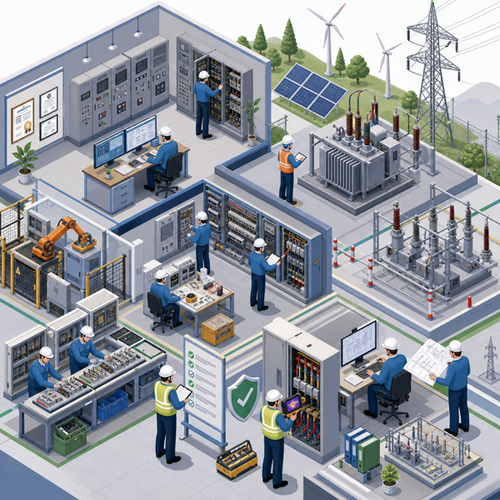
Electrical engineering professionals are facing an important period of advancement, as five new standards reshape the landscape this July 2026. This article provides a comprehensive, accessible overview of the new requirements, best practices, and technical specifications that organizations need to address. Covering network asset management, rechargeable cells, inductive components, auxiliary power systems, and connectors for storage units, these standards are essential for energy, electronics, industrial, and infrastructure sectors.
Overview / Introduction
The field of electrical engineering is continually evolving—with reliability, efficiency, and safety forming the cornerstones of contemporary operations. International standards facilitate a common framework, ensuring that equipment and processes meet rigorous performance and safety benchmarks. This month’s standards release includes critical updates spanning power network management and asset optimization, advanced battery technology, component specification, and infrastructure interfaces.
In this article, readers will gain:
- An understanding of each new standard, including scope, requirements, and impact
- Key changes and technical highlights
- Implementation recommendations for compliance and operational improvement
Detailed Standards Coverage
IEC 63223-1:2026 – Management of Network Assets in Power Systems
Management of network assets in power systems – Part 1: Overview, principles and terminology
The IEC 63223-1:2026 standard marks a pivotal step in formalizing asset management frameworks specific to electrical energy networks. Targeted at asset managers, regulatory authorities, service providers, and stakeholders, this document provides foundational terms, overarching principles, and practical value creation strategies for physical assets in transmission and distribution systems.
Key requirements focus on:
- Core asset management activities, such as risk-informed decision-making, maintenance, asset renewal, and value optimization
- Alignment with the ISO 55000 series for asset management, but tailored for the complexities of power networks
- Emphasizing both risk mitigation and value creation through efficient utilization, resilience initiatives, and robust data-driven strategies
Who should comply:
- Power network companies (TSOs, DSOs)
- Energy regulators
- Asset owners and service providers in the electrical sector
Notable changes:
- Provides clear alignment between generic asset management (ISO 55000) and the practical realities of modern power systems
- Expanded value creation options—incorporates both risk reduction and opportunity exploitation
Key highlights:
- Comprehensive terminology for standardized communication
- Structured process for risk-informed decision making
- Framework for value creation from power network assets
Access the full standard:View IEC 63223-1:2026 on iTeh Standards
FprEN IEC 60623:2026 – Vented Nickel-Cadmium Batteries for Industrial Applications
Secondary cells and batteries containing alkaline or other non-acid electrolytes – Vented nickel-cadmium prismatic rechargeable cells and batteries for use in industrial applications
FprEN IEC 60623:2026 addresses the increasing demand for reliability and robustness in industrial power sources. This standard lays out mandatory designations, testing routines, marking requirements, and safety recommendations for vented nickel-cadmium (Ni-Cd) prismatic battery cells. It is directly relevant for manufacturers and operators of industrial and infrastructure systems—especially where backup power, grid smoothing, or high-demand cycling is required.
Key requirements include:
- Cell and battery system designations, marking protocols, and structured documentation
- Stringent electrical testing: charge/discharge profiles, internal resistance, pulse power, charge retention, and cycle endurance
- Operating voltage ranges, environmental considerations, and performance in extreme temperatures
- Type approval and batch acceptance criteria to validate quality, consistency, and longevity
Who should comply:
- Manufacturers and users of industrial batteries
- Power generation, transmission, and distribution infrastructure managers
- Industrial automation system developers
Practical implications:
- Enhances product selection, installation, maintenance, and lifecycle planning
- Supports the design of battery systems for telecom, backup, and stationary applications
Key highlights:
- Detailed endurance and charge retention performance tests
- Comprehensive marking and documentation for traceability
- Methodologies for battery system sizing and expected lifetime estimation
Access the full standard:View FprEN IEC 60623:2026 on iTeh Standards
IEC 62674-1:2026 – High Frequency Inductive Components
High frequency inductive components – Part 1: Fixed surface mount inductors for use in electronic and telecommunication equipment
This revised edition of IEC 62674-1:2026 is essential for manufacturers of electronics, telecommunications, and component suppliers. It outlines specifications and testing methods for fixed surface mount inductors and ferrite beads, providing updated dimensional data and expanded temperature ranges for component reliability.
Key requirements:
- Standardized nomenclature and preferred characteristics for component selection
- Mechanical and electrical performance tests, including: inductance, impedance, Q-factor, resonance frequency, DC resistance, and current ratings
- General guidance on marking, assembly, and environmental durability (including vibration, thermal cycling, and solderability)
- Updates for shape D dimensions and extended upper operating temperatures
Who should comply:
- Electronics and telecom equipment manufacturers
- Component suppliers
- Laboratories and certification bodies
Implications:
- Facilitates the integration of reliable, robust surface mount components in compact designs
- Enhances supply chain compatibility through standardized shapes, sizes, and test criteria
Key highlights:
- Updated shapes and dimension tables for new applications
- Higher upper operating temperature range for advanced environments
- Enhanced test procedures for mechanical and electrical reliability
Access the full standard:View IEC 62674-1:2026 on iTeh Standards
IEC TS 63346-2-2:2026 – Low-Voltage DC Auxiliary Power Systems for Substations
Low-voltage auxiliary power systems – Part 2-2: Design criteria – Low-voltage DC auxiliary power systems for substations
IEC TS 63346-2-2:2026 provides foundational guidance for the design and configuration of low-voltage DC auxiliary power systems (APS) in electrical substations. Primarily intended for design engineers, substation operators, and infrastructure developers, it standardizes common rules and specific requirements for power source configuration, system wiring, equipment layout, and protection measures.
Key requirements:
- Comprehensive system boundary from AC charger input to DC load input points
- Design and classification of DC APS using lead-acid and nickel-cadmium series cells
- Detailed electrical, safety, and environmental criteria
- Guidance on protection selectivity, redundancy, monitoring, and control strategies for safe operation
- Excludes traction substations, offshore substations, and substations for nuclear power plant interfacing
Who should comply:
- Electrical system design engineers and substation operators
- Contractors and EPCs developing or refurbishing substations
- Battery and charger suppliers for APS
Implementation benefits:
- Promotes robust, resilient, and maintainable auxiliary power systems in critical infrastructure
- Provides a template for safety, maintainability, and harmonized system operation
Key highlights:
- Defines APS scope, including equipment selection, layout, and monitoring
- Supports series and parallel cell arrangements for modular scalability
- Focuses on operational safety, reliability, and environmental adaptation
Access the full standard:View IEC TS 63346-2-2:2026 on iTeh Standards
IEC 63066:2026 – Low-Voltage Docking Connectors for Removable Energy Storage Units
Low-voltage docking connectors for removable energy storage units
The updated IEC 63066:2026 standard delivers crucial requirements for docking connectors—referred to as accessories—used in connecting, swapping, or integrating removable/swapable energy storage units. These connectors support up to 2,000 A and 1,500 V DC, targeting energy storage integration, distributed generation, mobility, and modular battery systems. Major improvements include the introduction of standard sheets, technical advances, and alignment with international norms (notably IEC 60309‑1:2021).
Key requirements:
- Classification and dimensional requirements for connector types and applications
- Construction, marking, protection, and safety design for high-current, high-voltage DC environments
- Endurance, environmental resistance, mechanical robustness, and EMC performance
- Methods for testing short-circuit resistance using the I2t methodology
Who should comply:
- Manufacturers of battery energy storage systems and docking solutions
- Electric mobility equipment developers
- System integrators in renewables, e-mobility, and modular grid storage
Notable changes:
- Technical enhancements for short-circuit performance and safety
- Cross-compatibility with evolving international connector and safety standards
Key highlights:
- Standardized docking connector types, dimensions, and performance
- Supports both power transfer and data communication integration
- Focused on modularity, safety, and interoperability for the future of energy storage
Access the full standard:View IEC 63066:2026 on iTeh Standards
Industry Impact & Compliance
These July 2026 standards profoundly affect electrical engineering businesses in several ways:
- Regulatory Compliance: Meeting updated international standards ensures legal and contractual alignment, reduces liability, and supports global market access.
- Operational Excellence: Adhering to new asset management and component standards enables documented improvements in asset lifecycle value, reliability, and maintainability.
- Competitive Positioning: Organizations adopting these updates early signal a commitment to best practices, supporting public and stakeholder trust.
- Implementation Timelines: Early review and procurement planning are critical; many certification processes and audits can reference these newly revised standards within months of publication.
- Risk Management: Failure to comply risks non-conformity in audits, contract penalties, or, in extreme cases, system failures or safety issues leading to financial and reputational damage.
Technical Insights
Across these standards, several technical themes emerge:
- Harmonized Terminology and Reference Models: Enabling interdisciplinary communication around assets, risk management, and component specification.
- Enhanced Testing, Type Approval, and Documentation: Requiring full documentation, representative testing, and batch acceptance protocols for traceability.
- System Integration and Interoperability: Standard connector dimensions and performance criteria support exchange and integration across manufacturers and sites.
- Ambient and Environment Considerations: With detailed procedures for temperature extremes, humidity, and vibration, components are increasingly robust for modern operational contexts.
Implementation Best Practices:
- Gap Assessment: Map the new requirements against current policies, asset inventories, and procurement specifications.
- Staff Training: Ensure teams understand both practical and conceptual changes, particularly in terminology and risk-informed decision-making.
- Testing and Certification: Schedule type testing and certificate renewals in advance of operational deadlines.
- Documentation and Traceability: Utilize marking and record-keeping protocols to ensure system-wide compliance, especially for batteries and connectors.
- Continuous Monitoring: Leverage new standards’ guidance on ongoing monitoring and control, especially in auxiliary power and substation environments.
Conclusion / Next Steps
Electrical engineering’s July 2026 standards introduce vital updates for a rapidly evolving industry. By understanding, adopting, and integrating these requirements, organizations not only secure compliance but also drive operational excellence and Industry 4.0 readiness.
Key takeaways:
- New standards enable safer, more resilient, and future-ready power and energy infrastructure
- Upgraded requirements for component selection, system design, and asset management
- Immediate review and implementation establishes your organization’s commitment to best practice
Recommendations:
- Review each standard using direct access to authoritative documents on iTeh Standards
- Update internal policies, design guidelines, and procurement documents
- Stay engaged with the next installments in this series for a complete overview of upcoming international standards developments
Explore these standards in depth and ensure your organization stays ahead:Visit iTeh Standards
Categories
- Latest News
- New Arrivals
- Generalities
- Services and Management
- Natural Sciences
- Health Care
- Environment
- Metrology and Measurement
- Testing
- Mechanical Systems
- Fluid Systems
- Manufacturing
- Energy and Heat
- Electrical Engineering
- Electronics
- Telecommunications
- Information Technology
- Image Technology
- Precision Mechanics
- Road Vehicles
- Railway Engineering
- Shipbuilding
- Aircraft and Space
- Materials Handling
- Packaging
- Textile and Leather
- Clothing
- Agriculture
- Food technology
- Chemical Technology
- Mining and Minerals
- Petroleum
- Metallurgy
- Wood technology
- Glass and Ceramics
- Rubber and Plastics
- Paper Technology
- Paint Industries
- Construction
- Civil Engineering
- Military Engineering
- Entertainment