


Electrical Steel Standards Updated: June 2026 Advances in Magnetic Material Requirements
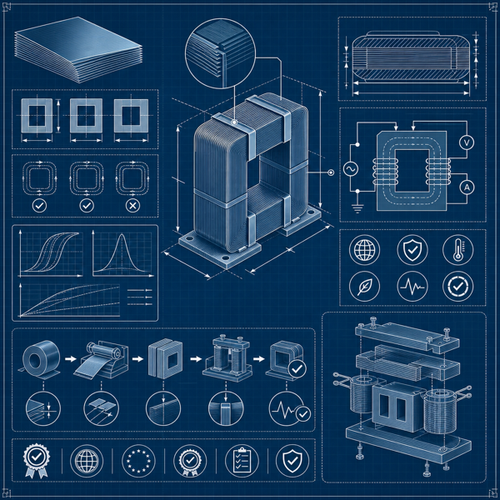
Electrical engineering professionals are seeing notable advancements with the release of two major IEC standards in June 2026. These freshly updated documents address the critical specifications for electrical steel strip and sheet—materials foundational to the performance, safety, and efficiency of electrical machines and magnetic circuits. Covering both mechanical and magnetic properties, as well as requirements tailored to medium-frequency applications, these standards are set to impact manufacturers, quality managers, and engineers throughout the electrical equipment value chain.
Overview / Introduction
The electrical engineering sector relies heavily on standardized materials to guarantee system reliability, safety, and energy efficiency. One core material class—electrical steel—is essential in devices from transformers to rotating machines. Adhering to international standards ensures interoperability, product longevity, and regulatory compliance worldwide. In this article, readers will gain an in-depth understanding of the June 2026 updates to electrical steel strip and sheet requirements, featuring analysis of two newly published IEC standards. Discover what has changed, why it matters, and how your organization can ensure seamless compliance and integration.
Detailed Standards Coverage
IEC 60404-8-5:2020 - Electrical Steel Strip and Sheet with Specified Mechanical Properties and Magnetic Polarization
Magnetic Materials – Part 8-5: Specifications for Individual Materials – Electrical Steel Strip and Sheet with Specified Mechanical Properties and Magnetic Polarization
This updated standard provides a comprehensive framework for classifying and specifying electrical steel strip and sheet with precise mechanical and magnetic characteristics. Its scope focuses on products intended for constructing poles and rims of rotating electrical machines, addressing both hot-rolled and cold-rolled grades. It also aligns requirements with Class D21 in IEC 60404-1.
Key sections detail general requirements, mechanical and technological properties, magnetic polarization values, geometric tolerances, and rigorous inspection procedures. The standard encompasses supply forms (coils or bundles), surface and edge quality, suitability for further processing (cutting/welding), and delivery conditions (insulation and finish).
Major technical changes in this edition include:
- Inclusion of improved electrical steel grades, extending available material ranges.
- Enhanced flatness control, splitting previous ‘flatness’ requirements into distinct metrics for edge wave and residual curvature—harmonizing with IEC 60404-9.
- Revised test specimen requirements, reducing the required specimen length from 2 meters to 1 meter for geometric determinations.
For professionals involved in design, procurement, or quality control of rotating electrical machinery, adhering to this standard ensures material performance and regulatory alignment.
Key highlights:
- Coverage of both hot-rolled and cold-rolled grades, with detailed mechanical and magnetic characteristics.
- New, improved grades for expanded performance options.
- Updated tolerances and test requirements for flatness and geometric characteristics.
Access the full standard:View IEC 60404-8-5:2020 on iTeh Standards
IEC 60404-8-8:2017 - Thin Electrical Steel Strip and Sheet for Use at Medium Frequencies
Magnetic Materials – Part 8-8: Specifications for Individual Materials – Thin Electrical Steel Strip and Sheet for Use at Medium Frequencies
Targeted at manufacturers and users requiring precision in magnetic circuit applications—especially those operating from 100 Hz to 10 kHz—this standard specifies both non-oriented and grain-oriented thin electrical steel strip and sheet. Thicknesses range down to 0.05 mm, catering to advanced, high-efficiency designs prevalent in modern power electronics and transportation.
The standard details:
- Minimum magnetic polarization and specific total energy loss limits at designated frequencies.
- Dimensional and geometric tolerances matching the needs of high-speed, low-loss magnetic circuit construction.
- Delivery in finally annealed condition, with precise standards for surface coatings, burr height, edge camber, and stacking factors.
- Technology-specific guidance—such as insulation coating, mechanical bend requirements, and special provisions for coated materials.
New in the latest edition is a significant expansion to include improved thin electrical steel grades, enabling better material choices for next-generation magnetic devices.
Key highlights:
- Expanded portfolio of thin electrical steel grades for advanced frequency applications.
- Comprehensive, harmonized testing and inspection practices for loss, polarization, and geometrical criteria.
- Optional agreements for customized properties, including alternative thicknesses and special coatings.
Access the full standard:View IEC 60404-8-8:2017 on iTeh Standards
Industry Impact & Compliance
The updates to these standards have broad implications across the supply chain for electrical equipment, machine manufacturing, and energy technology providers. Organizations must adjust sourcing, quality assurance, and production processes to:The new standards define stricter material characteristics, finer control of geometric tolerances, and more robust inspection regimes. Early adoption ensures:
- Seamless procurement from international and regional steel suppliers.
- Improved compatibility and performance of rotating machinery and medium-frequency magnetic devices.
- Stronger risk mitigation against non-compliance, which can lead to costly recalls or regulatory penalties.
For businesses, timely transition involves:
- Reviewing supplier certifications and compliance statements against the new requirements.
- Updating inspection, testing, and documentation protocols.
- Retraining quality and engineering staff on revised test methods and specification clauses.
Benefits include enhanced product reliability, increased energy efficiency, and improved market acceptance globally.
Technical Insights
Across both standards, some common technical threads emerge:
- Magnetic polarization requirements: Both documents implement minimum magnetic polarization thresholds, measured with Epstein frames in accordance with IEC 60404-2, to guarantee effective and predictable magnetic performance.
- Improved geometric precision: Tighter tolerances on thickness, width, and flatness are mandated, often subdivided to address edge wave, residual curvature, and camber specifically.
- Enhanced mechanical reliability: Required minimum proof strength, tensile strength, and elongation aid in long-term durability, especially under dynamic mechanical loads in rotating electrical machines.
- Inspection and testing protocols: Rigorous sampling, specimen preparation, and testing frequencies (per acceptance unit) are specified, with clear rules for retests and dispute resolution.
- Best practices for implementation:
- Always confirm material certification against the most current edition of relevant IEC standards.
- Utilize calibrated, high-accuracy test equipment (e.g., micrometers accurate to 0.001 mm for thickness checks).
- When specifying materials, document any special requirements—such as coatings, insulation compatibility, or mechanical properties—at the ordering stage to ensure proper compliance and avoid costly field modifications.
Additionally, optional and customizable provisions facilitate flexibility, allowing manufacturers and purchasers to agree on specific performance attributes when unique applications demand it.
Conclusion / Next Steps
The June 2026 updates to the international standards for electrical steel strip and sheet signal a continued shift towards higher efficiency, increased durability, and stringent quality assurance in electrical engineering. To stay competitive and compliant, organizations should:
- Audit current stock and supply agreements for alignment with the new grades and specification tables.
- Update procurement and quality control documentation referencing the latest IEC 60404 series parts.
- Train staff to adapt testing and reporting practices to revised protocols and metrics.
- Consult the full, authoritative versions of IEC standards via trusted sources such as iTeh Standards for the detailed requirements, annexes, and testing procedures.
Staying proactive not only avoids regulatory pitfalls but also positions companies to leverage the operational and market advantages of superior magnetic materials. For ongoing industry intelligence and access to authoritative standards, visit iTeh Standards.
Categories
- Latest News
- New Arrivals
- Generalities
- Services and Management
- Natural Sciences
- Health Care
- Environment
- Metrology and Measurement
- Testing
- Mechanical Systems
- Fluid Systems
- Manufacturing
- Energy and Heat
- Electrical Engineering
- Electronics
- Telecommunications
- Information Technology
- Image Technology
- Precision Mechanics
- Road Vehicles
- Railway Engineering
- Shipbuilding
- Aircraft and Space
- Materials Handling
- Packaging
- Textile and Leather
- Clothing
- Agriculture
- Food technology
- Chemical Technology
- Mining and Minerals
- Petroleum
- Metallurgy
- Wood technology
- Glass and Ceramics
- Rubber and Plastics
- Paper Technology
- Paint Industries
- Construction
- Civil Engineering
- Military Engineering
- Entertainment