


August 2026: Essential New Standards for Electronics Revealed
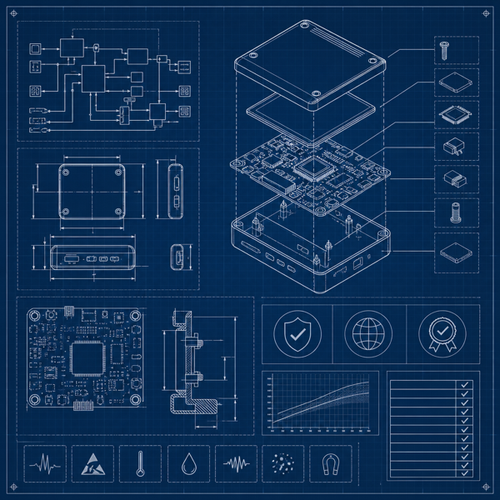
August 2026: Essential New Standards for Electronics Revealed
The electronics industry enters a new era in August 2026 with three key international standards published by the IEC, setting the pace for improved quality, reliability, and safety. These standards herald new benchmarks across connector technology, semiconductor reliability, and the deployment of precision oscillators. Each update brings crucial specifications relevant to engineering, procurement, compliance, and manufacturing professionals seeking to align with the highest global requirements.
Overview
As the backbone of industrial progress, the electronics sector relies on robust standards to ensure seamless component interoperability, reliable system performance, and sustained innovation. The August 2026 publications from IEC focus on expanding capabilities for circular connectors, strengthening early failure prediction in semiconductor devices, and advancing practical guidelines for oscillators in critical timing applications.
Professionals in electronics design, manufacturing, procurement, compliance management, and R&D will find in this article:
- Detailed summaries of each new standard
- Key technical and compliance requirements
- Implementation challenges and best practices
- The strategic advantages of early adoption
Let’s delve into each standard’s details and ramifications.
Detailed Standards Coverage
IEC 61076-2-118:2026 – Circular Connectors for Power, Signal & Data
Connectors for electrical and electronic equipment - Product requirements - Part 2-118: Circular connectors - Detail specification for shielded and unshielded, free and fixed connectors with bayonet-locking size B12, B17, B23 and B40, for power, signal and data transmission
Scope & Application IEC 61076-2-118:2026 delivers a comprehensive, harmonized specification for circular connectors equipped with bayonet-locking mechanisms (sizes B12, B17, B23, and B40). These connectors, available as both shielded and unshielded variants, are foundational for modern power, signal, and data transmission in industrial and automation environments. The standard details precise requirements for both free (plug) and fixed (socket) connectors, ensuring compatibility and high performance in demanding operational contexts.
Key Requirements & Specifications
- Dimensional specifications: Standardizes mating dimensions, mounting styles, and interface characteristics across all connector sizes.
- Electrical performance: Defines capabilities for voltage proof, impulse withstand voltage, insulation resistance, and contact/shield resistance across power, signal, and data pins.
- Transmission parameters: Outlines insertion loss, return loss, NEXT, FEXT, TCL, TCTL, transfer impedance, coupling attenuation, and propagation delay.
- Mechanical robustness: Addresses vibration, shock, degree of environmental protection (IP codes), mating cycles, torque requirements, and coding for polarization.
- Test schedules: Provides detailed protocols for qualification through electrical, mechanical, and signal integrity testing.
Who Needs to Comply? Target users include manufacturers and integrators of:
- Industrial automation and control systems
- Robotics
- Power distribution nodes
- Process instrumentation
- Data communication and networking systems
Implementation Impact Adoption ensures improved interoperability, higher system reliability, and standardized procurement. The harmonization with existing electrical and mechanical infrastructures supports global supply chains and reduces integration barriers.
Notable Changes This publication marks the first edition, reflecting modern connector performance criteria including advanced shielding, modularity, and expanded signal capability for Industry 4.0 environments.
Key highlights:
- Standardizes dimensions and interfaces for all B12–B40 connectors
- Comprehensive transmission and signal integrity requirements
- Enhanced mechanical endurance and protection levels
Access the full standard:View IEC 61076-2-118:2026 on iTeh Standards
IEC 63287-4:2026 – Reliability Qualification for Semiconductor Devices
Semiconductor devices - Guidelines for reliability qualification plans - Part 4: Early failure assessment
Scope & Application IEC 63287-4:2026 introduces detailed guidance for reliability qualification of semiconductor devices, focusing on early failure assessment. It covers development principles for reliability qualification plans that factor in environmental conditioning and anticipated product usage. Although not designed for military or space applications, it sets a new industry baseline for commercial and industrial electronics.
Key Requirements & Specifications
- Early failure assessment methods: Provides statistical and procedural frameworks for evaluating zero-failure events and establishing high-confidence reliability based on environmental stress testing.
- Zero-failure analytics: Supports confidence interval calculations for cases where no failures are observed in early reliability trials, including methods based on chi-squared distributions, Weibull analysis, and binomial models.
- Reliability qualification plans: Outlines requirements for defining sample sizes, test durations, and environmental stress factors to ensure representative failure statistics.
- Alignment with IEC 63287-1: Reinforces harmonization across the IEC 63287 series, strengthening generic qualification strategies.
Who Needs to Comply?
- Semiconductor manufacturers and reliability engineers
- Quality and compliance managers in OEM electronics
- Test labs focused on product qualification and screening
Implementation Impact Organizations adopting this standard gain a clearer pathway to minimize early device failures, improve field reliability, and mitigate warranty risks. The rigorous approach to zero-failure cases enables more accurate failure rate and MTBF estimations, critical for high-reliability and safety-centric systems.
Notable Changes As the inaugural edition for early failure assessment within IEC 63287, the standard introduces modern statistical models and integrates learnings from prior field studies, enabling robust qualification plans for today’s complex semiconductor landscape.
Key highlights:
- Proven methodologies for analyzing zero-failure qualification data
- Consistent approaches to environmental and operational stress testing
- Supports high-confidence reliability predictions for new product launches
Access the full standard:View IEC 63287-4:2026 on iTeh Standards
IEC 60679-2:2026 – Guidelines for Piezoelectric, Dielectric & Electrostatic Oscillators
Piezoelectric, dielectric and electrostatic oscillators of assessed quality - Part 2: Guidelines for the use of oscillators
Scope & Application The updated IEC 60679-2:2026 delivers practical, up-to-date guidelines for the selection, application, and deployment of oscillators, with an emphasis on quartz crystal types, but also referencing MEMS and other technologies. It defines oscillator classifications (SPXO, TCXO, VCXO, OCXO, DCXO, PLXO), usage precautions, and performance characteristics essential in timing, communications, and control systems.
Key Requirements & Specifications
- Operating principles: Explains the fundamental behaviors of quartz oscillators, including feedback loop design, phase and amplitude considerations, and gain conditions.
- Classification and selection: Details main oscillator categories, their thermal characteristics, and when to apply each for optimal stability.
- Frequency stability and environmental resilience: Specifies how temperature, aging, drive-level dependence, shock, and vibration affect performance, with guidance on minimizing drift.
- Performance specification and measurement: Guides the assessment of phase noise, frequency adjustment range, supply and control voltage effects, and compliance with EMI/ESD precautions.
- Precautions and best practices: Addresses power supply filtering, PCB layout for minimal noise, and the integration of differential outputs for improved signal integrity.
Who Needs to Comply?
- Designers and specifiers of timing solutions for communications, data centers, and industrial automation
- System integrators and board-level engineers
- Procurement specialists sourcing high-reliability oscillators
Implementation Impact Adhering to IEC 60679-2:2026 ensures that oscillator deployments achieve the required frequency stability, robustness, and EMC compliance, thereby reducing risk of downstream timing issues in complex systems.
Notable Changes from Previous Edition This edition incorporates cutting-edge manufacturing technologies, adds new content on operating principles, and expands sections on critical usage precautions, representing a significant advance over the 1981 baseline.
Key highlights:
- Comprehensive guidance on all commercial oscillator types and applications
- Specifics on environmental and electrical precautions for deployment
- Enhanced coverage of modern IC and MEMS-based oscillator technologies
Access the full standard:View IEC 60679-2:2026 on iTeh Standards
Industry Impact & Compliance
The release of these three standards directly impacts:
- Product performance: Uniform connector designs ensure mechanical and electrical interoperability, while advanced reliability qualification methodologies cut early field failures in semiconductors, and modern oscillator guidelines stabilize system clocks.
- Market access: Compliance with IEC standards is often a prerequisite for international product launch and acceptance, supporting faster approvals and reducing risk of costly redesigns.
- Regulatory and contractual compliance: Adhering to recognized standards is central to meeting obligations for safety, performance, and quality assurance in regulated markets.
Compliance Timelines Organizations should:
- Review product portfolios for alignment with the new requirements
- Update supplier and internal specifications
- Train engineering and QA teams on the latest test procedures
Adoption Benefits:
- Enhanced reliability and reduced warranty costs
- Streamlined audits and customer qualification processes
- Increased reputation for quality and forward-thinking engineering
Risks of Non-Compliance:
- Supply chain disruptions due to incompatible components
- Increased product failures and liability exposure
- Potential market access restrictions
Technical Insights
Across these standards, several technical themes emerge:
- Consistency in system architecture: Connector and oscillator standards ensure parts can be reliably integrated into diverse platforms.
- Statistical rigor in reliability engineering: The semiconductor reliability guideline provides formalized statistical methods to compensate for low-defect observations, crucial for next-gen high performance computing and IoT products.
- Testing and certification: All three standards mandate comprehensive, structured testing covering environmental, electrical, and mechanical conditions, with explicit minimum sample sizes and reporting protocols.
Implementation Best Practices
- Conduct gap analyses between existing processes and new standard requirements
- Collaborate with suppliers to ensure inbound components are certified to the latest editions
- Document all conformance activities for traceability during audits
Testing Considerations
- Use qualified laboratories familiar with IEC qualification protocols
- Schedule re-validation for products undergoing design changes or sourced from new suppliers
Conclusion and Next Steps
The August 2026 IEC standards portfolio marks a significant advance in electronics engineering, providing industry professionals with cutting-edge requirements and robust implementation guidelines. By adopting these standards, organizations reinforce product quality, streamline global market entry, and stay at the forefront of technology.
Next actions:
- Download and study the full text of each standard via the links above
- Align procurement and engineering processes to new requirements
- Ensure quality and compliance teams are updated on latest test and certification methods
- Engage with iTeh Standards to stay ahead of further industry developments
Stay informed—continue exploring the comprehensive standards library at iTeh Standards and position your organization for success in the evolving world of electronics.
Categories
- Latest News
- New Arrivals
- Generalities
- Services and Management
- Natural Sciences
- Health Care
- Environment
- Metrology and Measurement
- Testing
- Mechanical Systems
- Fluid Systems
- Manufacturing
- Energy and Heat
- Electrical Engineering
- Electronics
- Telecommunications
- Information Technology
- Image Technology
- Precision Mechanics
- Road Vehicles
- Railway Engineering
- Shipbuilding
- Aircraft and Space
- Materials Handling
- Packaging
- Textile and Leather
- Clothing
- Agriculture
- Food technology
- Chemical Technology
- Mining and Minerals
- Petroleum
- Metallurgy
- Wood technology
- Glass and Ceramics
- Rubber and Plastics
- Paper Technology
- Paint Industries
- Construction
- Civil Engineering
- Military Engineering
- Entertainment