


July 2026: New Environmental and Safety Standards Enhance Compliance for Water, Soil, and Electronics
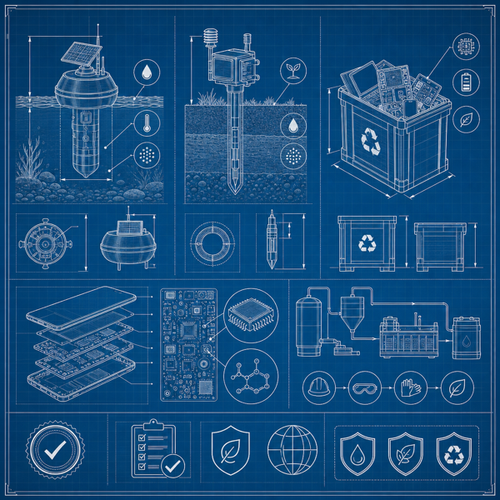
July 2026 Brings Major Updates to Environmental, Health, and Safety Standards
July 2026 has seen the publication of four significant international standards advancing best practices in environmental protection, human health, and safety management. These new documents support professionals across electronics manufacturing, water quality monitoring, soil assessment, and ecosystem research. The latest standards introduce enhanced controls, rigorous technical requirements, and globally harmonized procedures designed to streamline compliance, promote sustainability, and ensure safer products and environments. This article explores each newly minted standard, what’s changed, who must comply, and how to efficiently implement these changes in your organization.
Overview / Introduction
Environmental, health, and safety regulations are growing stricter and more sophisticated. In response, international standards are updating at pace—establishing the baseline technical expectations for compliance, procurement, and risk management in sectors ranging from electronics to environmental monitoring. The four standards covered in this update span:
- Screening for hazardous substances in electrotechnical products
- Water quality assessment using eDNA
- Soil quality monitoring using invertebrates
- Design of soil sampling programs for robust ecological data
These standards arm quality managers, compliance officers, researchers, engineers, and procurement specialists with consistent frameworks that underpin market access, internal audits, and demonstration of due diligence to regulators or clients. Read on for in-depth breakdowns, implementation highlights, and practical takeaways directly linked to authoritative full-text references.
Detailed Standards Coverage
EN IEC 62321-3-1:2026 – Enhanced XRF Screening for Hazardous Substances
Determination of certain substances in electrotechnical products – Part 3-1: Screening – Lead, mercury, cadmium, total chromium, total bromine, total phosphorus, total chlorine, total tin and total antimony content by X-ray fluorescence spectrometry
This updated standard is a cornerstone for electronics manufacturers and suppliers concerned with restricted substances compliance (e.g., RoHS, REACH). It defines robust procedures for non-destructive and destructive analysis of uniform materials, leveraging X-ray fluorescence (XRF) spectrometry to detect:
- Lead (Pb)
- Mercury (Hg)
- Cadmium (Cd)
- Total chromium (Cr)
- Total bromine (Br)
- Total phosphorus (P)
- Total chlorine (Cl)
- Total tin (Sn)
- Total antimony (Sb)
Scope and Key Requirements
EN IEC 62321-3-1:2026 applies to polymers, metals, ceramics, and composites found in finished electronic and electrical products. The methodology is designed for both initial screening and as a basis for more detailed characterization if flagged results are observed. The 2026 revision expands the list of indicator elements, strengthens performance criteria for XRF instruments, and formally links phosphorus, chlorine, tin, and antimony screening to critical raw materials and regulated compound sources.
Special attention is given to ensuring matrix effects and interferences are managed, with sections on sample preparation, equipment calibration, and quality control. The revised document also contains user-friendly tables for common polymers (e.g., ABS, PVC, HIPS, polyolefins), solder, and metal alloys, specifying expected ranges and test parameters.
Who Should Comply
- Electrical and electronics manufacturers
- Component suppliers
- Testing laboratories and contract certifiers
- Regulatory compliance teams in global supply chains
Practical Implications
- Streamlines RoHS/REACH substance screening for market access
- Reduces false negatives and positives through improved calibration
- Supports quick identification of restricted material at incoming inspection
- Facilitates due diligence documentation for customers and regulators
- Aligns with EU critical raw materials policy considerations
Notable Changes in 2026 Edition
- Expansion of test substances to better reflect regulatory and raw materials risks
- Enhanced XRF instrument validation procedures
- Increased guidance for interpreting results with new matrix effect data
- Horizontal document status—applicable across all electrotechnical sectors
Key highlights:
- Comprehensive screening for more substances, including those tied to critical raw materials
- Updated sample preparation and calibration workflows
- Stronger data interpretation and reporting requirements
Access the full standard:View EN IEC 62321-3-1:2026 on iTeh Standards
ISO 17805:2026 – Water Quality: Capturing and Preserving Environmental DNA (eDNA)
Water quality — Sampling, capture and preservation of environmental DNA from water
ISO 17805:2026 offers a groundbreaking, standardized protocol for sampling, storage, and quality assurance of environmental DNA (eDNA) from aquatic ecosystems. The standard responds to the explosive demand for high-resolution biodiversity data and is critical for organizations supporting regulatory monitoring (e.g., Water Framework Directive), aquatic ecology studies, and bio-surveillance of invasive species or pathogens.
Scope and Key Requirements
Covers water sampling, DNA filtration, field and laboratory contamination controls, sample preservation, and mandatory metadata recording. Excludes sediment sampling and passive sampling designs. The protocol details:
- Site selection and water sample representativeness considering organism lifecycle, environmental conditions, and target species’ shedding behavior
- Decontamination and field blank requirements
- Closed, open, and housed filter types and how to handle them to minimize cross-contamination
- Immediate sample preservation protocols (e.g., cold storage, lysis buffers)
- Comprehensive metadata and reporting to enable cross-study comparability
Who Should Comply
- Water utilities and quality monitoring agencies
- Aquatic ecologists and biodiversity researchers
- Regulatory authorities managing water quality compliance
- Environmental consulting and laboratory services
Practical Implications
- Enables reliable, comparable results for biodiversity and water quality indices
- Reduces contamination risks, crucial for regulatory and legal evidence
- Facilitates rapid detection of non-native, endangered, or pathogenic species
Notable Changes & Advances
- First global standard to unify routine eDNA monitoring in running or standing waters
- Incorporates best practices for rapid, field-compatible DNA stabilization
- Mandates detailed reporting for reproducibility and audit trails
Key highlights:
- Uniform approach to DNA-based aquatic monitoring
- Tight controls for contamination and preservation
- Explicit requirements for data management and traceability
Access the full standard:View ISO 17805:2026 on iTeh Standards
EN ISO 23611-1:2026 – Sampling Soil Invertebrates: Earthworm Assessment
Soil quality – Sampling of soil invertebrates – Part 1: Hand-sorting and extraction of earthworms (ISO 23611-1:2026)
This revision modernizes the foundation for using earthworms as bioindicators in terrestrial soil quality assessments. Designed for agronomists, soil scientists, ecotoxicologists, and land managers, it specifies quantitative and qualitative techniques for collecting, preserving, and analyzing earthworm populations.
Scope and Key Requirements
The standard details
- Hand-sorting protocols (recommended for nearly all field conditions)
- Extraction using allyl isothiocyanate (AITC)—a less hazardous alternative to formalin
- Procedures for biomass determination and preparation of samples for DNA metabarcoding
- Suitability for all terrestrial biotopes except some semi-aquatic environments
- Guidance on taxonomic and ecological categorization
The standard clarifies data handling, documentation, and reporting to ensure studies are robust for compliance, comparative, or research uses.
Who Should Comply
- Soil quality labs and monitoring programs
- Agro-environmental consultants
- Land management authorities
- Ecotoxicologists and biodiversity researchers
Practical Implications
- Generates reliable, repeatable data for site remediation decisions
- Forms the backbone for soil health and ecological risk assessments
- Supports modern methods (e.g., DNA barcoding compatibility)
- Avoids use of carcinogenic preservatives, improving operator safety
Notable Changes in 2026 Edition
- Addition of DNA-based sampling guidance for composite community samples
- Formal replacement of formalin with AITC as the extraction standard
- Updates to ecological and practical context, supporting broader deployment
Key highlights:
- Safe, efficient collection and preservation of earthworm bioindicator data
- Modern compatibility with metabarcoding and ecological studies
- Expanded guidance on safety, sample processing, and reporting
Access the full standard:View EN ISO 23611-1:2026 on iTeh Standards
EN ISO 23611-6:2026 – Designing Soil Invertebrate Sampling Programs
Soil quality – Sampling of soil invertebrates – Part 6: Design of sampling programmes with soil invertebrates (ISO 23611-6:2026)
EN ISO 23611-6:2026 complements the organism-specific methods in the ISO 23611 series by standardizing the design and planning of soil invertebrate sampling campaigns. This ensures that the data generated through fieldwork is statistically robust and suitable for different regulatory, research, or restoration goals.
Scope and Key Requirements
Highlights include:
- Designing site-specific risk assessments (e.g., contamination impact studies)
- Evaluating side effects of anthropogenic stressors (e.g., chemicals, construction)
- Protocols for biological soil quality assessment, nature conservation, and restoration monitoring
- Detailed statistical considerations for field surveys—including patterns (grid, random, clustered) and reporting completeness
- Practical advice for preparation, safety, documentation, and QA/QC
The 2026 revision provides updated case studies, statistical analysis techniques, and practical tools for study design, helping users avoid common biases and enhance data comparability.
Who Should Comply
- Environmental project managers
- Soil scientists and ecologists
- Consultants advising on contaminated land and remediation
- Research teams conducting biodiversity, restoration, or ecological monitoring
Practical Implications
- Robust, repeatable studies—ensuring representativeness and regulatory credibility
- Alignment with best international practice for environmental impact assessment
- Facilitates meaningful long-term tracking of soil health changes
Notable Changes in 2026 Edition
- Enhanced guidance on statistical methods for risk assessment
- Streamlined, actionable toolkit for field study design and reporting
Key highlights:
- Standardizes sampling design for any soil invertebrate study
- Ensures field data meets regulatory requirements and scientific rigor
- New emphasis on QA/QC, risk assessment, and documentation
Access the full standard:View EN ISO 23611-6:2026 on iTeh Standards
Industry Impact & Compliance
Business Impact
Across electronics, water, and soil sectors, these new and revised standards directly affect how organizations:
- Demonstrate compliance with EU and international regulations (e.g., RoHS, REACH, Water Framework Directive)
- Manage risk in supply chains and site management
- Satisfy tender and procurement requirements with recognized, harmonized procedures
- Build credibility in audits, certifications, and customer assurance processes
Compliance Considerations and Timelines
- Transition Period: Organizations should review procurement and compliance plans to account for transition from previous editions—a typical grace period may apply, but early adoption is recommended for supply chain stability and risk mitigation.
- Documentation: Emphasize traceable, comprehensive reporting. Updated standards make this a strict requirement for regulatory and legal defensibility.
Benefits of Adoption
- Reduced legal, financial, and brand risk from non-compliance
- Improved technical accuracy and comparability across borders
- Increased supplier and client confidence
- Easier integration with broader sustainability and reporting initiatives
Risks of Non-Compliance
- Loss of market access (e.g., for electronics with restricted substances)
- Penalties or delays in regulatory clearance
- Data invalidity in research and contracts
- Damage to organizational reputation and client trust
Technical Insights
Common Requirements Across the Standards
- Rigorous sample handling and contamination controls
- Thorough, traceable documentation and metadata
- Standardized sample collection and processing procedures
- Performance verification for analytical equipment
- Data quality criteria—statistical validity, repeatability, accuracy
Implementation Best Practices
- For electronics testing (EN IEC 62321-3-1:2026):
- Verify instrument calibration against new criteria
- Update internal procedures to reflect expanded scope and substances
- Train laboratory staff on revised sampling/preparation workflows
- For eDNA sampling (ISO 17805:2026):
- Implement field blanks and decontamination at every stage
- Prioritize immediate sample preservation in fieldwork plans
- Upgrade metadata/reporting templates to match the standard
- For soil biota assessment (EN ISO 23611-1 & 23611-6:2026):
- Plan studies using statistically valid patterns (random, grid, cluster)
- Optimize sampling for the project objectives (risk, monitoring, classification)
- Ensure laboratory and field teams use standardized, safe reagents (e.g., AITC instead of formalin)
Testing and Certification Considerations
- Review accreditation requirements for laboratories (e.g., ISO/IEC 17025)
- Align procurement with suppliers whose certification bodies use the latest standards
- Document adherence in management systems (QMS, EMS)
Conclusion / Next Steps
July 2026’s standards suite signals a major push toward safer, more sustainable, and more compliant operations in environmental protection, health, and safety sectors. Rapid implementation will:
- Streamline market access and regulatory approvals
- Bolster data credibility for research and reporting
- Reduce business risk while maximizing environmental and social benefits
Recommendations:
- Audit your current processes against these updated requirements
- Train involved staff and update all relevant procedures
- Engage with trusted partners and suppliers, referencing the iTeh Standards catalog for authoritative guidance and future updates
Stay ahead—explore the full standards on iTeh Standards and subscribe for the latest updates in Environmental Protection, Health, and Safety compliance.
Categories
- Latest News
- New Arrivals
- Generalities
- Services and Management
- Natural Sciences
- Health Care
- Environment
- Metrology and Measurement
- Testing
- Mechanical Systems
- Fluid Systems
- Manufacturing
- Energy and Heat
- Electrical Engineering
- Electronics
- Telecommunications
- Information Technology
- Image Technology
- Precision Mechanics
- Road Vehicles
- Railway Engineering
- Shipbuilding
- Aircraft and Space
- Materials Handling
- Packaging
- Textile and Leather
- Clothing
- Agriculture
- Food technology
- Chemical Technology
- Mining and Minerals
- Petroleum
- Metallurgy
- Wood technology
- Glass and Ceramics
- Rubber and Plastics
- Paper Technology
- Paint Industries
- Construction
- Civil Engineering
- Military Engineering
- Entertainment