

September 2026: Essential Updates in Environmental, Health, and Safety Standards
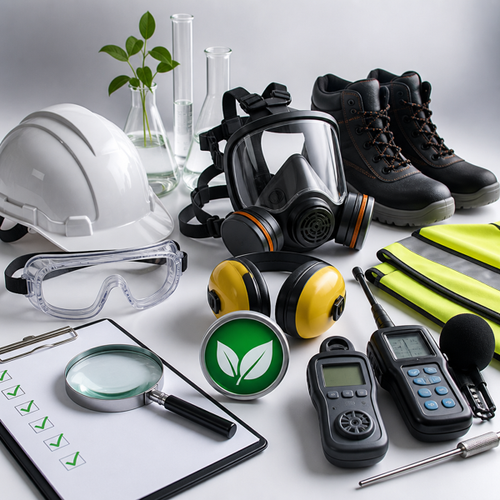
September 2026 Brings Critical Updates to Environmental, Health, and Safety Standards
As global industries raise the bar for risk mitigation and operational safety, September 2026 saw the release of two vital international standards in environmental, health protection, and safety. Covering both fire hazard engineering for electrotechnical products and explosion protection in underground mining, these updates provide comprehensive frameworks to address contemporary risks, regulatory demands, and technological shifts. For quality managers, compliance officers, engineers, and safety professionals, staying ahead with these updates isn’t just about best practice—it’s essential for maintaining robust operations and legal conformity.
Overview: The Importance of Environmental, Health, and Safety Standards
In sectors where people, assets, and the environment are at stake, standards set the foundation for safety, regulatory compliance, and reliable performance. From fire hazards in electrical equipment to explosion prevention in high-risk environments like underground mines, these standards provide benchmark requirements, methodologies, and guidance for organizations worldwide.
This article delves into two major September 2026 standards publications:
- IEC 60695-1-12:2026: Guidance on fire hazard assessment for electrotechnical products using fire safety engineering (FSE).
- ISO/IEC 80079-38:2026: Explosion protection for equipment and components used in underground mines.
We detail their scope, new requirements, targeted users, and practical impact. Whether you are making decisions on product design, compliance audits, procurement, or certification, these insights are crucial for today’s safety-focused organizations.
Detailed Standards Coverage
IEC 60695-1-12:2026 – Guidance for Assessing the Fire Hazard of Electrotechnical Products – Fire Safety Engineering
Fire hazard testing – Part 1-12: Guidance for assessing the fire hazard of electrotechnical products – Fire safety engineering
The second edition of IEC 60695-1-12:2026 introduces an updated fire safety engineering framework, clarifying principles and best practices for fire hazard assessment in electrotechnical products. Geared toward product committees, designers, and safety engineers, this renewed standard aligns with the latest advances in fire science and supports both performance-based and prescriptive safety strategies.
Scope and Application
IEC 60695-1-12:2026 provides:
- In-depth explanation of fire safety engineering (FSE) principles, including terminology and concepts.
- Guidance on integrating FSE into the design process for electrotechnical products.
- Data requirements for FSE assessments, including input from fire tests and performance metrics.
- Informative references and alignment with international frameworks (e.g., ISO 23932-1).
Although not a detailed technical design guide, this document offers product committees methodologies to develop robust safety publications. Its holistic framework spans materials, assemblies, products, and entire electrotechnical systems.
Key Requirements and Specifications
- Advocates structured FSE processes for design, implementation, and management of fire safety.
- Encourages use of both prescriptive and performance-based approaches.
- Specifies criteria such as available safe escape time (ASET) vs. required safe escape time (RSET).
- Lists functional and performance-based requirements (e.g., resistance to flame spread, smoke control, system continuity during fire events).
- Outlines the use of quantitative (data-driven) and qualitative fire tests for risk estimations.
Who Must Comply
- Electrotechnical product manufacturers
- Product design and safety committees
- Certification and regulatory bodies
- Engineering consultancies and testing laboratories
Changes From Previous Edition
This edition delivers a substantial technical revision:
- Entire text revised for alignment with emerging technologies and ISO TC92 Fire Safety Engineering.
- Updated annexes, including international practical applications (e.g., in microgravity assessments).
- Expanded examples, performance criteria, and risk assessment guidance.
Practical Implications
Emphasizing a risk-based, scientific approach, this standard helps users:
- Implement more flexible, cost-effective fire safety strategies
- Justify innovative designs using performance metrics
- Safeguard life, property, environment, and heritage
- Enable easier harmonization with international codes
Key highlights:
- Modernizes FSE guidance to reflect recent technical advances
- Integrates data-driven fire risk assessment into product design
- Facilitates compliance with international safety objectives
Access the full standard:View IEC 60695-1-12:2026 on iTeh Standards
ISO/IEC 80079-38:2026 – Explosive Atmospheres: Equipment and Components in Underground Mines
Explosive atmospheres – Part 38: Equipment and components in explosive atmospheres in underground mines
Safety in underground environments demands rigorous processes to prevent fires, explosions, and system failures. The ISO/IEC 80079-38:2026 standard brings comprehensive, updated requirements for explosion protection in underground mining machinery and components, setting strict parameters for both product design and operational safety.
Scope and Application
ISO/IEC 80079-38 applies to:
- Explosive atmosphere protection for all Group I mining equipment and assemblies, including electrical and non-electrical systems.
- Construction, testing, and marking requirements for explosion-protected equipment/components used in mines (both coal and non-coal), specifically considering environments with firedamp (methane), coal dust, or both.
- Covers both individual equipment items and assemblies situated in hazardous (potentially explosive) underground atmospheres.
Key Requirements and Specifications
- Sets environmental parameters (−20 °C to +60 °C, 80 kPa to 110 kPa, 21% oxygen) for valid equipment operation.
- Introduces requirements for Explosion Protection Levels (EPLs) Ma (highest protection) and Mb.
- Mandates ignition hazard assessment for all mining machinery, referencing ISO 80079-36 for methodology.
- Requires detailed over-current and earth-fault protection, ensuring effective isolation and prevention of dangerous fault conditions.
- Demands robust construction for electric cables, fire protection, and resistance to mining environment hazards (impact, abrasion, etc.).
- Refers to an integrated approach covering both electrical and mechanical (non-electrical) equipment, and highlights certification and marking protocols.
Target Industries and Organizations
- Mining companies (underground coal and non-coal)
- Equipment manufacturers and suppliers
- Safety and regulatory bodies
- Certification agencies and testing laboratories
Changes From Previous Edition
Key technical and editorial updates in the 2026 edition include:
- Scope expanded to include assemblies and Group I applications outside traditional coal mines (e.g., tunnels)
- Detailed and clarified explosion protection for both EPL Ma and Mb
- Updated marking and certification requirements
- Additional and reorganized requirements for batteries, cables, fire-resistant fluids, and specialized mining machinery
Practical Implications
- Enhanced clarity on compliance for complex equipment assemblies
- Facilitates conformity assessments and certification processes
- Supports risk reduction for operators and maintenance teams
- Provides a pathway for safer adoption of advanced mining machinery
Key highlights:
- Robust updates to explosion protection and hazard assessment in mining
- Clarification of certification and marking for both Ma and Mb-level equipment
- Integration of contemporary safety and testing requirements
Access the full standard:View ISO/IEC 80079-38:2026 on iTeh Standards
Industry Impact & Compliance
Adoption of these standards can significantly affect operational practices across industries:
- Risk Management: Both standards drive a shift from prescriptive compliance to risk- and performance-based strategies, promoting proactive hazard identification and prevention.
- Certification & Market Access: Stringent marking, documentation, and testing facilitate streamlined certification, essential for international market access.
- Regulatory Alignment: Updated references, harmonization with ISO/IEC guidelines, and detailed methodologies enable easier alignment with global regulatory frameworks.
- Business Continuity: By minimizing fire and explosion risks, organizations protect assets, maintain operational continuity, and avoid the reputational and financial consequences of incidents.
Compliance timelines will vary based on regulatory adoption, but proactive adjustment to these new requirements mitigates the risk of future non-compliance and positions organizations as leaders in safety excellence.
Benefits of adoption:
- Enhanced personnel and environmental safety
- Reduced downtime through accident prevention
- Lower insurance premiums and improved stakeholder confidence
- Accelerated innovation through performance-based design flexibility
Risks of non-compliance:
- Operational shutdowns due to regulatory breaches
- Increased incident and injury rates
- Loss of certification and market opportunities
- Potential legal and financial liabilities
Technical Insights: Best Practices for Implementation
Common Technical Themes
- Comprehensive Hazard Analysis: Both standards demand rigorous assessment—be it fire, ignition, or explosion hazards—using quantitative and qualitative data.
- Performance-Based Approaches: Move toward design and risk mitigation measured by explicit, outcome-focused criteria rather than rigid prescriptive rules.
- Lifecycle Safety Management: Incorporate safety objectives from concept and design through to operation and maintenance, aligning with standards’ recommendations.
Implementation Steps
- Gap Analysis: Review current equipment and procedures against updated standard requirements.
- Staff Training: Educate engineering, design, and maintenance teams on new methodologies and compliance steps.
- Testing and Certification: Engage with accredited labs and certification bodies to ensure products meet or exceed the new performance criteria.
- Documentation & Marking: Update product labeling, user instructions, and maintenance documentation in line with the new standards’ provisions.
- Continuous Monitoring: Establish monitoring and feedback systems to keep pace with evolving best practices.
Testing & Certification Considerations
- Be prepared for rigorous testing of materials, assemblies, and products under both standard atmospheric and simulated misuse conditions.
- Ensure all ignition hazard assessments, fire tests, and performance data are documented and traceable for audits.
- For underground mining, work closely with equipment suppliers and certifiers to address all specific conditions of use and certification labeling.
Conclusion & Next Steps
The September 2026 release of IEC 60695-1-12 and ISO/IEC 80079-38 marks a pivotal evolution in environmental, health protection, and safety standards. For organizations operating in electrified industries and high-risk underground environments, these standards are essential for sustaining compliance, minimizing risk, and fostering continuous improvement.
Key takeaways:
- Both standards represent significant technical and methodological advances.
- Compliance facilitates safer operations, improved risk management, and greater design flexibility.
- Early adoption ensures market competitiveness and regulatory assurance.
Recommendations:
- Conduct a compliance readiness review.
- Engage with standards and certification experts.
- Incorporate new practices into design, procurement, and operational workflows.
- Stay updated via authoritative resources such as iTeh Standards.
To explore the full texts and detailed procedural requirements, access these standards directly via the links provided above.
Stay proactive—align your operations with the latest in performance-based safety management and keep your workforce, assets, and communities protected.
Categories
- Latest News
- New Arrivals
- Generalities
- Services and Management
- Natural Sciences
- Health Care
- Environment
- Metrology and Measurement
- Testing
- Mechanical Systems
- Fluid Systems
- Manufacturing
- Energy and Heat
- Electrical Engineering
- Electronics
- Telecommunications
- Information Technology
- Image Technology
- Precision Mechanics
- Road Vehicles
- Railway Engineering
- Shipbuilding
- Aircraft and Space
- Materials Handling
- Packaging
- Textile and Leather
- Clothing
- Agriculture
- Food technology
- Chemical Technology
- Mining and Minerals
- Petroleum
- Metallurgy
- Wood technology
- Glass and Ceramics
- Rubber and Plastics
- Paper Technology
- Paint Industries
- Construction
- Civil Engineering
- Military Engineering
- Entertainment