


July 2026: Major Updates in Environmental Protection and Safety Standards
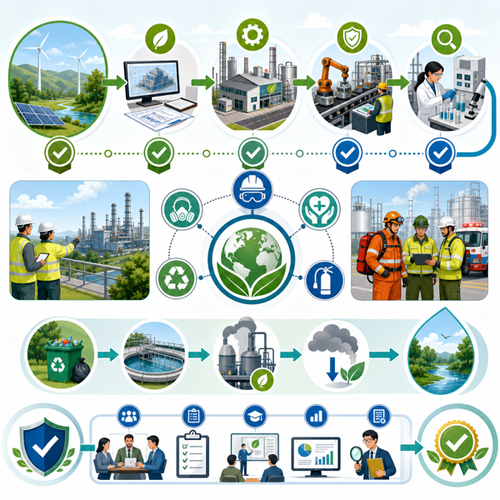
July 2026: Major Updates in Environmental Protection and Safety Standards
July 2026 has seen a significant wave of newly published standards crucial to Environmental Protection and Safety. Part 5 of our 8-part coverage delves into the latest technical requirements and guidance across five influential publications. These standards, ranging from wastewater storm management to air quality monitoring and appliance safety, mark essential advances for regulatory compliance, operational excellence, and public health risk mitigation.
Industry professionals, quality managers, engineers, researchers, and compliance officers will find actionable insights on scope, key requirements, practical impacts, and compliance pathways. This round-up ensures your organization stays ahead when it comes to the ever-evolving landscape of environmental and safety practices.
Overview
Protecting human health, the environment, and ensuring safety across operations are central mandates for organizations worldwide. International standards provide a unified, science-backed framework to manage risks, enhance regulatory conformity, and promote sustainable practices in sectors as diverse as water management, industrial hygiene, and consumer goods.
In July 2026, five new and updated standards offer authoritative requirements on:
- Wastewater storm water management at treatment plants
- Sampling environmental DNA (eDNA) in water quality assessments
- Safety compliance for vacuum cleaners and water-suction cleaning appliances
- Measurement of airborne organic isocyanate hazards in workplace air
- Safety of appliances generating directly inhalable aerosols
This article breaks down what’s new, why it matters, and what professionals must do to stay compliant and competitive.
Detailed Standards Coverage
EN 12255-2:2026 – Storm Water Management in Wastewater Treatment Plants
Wastewater Treatment Plants – Part 2: Storm Water Management Systems
This European standard focuses on the design, implementation, and operation of storm water management systems within wastewater treatment plants. It clarifies requirements for the separation, storage, treatment, discharge, and return of storm water, ensuring systems are fit for purpose during both typical and extreme rainfall events. Coverage explicitly excludes storm water management for sewer networks, instead referencing their respective standards (EN 752, EN 16933).
Key requirements laid out in EN 12255-2:2026 include:
- Flow management systems: Separation of storm inflows, with explicit sizing and design criteria for storm tanks, control of return flows, and appropriate cleaning systems.
- Instrumentation and automation: Mandates for measurement, monitoring, and automation to ensure reliable control of flows during storm events.
- Storage and partial treatment: Storm tanks must provide sufficient volume for short-term events, prevent solids discharge via sedimentation/screening, and enable safe return of stored water for full treatment.
Who must comply? This standard is binding for wastewater engineering professionals, municipal authorities, treatment plant designers, and facility operators overseeing plants with inadequate upstream storm management.
Practical implications:
- Improved resilience and compliance with European regulatory targets for effluent quality and overflow control.
- Reduced environmental impact by preventing uncontrolled storm water discharges.
- Alignment with systems integration and digital monitoring trends.
Key highlights:
- Comprehensive requirements for storm tank sizing, design, and cleaning
- Integration with broader treatment plant automation and monitoring networks
- Reinforced best practices for overflow prevention and partial treatment
Access the full standard:View EN 12255-2:2026 on iTeh Standards
EN ISO 17805:2026 – Water Quality: Environmental DNA (eDNA) Sampling
Water Quality – Sampling, Capture and Preservation of Environmental DNA from Water (ISO 17805:2026)
This international standard provides a robust protocol for sampling, capturing, and preserving environmental DNA (eDNA) in aquatic environments. eDNA-based analyses are transforming biodiversity monitoring, enabling detection of organisms present or recently present in water without the need for conventional capture methods.
Core requirements and specifications:
- Sampling procedures: Clear step-by-step methods for taking, processing, and preserving water samples for eDNA analysis.
- Preventing contamination: Rigorous instructions for decontaminating equipment, use of field blanks, and correct handling to avoid cross-contamination.
- Choice of filters and preservation agents: Guidance on filter types (enclosed, open, housed), chemicals, and lysis buffers to maximize DNA integrity.
- Reporting and traceability: Structured templates for sampling site documentation, sample identity, and operational conditions.
Target audience: Water quality laboratories, environmental monitoring agencies, biodiversity researchers, and regulatory bodies requiring evidence-based aquatic ecosystem assessments.
Practical implications:
- Enhanced reliability and comparability of eDNA results across laboratories and jurisdictions.
- Lower risk of false negatives/positives through robust contamination avoidance.
- Streamlined compliance with regional biodiversity directives (e.g., EU Water Framework Directive).
Key highlights:
- End-to-end protocols for eDNA sample collection and preservation
- Emphasis on contamination avoidance and procedural reporting
- Applicable to freshwater and marine sampling, but excludes biofilms or sediments
Access the full standard:View EN ISO 17805:2026 on iTeh Standards
IEC 60335-2-2:2026 – Safety for Vacuum Cleaners and Water-Suction Cleaning Appliances
Household and Similar Electrical Appliances – Safety – Part 2-2: Particular Requirements for Vacuum Cleaners and Water-Suction Cleaning Appliances
IEC 60335-2-2:2026 provides detailed safety requirements for a broad range of electric vacuum cleaners, including household, animal grooming, battery-operated, and centrally-sited appliances. Major updates align this edition with the latest base standard (IEC 60335-1:2020), with clarity for various operating environments and user types.
Key requirements and specifications:
- Electrical safety: Strict controls on access to live parts, thermal cut-offs, insulation, and moisture resistance.
- Mechanical and operational hazards: Testing for mechanical strength, abnormal operation, stability, and hose safety.
- Specific appliance classes: Covers vacuum cleaners with blowing/inflating functions, spray extraction (with pressure/temp limitations), and appliances for layperson use in shops, hotels, and farmhouses.
- Exclusions: Not applicable to purely industrial, high-pressure, or certain commercial cleaning machines (referenced in other IEC standards).
- Notable revision points: Technical changes include aligning with IEC 60335-1:2020, converting notes to normative rules, and expanding scope for multi-phase central vacuum systems.
Industries affected: Appliance manufacturers, product safety certification labs, electrical engineers, procurement specialists in retail, hospitality, and facility management.
Practical implications:
- Reduces product liability risk and strengthens consumer trust through enhanced safety testing.
- Facilitates product access to global markets via harmonized requirements.
- Ensures conformity with evolving battery and automation technologies.
Key highlights:
- Updated for new base requirements and central vacuum cleaner scope
- Specific testing protocols for operational hazards and multi-user settings
- Strict requirements for user instructions, marking, and protective construction
Access the full standard:View IEC 60335-2-2:2026 on iTeh Standards
ISO 16702:2026 – Monitoring Total Organic Isocyanate Groups in Workplace Air
Workplace Air — Determination of Total Organic Isocyanate Groups in Air Using 1-(2-methoxyphenyl)piperazine and Liquid Chromatography
ISO 16702:2026 sets the international benchmark for measuring airborne organic isocyanate exposure in workplace environments. It details sample collection, derivatization, and analytical protocols to accurately determine both monomeric and polymeric isocyanate groups—critically important given the toxicity of these compounds in industrial use.
Key requirements and specifications:
- Sample collection protocol: Use of impregnated filters or impingers for personal or background sampling, with a focus on the breathing zone.
- Derivatization and analysis: Employs 1-(2-methoxyphenyl)piperazine as the derivatization reagent and liquid chromatography (HPLC or other applicable methods) for separation and quantification.
- Detection sensitivities: Capable of reliable quantification down to ~0.3 μg/m³ across a wide concentration range.
- Quality control and reporting: Field blanks, calibration solutions, and explicit handling guidelines for accuracy and traceability.
Who should comply? Occupational hygiene professionals, EHS (Environment, Health & Safety) departments in manufacturing, labs, paints, and coatings sectors where isocyanates are processed or used.
Practical implications:
- Data-driven compliance with workplace exposure limits (WELs, OELs)
- Early detection and risk management for worker health protection
- Evidence collection for regulatory inspections and incident investigations
Key highlights:
- Comprehensive protocols from sample collection to quantitative analysis
- Personal and area sampling techniques covered
- Extends to a wide variety of isocyanate forms (monomeric, oligomeric, polymeric)
Access the full standard:View ISO 16702:2026 on iTeh Standards
IEC 60335-2-120:2024 – Safety for Appliances Generating Directly Inhalable Aerosols
Household and Similar Electrical Appliances – Safety – Part 2-120: Particular Requirements for the Safety of Appliances for the Generation of Directly Inhalable Aerosols
This new standard addresses the burgeoning market for appliances that generate directly inhalable aerosols, such as vaporizers, personal vaping devices, e-cigarettes, ENDS, ENNDS, and tobacco heating appliances. It covers both AC and DC (including battery-operated) systems, up to 250V for single-phase units.
Key requirements and guidelines:
- Health and safety focus: Rigorous design and construction controls to prevent electrical, mechanical, and thermal hazards.
- Specific exclusions: Does not apply to medical ventilators, humidifiers, consumables (like e-liquids), or emissions testing.
- Global applicability: Aims to establish laws and product rules for consistent safety across consumer and public markets.
- Testing and documentation: Sets out requirements for endurance, leakage current, live part access, and battery safety, alongside robust marking and instruction mandates.
Who should comply: Appliance makers, importers, distributors of vaping devices and aerosol generators, consumer safety bodies, and testing laboratories.
Practical implications:
- Simplifies market access in regions moving to regulate or ban unsafe products
- Reduces liability and recall risk via stronger design and labeling compliance
- Enhances end-user safety for non-medical inhalable appliance markets
Key highlights:
- Applies to latest market innovations in vaping and aerosol generation
- Aligns with global trends in product safety regulation
- Focused on electrical and mechanical integrity of the appliance (not consumables)
Access the full standard:View IEC 60335-2-120:2024 on iTeh Standards
Industry Impact & Compliance
The publication of these five standards has immediate and long-term consequences for organizations committed to Environmental Protection and Safety. New requirements affect:
- Design and procurement: Specification updates may render old designs or purchase specs non-compliant; procurement must update technical requirements accordingly.
- Operational processes: Upgraded sampling and monitoring protocols, automation systems, and testing plans will be required in water treatment, laboratories, and manufacturing facilities.
- Compliance management: Organizations must review and update compliance checklists, conduct gap analyses (especially for transitional provisions), and retrain staff on new procedures.
Benefits of adopting these standards:
- Improved operational safety and accident prevention
- Enhanced environmental stewardship and public health protection
- Streamlined regulatory audits and market access
Risks of non-compliance:
- Exposure to fines, legal liability, or shutdown orders
- Reputational damage
- Loss of certification, market access, or supplier status
Implementing these standards is an opportunity to future-proof quality and safety management across industries.
Technical Insights
A synthesis of these standards shows growing commonalities across Environmental Protection and Safety disciplines:
- Instrumentation and automation: Emphasis on digital sensors, control systems, automated sampling, and real-time monitoring.
- Sampling and contamination control: Whether water, air, or product samples, strict guidance on equipment cleanliness, field blanks, and chain-of-custody procedures.
- Risk-based design: Storm tanks, sampling plans, and appliance safety features are all informed by risk analysis, emphasizing control at the source.
- Documentation and reporting: Structured templates and documentation processes boost traceability, transparency, and regulatory defensibility.
- Testing and certification: Third-party tests and (where required) certified laboratories for analytical methods (such as isocyanate group analysis or appliance safety compliance) are increasingly the norm.
Implementation best practices:
- Perform a gap analysis against the updated standard requirements across all relevant areas.
- Upgrade systems and retrain staff on new protocols, especially in sampling, testing, and documentation.
- Review supplier compliance and update contracts to ensure purchased equipment or laboratory services align with the latest specifications.
- Engage with third-party certification bodies where required for regulatory or market reasons.
Conclusion / Next Steps
The July 2026 release of these Environmental Protection and Safety standards is a pivotal moment for organizations involved in water management, workplace health, and consumer safety technologies. Staying ahead of regulatory requirements is essential not just for compliance, but for operational resilience and stakeholder trust.
Key takeaways:
- Update internal standards libraries and procedural manuals to reflect these new publications.
- Prioritize staff training and competency development in line with new testing, sampling, and product design practices.
- Conduct a strategic review of compliance workflows, documentation, and supplier relationships.
- Reach out to specialist consultants or your national standards body for guidance on implementation.
For direct access to each standard and expert guidance, visit iTeh Standards. By proactively integrating these requirements, your organization will strengthen its commitment to health, safety, and environmental excellence.
Categories
- Latest News
- New Arrivals
- Generalities
- Services and Management
- Natural Sciences
- Health Care
- Environment
- Metrology and Measurement
- Testing
- Mechanical Systems
- Fluid Systems
- Manufacturing
- Energy and Heat
- Electrical Engineering
- Electronics
- Telecommunications
- Information Technology
- Image Technology
- Precision Mechanics
- Road Vehicles
- Railway Engineering
- Shipbuilding
- Aircraft and Space
- Materials Handling
- Packaging
- Textile and Leather
- Clothing
- Agriculture
- Food technology
- Chemical Technology
- Mining and Minerals
- Petroleum
- Metallurgy
- Wood technology
- Glass and Ceramics
- Rubber and Plastics
- Paper Technology
- Paint Industries
- Construction
- Civil Engineering
- Military Engineering
- Entertainment