


May 2026: Key Standards Update for Electrical Controls, Outdoor Furniture, and LPG Appliances
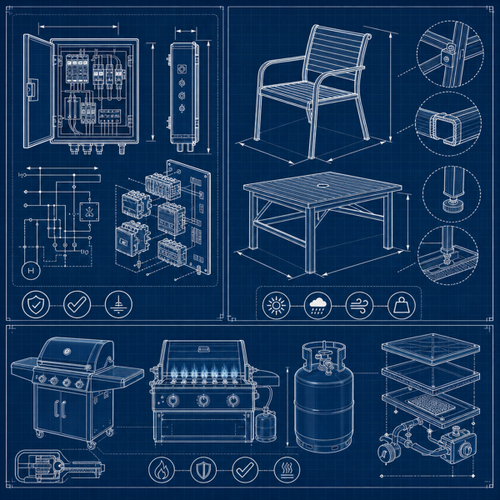
May 2026: Key Standards Update for Electrical Controls, Outdoor Furniture, and LPG Appliances
The month of May 2026 brings pivotal updates to standards in the domestic and commercial equipment, entertainment, and sports industry. Five newly published international standards—ranging from electrical controls and temperature sensing modules to outdoor furniture safety and LPG-powered absorption refrigerators—are set to redefine safety, reliability, and compliance across a wide spectrum of products used in households, commercial venues, and leisure environments. These updates are vital reading for quality managers, engineers, compliance officers, procurement professionals, and manufacturers striving for operational excellence and regulatory alignment.
Overview / Introduction
Domestic and commercial equipment, along with solutions for entertainment and sports, form the backbone of everyday comfort, workplace efficiency, and recreational enjoyment. From the invisible controls governing modern appliances to the robustness of outdoor furniture and the safety of alternative-powered devices, standards ensure that every product meets stringent criteria for performance, reliability, and user protection.
Why Standards Matter:
- They establish a common language and requirements for product design, safety, and interoperability.
- Compliance with the latest international standards helps organizations access global markets, meet legal obligations, and safeguard user trust.
- Updated standards reflect the latest in technological advances and risk mitigation, vital for competitive positioning and sustainable operation.
This article unpacks the May 2026 releases of five critical standards, detailing their scope, application, and how they shape the landscape for professionals in this dynamic sector.
Detailed Standards Coverage
IEC 60730-2-24:2026 – Electrical Displacement Controls for Household and Similar Equipment
Automatic electrical controls – Part 2-24: Particular requirements for displacement electrical controls
The IEC 60730-2-24:2026 standard defines the safety and functional requirements for automatic electro-mechanical displacement electrical controls. These controls are extensively used in household appliances, including pressure cookers, refrigeration units, and other equipment where safety is critically linked to positional movement and control.
What This Standard Covers
- Scope extends to both AC and DC powered controls rated up to 690 V AC or 600 V DC.
- Addresses inherent and functional safety aspects in applications such as position sensing, actuation, and equipment safety circuits.
- Applies to controls that are triggered by displacement, excluding purely electronic controls (addressed elsewhere in the IEC 60730 series).
- Supplements general requirements from IEC 60730-1:2022, blending new and existing expectation sets.
Key Requirements and Specifications
- Comprehensive guidance on construction, operation, installation, and testing of displacement control devices.
- Focus on the protection against electric shock, correct earthing practices, and mechanical mounting robustness.
- Specifies test methods for moisture, dust resistance, insulation, and endurance to ensure safe long-term operation.
- Outlines detailed fault assessment protocols for safety-critical scenarios.
Who Needs to Comply
- Manufacturers and suppliers of household and similar appliances integrating displacement-sensitive electrical controls.
- OEMs and designers developing kitchen appliances, HVAC products, and safety interlocks in consumer and commercial environments.
- Compliance is particularly critical where equipment safety is a direct function of control performance (e.g., pressure limits, actuator positions).
Implementation Implications
- Adopting this standard ensures both regulatory compliance and market acceptance.
- Design and quality assurance teams must revisit their test regimes and documentation in line with the new requirements.
Notable Changes From Previous Versions
- Enhanced integration with the latest base requirements in IEC 60730-1:2022.
- Expanded testing and constructional guidance for improved functional safety.
Key highlights:
- Mandatory constructional and operating requirements for displacement controls.
- New endurance and environmental stress test methods.
- Greater alignment with up-to-date electrical safety principles.
Access the full standard:View IEC 60730-2-24:2026 on iTeh Standards
EN 581-2:2026 – Mechanical Safety for Outdoor Seating
Outdoor furniture – Mechanical safety requirements and test methods – Part 2: Seating for camping, domestic and contract use
EN 581-2:2026 is a cornerstone standard for the safety and structural integrity of outdoor seating designed for camping, domestic, and non-street commercial environments. With pressure on manufacturers to deliver both comfort and user protection, this update presents a modernized suite of requirements and test methods.
Scope and Coverage
- Applies to all types of outdoor seating intended for adults, regardless of material or construction technique.
- Encompasses foldable, knock-down, and lightweight products for camping, as well as fixed seating for home and contract (public) use.
- Excludes street furniture, electrical safety, and aspects related to upholstery and long-term material degradation.
Requirements and Specifications
- Defines minimum safety, strength, and durability thresholds based on user loads up to 110 kg.
- Focused on risk reduction—addresses sharp edges, pinch points, and unintended mechanical failures.
- Mandates stability and structural tests for different chair types, including loungers and deckchairs.
- Details procedures for determining stress points, load application, and pass/fail criteria.
Target Users
- Outdoor furniture manufacturers, camping equipment brands, and contract furniture suppliers.
- Procurement specialists sourcing products for hospitality, leisure venues, and campsite outfitting.
- Regulatory bodies and testing labs.
Practical Implementation
- Informs both design and post-production quality assurance.
- Manufacturers must align internal test labs and supplier quality agreements to these requirements.
- Provides clarity on marking, user information, and reporting.
Notable Updates
- Integrates feedback from EN 1022:2023 for stability and EN 1728:2012 for strength testing.
- Streamlines test sequences and clarifies rearward stability for camping uses.
Key highlights:
- Universal safety benchmarks for camping, home, and contract seating.
- Enhanced mechanical testing methodology.
- Clearer guidelines on use, marking, and consumer information.
Access the full standard:View EN 581-2:2026 on iTeh Standards
EN 581-3:2026 – Safety and Strength Standards for Outdoor Tables
Outdoor furniture – Mechanical safety requirements and test methods – Part 3: Tables for camping, domestic and contract use
The EN 581-3:2026 standard sets comprehensive safety and structural durability requirements for outdoor tables, including those used in households, commercial contract spaces, and for camping.
Scope and Application
- Applies to tables for adults in camping, domestic, and non-office contract uses.
- Covers tables with or without glass tops, addressing issues unique to materials and usage environments.
- Does not cover office workstations, laboratory tables, or street furniture.
Structure and Requirements
- Outlines general and specific mechanical safety benchmarks, such as rounded edges, stability, and resistance to mechanical hazards.
- Includes advanced test protocols—vertical/horizontal load application, strength, and durability cycles based on table type and intended use.
- Special considerations for tables with extension elements and glass surfaces, including impact and fragmentation testing.
Who Should Adopt
- Furniture designers, manufacturers, and suppliers for leisure, home, and contract outdoor settings.
- Quality and compliance engineers responsible for new product validation.
- Hospitality and accommodation brands sourcing safe, durable furniture for guest use.
Implementation Considerations
- Manufacturers must certify product designs and production samples against the updated test methods.
- Specific attention to glass specification and safety testing, especially for contract and commercial applications.
Notable Enhancements
- Incorporates the latest EN 1730:2012 requirements for stability, strength, and durability.
- Updates terminology and adapts test sequences for diverse product formats, including folding/portable types.
Key highlights:
- Rigorous safety protocols for all outdoor table constructions.
- Special guidance for glass-topped and extension tables.
- Harmonized test regimes for camping, home, and contract sectors.
Access the full standard:View EN 581-3:2026 on iTeh Standards
FprEN 732 – LPG Appliance Requirements: Absorption Refrigerators
Specifications for dedicated liquefied petroleum gas appliances – Absorption refrigerators
FprEN 732 addresses the design, safety, and performance of absorption refrigerators powered by liquefied petroleum gas (LPG). As off-grid living, caravanning, and recreational boating gain popularity, the demand for efficient portable refrigeration has surged. This standard responds with detailed technical and safety specifications.
Applicability
- Room sealed (Type C11) and flueless (Type A1) absorption refrigerators using third family LPG.
- Mobile appliances for vehicles, caravans, leisure accommodation, and recreational boats, as well as household LPG refrigerators.
- Does not cover gas cylinders/cartridges or regulator requirements.
Key Requirements & Test Methods
- Constructional guidelines: gas circuit soundness, material suitability, secure mounting, and controls.
- Mandatory incorporation of flame supervision and shut-off devices.
- Strict limits on part temperatures, overheating risks, housing wall heat, and adjacent surface temperatures.
- Prescribes test gases, pressures, installation scenarios, and combustion analysis procedures.
- Manuals and appliance marking must follow detailed minimum criteria.
Compliance Scope
- Applicable for OEMs and aftermarket suppliers of LPG-powered refrigerators.
- Caravan, habitable vehicle, and boat manufacturers seeking compliant appliances.
- Testing agencies and certification bodies specializing in domestic/LPG appliance safety.
Implementation Considerations
- Product design, assembly, and certification workflows must be updated to integrate new flame safety, temperature, and leakage tests.
- Documentation and marking practices must align with clarity and durability standards.
Noteworthy Aspects
- Aligns with current European directives for recreational craft (EU 2013/53/EU).
- Excludes efficiency claims; focuses exclusively on operational and safety characteristics.
Key highlights:
- Holistic approach to construction, operational safety, and marking.
- Ensures critical flame stability and combustion safety.
- Applies to both fixed and portable LPG refrigerator solutions.
Access the full standard:View FprEN 732 on iTeh Standards
IEC 60730-2-9:2026 – Temperature Sensing Controls for Household and Similar Use
Automatic electrical controls – Part 2-9: Particular requirements for temperature sensing controls
The IEC 60730-2-9:2026 presents enhanced requirements for automatic temperature sensing controls, including both traditional and smart-enabled thermostats. This standard addresses controls used in appliances, building automation, HVAC, and similar applications for both domestic and commercial environments.
Standard’s Scope
- Applies to temperature sensing controls operating at ≤ 690 V AC or 600 V DC.
- Includes controls for electrical, gas, oil, and solar-heated systems (e.g., boiler thermostats, HVAC controls, thermal cut-outs).
- Covers AC/DC powered devices, integration in smart grids, and remote interfaces.
- Encompasses both inherent and functional safety of temperature-based switching and control mechanisms.
Technical and Safety Requirements
- Constructional, operating, and testing requirements for thermostat reliability and safety.
- Strong emphasis on protection against electric shock, insulation standards, and safe mechanical operation.
- EMC (electromagnetic compatibility), environmental, and mechanical resistance test protocols.
- Includes detailed requirements for temperature sensing elements (PTC/NTC thermistors), and manual override functions.
Targeted Stakeholders
- Appliance manufacturers, smart device OEMs, and suppliers of controls for domestic and commercial systems.
- Building automation engineers, facility managers, and product compliance teams.
Implementation and Compliance
- Calls for comprehensive testing and fault assessment for both inherent and functional safety.
- Requires clear documentation of test outcomes and performance metrics.
- Encourages adoption of smart and connected controls, including provisions for remote operation and integration.
Changes From Prior Versions
- Incorporates lessons learned from IEC 60730-1:2022 and recent developments in connected controls.
- Expanded guidance for smart-enabled and networked temperature controls.
Key highlights:
- Covers a vast array of temperature sensing applications, including smart and remote interfaces.
- New procedures for combining safety with advanced features (EMC, software, and functional safety).
- Addresses both user-facing and embedded solution requirements.
Access the full standard:View IEC 60730-2-9:2026 on iTeh Standards
Industry Impact & Compliance
These newly published standards will drive a wave of product redesigns and compliance checks across the domestic and commercial equipment spectrum. Businesses must proactively align their products to ensure:
- Legal compliance within target markets, particularly the EU and countries adopting international or harmonized standards.
- Mitigated risk of product recalls, liability claims, or poor market acceptance due to outdated testing or documentation practices.
- Enhanced reputation as a trusted supplier delivering certified, reliable, and user-safe products.
Professionals should:
- Review existing product lines and new developments against these standards.
- Integrate updated test methods into development and quality cycles.
- Update supply chain agreements to reflect new compliance and documentation needs.
Non-compliance can result in regulatory fines, product withdrawal, or reputational harm—especially as end-user awareness of product safety continues to grow.
Technical Insights
Common Requirements Across Standards
While each standard has a distinct focus, several technical themes recur:
- Emphasis on constructional safety: robust design, secure mounting, and protection against mechanical or electrical hazards.
- Rigorous testing protocols: endurance, environmental, and fault simulation tests are now more detailed and scenario-specific.
- Focus on user interaction and marking: clear instructions, avoidance of pinch points and sharps, and correct labeling practices.
- Software and smart integration: Emerging standards, especially for controls, increasingly address functional safety, error handling, and EMC for networked products.
Implementation Best Practices
- Adopt a cross-functional approach: Engage R&D, compliance, quality, and procurement teams from early development through full-scale production and post-market surveillance.
- Leverage third-party certification: Accredited testing labs and notified bodies provide impartial assessment and facilitate access to regulated markets.
- Document rigorously: Maintain records of test outcomes, risk assessments, and supplier declarations—audit trails are crucial.
- Stay proactive: Engage with industry associations, monitor updates via platforms like iTeh Standards, and plan for forthcoming changes well in advance.
- Sustain training: Regularly update staff and supply chain partners on evolving requirements and testing methods.
Testing & Certification Considerations
- Ensure proper calibration of equipment for mechanical and electrical testing.
- For controls and smart devices, integrate EMC and software reliability assessment into validation protocols.
- Follow marking, user information, and warning label standards per the latest documents to ensure safe and legal product distribution.
Conclusion / Next Steps
The May 2026 standards update marks a significant milestone for organizations active in domestic and commercial equipment, entertainment, and sports. With expanded safety, functional, and interoperability criteria, these documents serve as the new gold standard for product development and compliance.
Key Takeaways:
- Implement these standards to demonstrate safety leadership and regulatory conformity.
- Rethink testing, documentation, and supply chain protocols in light of new benchmarks.
- Engage proactively—audit current product ranges, enhance staff training, and collaborate with certification partners.
For professionals and organizations, now is the time to:
- Explore the full text of each standard via iTeh Standards using the direct links provided.
- Subscribe to future standards updates and leverage iTeh Standards to remain at the forefront of compliance and innovation.
- Prepare for Part 2 of this comprehensive update series, which will cover additional standards published in this dynamic sector in May 2026.
For authoritative and up-to-the-minute resources, visit iTeh Standards, your partner in global compliance and technical excellence.
Categories
- Latest News
- New Arrivals
- Generalities
- Services and Management
- Natural Sciences
- Health Care
- Environment
- Metrology and Measurement
- Testing
- Mechanical Systems
- Fluid Systems
- Manufacturing
- Energy and Heat
- Electrical Engineering
- Electronics
- Telecommunications
- Information Technology
- Image Technology
- Precision Mechanics
- Road Vehicles
- Railway Engineering
- Shipbuilding
- Aircraft and Space
- Materials Handling
- Packaging
- Textile and Leather
- Clothing
- Agriculture
- Food technology
- Chemical Technology
- Mining and Minerals
- Petroleum
- Metallurgy
- Wood technology
- Glass and Ceramics
- Rubber and Plastics
- Paper Technology
- Paint Industries
- Construction
- Civil Engineering
- Military Engineering
- Entertainment