

October 2026: New Standards for Home Appliances, Children's Furniture, and Event Drone Safety
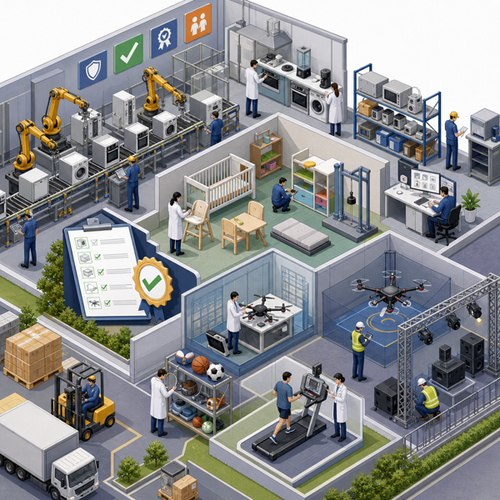
October 2026: New Standards for Home Appliances, Children's Furniture, and Event Drone Safety
In October 2026, three influential international standards were released covering critical aspects of domestic and commercial equipment, children’s furniture, and entertainment technology. These standards—spanning safe use of home appliance controls, detailed guidance for children’s cribs, and comprehensive safety requirements for drones used in stage and production areas—represent fundamental progress for manufacturers, suppliers, and operators aiming to maintain high safety and quality benchmarks in their sectors. This roundup provides essential details, implementation insights, and compliance best practices for these new standards, equipping professionals with the information needed for timely adoption.
Overview
The "Domestic and Commercial Equipment, Entertainment, and Sports" sector plays a vital role across home environments, childcare settings, event venues, and entertainment production. Ensuring the safety, reliability, and performance of equipment in these domains reduces risk to users and supports regulatory compliance for manufacturers, service providers, and facility operators alike.
International standards are pivotal in this landscape. They:
- Establish universally recognized safety and performance requirements
- Promote best practices in design, operation, and testing
- Facilitate market access and interoperability
- Protect end-users—ranging from families and children to event audiences and operators
In this article, you will discover the scope and implications of the three latest standards published in October 2026, including:
- Enhanced requirements for automatic controls in household appliances
- Clarified interpretations for safety and testing of children’s cribs
- Comprehensive safety guidelines for drones (UAS) in entertainment venues
Detailed Standards Coverage
EN IEC 60730-2-10:2026 - Automatic Electrical Controls for Household and Similar Use: Motor-Starting Relays
Automatic electrical controls – Part 2-10: Particular requirements for motor-starting relays
This comprehensive standard addresses safety and performance criteria for motor-starting relays used in household and similar electrical appliances. As a third edition, it supersedes the previous EN 60730-2-10:2007, incorporating important updates that align with EN IEC 60730-1:2022 and expanding protection measures for both end-users and manufacturers.
Scope & Applicability:
- Applies to automatic electrical controls for use in both domestic and similar non-domestic environments
- Focuses specifically on motor-starting relays, a component critical in refrigerators, washing machines, and HVAC equipment
- Relevant for appliance manufacturers, quality control personnel, and certification bodies
Key Requirements and Specifications:
- Comprehensive provisions for protection against electric shock, grounding (earthing), and wiring practices
- Strict specifications for creepage distances, clearances, and insulation resistance to ensure long-term reliability
- Enhanced fault assessment, focusing on electronic circuit failures and abnormal operation scenarios
- Environmental resistance requirements for moisture, heat, fire, corrosion, and dust
- EMC (Electromagnetic Compatibility) criteria for emission and immunity
- Testing protocols for endurance, mechanical strength, and operational deviation
What’s New in the 2026 Edition:
- Fully aligns with the updated EN IEC 60730-1:2022, meaning manufacturers must now integrate all cross-referenced general changes introduced in the base standard
- Expands requirements for functional safety through dedicated annexes
- Updated references to low-voltage switchgear, with additional clarity on compatibility
Practical Implications:
- Mandatory adoption for new products and significant updates of existing product lines
- Non-compliance risks withdrawal or restriction of products in regulated markets
- Drives innovation towards safer, more robust relay designs
Key highlights:
- Complete harmonization with the latest general requirements for automatic electrical controls
- Detailed provisions for electronic faults, EMC, and functional safety
- Revised endurance and environmental stress tests
Access the full standard:View EN IEC 60730-2-10:2026 on iTeh Standards
CEN/TR 18384-1:2026 - Children’s Furniture: Compiled Interpretations of Safety Requirements and Test Methods for Cribs (EN 1130:2019)
Children’s furniture – Compiled interpretations of CEN/TC 207/WG2 standards – Part 1: EN 1130:2019, Children’s furniture – Cribs – Safety requirements and test methods
This technical report provides authoritative clarifications and official interpretations regarding key clauses of EN 1130:2019, the safety standard for children’s cribs. It is designed to help manufacturers, laboratories, and market surveillance authorities correctly interpret and implement crucial safety requirements during design, production, and testing.
Scope & Applicability:
- Applies to all products within the scope of EN 1130:2019 (cribs, cradles, suspended cribs, bedside sleepers for infants up to a sitting/rolling age)
- Targets companies involved in design, testing, and quality control of children’s furniture
- Provides guidance for market surveillance bodies and compliance officers
Key Themes and Interpretations:
- Clarifies when certain types of products—e.g., suspended cribs—fall under the safety requirements of EN 1130
- Details acceptable forms of verification for chemical hazards, helping clarify when a laboratory report, manufacturer statement, or other evidence is sufficient
- Offers consensus answers on the measurement of base inclinations and proper test methods (e.g., use of standard test plates and angle-measuring devices)
- Discusses the handling of horizontal vs. side-to-side base inclinations and the necessity (or not) of locking mechanisms for rocking or swinging cribs
- Provides procedural guidance for the process of requesting further interpretations or amendments to the core standard, helping organizations navigate evolving compliance demands
Practical Implications:
- Enhances uniformity among manufacturers and test labs, reducing risk of divergent or non-compliant interpretations
- Supports efficient, evidence-based product development and market access
- Minimizes liability from inconsistent application of safety requirements
Key highlights:
- Official answers to over a dozen pivotal clarity requests from industry and labs
- Covers chemical safety, mechanical hazards, and purchase/instructional information
- Aids in reliable, repeatable product design and testing for infant safety
Access the full standard:View CEN/TR 18384-1:2026 on iTeh Standards
EN 17206-3:2026 - Entertainment Technology: Safety Requirements for Unmanned Aircraft Systems (Drones) in Staging and Production
Entertainment technology – Machinery for stages and other production areas – Part 3: Safety requirements and inspections for unmanned aircraft systems (UAS/Drones)
This ground-breaking standard lays out comprehensive safety, inspection, and operational guidelines for the use of drones (Unmanned Aircraft Systems, or UAS) in entertainment and events settings. Covering everything from theatres and studios to open-air venues, it addresses critical hazards confronted when integrating drone technology into live productions.
Scope & Applicability:
- Applies to all UAS used in the entertainment industry, both indoors and outdoors
- Relevant for production companies, stage managers, venue operators, drone service providers, and safety/compliance officers
- Covers UAS defined in the "open", "specific", and "certified" categories—explicitly including systems used exclusively indoors and newer drone technologies
Key Requirements and Specifications:
- Complete hazard identification framework based on comprehensive risk assessments
- Safety demands for crashworthiness, load assumptions, tethering, and terminal fittings
- Safeguarding of hazardous areas and requirements for fall protection, barricades, and emergency recovery
- Robust specifications for electrical safety, electromagnetic compatibility, and environmental durability (moisture, temperature, wind, light exposure)
- Mandatory features: emergency stop functions, overload and loss-of-power protections, geo-awareness (to avoid no-fly zones), and direct remote identification
- Detailed user information and marking obligations, including operation instructions, maintenance schedules, and warnings about misuse
- Guidelines for operating UAS in groups, coordinated formations, and interoperating with human performers
What’s New:
- Brings UAS in stage/production contexts under clear regulatory control
- Addresses hazards unique to drones (multi-point collisions, payload failures, sudden loss of control) in live event settings
- Requires alignment with current aerospace and safety machinery directives, ensuring compatibility with the EU’s Machinery Directive (2006/42/EC) and relevant functional safety protocols (including EN 61508 series)
Practical Implications:
- Enables safer integration of drone technologies into increasingly complex show environments
- Provides a framework for demonstration of due diligence in risk management
- Facilitates insurance and risk assessment for venues using UAS
- Failure to comply could result in regulatory fines, production stoppages, or loss of stakeholder trust
Key highlights:
- End-to-end safety system for all entertainment UAS deployments
- Mandates best practices in risk assessment, emergency response, and operator competency
- Harmonizes drone use in events with aerospace and machinery safety laws
Access the full standard:View EN 17206-3:2026 on iTeh Standards
Industry Impact & Compliance
How These Standards Affect Businesses
The introduction of these new and revised standards signals a significant shift for:
- Domestic and commercial equipment manufacturers: Ensuring that new appliances, particularly those with motor-starting relays, meet upgraded electrical safety and reliability benchmarks. Early adoption enhances consumer trust and reduces costly recalls or compliance investigations.
- Children's furniture manufacturers and importers: Consistent interpretation and application of crib safety requirements now ensure a uniform approach to design, labelling, and testing—strengthening both compliance and consumer protection.
- Event and entertainment technology providers: The new UAS standard provides the clear regulatory foundation needed to confidently expand drone-based effects, with lower liability and greater acceptance by venues, insurers, and regulators.
Compliance Considerations and Timelines
- Transition period: Newly published standards provide a window (often 12–36 months) for market adaptation; however, industry leaders should aim for rapid compliance to maintain market access.
- Documentation: Accurate, up-to-date technical documentation and test records must be maintained to demonstrate conformity.
- Training: Operations and QA staff require updated training to reflect new requirements, especially for drone safety and children’s furniture testing.
Benefits of Adoption
- Lower accident and injury rates
- Improved product quality and marketability
- Reduced risk of enforcement actions or market withdrawal
- Smoother certification and approvals process, both in the EU and globally
Risks of Non-Compliance
- Regulatory penalties, market access restrictions, or product recalls
- Increased liability exposure in the case of incidents
- Loss of stakeholder, customer, or regulatory trust
Technical Insights
Common Technical Requirements
Across these standards, several themes emerge:
- Risk-based design: Emphasis on risk assessments and design mitigation for identified hazards
- Testing and Verification: High standards for repeated, evidence-based product testing (both in-lab and in situ)
- Documentation: Detailed user instructions and robust technical files are universally required for confidence in compliance
Implementation Best Practices
- Engage early with updated standards in R&D and procurement
- Conduct internal audits against new requirements
- Invest in staff training for emerging hazard domains—especially UAS operations and furniture safety protocols
- Utilize accredited laboratories for verification, especially when chemical or mechanical test evidence is needed
Testing and Certification Considerations
- Tap into conformity assessment services early in product development
- Where possible, seek third-party certification for critical components and high-risk applications
- For UAS, ensure operator training and maintenance meet all provisions for ongoing compliance
Conclusion / Next Steps
These October 2026 standards updates represent a significant step toward safer, more reliable, and more innovative products across domestic appliances, children’s environments, and the entertainment industry. Adopting these new specifications does more than ensure compliance: it supports market leadership, consumer trust, and operational safety.
Key takeaways:
- Early, proactive adoption streamlines compliance and marketability
- Standards harmonize safety, performance, and operational protocols across the value chain
- iTeh Standards is your authoritative source for accessing, interpreting, and implementing the latest standards
Recommendations for organizations:
- Review and update product design and compliance documentation according to the latest standards
- Train teams on the specifics of the new requirements and best practices
- Access the full standards on iTeh Standards and consider subscribing for timely update alerts
Stay competitive, stay compliant, and ensure safe, high-quality outcomes by integrating these latest international standards into your operational strategy.
Categories
- Latest News
- New Arrivals
- Generalities
- Services and Management
- Natural Sciences
- Health Care
- Environment
- Metrology and Measurement
- Testing
- Mechanical Systems
- Fluid Systems
- Manufacturing
- Energy and Heat
- Electrical Engineering
- Electronics
- Telecommunications
- Information Technology
- Image Technology
- Precision Mechanics
- Road Vehicles
- Railway Engineering
- Shipbuilding
- Aircraft and Space
- Materials Handling
- Packaging
- Textile and Leather
- Clothing
- Agriculture
- Food technology
- Chemical Technology
- Mining and Minerals
- Petroleum
- Metallurgy
- Wood technology
- Glass and Ceramics
- Rubber and Plastics
- Paper Technology
- Paint Industries
- Construction
- Civil Engineering
- Military Engineering
- Entertainment