


July 2026: New Standards for Pressure Vessel Fabrication and Testing in Fluid Systems
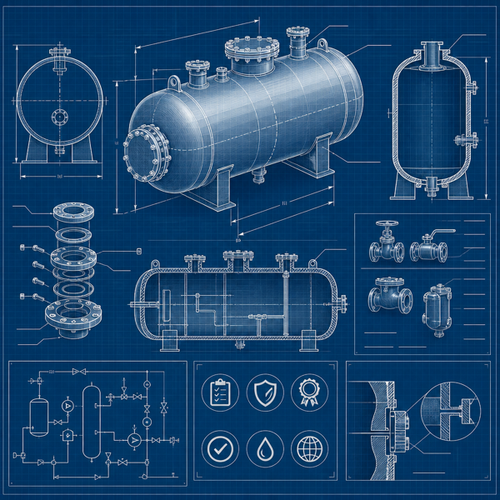
The July 2026 publication cycle brings significant updates for professionals working with pressure vessels and fluid system components. The latest edition of the EN 13445 series expands requirements for the fabrication, inspection, and testing of unfired pressure vessels, including specific attention to advanced materials such as spheroidal graphite cast iron and aluminium alloys. This article explores four newly published standards in the "Fluid Systems and Components for General Use" category, offering critical guidance for manufacturers, quality managers, and engineers looking to remain at the forefront of regulatory compliance and technical excellence.
Overview / Introduction
The fluid systems and components sector underpins countless industrial processes, from petrochemical refining and pharmaceuticals to food and beverages and general engineering. Central to many of these applications are unfired pressure vessels—essential equipment for the storage and transport of gases and liquids under pressure. Adherence to up-to-date international standards is vital for safety, efficiency, and market access, as well as for meeting legal obligations under regional frameworks like the EU Pressure Equipment Directive (PED).
This article explores:
- The scope and key requirements of the four newly released EN 13445 series standards for July 2026
- Practical compliance tips and industry impacts
- Technical best practices for implementation
- The latest in testing, inspection, and materials technology for pressure vessels
Whether you are selecting new equipment, overseeing fabrication, or ensuring ongoing compliance, these updates are essential reading.
Detailed Standards Coverage
EN 13445-4:2026 - Fabrication of Unfired Pressure Vessels
Unfired pressure vessels – Part 4: Fabrication
This standard establishes comprehensive requirements for the manufacture of unfired pressure vessels and their components made of steel. Covering everything from material traceability to finishing operations, EN 13445-4:2026 is a cornerstone document for vessel manufacturers and suppliers.
The revised edition incorporates detailed manufacturing tolerances, welding procedures, heat treatments, and the qualification processes for both welders and permanent joint operators. Requirements extend to the handling of forming operations, repairs (including weld defects), and final inspection protocols.
Those responsible for fabrication—particularly in sectors such as chemical processing, oil and gas, and food production—will find updated specifications ensuring vessels' mechanical integrity and regulatory conformity. The standard also tightens controls on documentation, marking, and the transfer of material certifications throughout production, aligning with traceability mandates under PED.
Key highlights:
- Strengthened control over material traceability and identification
- Updated welding procedure specifications (WPS) and qualification records for operators
- Clear tolerances for weld geometry and pressure-bearing surfaces
- Enhanced protocols for forming, heat treatment, and post-weld inspection
- Robust documentation requirements for each stage of manufacture
Access the full standard:View EN 13445-4:2026 on iTeh Standards
EN 13445-5:2026 - Inspection and Testing
Unfired pressure vessels – Part 5: Inspection and testing
EN 13445-5:2026 defines the parameters for ensuring pressure vessel safety and performance through systematic inspection and testing, applicable to both individual and serially produced vessels made of steel. This update is directly relevant to quality managers and inspection authorities charged with final acceptance and routine surveillance.
The standard provides for a comprehensive range of non-destructive testing (NDT) techniques, destructive testing protocols, calibration methods, and marking requirements. Special annexes address the needs of vessels operating in cyclic service—including fatigue assessment—and those exposed to high-temperature (creep) regimes.
Industries relying on pressure equipment will benefit from refinements in documentation, including detailed technical records, test reports, and declarations of conformity. EN 13445-5:2026 also outlines requirements for subcontracted inspection and clarifies responsibilities among manufacturers, operators, and notified bodies under the PED.
Key highlights:
- Expanded guidance for NDT and acceptance criteria for welded joints
- Detailed technical documentation and records management
- Final assessment procedures: visual inspection, dimensional checks, and pressure tests
- Marking and traceability to satisfy regulatory and operational needs
- Special provisions for serially produced vessels and those subject to cyclic loads or creep
Access the full standard:View EN 13445-5:2026 on iTeh Standards
EN 13445-6:2026 - Spheroidal Graphite Cast Iron Vessels
Unfired pressure vessels – Part 6: Requirements for the design and fabrication of pressure vessels and pressure parts constructed from spheroidal graphite cast iron
This standard addresses the specialized design, manufacturing, and testing requirements for pressure vessels constructed from spheroidal graphite cast iron, both ferritic and austenitic grades. Such vessels are used extensively where resistance to corrosion, high temperatures, or low temperatures is required, often in the chemical, energy, and transport sectors.
EN 13445-6:2026 sets clear limits for maximum allowable pressure (up to 100 bar for gases/liquids in group 1 or 2, and up to 1,000 bar for group 2 liquids), as well as shell wall thickness. It includes detailed recommendations for material selection (as per grade tables), service conditions, design documentation, casting quality, and the full spectrum of mechanical and NDT testing. The scope explicitly excludes lamellar graphite cast irons, which have lower ductility and are governed by different standards.
Key highlights:
- Strict requirements for chemical composition, mechanical properties, and ductility
- Fatigue life and service condition assessments
- Guidance on wall thickness, dimensional tolerances, and experimental testing
- Specialized marking, documentation, and quality validation for cast parts
- Enhanced requirements for fatigue assessment and joint design
Access the full standard:View EN 13445-6:2026 on iTeh Standards
EN 13445-8:2026 - Aluminium and Aluminium Alloy Vessels
Unfired pressure vessels – Part 8: Additional requirements for pressure vessels of aluminium and aluminium alloys
EN 13445-8:2026 brings forth specific requirements for the construction of unfired pressure vessels made from aluminium and aluminium alloys, supplementing the general requirements of Parts 1-5. Manufacturers engaging with lightweight, corrosion-resistant vessels—frequently used in transportation, chemical processing, and energy—will find prescriptive rules on material properties, fabrication, and inspection.
The document details elongation requirements post-fracture (≥14% for cold-formed/welded parts; ≥10% for others), chemical purity, prevention of brittle fracture, and mandatory inspection documentation. It prohibits the use of cast aluminium in the current edition, pending future amendments.
From the manufacturing perspective, the standard mandates stringent welding procedure qualification, operator testing, and specific NDT acceptance criteria for aluminium welds. It also describes mechanical and pressure testing protocols, hydrostatic tests, forming, and post-weld heat treatments. These expanded requirements ensure vessel integrity, durability across full service cycles (up to 500 full cycles), and compliance with materials traceability standards.
Key highlights:
- Prescriptive elongation and mechanical property requirements for aluminium alloys
- Specific NDT rules—radiography, penetrant, and ultrasonic—for weld quality
- Clear rules on forming, heat treatment, and operator/welding procedure qualification
- Exclusion of cast aluminium (subject to future revision)
- Enhanced test protocols for cyclic and model testing
Access the full standard:View EN 13445-8:2026 on iTeh Standards
Industry Impact & Compliance
The release of these updated standards has substantial implications for businesses across fluid systems and pressure vessel manufacturing:
- Legal compliance: The EN 13445 series is harmonized under the EU PED, making adherence essential for CE marking and market access in Europe.
- Safety improvements: Enhanced controls on fabrication and testing reduce the risk of catastrophic mechanical failures, protecting both personnel and assets.
- Quality assurance: Stricter requirements for material traceability, documentation, and operator qualification help organizations strengthen quality management systems.
- Operational efficiency: By standardizing inspection routines and test protocols, manufacturers can optimize production workflows and reduce costly rework.
Compliance tips:
- Conduct a gap analysis against the latest requirements
- Train staff and subcontractors on updated welding, NDT, and recordkeeping protocols
- Ensure all relevant documentation—test reports, material certifications, operator qualifications—is maintained for audit readiness
- Monitor implementation timelines to remain in step with regulatory withdrawal of superseded standards (e.g., EN 13445-4:2021, EN 13445-5:2021, EN 13445-6:2021, EN 13445-8:2021)
The risks of non-compliance include denial of market entry, safety incidents, legal liability, and damage to business reputation. Proactive adoption delivers both risk mitigation and competitive advantage.
Technical Insights
Common technical requirements:
- Detailed controls for material traceability, particularly for high-risk applications and complex assemblies
- Tighter tolerances for weld geometry, wall thickness, and vessel dimensions
- Unified NDT acceptance criteria (radiographic, ultrasonic, penetrant) across pressure vessel types
- Standardized welding procedure qualification and operator training protocols
- Robust documentation and marking procedures to safeguard traceability and compliance
Implementation best practices:
- Thoroughly review the updated standards and cross-reference them with existing fabrication procedures.
- Update welding and NDT training programs for staff and subcontractors.
- Incorporate new requirements into design reviews and supplier qualification audits.
- Collaborate closely with notified bodies or regulatory agencies throughout the transition period for clarifications and approvals.
- Employ digital documentation and recordkeeping platforms to streamline inspection and compliance processes.
Testing and certification considerations:
- Schedule early sample testing and prototype validation to ensure compliance with updated criteria.
- Pay special attention to Annexes on fatigue and cyclic testing (EN 13445-6, EN 13445-5, EN 13445-8).
- Maintain detailed calibration and test equipment records as per EN 13445-5 requirements.
- Engage accredited third-party labs for mandatory destructive and non-destructive testing, where required.
Conclusion / Next Steps
The July 2026 revision of the EN 13445 series offers critical advancements in the standards landscape for fluid systems and unfired pressure vessels. With a focus on fabrication, inspection, and materials innovation, these documents furnish industry practitioners with the information needed to deliver safe, compliant, and high-performance pressure equipment.
Key takeaways:
- Four new standards now govern fabrication, inspection, and specialized materials for unfired pressure vessels
- Updated rules bring clarity to processes, documentation, and testing for a wider range of industrial applications
- Proactive adoption supports legal compliance, safety, and operational efficiency
Recommendations:
- Download and review the full text of each standard from iTeh Standards
- Consult with quality and regulatory teams to integrate updated requirements into your QMS
- Stay engaged with standards organizations and regulatory authorities to anticipate and address future amendments
Stay ahead by embracing the new standards, ensuring both your company’s compliance and its reputation for excellence in fluid systems and pressure equipment.
Categories
- Latest News
- New Arrivals
- Generalities
- Services and Management
- Natural Sciences
- Health Care
- Environment
- Metrology and Measurement
- Testing
- Mechanical Systems
- Fluid Systems
- Manufacturing
- Energy and Heat
- Electrical Engineering
- Electronics
- Telecommunications
- Information Technology
- Image Technology
- Precision Mechanics
- Road Vehicles
- Railway Engineering
- Shipbuilding
- Aircraft and Space
- Materials Handling
- Packaging
- Textile and Leather
- Clothing
- Agriculture
- Food technology
- Chemical Technology
- Mining and Minerals
- Petroleum
- Metallurgy
- Wood technology
- Glass and Ceramics
- Rubber and Plastics
- Paper Technology
- Paint Industries
- Construction
- Civil Engineering
- Military Engineering
- Entertainment