

September 2026: Major Updates to Health Care Technology Standards
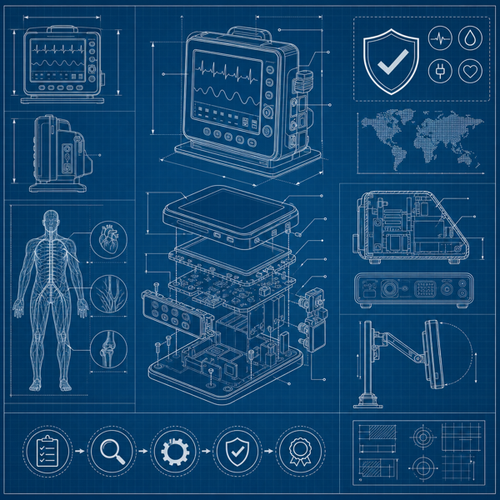
Delivering better patient outcomes and advancing medical innovation depend on robust, up-to-date standards. This September 2026, five new and revised Health Care Technology standards were published, touching everything from hearing aid fitting protocols and acupoint stimulation safety to dental materials, X-ray tube safety, and comprehensive biological risk assessments for medical devices. For health care professionals, quality managers, and regulatory specialists, these major updates provide essential guidance, ensuring both compliance and the highest levels of safety across clinical and technical practices.
Overview / Introduction
The Health Care Technology sector is constantly evolving, driven by emergent technologies and the rising demand for effective, safe, and user-focused health solutions. International standards play a pivotal role in this progress—they define the benchmarks for safety, effectiveness, interoperability, and clinical quality that manufacturers, service providers, and regulators must uphold.
In this article, you’ll find a deep dive into five newly released standards, published in September 2026, which directly impact key areas of medical practice and device manufacturing. From sophisticated requirements in hearing aid services and acupoint stimulators, to critical updates in dental materials and diagnostic X-ray equipment, and groundbreaking approaches to biological risk assessment, this review gives compliance officers, engineers, procurement leads, and researchers a clear roadmap for integrating these changes into their operations.
Detailed Standards Coverage
ISO 21388-1:2026 - Acoustics — Hearing Aid Fitting Management (HAFM) — Part 1: General Process
Acoustics — Hearing aid fitting management (HAFM) — Part 1: General process
This comprehensive standard establishes the general process for hearing aid fitting management (HAFM), setting out procedural and competency requirements for hearing aid professionals (HAPs) delivering services to adults with hearing loss. It details six primary stages—client profiling, counselling, fitting, verification and validation, post-fitting support, and follow-up—ensuring a patient-centric approach to maximize user satisfaction and outcomes.
Key process elements include: proper preconditions (such as education, clinical facilities, and ethical practices), clinical documentation, client communication, and quality assurance. The standard defines essential competencies for HAPs, recommends curricula for professional training, and provides practical guidance for room setup, referral protocols, and information exchange.
Who must comply: Audiologists, hearing care service providers, clinics, and training organizations serving adult hearing aid users.
Notable updates: This first edition aligns international processes with best practices, offering clarity for global service delivery and bridging gaps where national protocols previously varied or were absent.
Key highlights:
- Six-stage HAFM process from initial profile to follow-up
- Competency requirements and recommended training curriculum
- Guidance on ethical practice, documentation, and complaint handling
Access the full standard:View ISO 21388-1:2026 on iTeh Standards
ISO 24996:2026 - Traditional Chinese Medicine — General Requirements and Recommendations for the Basic Safety and Essential Performance of the Transcutaneous Electrical Acupoint Stimulators
Traditional Chinese medicine — General requirements and recommendations for the basic safety and essential performance of the transcutaneous electrical acupoint stimulators
Recognizing the global adoption of non-invasive acupuncture techniques, this standard addresses the critical safety and performance characteristics of transcutaneous electrical acupoint stimulators (TEAS) used in professional traditional Chinese medicine practices. ISO 24996:2026 specifies requirements for design, manufacture, and testing, covering electrical safety, mechanical hazards, output parameters, electrode specifications, and electromagnetic compatibility. It clearly excludes invasive devices and focuses solely on professional settings.
The requirements extend to device marking, control functions, instructions for use (including output parameters and pediatric considerations), hazardous situation prevention, and risk management in the design of electrodes and leads.
Who must comply: Manufacturers and professional healthcare providers in the field of traditional Chinese medicine offering TEAS therapy.
Practical implications: Ensures patient safety, device consistency, and reliable therapeutic outcomes, providing assurance to clinics, regulators, and users in a field marked by increasing international uptake.
Key highlights:
- Comprehensive electrical and mechanical risk mitigation
- Detailed labelling and operational documentation requirements
- Specific pediatric use precautions
Access the full standard:View ISO 24996:2026 on iTeh Standards
EN ISO 10477:2026 - Dentistry – Polymer-based Crown and Veneering Materials
Dentistry - Polymer-based crown and veneering materials (ISO 10477:2026)
Essential for dental labs and clinicians, this European-adopted standard classifies and sets performance criteria for polymer-based materials used in permanent crowns and veneers. Its scope comprises both laboratory-fabricated alternatives and innovative products which rely on chemical adhesion rather than macromechanical retention.
Specifically, EN ISO 10477:2026 establishes technical requirements for flexural strength, bond strength, surface finish, depth of cure, water sorption, shade consistency, and colour stability—factors critical for durable and esthetic dental restorations. Detailed test methods and sampling procedures support conformant manufacturing and quality assurance.
Who must comply: Manufacturers of dental materials, dental labs, prosthodontists, and procurement professionals in oral health centers.
Major changes from previous edition: Updates reflect new classes of bonding systems and enhanced criteria for product reliability and patient safety.
Key highlights:
- Performance and classification of polymer-based crown and veneer materials
- Requirements for both traditional and chemically adhesive systems
- Robust testing regime aligning with international best practices
Access the full standard:View EN ISO 10477:2026 on iTeh Standards
IEC 60601-2-28:2017 - Medical Electrical Equipment – X-ray Tube Assembly Safety for Medical Diagnosis
Medical electrical equipment - Part 2-28: Particular requirements for the basic safety and essential performance of X-ray tube assemblies for medical diagnosis
This advanced standard specifies particular safety and essential performance requirements for X-ray tube assemblies and their components in diagnostic imaging. It integrates with the broader IEC 60601 medical electrical equipment framework, providing focused clauses for electrical, radiation, and mechanical safety applicable to both standalone devices and integrated medical equipment assemblies.
The 2026 amendment streamlines references to current editions of collateral standards, clarifies the delineation between equipment and system-level requirements, and updates test procedures for expelled parts and tube implosion risks. It also updates labeling and documentation needs in line with modern regulatory demands.
Who must comply: Device manufacturers, clinical engineers, radiology departments, and safety assessors working with X-ray diagnostic systems.
Implementation edge: Ensures safe operation and regulatory compliance for critical imaging infrastructure, incorporating lessons from recent advancements in X-ray tube technology.
Key highlights:
- Harmonized electrical, mechanical, and radiation protection criteria
- Updated references and testing procedures
- Safety measures for tube assembly failures
Access the full standard:View IEC 60601-2-28:2017 on iTeh Standards
EN ISO 10993-3:2026 - Biological Evaluation of Medical Devices – Genotoxicity, Carcinogenicity, Reproductive and Developmental Toxicity
Biological evaluation of medical devices - Part 3: Evaluation of genotoxicity, carcinogenicity, reproductive toxicity and developmental toxicity (ISO 10993-3:2026)
EN ISO 10993-3:2026 is a cornerstone in biocompatibility assessment, guiding manufacturers and regulators in evaluating four of the most critical biological risks associated with medical devices. This updated edition details rigorous strategies for testing, risk estimation, and evaluation of genotoxic, carcinogenic, and reproductive/developmental toxicity—integral for regulatory submissions and product safety validation.
Adhering closely to ISO 10993-1 selection guidelines, this standard outlines when and how to assess each type of biological harm, the relevant test batteries (including in vitro and in vivo methods), and the decision-making steps for further evaluation or action. It also clarifies applicability boundaries, notably for device-drug and device-biologic combination products.
Who must comply: Medical device manufacturers, biological safety officers, clinical investigators, quality and regulatory teams.
Key changes: Greater alignment with EU Medical Device Regulation (EU MDR), expanded guidance on relevant biological endpoints, and refined test protocols.
Key highlights:
- Structured approach to risk estimation and testing for critical biological endpoints
- Application guidance for diverse classes of medical devices
- Integration with current regulatory frameworks and support for presumption of conformity
Access the full standard:View EN ISO 10993-3:2026 on iTeh Standards
Industry Impact & Compliance
The publication of these five standards represents a transformative step for health care technology professionals. Their implementation brings several tangible benefits:
- Improved safety and patient outcomes: Each standard directly enhances user and patient protections—whether through robust risk assessment, better device design, safer materials, or more consistent clinical processes.
- Regulatory alignment: They support compliance with international and regional regulations, such as the EU MDR and IEC safety frameworks, smoothing market access and reducing uncertainty in audits and inspections.
- Streamlined procurement and quality management: Clear, harmonized requirements make it easier to specify, purchase, and monitor compliant equipment and materials.
Compliance timelines for each standard should be checked with local and regional regulations. In most cases, a period of transition allows organizations to update their processes, retrain staff, and requalify products before the full application becomes mandatory. Early adoption is strongly recommended to minimize non-compliance risks and benefit from improved performance and patient trust.
Risks of non-compliance include regulatory penalties, loss of market access, reputational harm, and most critically, increased patient safety incidents. Investing in early training, documentation updates, and supplier alignment provides both competitive and operational advantages.
Technical Insights
While each standard is specialized, several common technical themes emerge:
Structured risk management: Whether for biological safety or device performance, all five standards emphasize systematic risk identification, assessment, and mitigation.
Emphasis on evidence-based performance: Robust, reproducible test methods and validation procedures underpin each standard, supporting objective decision-making and regulatory trust.
Documentation and training: Detailed technical records, traceability for materials and processes, and well-documented staff competencies are essential for demonstrating compliance—especially during regulatory inspections or market audits.
Implementation best practices:
- Conduct gap analyses between new standards and existing procedures
- Update technical files, instructions for use, and marking/labelling specifics
- Review supplier certifications for alignment with the latest specifications
- Organize multidisciplinary training covering clinical, laboratory, and quality staff
- Where possible, leverage informative annexes for practical implementation guidance
Testing and certification: Utilize accredited laboratories for verification of performance or biological testing. Maintain updated test reports and ensure adherence to timing and reporting requirements defined in each standard or harmonized regulation.
Conclusion / Next Steps
September 2026’s Health Care Technology standards refresh is a call to action for the entire industry. By aligning processes and products with these latest international requirements, organizations protect patients, achieve compliance, and support broader health care innovation. Quality managers and compliance officers should immediately review the applicability of each standard, begin internal gap assessments, and prioritize staff education.
Next steps for organizations:
- Assign responsibility for each standard to appropriate technical and regulatory teams.
- Communicate upcoming changes and compliance deadlines internally and to supplier networks.
- Initiate training sessions and documentation updates using the informative annexes and guidance included in each standard.
- Explore each standard in detail and ensure your organization remains ahead of the compliance curve.
Explore the full suite of standards and stay updated by visiting iTeh Standards.
Categories
- Latest News
- New Arrivals
- Generalities
- Services and Management
- Natural Sciences
- Health Care
- Environment
- Metrology and Measurement
- Testing
- Mechanical Systems
- Fluid Systems
- Manufacturing
- Energy and Heat
- Electrical Engineering
- Electronics
- Telecommunications
- Information Technology
- Image Technology
- Precision Mechanics
- Road Vehicles
- Railway Engineering
- Shipbuilding
- Aircraft and Space
- Materials Handling
- Packaging
- Textile and Leather
- Clothing
- Agriculture
- Food technology
- Chemical Technology
- Mining and Minerals
- Petroleum
- Metallurgy
- Wood technology
- Glass and Ceramics
- Rubber and Plastics
- Paper Technology
- Paint Industries
- Construction
- Civil Engineering
- Military Engineering
- Entertainment