

September 2026: New IT Standards Released for Imaging, Automation, Learning, Safety, and EFC Security
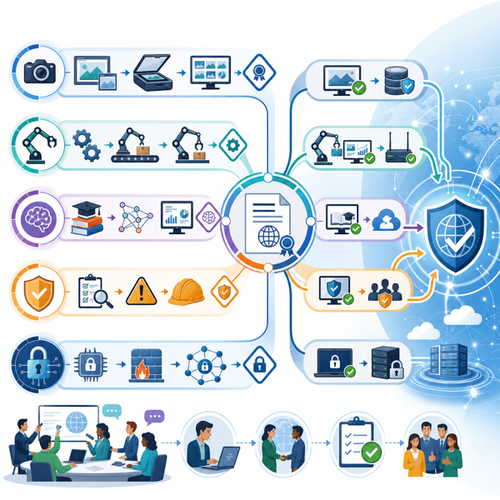
In September 2026, the Information Technology sector witnessed a significant boost in its standards landscape, with five pivotal new publications that touch imaging technologies, smart manufacturing, digital learning, functional safety, and electronic fee collection (EFC) security. These fresh releases from ISO, IEC, and CLC embrace evolving industry needs—helping professionals build resilient, interoperable, and compliant digital ecosystems. Here’s what you need to know from this month’s major standards update.
Overview / Introduction
The field of Information Technology and Office Equipment continues to evolve at a rapid pace, driven by demands for higher-quality imaging, secure payment systems, seamless machine communication, and standardized digital learning environments. As organizations digitize and automate more operations, the role of clear, interoperable, and internationally recognized standards has never been more important. This article delves into the details of five new standards released in September 2026, explaining their practical requirements, key updates, and how they set a new benchmark for quality, safety, and efficiency in IT deployment.
Readers will find:
- What each standard covers and why it matters
- Key compliance and implementation insights
- How these changes impact your operations and technology choices
Detailed Standards Coverage
ISO/IEC 19566-10:2026 - JPEG Systems Reference Software
Information technology — JPEG systems — Part 10: Reference software
This standard provides a comprehensive reference software implementation supporting the ISO/IEC 19566-5 JPEG Universal Metadata Box Format (JUMBF). It delivers sample Java and C++ software libraries, plus a robust dataset for conformance checking and validation. The reference software is not mandatory for implementation, but acts as an authoritative anchor for understanding, testing, and developing solutions that conform to the JPEG Systems specifications.
Key requirements include:
- Embedding, parsing, and generating JUMBF metadata within various image file formats
- Reference implementations for all JUMBF Content Types (XML, JSON, JP2C, CBOR, UUID, Embedded File)
- Support for validation scenarios, including privacy, security, JPEG 360, JLINK, and JPEG Snack extensions
- Guidance for software developers and vendors to assess conformity of their own implementations
- Details on licensing, validation methodology, and interoperability best practices
Target organizations: Any entity or developer working with JPEG image processing or digital asset management requiring metadata standardization and validation.
Practical implications:
- Accelerates compliant product development by providing ready reference implementations
- Facilitates interoperability testing and validation
- Anchors industry-wide consistency in JPEG metadata usage
- Ensures faster onboarding for new developers and QA teams
Key highlights:
- Expanded reference software for all JUMBF Content Types
- Conformance dataset for interoperability testing
- Validated sample code in Java and C++ with implementation guidelines
Access the full standard:View ISO/IEC 19566-10:2026 on iTeh Standards
ISO 16400-4:2026 - Virtual Production Equipment Behaviour Application Methods
Automation systems and integration — Equipment behaviour catalogues for virtual production system — Part 4: Application methods
ISO 16400-4:2026 sets out requirements and an overarching framework for applying Equipment Behaviour Catalogue (EBC) concepts in smart manufacturing and virtual production. The standard details procedures for specification, integration, and categorization of EBC application methods to ensure that machines, controllers, and digital twins interact seamlessly in Industry 4.0 systems.
Key requirements and coverage:
- Defines the process for elaborating and embedding EBC elements into manufacturing applications
- Outlines a systematic approach for specifying, categorizing, and integrating EBCs for simulation, monitoring, and process optimization
- Details application viewpoints for various stakeholders, covering system architects, developers, integrators, and operational engineers
- Provides a categorization scheme for various EBC application methods based on integration level and use case
- Offers annexes with practical integration examples (e.g., equipment hierarchies, failure information, and service interfaces)
Target organizations: Smart manufacturing facilities, automation solution providers, MES/SCADA vendors, digital twin solution providers
Practical implications:
- Ensures standardized and future-proofed application of machine behaviour models
- Simplifies integration between virtual and physical assets
- Supports flexibility and scalability in manufacturing system design
Key highlights:
- Comprehensive application method categorization for EBCs
- Procedures for developing and embedding EBCs into various platforms
- Integration guides for different automation use cases
Access the full standard:View ISO 16400-4:2026 on iTeh Standards
ISO/IEC 19788-2:2026 - Metadata for Learning Resources: Dublin Core Properties
Information technology for learning, education and training — Metadata for learning resources — Part 2: Dublin Core properties
This important update advances metadata interoperability for digital learning resources, aligning Dublin Core element sets with the ISO/IEC 19788-1 framework. The standard prescribes a rule-based specification of properties and their attributes, supporting literal values and complex resource class links, enabling richer and more flexible descriptions for educational materials in modern digital ecosystems.
Key requirements and features:
- Codifies both ‘literal’ and resource class properties for learning resource metadata
- Delivers full alignment and interoperability between Dublin Core and ISO/IEC Metadata for Learning Resources (MLR) frameworks
- Specifies a uniform, extensible structure for resource classes (Person, Information Resource, Rights Statement) and key properties (title, creator, subject, date, etc.)
- Provides explicit mapping for deploying Dublin Core records as part of linked data or traditional metadata environments
- Incorporates updates for labeling, canonical identifiers, and deprecates certain outdated elements
Who should comply: Educational publishers, e-learning platforms, content aggregators, academic institutions, and learning technology developers seeking global interoperability and discoverability
Practical implications:
- Enables seamless exchange of educational metadata across platforms
- Enhances searchability, discovery, and reuse of learning resources
- Supports transition to semantic web and linked data paradigms in education
Key highlights:
- Updated property definitions with standardized labels and identifiers
- Helps organizations comply with both Dublin Core and ISO standards
- Facilitates richer digital resource management
Access the full standard:View ISO/IEC 19788-2:2026 on iTeh Standards
prEN IEC 61508-7:2025 - Functional Safety Techniques and Measures
Functional safety of electrical/electronic/programmable electronic safety-related systems - Part 7: Overview of techniques and measures
This draft European and International Standard consolidates practical techniques, procedures, and preventive measures essential for achieving functional safety in electronic, electrical, and programmable electronic safety-related systems (E/E/PE systems). The document extensively details controls for both random hardware and systematic failures, helping organizations to align with IEC 61508 safety lifecycle requirements.
Scope and requirements include:
- Catalogues of technical and procedural safeguards for hardware and software systems
- Guidance on monitoring, redundancy, error-checking, and validation for system components (memory, sensors, actuators, communication interfaces, power supply, etc.)
- Techniques for software validation, static/dynamic analysis, simulation, and failure insertion testing
- Comprehensive management and documentation practices to minimize systematic errors
- Methods for project management, traceability, and ensuring independence in safety assurance roles
Target users: Safety engineers, system designers, component manufacturers, integrators in sectors like process automation, manufacturing, transportation, and critical infrastructure
Practical implications:
- Supports reliable risk reduction and compliance with functional safety certification programs
- Facilitates audit readiness and market access for safety-critical products
- Encourages best practices for both system architecture and operational procedures
Key highlights:
- Extensive list of recommended safety measures for hardware and software
- Practical techniques for testing, validation, and maintenance
- Methods enabling compliance with IEC 61508 (process industry, machinery, etc.)
Access the full standard:View prEN IEC 61508-7:2025 on iTeh Standards
ISO 17574:2026 - Security Protection Profiles for Electronic Fee Collection
Electronic fee collection — Requirements for security protection profiles
ISO 17574:2026 is the new go-to reference for preparing and evaluating security requirements in electronic fee collection (EFC) systems, particularly those relying on the ISO/IEC 15408 Common Criteria framework. It covers the architecture and methodology for creating protection profiles (PPs), clarifies relationships between operators, system providers, and evaluators, and provides sample procedures for developing robust security targets and assurance measures.
Key content and specifications:
- Outlines the security architecture and process for EFC system protection profile development
- Clarifies domain-specific security roles and interfaces (e.g., operator, application, and audit domains)
- Provides stepwise guidance for conducting threat analysis, defining objectives, and mapping to security functional and assurance requirements
- Aligns with international certification (Common Criteria Recognition Arrangement - CCRA) to ensure global acceptance
- Includes best-practice procedures for security requirement registration, audit, and evaluation
Primary audience: Toll operators, intelligent transport system designers, payment equipment vendors, government agencies managing toll networks
Implementation and impact:
- Ensures that EFC equipment and systems can pass international security evaluations
- Reduces the risk of fraud, data breaches, and service disruptions in toll collection
- Streamlines procurement, certification, and audit processes for EFC solutions
Key highlights:
- Step-by-step PP preparation aligned with ISO/IEC 15408
- Roles and audit responsibilities clearly defined
- Encourages harmonization and reuse of security profiles across markets
Access the full standard:View ISO 17574:2026 on iTeh Standards
Industry Impact & Compliance
The release of these five standards reflects the broadening scope of Information Technology in modern business and public infrastructure. Organizations aiming for international market access, certification, or leadership in digital transformation initiatives will benefit greatly from early adoption and compliance.
Key industry impacts include:
- Enhanced interoperability: Standards like ISO/IEC 19566-10 and ISO/IEC 19788-2 smooth data exchange in imaging and learning environments.
- Future-proofed manufacturing: ISO 16400-4 solidifies the role of behavior-driven modelling and simulation in smart factories.
- Heightened safety assurance: prEN IEC 61508-7 delivers best-in-class techniques for system reliability and risk reduction.
- Trustworthy EFC environments: ISO 17574 ensures EFC setups stand up to security scrutiny, audit, and regulation.
Compliance considerations:
- Organizations must review existing practices to ensure alignment with new procedural, technical, and documentation requirements
- Many standards allow for phased adoption; integration planning and staff training are key
- Failure to conform may risk loss of certification, reduced interoperability, and market delays
Adoption benefits:
- Reduced integration and validation costs
- Smoother supplier/customer qualification
- Improved service quality, safety, and regulatory compliance
Technical Insights
These newly published standards share a focus on clarity, detailed procedural guidance, and modular, scalable implementation. Common technical requirements include:
- Use of reference software or datasets (for validation/testing)
- Application of standardized property definitions and interoperability frameworks
- Documented testing and validation procedures for compliance verification
- Adoption of security-by-design principles and audit-ready documentation (especially in safety and fee collection domains)
Implementation best practices:
- Review scope and cross-references for each standard to avoid duplication or gaps in processes
- Integrate reference implementations and datasets into development/testing cycles
- Develop internal guidelines and checklists aligning with new standards’ annexes
- Use risk and threat analysis tables as templates for your own security/safety reviews
- For educational and content systems, migrate legacy metadata to frameworks specified by ISO/IEC 19788-2 for best interoperability
- Involve compliance, IT, and procurement teams early in planning upgrades to align with evolving certification timelines
Testing and certification:
- Many standards mandate or recommend specific test procedures for certification (e.g., conformance datasets, reference implementations, memory and code validation, security functional requirements)
- Maintain close liaison with national or international standards bodies for updates and harmonization
Conclusion / Next Steps
The September 2026 portfolio of newly published Information Technology standards is both broad and deep, reflecting industry demand for greater quality, safety, interoperability, and security. Forward-looking organizations will prioritize:
- Identifying which standards impact their products, services, or operations
- Mapping gaps between new requirements and current practices
- Developing implementation and compliance roadmaps in consultation with standards specialists
- Engaging with the wider IT community via platforms like iTeh Standards to monitor new developments and access authoritative resources
Stay ahead: By leveraging these standards, enterprises not only meet compliance obligations but also foster innovation, operational resilience, and customer confidence in a rapidly transforming digital environment.
Categories
- Latest News
- New Arrivals
- Generalities
- Services and Management
- Natural Sciences
- Health Care
- Environment
- Metrology and Measurement
- Testing
- Mechanical Systems
- Fluid Systems
- Manufacturing
- Energy and Heat
- Electrical Engineering
- Electronics
- Telecommunications
- Information Technology
- Image Technology
- Precision Mechanics
- Road Vehicles
- Railway Engineering
- Shipbuilding
- Aircraft and Space
- Materials Handling
- Packaging
- Textile and Leather
- Clothing
- Agriculture
- Food technology
- Chemical Technology
- Mining and Minerals
- Petroleum
- Metallurgy
- Wood technology
- Glass and Ceramics
- Rubber and Plastics
- Paper Technology
- Paint Industries
- Construction
- Civil Engineering
- Military Engineering
- Entertainment