

September 2026: New Standards Redefine Manufacturing Engineering Practices
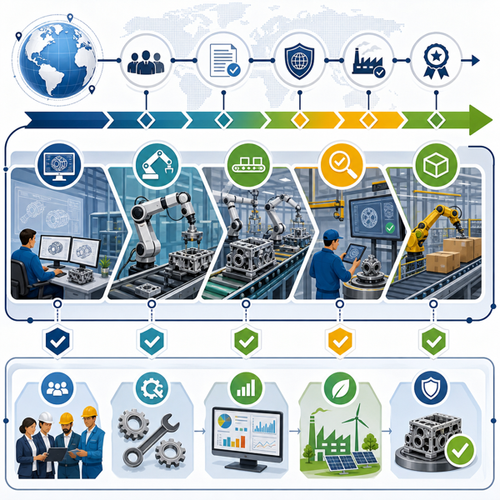
September 2026: New Standards Redefine Manufacturing Engineering Practices
The world of manufacturing engineering is undergoing a pivotal shift this September 2026, with the introduction of five newly published international standards. These standards bring transformative improvements to material testing protocols, industrial heating processes, and digital asset management. For industry professionals, engineers, and compliance leaders, staying updated on these changes is critical to ensure compliance, process efficiency, and competitive advantage. This is Part 1 of a comprehensive three-part series highlighting all major standardization updates for manufacturing engineering this month.
Overview / Introduction
Manufacturing engineering sits at the core of industrial innovation, where process reliability and product quality are non-negotiable. In an era defined by global supply chains and rapid technical evolution, international standards are vital—they harmonize requirements, enable cross-border trust, and safeguard users. Updated standards impact every aspect of production: from raw materials and test methods to automation, monitoring, and digital transformation initiatives.
This article covers:
- Advanced testing methodologies for metallic coatings on plastics
- New definitions for evaluating power output in industrial heating
- Frameworks for intelligent device management and asset data governance
Discover detailed coverage of each new standard, their technical requirements, implementation guidance, and the industry-wide implications for manufacturing organizations.
Detailed Standards Coverage
ISO 25245:2026 - Peel Strength of Metallic Coatings on Plastics
Peel Strength of Metallic Coatings on Plastics — Designation and Test Method under Controlled Temperatures
This groundbreaking ISO standard introduces a rigorous, quantitative peel test method to measure the adhesion strength of metallic coatings on plastic substrates—conducted under precisely controlled temperatures. Replacing qualitative legacy techniques, ISO 25245:2026 sets out a global methodology for assessing and designating peel strength, embedding temperature, substrate, coating process, and thickness data into results for unparalleled clarity.
The method centers on:
- Using a tensile testing machine equipped with thermostatic control to assess adhesion across a wide temperature range.
- Specimen preparation and sampling protocols for consistent, statistically valid results.
- Designation systems that facilitate transparent reporting, including test temperature, substrate material, coating process, and thickness.
Who should comply:
- Automotive and transport manufacturers
- Electronics and electrical component producers
- Consumer goods, telecom, industrial equipment, medical device, aerospace, and renewable energy sectors relying on metalized plastics
Practical implications:
- Greater reliability in product qualification and supplier audits
- Supports R&D and process optimization for new coating technologies
- Enables consistent quality management even when operating in extreme environments (e.g., subzero or over 100°C)
Key highlights:
- Sets quantitative, reproducible tests for bond strength of metallic coatings
- Introduces controlled-temperature testing to reflect real-world operating conditions
- Outlines reporting requirements for full traceability and comparison
Access the full standard:View ISO 25245:2026 on iTeh Standards
EN IEC 61307:2026 - Industrial Microwave Heating Installations: Power Output Test Methods
Industrial Microwave Heating Installations - Test Methods for the Determination of Power Output
EN IEC 61307:2026 brings major advancements to the reliability and standardization of power output measurement in industrial microwave heating. The standard applies to industrial microwave assemblies from 300 MHz to 300 GHz, focused on ISM frequencies below 6 GHz. With updated guidance for both Type A and Type B equipment, it supersedes the 2011 edition and aligns with emerging industrial electroheating practices.
Core technical elements include:
- Detailed methods for calorimetric measurement using water and substitute loads
- Flexible workload and effective microwave power measurement approaches for practical factory settings
- Efficiency determination procedures addressing electrical input, available output, and operational flexibility—including standby/hibernation/holding modes
Who should comply:
- Manufacturers and operators of industrial microwave heating installations
- Chemical, food processing, pharmaceuticals, advanced ceramics, and composites producers relying on heat-based processing
Practical implications:
- More accurate process validation and energy consumption analysis
- Easier cross-facility and supplier comparisons globally
- Supports planning for upgrades and maintenance based on comparable and verifiable power data
Key highlights:
- Enhanced coverage of start-up, standby, and holding power consumption
- Clear classification and measurement guidance for both modular and integrated installations
- Operational testing methodologies supporting process certification
Access the full standard:View EN IEC 61307:2026 on iTeh Standards
EN IEC 61308:2026 - High-Frequency Dielectric Heating Installations: Power Output Test Methods
High-Frequency Dielectric Heating Installations - Test Methods for the Determination of Power Output
The 2026 revision of EN IEC 61308 sets out standardized protocols for testing useful output power in high-frequency dielectric heaters—spanning equipment from 100 kHz to 300 MHz, particularly within ISM bands such as 6.78, 13.56, 27.12, and 40.68 MHz. The update features improved guidance for calorimetric, lamp-load, wet-sand, and matched resistive testing methods.
The standard specifically addresses:
- Output power measurement in both Type A (modular) and Type B (integrated) systems
- Special procedures for dielectric plastic welding applications (including test electrodes)
- The impact of tuning and load variations on reported results
Who should comply:
- Industrial heating and processing equipment manufacturers, system integrators
- Factories using dielectric heating for plastics, textiles, wood, paper, and rubber
Practical implications:
- Empowers operators to report and compare equipment performance transparently
- Informs procurement and maintenance planning with standardized power data
- Aligns product qualification and end-user expectations internationally
Key highlights:
- Expanded calorimetric test procedures and load test guidelines
- Full alignment with the latest safety standards for industrial electroheating
- New requirements for plastic welding power output verification
Access the full standard:View EN IEC 61308:2026 on iTeh Standards
EN IEC 63082-1:2026 - Intelligent Device Management: Concepts and Terminology
Intelligent Device Management - Part 1: Concepts and Terminology
Reflecting the digital transformation in manufacturing, EN IEC 63082-1:2026 lays the linguistic and conceptual groundwork for effective intelligent device management (IDM) within industrial processing environments. This first part offers an authoritative vocabulary for IDM, ensuring clarity across procurement, integration, and operations.
Key structural components:
- Precise definitions of IDM concepts, management functions, and organizational structures
- Coverage of program life cycles, supplier coordination, information risk, and facility integration
- Guidance for mapping IDM to broader asset management and digital transformation initiatives
Who should comply:
- Manufacturing facilities deploying, procuring, or maintaining automation and intelligent field devices
- System integrators and solution architects
- Quality and asset management professionals
Practical implications:
- Enables organizations to build robust, scalable, and auditable IDM programs
- Assures seamless communication across the supplier, integrator, and user ecosystem
- Lays the foundation for advanced, interoperable procurement and integration strategies
Key highlights:
- Consolidates terminology for IDM across industries
- Supports enterprise-grade IDM programming, including supplier management
- Underpins best practices for corporate digital transformation
Access the full standard:View EN IEC 63082-1:2026 on iTeh Standards
IEC 63278-4:2026 - Asset Administration Shell for Industrial Applications: Application Guidance
Asset Administration Shell for Industrial Applications - Part 4: Applications of Asset Administration Shell
Emerging as a key enabler of Industry 4.0 and digital twin initiatives, IEC 63278-4:2026 provides hands-on guidance for applying the Asset Administration Shell (AAS) in industrial settings. This part expands on IEC 63278-1 by detailing real-world uses, additional requirements, and governance for implementing AAS across assets, product types, and enterprise systems.
Highlights include:
- Use-case-driven explanations for asset representation, integration, and modification
- Guidance for data exchange, service deployment, digital twin construction, and responsibility attribution
- Practical examples for virtual commissioning, supply chain collaboration, and carbon footprint calculation
Who should comply:
- Manufacturers, systems integrators, MES/ERP vendors, and industrial automation firms
- Organizations adopting digital twins and comprehensive asset data governance
Practical implications:
- Facilitates interoperable, future-proof digital asset management
- Streamlines industrial automation and supply chain data traceability
- Promotes holistic lifecycle management and regulatory compliance
Key highlights:
- In-depth scenarios for AAS application, modification, and data exchange
- Enhanced requirements and recommendations for AAS implementations
- Expanded coverage for integrating physical, logical, and digital asset components
Access the full standard:View IEC 63278-4:2026 on iTeh Standards
Industry Impact & Compliance
The introduction of these manufacturing engineering standards marks a watershed for global manufacturers:
- Business Impact:
- Enhanced process control, reliability, and product quality
- Improved energy efficiency in industrial heating and reduced operational costs
- Accelerated digitalization and robust asset data governance
- Compliance Considerations:
- Organizations will need to update their quality assurance, procurement, and production protocols
- Transition plans should factor in timelines for integration, supplier alignment, and possible recertification
- Early adoption can deliver competitive advantages in market access and stakeholder trust
- Benefits of Adoption:
- Reduced risk of failure in critical applications and regulatory penalties
- Streamlined audits and better transparency for partners and end-users
- Opportunities for innovation in process and product development
- Risks of Non-Compliance:
- Loss of customer confidence and supply chain position
- Increased liability, scrap rates, or process variation
- Delayed access to international markets or inability to meet tender requirements
Technical Insights
While the standards span different technical domains, several key technical requirements and best practices are consistent:
- Explicit Reporting and Data Management:
- All test results and device management actions require traceable, comprehensive reporting
- Quantitative Measurement and Verification:
- Emphasis is placed on numerical, reproducible test outcomes (e.g., Newtons for peel strength, Watts for power)
- Temperature, Load, and Environmental Control:
- Controlled conditions are mandated for accurate testing and equipment comparison
- Systematic Asset and Device Lifecycle Management:
- Digital twin concepts and asset administration methods are prioritized for future scalability
- Implementation Best Practices:
- Regularly train quality and technical teams on new and revised standards
- Collaborate with suppliers for sample testing and integration strategies
- Invest in test equipment and software updates in anticipation of new protocols
- Integrate new terminology and workflows into internal management systems
- Testing and Certification:
- Certification bodies and notified organizations may soon require evidence of compliance for certification and audit
- Supplier Management:
- Coordination throughout the life cycle of intelligent devices and asset data across supply chains ensures business continuity and compliance
Conclusion / Next Steps
The September 2026 updates in manufacturing engineering standards usher in a new era of quality, discipline, and digital intelligence across industrial operations. Comprehensive adoption supports better product reliability, efficient automation, transparent asset tracking, and future-ready compliance.
Recommendations:
- Review each standard in detail and assess your organization’s current compliance status
- Initiate cross-departmental meetings for action planning—especially in quality, technical, and procurement teams
- Engage with suppliers early for alignment on test, integration, and reporting requirements
- Stay tuned for Parts 2 and 3 of this manufacturing engineering standards update series for complete coverage
For full access to the text and latest updates, visit iTeh Standards and ensure your teams are equipped for the future of manufacturing.
Categories
- Latest News
- New Arrivals
- Generalities
- Services and Management
- Natural Sciences
- Health Care
- Environment
- Metrology and Measurement
- Testing
- Mechanical Systems
- Fluid Systems
- Manufacturing
- Energy and Heat
- Electrical Engineering
- Electronics
- Telecommunications
- Information Technology
- Image Technology
- Precision Mechanics
- Road Vehicles
- Railway Engineering
- Shipbuilding
- Aircraft and Space
- Materials Handling
- Packaging
- Textile and Leather
- Clothing
- Agriculture
- Food technology
- Chemical Technology
- Mining and Minerals
- Petroleum
- Metallurgy
- Wood technology
- Glass and Ceramics
- Rubber and Plastics
- Paper Technology
- Paint Industries
- Construction
- Civil Engineering
- Military Engineering
- Entertainment