


ISO 19697:2026 Sets New Standards for Electronic Inclinometers in Marine Navigation – July 2026
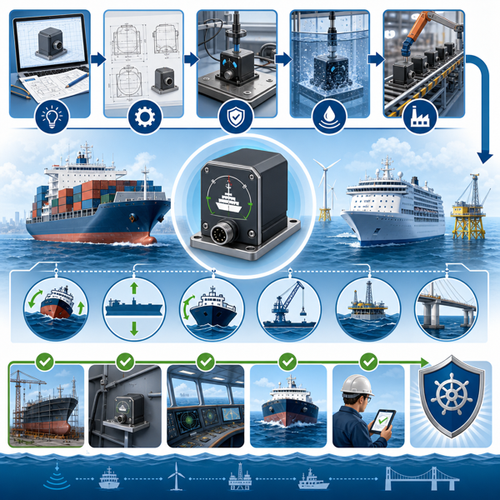
In July 2026, the International Organization for Standardization (ISO) unveiled an essential update for the maritime industry: ISO 19697:2026, setting comprehensive requirements for electronic inclinometers used in ship navigation and operations. This single but significant standard addresses the technical expectations, rigorous testing, and alert management protocols necessary for reliable, compliant shipboard deployment. With navigation technology evolving and regulatory demands increasing worldwide, this standard provides stakeholders with a critical framework for safety and operational integrity across fleets.
Overview / Introduction
The shipbuilding and marine structures industry is at the heart of global trade and passenger travel, demanding the highest levels of safety, reliability, and performance from its navigation systems. Standards in this sector ensure that marine equipment—from hull integrity to bridge instrumentation—meets stringent international benchmarks. The newly published ISO 19697:2026 focuses on electronic inclinometers, instruments vital for monitoring and reporting ship roll and stability. By defining performance, display, and alert requirements, this standard supports both daily navigation and emergency responses at sea.
In this article, you'll learn:
- What ISO 19697:2026 covers and why it's now mandatory for shipbuilders and operators
- The technical specifications and practical implications of the newest inclinometer standard
- How businesses can ensure compliance and benefit from updated marine navigation requirements
Detailed Standards Coverage
ISO 19697:2026 – Electronic Inclinometers for Ship Navigation
Ships and marine technology — Navigation and ship operations — Electronic inclinometers
Scope and Purpose:
ISO 19697:2026 establishes global criteria for the performance, testing, and operational features of electronic inclinometers as required by IMO resolution MSC.363 (92), supplementing the broader shipboard requirements of IMO Resolution A.694 (17). This standard applies specifically to electronic inclinometers used for monitoring vessel roll, heel angle, period, and stability—key parameters for navigational safety and accident prevention—not for other uses like cargo monitoring.
Key Requirements & Specifications:
- Performance Accuracy:
- Measurement of actual heel angle and roll amplitude with high precision over a ±90° range.
- Roll periods detectable from 4 to 40 seconds, using zero crossing methodology if required for increased precision.
- Display Standards:
- Analogue displays show heel angle up to ±45°, maintaining clarity even if thresholds are exceeded.
- Digital and analogue forms for roll amplitude, peak hold values, and period, adhering to minimum resolutions (1° for angles, 1 second for period).
- Display integration with other bridge systems is permitted, but all displays must comply with updated IMO and IEC display standards (notably MSC.191(79), MSC.466(101), IEC 62288).
- Alert Management:
- Implements bridge alert management in line with IEC 62923-1:2018 and IEC 62923-2:2018.
- Alerts for system failures, threshold exceedances, and operational issues must be standardized and acknowledged through the ship’s bridge systems.
- Thresholds for alerts are configurable, ensuring prompt warning if preset heel angles are breached.
- Testing Methodologies:
- Includes static, dynamic, and long-term heel angle accuracy tests.
- Requires tests for connection with other equipment and for alert/peak value/reset functions.
- Mandates power failure alert tests to ensure continued reliability under duress.
- Interface and Data Sharing:
- Provides standardized digital interfaces (IEC 61162 series), ensuring compatibility with voyage data recorders (VDR), central alert management (CAM), and other electronic systems.
Target Audience:
- Shipbuilding firms
- Marine electronics manufacturers
- Fleet operators and managers
- Bridge crew and navigation officers
- Marine safety and quality managers
- Certification and compliance bodies
Notable Changes from Previous Editions:
- Updated references to harmonize with the latest IMO and IEC frameworks
- Integration of enhanced alert management features
- Broader requirements regarding power supply monitoring and alerting
- Replacement of interface annex to cover IEC 61162 compatibility
- Addition of detailed annexes on alert definitions and test methodologies
Key highlights:
- Accurate, standardized heel angle and roll measurement from ±90°
- Improved, configurable alerting integrated into bridge alert management (BAM)
- Stricter interface and testing requirements for VDR and data interoperability
Access the full standard:View ISO 19697:2026 on iTeh Standards
Industry Impact & Compliance
The adoption of ISO 19697:2026 marks a decisive improvement in shipboard safety and data integrity. By enforcing precise measurement and alerting requirements, this standard ensures that navigation teams receive actionable information in real time, directly supporting safer ship operations and facilitating compliance with international conventions.
Compliance Considerations:
- Timelines: As this is a revision replacing ISO 19697:2016, shipbuilders, equipment suppliers, and operators should update procurement criteria and operational guidelines immediately to meet new requirements.
- Certification: Marine classification societies and regulatory agencies will use this standard as the benchmark for equipment approvals and periodic inspections.
- Procurement: Newbuilds and retrofits must specify compliance with ISO 19697:2026 to ensure long-term regulatory acceptance and operational reliability.
Benefits:
- Enhanced crew situational awareness and decision-making via reliable electronic data
- Reduced risk of incidents due to system failure or misinterpretation
- Streamlined interoperability between navigation and alert management systems
- Elevated international credibility and competitive advantage for compliant manufacturers and operators
Risks of Non-Compliance:
- Increased liability and insurance costs
- Risk of detention or financial penalties during port state controls
- Potential for navigation or safety failures due to unapproved equipment
Technical Insights
Common Technical Requirements:
- Precision Measurement: All inclinometers must meet stringent accuracy standards and display minimum resolutions as specified.
- Display and Integration: Both analogue and digital interfaces are defined. All displays must present information clearly under all operational circumstances, and their design must account for integration with existing bridge systems.
- Alert Systems: All devices must provide tiered warnings for exceeded thresholds and system malfunctions. Alerts must be configurable, acknowledged, and managed according to standardized protocols for both operational and maintenance scenarios.
- Testing and Certification:
- Manufacturers must document rigorous testing, including performance under static, dynamic, and long-duration conditions.
- Interface compliance with IEC 61162 and BAM support are mandatory for approval.
- Equipment must withstand power interruptions and continue to alert the crew if failures occur.
Implementation Best Practices:
- Review and update internal technical specifications to align with all new definitions and interfaces outlined in the standard.
- Select equipment with verifiable testing records and up-to-date certifications covering static/dynamic/alert function reliability.
- Train bridge officers and maintenance teams to understand new alerting behaviors, reset protocols, and VDR integration points.
- Audit existing installations to identify gaps against new requirements—prioritize retrofits where risk is highest.
Testing and Certification Considerations:
- Ensure all electronic inclinometers undergo accredited testing for both functional performance and alert interoperability.
- Maintain compliance documentation for regulatory inspections and port state control checks.
- Regularly consult ISO and IEC updates for any amendments impacting interoperability or data management requirements.
Conclusion / Next Steps
ISO 19697:2026 brings the latest thinking in maritime electronics and safety management directly into the operational heart of ship navigation. By tightening requirements for measurement accuracy, alert management, and systems integration, this standard raises the bar for both new and existing vessels, supporting global safety objectives.
Key takeaways:
- The standard is now the definitive benchmark for electronic inclinometers on the bridge
- Compliance is essential for regulatory approval, insurance, and operational safety
- Manufacturers, shipbuilders, and fleet operators must move quickly to understand and implement the new specifications
Recommendations:
- Review all onboard and planned electronic inclinometer installations—ensure they are certified to ISO 19697:2026
- Update procurement, installation, and crew training practices to reflect new performance and alert management expectations
- Leverage the iTeh Standards platform to access the full text and related guidance documents
Stay ahead in maritime navigation technology and compliance—explore the standard, evaluate your equipment, and ensure your operations meet the July 2026 benchmark for safe and effective ship management.
Explore this standard in detail:View ISO 19697:2026 on iTeh Standards
Categories
- Latest News
- New Arrivals
- Generalities
- Services and Management
- Natural Sciences
- Health Care
- Environment
- Metrology and Measurement
- Testing
- Mechanical Systems
- Fluid Systems
- Manufacturing
- Energy and Heat
- Electrical Engineering
- Electronics
- Telecommunications
- Information Technology
- Image Technology
- Precision Mechanics
- Road Vehicles
- Railway Engineering
- Shipbuilding
- Aircraft and Space
- Materials Handling
- Packaging
- Textile and Leather
- Clothing
- Agriculture
- Food technology
- Chemical Technology
- Mining and Minerals
- Petroleum
- Metallurgy
- Wood technology
- Glass and Ceramics
- Rubber and Plastics
- Paper Technology
- Paint Industries
- Construction
- Civil Engineering
- Military Engineering
- Entertainment