


Materials Handling Equipment Standards: Key May 2026 Updates for Cranes and Industrial Trucks
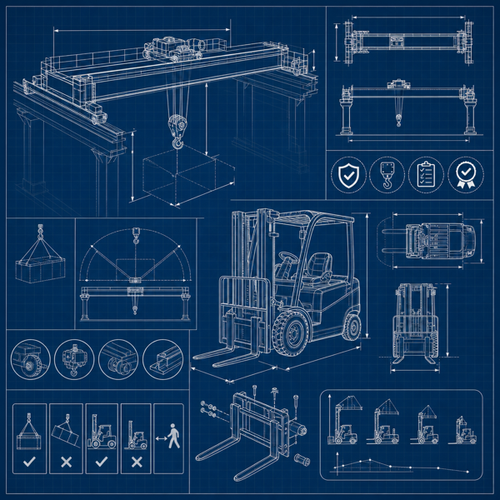
The international landscape for materials handling equipment continues to evolve, and May 2026 brings a suite of important new standards that impact organizations involved in logistics, manufacturing, construction, and warehouse operations. This first part of our two-part coverage focuses on five significant publications addressing a spectrum of equipment: from advanced container cranes and industrial trucks to hand-powered lifting devices and specialized environmental protection systems for earth-moving machinery. For professionals who depend on the safety, efficiency, and legal compliance of their materials handling operations, these updates mark essential changes—introducing more rigorous safety measures, clarifying technical requirements, and aligning equipment practices with the latest technological advancements.
Overview / Introduction
Materials handling equipment is fundamental to efficient logistics, warehousing, industrial production, and large-scale construction. The equipment ranges from massive container cranes at ports to nimble industrial trucks in distribution centers, each with unique safety and performance needs. International standards play a vital role in harmonizing safety, design, and operational criteria—ensuring interoperability, minimizing risks, and facilitating global trade.
In this article, you will find a detailed review of the latest standards published in May 2026 for the materials handling sector, including container handling spreaders for cranes, protective systems for earth-moving machinery, hand-powered crane safety, and enhanced technical requirements for industrial trucks. For each standard, we provide clarity on scope, practical application, key requirements, and implementation implications, allowing stakeholders to make informed decisions around procurement, safety policy, and compliance.
Detailed Standards Coverage
EN 15056:2026 - Container Handling Spreaders for Cranes
Cranes — Requirements for Container Handling Spreaders
The EN 15056:2026 standard delivers rigorous safety and design requirements for container handling spreaders used with cranes, specifically those handling ISO freight containers. The focus is on units equipped with twistlocks that engage the container’s upper corner castings, excluding manual and certain bottom-lift types. This standard is essential for manufacturers, port operators, crane integrators, maintenance providers, and safety regulators involved with container cranes at shipping terminals and intermodal hubs.
Key technical elements include the spreader’s interface with crane control systems, detailed structural strength specifications, requirements for twistlock operation and blockading, electrical and hydraulic systems safety, and protection against foreseeable misuse. EN 15056:2026 was updated from its previous version with revised hazard lists, improved clarity, and alignment with the latest EU Machinery Regulation, making it critical for organizations seeking CE conformity and robust accident prevention protocols.
Key highlights:
- Comprehensive requirements for strength, twistlock systems, and crane interface
- Updated structural, control system, and electrical safety provisions
- Integration with EU Machinery Regulation for CE marking
Access the full standard:View EN 15056:2026 on iTeh Standards
EN 17969:2026 - Contamination Protective Systems for Earth-Moving Machinery
Earth-moving Machinery — Safety — Contamination Protective Systems
EN 17969:2026 addresses the risks to equipment operators who work in areas exposed to hazardous contaminants including dust, aerosols, gases, or vapors. This standard provides in-depth specifications for protective ventilation systems—covering operator's cabins on earth-moving machines such as excavators, loaders, and bulldozers.
Manufacturers and fleet operators will find guidance on required airflow rates, filter efficiency (including H13-classification for dust filters), safe HVAC design, system monitoring, and critical documentation. Relief features include requirements for clear escape mechanisms, information for use, and marking protocols. The standard enhances previous general safety requirements (notably EN 474-1:2022), introducing specific tests and operational thresholds tailored to contaminated environments, thereby raising industry standards for operator health protection.
Key highlights:
- Mandates advanced ventilation and filtration in contaminated environments
- Minimum airflow and filter efficiency requirements (H13 filter)
- Detailed test procedures for manufacturers and operators
Access the full standard:View EN 17969:2026 on iTeh Standards
prEN 13157 - Hand Powered Crane Safety
Cranes — Safety — Hand Powered Cranes
Draft EN 13157 standardizes safety requirements for a broad range of hand-powered cranes—hand chain blocks, lever hoists, jaw winches, drum winches, pulley blocks, and manually moved trolleys. It systematically addresses mechanical, thermal, ergonomic, material, and environmental hazards for this essential class of equipment, excluding those intended for operation in extreme temperatures, explosive atmospheres, or those handling sensitive/hazardous materials.
Practically, this standard applies to manufacturers, industrial users, and those responsible for equipment sourcing in small and large organizations. Requirements span structural integrity, braking systems, operational effort, temperature use ranges, guarding, hooks, load chains, and installation protocols. Importantly, the new draft distinguishes itself by clarifying scope, modernizing verification and test methods, and providing explicit boundaries for safe use—which benefits conformity assessments and workplace accident reduction.
Key highlights:
- Clear safety criteria for multiple hand-powered lifting devices
- Addresses major hazards and environmental use limitations
- Modernized verification/testing procedures for compliance
Access the full standard:View prEN 13157 on iTeh Standards
ISO 13284:2026 - Fork Arm Extensions and Telescopic Fork Arms for Industrial Trucks
Industrial Trucks — Fork Arm Extensions and Telescopic Fork Arms — Technical Characteristics and Strength Requirements
ISO 13284:2026 sets global benchmarks for the design, fitment, and strength of fork arm extensions and telescopic fork arms used in industrial trucks—such as forklifts, stackers, and electric warehouse vehicles. The standard delineates when extensions may safely be used, lays out precise calculation methods for retaining system design, and demands compliance with established testing procedures and safety factors.
This edition introduces updated requirements for lateral clearance and distinguishes between procedures for fork arm extensions and telescopic arms (including modes with or without pallet stops, extended or retracted). It applies to both manufacturers supplying original equipment and aftermarket/retrofit solution providers, ensuring product traceability, marking, and thorough documentation of rated capacities and operational boundaries.
Key highlights:
- Harmonized strength and technical requirements for safety and durability
- Clear procedures for design verification, testing, and product marking
- Aligns with latest ISO definitions for industrial trucks and fork arm carriers
Access the full standard:View ISO 13284:2026 on iTeh Standards
ISO 22915-13:2026 - Stability Verification for Rough-Terrain Trucks with Mast
Industrial Trucks — Verification of Stability — Part 13: Rough-Terrain Trucks with Mast
ISO 22915-13:2026 is a critical safety standard detailing how to test and verify the stability of rough-terrain, counterbalanced industrial trucks that feature vertical masts and load handling attachments, with capacities up to 10,000 kg. Tailored to applications in construction, agriculture, and heavy industry, this part of the ISO 22915 series ensures that rough-terrain trucks can safely operate under real-world loading and handling scenarios.
The 2026 revision introduces modifications to lateral test procedures and testing height to better mimic real-world risks encountered in challenging operating environments. The standard differentiates between various configurations (mast, attachments, region-specific conditions) and does not cover container-handling or variable-reach trucks addressed in other standards. Essential for manufacturers, safety engineers, and operators managing heavy-duty fleets.
Key highlights:
- Detailed test protocols for verifying truck stability (including tilt table setup)
- New adjustments to hazardous lateral test procedures and configurations
- Applies to trucks with mast and attachments up to 10,000 kg
Access the full standard:View ISO 22915-13:2026 on iTeh Standards
Industry Impact & Compliance
These newly published standards signal higher expectations for equipment safety, operational transparency, and environmental stewardship across the materials handling sector. Organizations must adapt their procurement strategies, risk assessments, and staff training to stay compliant. Adoption will:
- Help organizations meet international and European legal frameworks (such as EU Machinery Regulation and relevant ISO/EN directives)
- Ensure safer workplaces and reduce incident rates by mandating stronger verification and user information
- Improve maintenance and inspection regimes through standardized documentation and marking
- Reduce liability risks and facilitate smoother regulatory audits
Depending on the standard, compliance may require:
- Equipment or process design reviews
- Updating operational manuals and user instructions
- Enhanced employee training and maintenance protocols
- Addressing gaps in certification, especially for imported or customized machinery
Delaying adoption can result in legal exposure, safety incidents, or supply chain disruptions—especially for organizations with international operations or government contracts.
Technical Insights
Across these standards, several technical themes emerge:
- Systematic hazard identification and risk reduction: Detailed annexes and test procedures for identifying and mitigating significant machinery hazards.
- Advanced safety functions: Requirements for twistlocks, fail-safes, overpressure protection, and system monitoring are tightened for modern operational risks.
- Verification, testing, and marking: Consistent demand for documented verification, product marking (including serial numbers and capacities), and validated user instructions.
- Product traceability: Enhanced through documentation, design calculations, and standardized marking practices.
- Operational boundaries and environment: Explicit temperature ranges, environmental exposure definitions, and clean application delineations ensure equipment reliability in diverse conditions.
- Best practices for implementation:
- Early engagement with qualified safety engineers and notified bodies
- Inclusion of new requirements in procurement/document clauses
- Investment in operator training on updated hazards and operational features
- Regular review of field maintenance against manufacturer guidance
- Utilization of third-party verification and testing services for initial and ongoing compliance
Conclusion / Next Steps
The May 2026 cycle of standards for materials handling equipment represents a significant step forward in the alignment of technical practice, safety, and compliance for cranes, industrial trucks, and earth-moving machinery. Organizations are strongly advised to:
- Review and update internal procedures in line with these new standards
- Train engineering, maintenance, and operations staff on revised safety requirements
- Incorporate the updated requirements into procurement and quality assurance specifications
- Consult the full texts and supporting materials on iTeh Standards for detailed guidance
Explore these standards in depth and stay tuned for Part 2, which will address additional updates later this month. Proactive adaptation not only mitigates compliance risks but also advances operational excellence in materials handling operations worldwide.
Categories
- Latest News
- New Arrivals
- Generalities
- Services and Management
- Natural Sciences
- Health Care
- Environment
- Metrology and Measurement
- Testing
- Mechanical Systems
- Fluid Systems
- Manufacturing
- Energy and Heat
- Electrical Engineering
- Electronics
- Telecommunications
- Information Technology
- Image Technology
- Precision Mechanics
- Road Vehicles
- Railway Engineering
- Shipbuilding
- Aircraft and Space
- Materials Handling
- Packaging
- Textile and Leather
- Clothing
- Agriculture
- Food technology
- Chemical Technology
- Mining and Minerals
- Petroleum
- Metallurgy
- Wood technology
- Glass and Ceramics
- Rubber and Plastics
- Paper Technology
- Paint Industries
- Construction
- Civil Engineering
- Military Engineering
- Entertainment