

Metallurgy Standards: Four Essential Updates Issued in September 2026
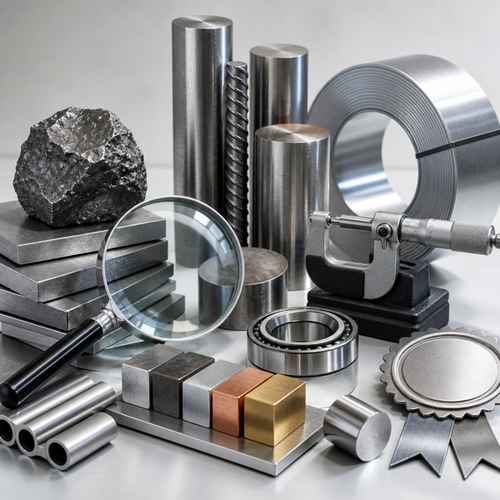
Four Essential Metallurgy Standards Released in September 2026
The metallurgy industry is seeing significant progress with the publication of four new international standards in September 2026. These developments range from environmental life cycle assessment for steel and a new compendium on copper alloys, to precise analytical techniques and advanced non-destructive testing for hardmetals. Designed to enhance quality, traceability, sustainability, and safety, these standards are essential for professionals striving to meet modern compliance requirements and industry best practices.
Overview / Introduction
Metallurgy plays a foundational role in sectors such as construction, automotive, electronics, and heavy industry. International standards in this field not only drive technical consistency and safety but also align products and processes with evolving regulatory, environmental, and market demands.
Adherence to up-to-date standards enables:
- Reliable materials data
- Improved product quality
- Sustainable and traceable supply chains
- Streamlined regulatory compliance
In this article, you’ll discover what’s new across four recently published standards covering steel life cycle inventory, copper alloys’ compositions, chromium content assessment, and ultrasonic testing methods for hardmetals. Each standard’s scope, requirements, and industry implications are covered, with direct links for deeper exploration.
Detailed Standards Coverage
ISO 20915:2026 - Life Cycle Inventory Calculation Methodology for Steel Products
Life cycle inventory calculation methodology for steel products
This standard establishes a rigorous methodology for conducting life cycle inventory (LCI) studies of steel products, reflecting steel’s unique capabilities for closed-loop recycling.
Scope and Significance
ISO 20915:2026 provides comprehensive procedures to calculate the environmental inventory of steel, from raw material extraction to the steelworks exit (cradle-to-gate), accounting for all major inputs, co-products, and the recycling loop. The methodology harmonizes with ISO 14040 and ISO 14044, ensuring that data aligns with internationally accepted environmental life cycle practice.
Key Requirements and Specifications
- Applies a declared unit for uniformity in LCI calculations
- Defines precise system boundaries including raw materials, utility consumption, and emissions
- Dictates procedures for evaluating the impact of scrap and co-products
- Includes detailed steps for data collection, allocation, and calculation of credits for recycling
- Sets requirements for reporting and documentation to ensure comparability and auditability
- Introduces methodologies for data quality assessment and allocation to avoid double-counting
Who Needs to Comply
- Steel producers and processors
- Environmental and compliance managers within metallurgy
- Life cycle assessment (LCA) professionals working with steel products
- Organizations needing verified data for eco-labels or green claims
Practical Implications
Implementing ISO 20915:2026 helps organizations:
- Generate credible environmental data for steel products
- Support sustainability-driven procurement and reporting
- Enable supply chain partners to assess embodied impact in construction, automotive, and appliances
Key highlights:
- Incorporates stainless steel and closed-loop recycling
- Allows alternative recycling methodologies for greater flexibility
- Enhances transparency and quality of life cycle inventory data
Access the full standard:View ISO 20915:2026 on iTeh Standards
CEN/TS 13388:2026 - Copper and Copper Alloys: Compendium of Compositions and Products
Copper and copper alloys - Compendium of compositions and products
CEN/TS 13388:2026 delivers an authoritative European reference on the material designations, compositions, and product forms available for copper and copper alloys.
Scope and Significance
This compendium covers all standardized coppers and copper alloys as developed by CEN/TC 133, collating critical information across unwrought, wrought, and cast products. It supports consistency across design, procurement, production, and material testing.
Key Requirements and Specifications
- Comprehensive tables cataloging grades, designations, and ranges of copper and alloying elements
- Detailed lists of available product forms (sheets, wires, rods, castings, etc.) with corresponding standards
- Harmonizes terminology across the European market and addresses updates from recent EN standards affecting materials, alloys, and compositions
- Includes clarity on master alloys, ingots, casting processes, and scrap compositions
Who Needs to Comply
- Manufacturers and suppliers of copper and copper alloy products
- Procurement and quality assurance teams
- Metallurgists and materials engineers
- Testing and certification bodies
Practical Implications
By referencing CEN/TS 13388:2026, organizations can:
- Accurately select materials for design and compliance
- Avoid supply chain ambiguity and errors in alloy specification
- Ensure regulatory and standard consistency for copper products in Europe and beyond
Key highlights:
- Updated to align with EN standards as of 2024
- Offers a single-source reference for copper grades and forms
- Supports harmonization and traceability in copper procurement
Access the full standard:View CEN/TS 13388:2026 on iTeh Standards
ISO 15355:2026 - Steel and Iron — Determination of Chromium Content — Indirect Titration Method
Steel and iron — Determination of chromium content — Indirect titration method
This standard outlines a precise potentiometric titration method for determining chromium content in steel and iron. The technique is essential for quality control and certification of alloyed steels.
Scope and Significance
Applicable for chromium contents from 1% to 35%, ISO 15355:2026 supports both production and verification needs. The method addresses potential interferences (such as vanadium) and refines analytical precision, ensuring product compliance with chemical composition standards.
Key Requirements and Specifications
- Titration method based on fusion with sodium peroxide, followed by redox reactions and potentiometric back titration
- Mathematically corrects for interference from vanadium, preserving accuracy
- Stepwise guidance for sampling, reagent purity, apparatus, and result calculation
- Updated interlaboratory precision data and test reporting
Who Needs to Comply
- Steel and iron producers
- Analytical laboratories and inspection agencies
- Quality managers in steelmaking and foundries
Practical Implications
Using ISO 15355:2026 allows:
- Reliable, reproducible analysis of chromium — critical for stainless and special steels
- Traceable results needed for product certification and customer requirements
- Mitigation of risks associated with inaccurate or non-conforming chemical analyses
Key highlights:
- Covers a wide range of chromium and vanadium contents
- Incorporates latest precision data and normative references
- Essential for quality assurance and regulatory compliance
Access the full standard:View ISO 15355:2026 on iTeh Standards
ISO/TS 23867:2026 - Ultrasonic Testing of Hardmetals
Ultrasonic testing of hardmetals
ISO/TS 23867:2026 introduces a specialist A-type ultrasonic pulse contact method for the inspection of hardmetal components, vital in tools manufacturing and critical parts.
Scope and Significance
This technical specification applies to ultrasonic inspection of hardmetal rods and components (minimum 6 mm diameter for rods, other shapes covered based on probe area) over a broad size range. It enables the detection and evaluation of internal defects—including cracks, porosity, and material inhomogeneity—in tungsten carbide and cobalt-based hardmetals.
Key Requirements and Specifications
- Covers preparation, qualification, and calibration using specialized flat-bottom hole and reference blocks
- Specifies sensitive detection using probe driving voltages (100–200 V)
- Clearly defines defect types (e.g., holes, cracks, delamination, eta-phase, cobalt pools)
- Outlines test block preparation with exact material and dimensional criteria
- Parameters for equipment selection, scanning, and evaluation procedures
- Practical guidance on grinding, polishing, and signal calibration for reproducible results
Who Needs to Comply
- Manufacturers of hardmetal tools, rods, and industrial components
- Quality control and NDT specialists
- OEMs and suppliers demanding stringent defect control
Practical Implications
Implementing ISO/TS 23867:2026 ensures:
- Early detection of critical defects affecting reliability and performance
- Improved yield and decreased product returns
- Documentation for customer and regulatory quality verification
Key highlights:
- Addresses a wide size range of hardmetal products
- Enables automated, high-sensitivity ultrasonic inspection
- Supports defect characterization for industry-leading quality
Access the full standard:View ISO/TS 23867:2026 on iTeh Standards
Industry Impact & Compliance
The publication of these four standards marks a comprehensive strengthening of the international quality, sustainability, and traceability framework within metallurgy.
Business Impacts:
- Supports continuous improvement in product quality, environmental performance, and competitive differentiation
- Empowers organizations to meet evolving environmental and market-driven requirements, especially for green procurement and supply chain transparency
Compliance Considerations:
- Standards such as ISO 20915:2026 and ISO 15355:2026 will likely become referenced benchmarks for product qualification, environmental reporting, and certification
- Adhering to these standards may be crucial for market access, particularly in regulated or highly competitive industries
- Compliance timelines depend on regulatory adoption and contractual customer requirements—early implementation is advisable
Benefits of Adoption:
- Enhanced sustainability reporting and LCA credibility (ISO 20915:2026)
- Assured alloy quality and traceability in supply chains (CEN/TS 13388:2026)
- Accurate, reliable quantitative chemical analysis for product certification (ISO 15355:2026)
- Consistent rejection of substandard castings and improved failure prevention (ISO/TS 23867:2026)
Risks of Non-compliance:
- Increased potential for non-conforming products and market rejection
- Higher risk of costly product recalls and customer disputes
- Competitive disadvantage as customers and regulators emphasize sustainability and quality
Technical Insights
Common Technical Requirements and Themes
- Traceability: Accurate documentation, reporting protocols, and specification of all relevant data
- Data Quality: Specification of primary data shares, data quality ratings, and reproducible methodologies
- Calibration and Testing: Rigorous requirements for equipment performance, calibration, and reference material preparation
- Scope and Boundaries: Careful definition of system or sampling boundaries to ensure comparability of data (critical in LCI and laboratory testing)
Implementation Best Practices
- Training: Ensure relevant personnel are trained on new procedures, especially for analytical and NDT methods
- Documentation: Maintain thorough records in line with the reporting and audit requirements
- Calibration: Regularly calibrate analytical and testing instruments using recommended reference materials
- Supply Chain Integration: Communicate updated requirements to suppliers and partners to maintain end-to-end compliance
Testing and Certification Considerations
- Engage accredited laboratories or certified personnel for testing
- Integrate standard methods into internal quality management systems
- Use standard references and forms in contractual and regulatory documentation
Conclusion / Next Steps
September 2026’s set of metallurgy standards deliver robust frameworks for quality, sustainability, and technical integrity—addressing key stages from production to analysis and inspection. Organizations should promptly review these standards’ applicability to their operations, update internal procedures, and engage with the latest best practices.
Key takeaways:
- These four standards substantially raise the technical and compliance baseline for steel, copper, and hardmetal product chains
- Stakeholders should assess current processes for alignment and plan for training, testing, and supplier communication
Recommendations:
- Review each standard in detail: iTeh Standards - Metallurgy Standards
- Map internal and supply chain practices to new requirements
- Stay informed on future updates via professional associations and standards publishers
Organizations aiming for operational excellence, sustainable supply chains, and international market access should act now to incorporate these important standards into their workflows.
Categories
- Latest News
- New Arrivals
- Generalities
- Services and Management
- Natural Sciences
- Health Care
- Environment
- Metrology and Measurement
- Testing
- Mechanical Systems
- Fluid Systems
- Manufacturing
- Energy and Heat
- Electrical Engineering
- Electronics
- Telecommunications
- Information Technology
- Image Technology
- Precision Mechanics
- Road Vehicles
- Railway Engineering
- Shipbuilding
- Aircraft and Space
- Materials Handling
- Packaging
- Textile and Leather
- Clothing
- Agriculture
- Food technology
- Chemical Technology
- Mining and Minerals
- Petroleum
- Metallurgy
- Wood technology
- Glass and Ceramics
- Rubber and Plastics
- Paper Technology
- Paint Industries
- Construction
- Civil Engineering
- Military Engineering
- Entertainment