

September 2026: Major Updates in Metrology and Measurement Standards
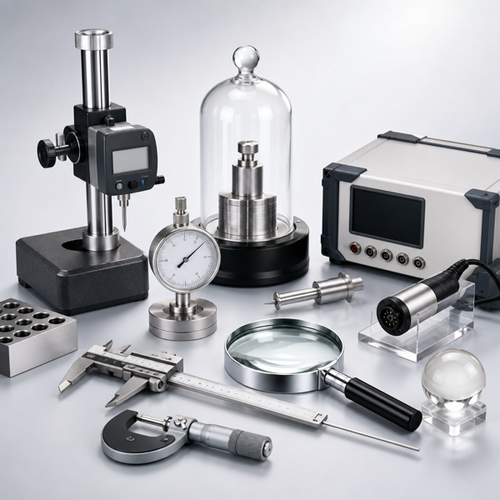
September 2026: Major Updates in Metrology and Measurement Standards
The landscape for metrology and measurement of physical phenomena is evolving fast, and the latest standards published in September 2026 reflect this transformation. Five new or revised standards—spanning electromagnetic compatibility, environmental sustainability, advanced noise prediction, surface texture metrology, and dimensional tolerancing—are now available. These updates empower laboratories, manufacturers, and industry professionals to improve accuracy, ensure compliance, and drive innovation in measurement-related fields.
Overview / Introduction
Metrology and the measurement of physical phenomena are foundational to quality assurance, R&D, and safe operations across countless sectors—from industrial automation and manufacturing to environmental monitoring and acoustics. International standards in this field help ensure:
- Reliable, traceable measurement results
- Compatibility across equipment and systems
- Environmental and safety compliance
- Efficient communication and data handling
This article details five recently published standards (Part 1 of 2 for this month's coverage) that address key challenges faced by labs, industrial plants, and product developers alike.
By the end of this article, you’ll understand:
- The scope and application of each standard
- Major technical and environmental advances introduced
- How these changes affect compliance, procurement, and technical practice
Detailed Standards Coverage
EN IEC 61326-2-7:2026 - EMC for Devices with Ethernet-APL Interfaces
Electrical equipment for measurement, control and laboratory use – EMC requirements – Part 2-7: Particular requirements – Test configurations, operational conditions, test levels and performance criteria for devices with Ethernet-APL interfaces
This cutting-edge standard builds on the foundation of IEC 61326-1, specifying electromagnetic compatibility (EMC) test requirements for process automation equipment featuring Ethernet-APL (Advanced Physical Layer) interfaces. Ethernet-APL, derived from IEEE 802.3-2022's 10BASE-T1L, enables robust, duplex communication over a single pair of conductors—key for modern process industries.
Scope & Requirements:
- Defines EMC test setups, operational conditions, and performance criteria specifically for Ethernet-APL infrastructure devices, switches, measurement instruments, and control devices.
- Supplements general EMC requirements by addressing susceptibility and emissions unique to Ethernet-APL interfaces.
- Test levels depend on the intended environment and product documentation, referencing IEC 61326-1 baseline levels.
Who Needs This?
- Process automation vendors and integrators
- Manufacturers using industrial Ethernet communication
- Labs certifying new measurement or control equipment
Key Implications:
- Assures high compatibility and immunity in digitally networked process systems
- Helps prevent interference and downtime in high-performance, connected environments
- Meets best practices for EMC safety and reliability
Key highlights:
- Detailed EMC immunity and emission tests for Ethernet-APL ports
- Specific shielding, cabling, and configuration guidance
- Alignment with IEEE and IEC requirements for next-gen automation
Access the full standard:View EN IEC 61326-2-7:2026 on iTeh Standards
EN IEC 63580:2026 - Environmental Aspects for Measuring Equipment
Measuring equipment for electrical and electromagnetic quantities – Environmental aspects
EN IEC 63580:2026 addresses one of the most pressing topics for laboratories and manufacturers: the environmental impact throughout the lifecycle of measuring equipment—including design, use, and end-of-life stages.
Scope & Requirements:
- Provides terminology, requirements for life cycle assessment (LCA), and material declarations for electrical and electromagnetic measuring equipment.
- Covers durability, energy usage, material efficiency, environmental communication, and profiles for various product families.
- Offers specific rules for equipment types (PMD, PQI, DDM, TRD2) regarding functional unit definitions, reference service life, and use-phase scenarios.
Who Needs This?
- Environmental and sustainability managers
- Equipment designers and R&D teams
- Quality and compliance professionals in test & measurement
Practical Implications:
- Supports the development of "greener" measurement devices
- Integrates eco-design principles into product development
- Facilitates meeting regulatory and customer sustainability requirements
Key highlights:
- Comprehensive LCA methodology for measurement instruments
- Detailed guidance on environmental impact categories and data quality
- Best practices for material declaration and sustainable end-of-life planning
Access the full standard:View EN IEC 63580:2026 on iTeh Standards
prEN ISO 9613-2 - Outdoor Sound Level Prediction Method
Acoustics – Attenuation of sound during propagation outdoors – Part 2: Engineering method for the prediction of sound pressure levels outdoors (ISO 9613-2:2024)
This major revision provides a robust, widely applicable engineering method for predicting environmental noise at a distance from industrial, transportation, and other ground-based sources.
Scope & Requirements:
- Offers algorithms for octave band sound attenuation due to geometric divergence, atmospheric absorption, ground effect, surface reflections, and obstacle screening
- Applicable to various source types (point, moving/static, assemblies)
- In-depth annexes for foliage, industrial settings, chimney stack directivity, wind-climatology corrections, and wind turbine noise
- Specifies use under meteorological conditions that favor propagation (e.g., downwind or temperature inversion)
Who Needs This?
- Environmental noise consultants and acoustic engineers
- Regulatory bodies and compliance managers
- Site planners and urban designers
Practical Implications:
- Enables accurate assessment of compliance with environmental noise limits
- Facilitates noise impact studies for permitting and mitigation design
- Supports advanced modeling (software implementations, industrial projects)
Key highlights:
- Enhanced prediction accuracy with expanded source and environment modeling
- Supports regulatory and long-term urban planning needs
- Aligns with evolving best practices in environmental acoustics
Access the full standard:View prEN ISO 9613-2 on iTeh Standards
EN ISO 25178-71:2026 - SDF File Format for Surface Texture (Areal)
Geometrical product specifications (GPS) – Surface texture: Areal – Part 71: SDF file format (ISO 25178-71:2026)
Advancing traceability and interoperability in surface topography measurement, EN ISO 25178-71:2026 defines the Surface Data File (SDF) format for areal and profile data.
Scope & Requirements:
- Specifies Type S1 (reference data) and Type S2 (reference software) for verifying the measurement instrument software
- SDF format covers profile and areal topography with orthogonal, equidistant data grids
- Ensures compatibility across tactile and non-contact instruments from various manufacturers
Who Needs This?
- Surface metrology and product design engineers
- Manufacturers using advanced topography or roughness measurements
- Software and instrument developers
Practical Implications:
- Facilitates instrument calibration and proficiency testing
- Enhances traceability and reduces risk of data misinterpretation
- Supports metrology lab software development ("softgauges")
Key highlights:
- Clear, unified SDF data structure for exchange and reference
- Updates for compatibility with modern software and sensors
- Strengthens metrological chain links and interoperability
Access the full standard:View EN ISO 25178-71:2026 on iTeh Standards
FprEN ISO 2768 - General Specification of Linear and Angular Tolerances
Geometrical product specifications (GPS) – Dimensional tolerancing – Tolerance limits for general specification of linear and angular sizes (ISO/FDIS 2768:2026)
A long-awaited revision of one of the most used standards in mechanical engineering, this document streamlines general tolerance rules for linear and angular dimensions on technical drawings.
Scope & Requirements:
- Defines four tolerance classes for dimensions produced by metal removal or sheet forming
- Updated tables for size limits; focuses exclusively on linear and angular sizes, omitting radii, chamfers, broken edges
- Includes guidance annex for using tolerances in modern CAD drawings per ISO GPS principles
Who Needs This?
- Mechanical designers and drafters
- Manufacturing quality and inspection teams
- Procurement and supplier quality engineers
Practical Implications:
- Reduces ambiguity and errors in interpreting general tolerances
- Smoother transition to digital manufacturing and CAD-based workflows
- Ensures consistent quality expectations across international supply chains
Key highlights:
- Streamlined, updated tolerance tables for current technology
- Clear scope (linear and angular only; material-independent)
- Directly supports smart manufacturing and global production
Access the full standard:View FprEN ISO 2768 on iTeh Standards
Industry Impact & Compliance
The release of these standards brings significant changes for:
- Manufacturers and OEMs: Enhanced guidance on design, data handling, and compliance reduces risk and warranty costs.
- Labs and Calibration Providers: Standardized approaches ensure measurement traceability and international recognition.
- EHS and Sustainability Professionals: New requirements for lifecycle and environmental data help fulfill regulatory and market-driven demands for "green" products.
Compliance Considerations:
- Adoption timelines are driven by sector-specific regulations or contractual terms; proactive engagement is strongly advised.
- Penalties, product recalls, or market exclusions may occur if legacy equipment fails to meet updated requirements.
- Early adoption bears tangible benefits: reduced nonconformity, streamlined audits, and market leadership.
Benefits of Adoption:
- Improved product reliability and interoperability
- Measurable reduction in errors, rejects, and environmental footprint
- Enhanced reputation and customer trust for compliant organizations
Technical Insights
Across these standards, several technical innovation and best practices are evident:
EMC Testing (EN IEC 61326-2-7:2026):
- Carefully simulate real-world network configurations in EMC test labs
- Employ prescribed shielding and grounding methods for Ethernet-APL
Environmental Assessment (EN IEC 63580:2026):
- Integrate LCA from early design through EOL (end of life)
- Maintain robust material declarations and document durability metrics
Noise Modeling (prEN ISO 9613-2):
- Use octave band analysis and meteorological corrections for high-precision outdoor sound modeling
- Implement new algorithms for ground effect and complex environments
Surface Data Exchange (EN ISO 25178-71:2026):
- Employ standardized SDF files for calibration, verification, and data interoperability
- Verify new instrument software against both S1 reference data and S2 reference software
Dimensional Tolerancing (FprEN ISO 2768):
- Apply general tolerance tables with explicit notation in digital and paper-based drawings
- Educate teams on ISO GPS to maximize benefit and compliance
Testing and Certification:
- Engage accredited labs for EMC and environmental testing
- Implement continuous training for technical staff on the latest documentation
- Utilize digital tools for drawing validation and data format compliance
Conclusion / Next Steps
September 2026 marks a transformative step for metrology and measurement of physical phenomena. These five standards—targeting EMC, environmental sustainability, sound prediction, surface topography, and size tolerancing—equip professionals to meet modern demands for accuracy, sustainability, and interoperability.
Recommendations:
- Analyze current compliance against new or revised standards
- Update internal procedures and design documentation
- Train technical and compliance teams
- Engage with accredited testing/certification partners
- Explore full documents via iTeh Standards for authoritative guidance
Stay ahead of regulatory shifts and operational demands: Review the latest standards, integrate their requirements, and visit iTeh Standards for up-to-date publication access.
Categories
- Latest News
- New Arrivals
- Generalities
- Services and Management
- Natural Sciences
- Health Care
- Environment
- Metrology and Measurement
- Testing
- Mechanical Systems
- Fluid Systems
- Manufacturing
- Energy and Heat
- Electrical Engineering
- Electronics
- Telecommunications
- Information Technology
- Image Technology
- Precision Mechanics
- Road Vehicles
- Railway Engineering
- Shipbuilding
- Aircraft and Space
- Materials Handling
- Packaging
- Textile and Leather
- Clothing
- Agriculture
- Food technology
- Chemical Technology
- Mining and Minerals
- Petroleum
- Metallurgy
- Wood technology
- Glass and Ceramics
- Rubber and Plastics
- Paper Technology
- Paint Industries
- Construction
- Civil Engineering
- Military Engineering
- Entertainment