

September 2026 Sees Major Updates in Mine Shaft Structures Standards
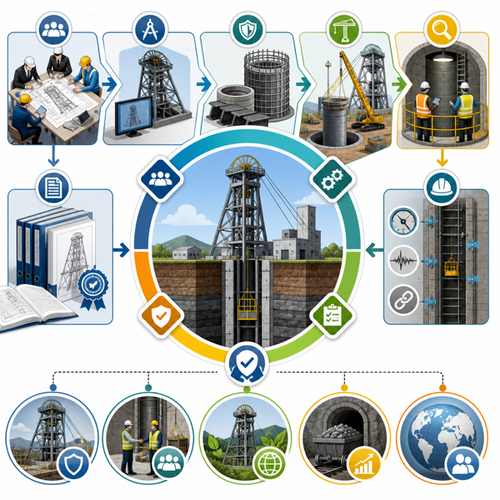
September 2026 Sees Major Updates in Mine Shaft Structures Standards
As the mining and minerals sector continues to evolve, September 2026 brings a significant milestone with the publication of five new international standards dedicated to the design, safety, and terminology of mine shaft structures. Professionals in mining engineering, compliance, and operations will benefit from these comprehensive updates, as they establish a globally unified approach to shaft design and operations for both vertical and decline mining environments. This article, the first in a two-part series, provides a detailed overview of these standards, helping industry stakeholders understand key requirements, applications, and compliance expectations.
Overview: Advancing the Mining and Minerals Sector Through Standardization
Mining and minerals extraction is a critical industry worldwide, demanding the highest standards in structural design, safety, and operational efficiency. Historically, mine shaft infrastructure has been subject to regional practices and diverse engineering vocabularies—creating challenges for international projects and cross-jurisdictional compliance. Unified, precise standards are essential to:
- Enhance mining safety and minimize structural failures
- Promote international consistency in terminology and techniques
- Support new technology integration and best engineering practices
This article explains the scope and impact of five newly published ISO standards that now form the global reference for mine shaft design terminology, headframes, sinking stages, conveyances, and shaft system structures. Readers will learn what each standard covers, who must comply, and how these specifications will influence mining operations.
Detailed Standards Coverage
ISO 19426-1:2026 – Structures for Mine Shafts, Part 1: Vocabulary
Structures for mine shafts — Part 1: Vocabulary
This foundational standard defines the terminology used across the ISO 19426 series, providing mining organizations, engineers, and suppliers with precise descriptors for all elements of mine shaft structures. The standardized vocabulary addresses international variations and alternative terms, ensuring clarity in communication and documentation within the global mining sector.
Key requirements include:
- Preferred terms listed in bold, used consistently throughout the ISO 19426 series
- Definitions focus on terms specific to mine shaft structures, omitting common dictionary definitions
- Alternative regional terms provided for global applicability
- Assumes professional knowledge, streamlining focus to terms critical for engineering, operational, and safety standards
Professionals engaged in mine shaft design, construction, inspection, and maintenance should use this vocabulary standard to ensure documentation and communication accuracy in international engagements or projects that reference ISO 19426 guidelines.
Key highlights:
- Establishes a unified linguistic framework for mine shaft engineering
- Supports cross-border project collaboration and regulatory alignment
- Incorporates terminology from diverse mining jurisdictions, improving global applicability
Access the full standard:View ISO 19426-1:2026 on iTeh Standards
ISO 19426-2:2026 – Structures for Mine Shafts, Part 2: Headframe Structures
Structures for mine shafts — Part 2: Headframe structures
This standard specifies the design loads and structural procedures for mine shaft headframes—the critical surface structures supporting winding systems and various operational elements. Covering permanent and sinking operations, ISO 19426-2:2026 details comprehensive load considerations, including those due to personnel, equipment, conveyances, bin materials, emergency events, and environmental actions like earthquakes.
Key requirements and features:
- Adoption of a limit states design philosophy for reliability and safety
- Rigorous specifications for foundation design, structural materials, and serviceability
- Comprehensive list of nominal loads, including permanent, imposed, rope, emergency, and abnormal loads
- Procedures for assessing stability, emergency response capacity, and design for earthquake resistance (via risk assessment)
- Does not address operational safety or specific layout, focusing solely on structural performance
This standard is essential for mining companies, engineers, and structural designers involved in new mine development, shaft refurbishment, or upgrades where headframe reliability and compliance are paramount.
Key highlights:
- Mandates risk assessment for earthquake loads
- Clarifies emergency load calculations, including crash beam and energy release loads
- Integrates bank and sub-bank levels into headframe design scope
Access the full standard:View ISO 19426-2:2026 on iTeh Standards
ISO 19426-3:2026 – Structures for Mine Shafts, Part 3: Sinking Stages
Structures for mine shafts — Part 3: Sinking stages
ISO 19426-3:2026 outlines the structural design requirements for shaft sinking stages—platforms and their components used during excavation and shaft sinking operations. The document details required design loads but excludes stage ropes, sheaves, and mechanised shaft sinking methods, deferring those to other standards or rational design approaches.
Key aspects of this standard:
- Defines loading scenarios for various sinking stage uses, such as deck loads, formwork winch loads, jumbo and lashing unit loads, canopy protection, and emergency events
- Specifies material requirements for steel and aluminium components
- Provides for stability checks, deflection limitations, emergency response loads, and replaceable member design
- Contains informative annexes with worked examples and guidance on special loading cases
Compliance with ISO 19426-3:2026 is critical for:
- Mining contractors and engineers overseeing new shaft construction or refurbishment
- Equipment and stage suppliers
- Safety officers responsible for temporary infrastructure risk assessment
Key highlights:
- Addresses stability, impact, and emergency loading
- New definitions and loading equations for special cases (e.g., swell factor impact)
- Emphasizes the need for rational method design for mechanized methods
Access the full standard:View ISO 19426-3:2026 on iTeh Standards
ISO 19426-4:2026 – Structures for Mine Shafts, Part 4: Conveyances
Structures for mine shafts — Part 4: Conveyances
Focusing on the steel and aluminium alloy structures used for material and personnel transport inside shafts, ISO 19426-4:2026 sets out required loads, load combinations, and design methodologies for cages, skips, kibbles, skeleton cages, inspection cages, bridles, crossheads, and counterweights. It specifically excludes ropes, sheaves, attachments, and chairlifts, instead requiring adherence to other specialized standards.
Key features include:
- Detailed treatment of operating, equipment, and emergency loads
- Coverage of conveyance roof, floor, lateral, impact, and special operating loads
- Distinct loading for personnel, material, equipment, and rock winding scenarios
- Provisions for fatigue, functional requirements (aspect ratio, ventilation), construction, and tolerances
- Requires confirmed design by testing of mechanisms and structures
Organizations engaged in shaft design, conveyance manufacturing, installation, and testing must apply this standard to ensure the integrity and safety of transport systems within mining shafts.
Key highlights:
- Comprehensive coverage of all conveyance structural types (cages, skips, kibbles, crossheads)
- Explicit emergency load handling procedures
- Mandates detailed construction requirements and tolerances
Access the full standard:View ISO 19426-4:2026 on iTeh Standards
ISO 19426-5:2026 – Structures for Mine Shafts, Part 5: Shaft System Structures
Structures for mine shafts — Part 5: Shaft system structures
This standard addresses the most diverse set of shaft infrastructure, spanning structural components required for safe mine operations, materials transport, and ventilation within both vertical and decline shafts.
Key elements include:
- Comprehensive loading and design procedures for buntons, guides, rails, station structures, rock loading and vehicle arresting structures, brattice walls, dropsets, rope guide anchor supports, and box fronts
- Exclusion of rock support from the standard, with focus maintained on designed infrastructure
- Design procedures based on a limit states philosophy, emphasizing fatigue, wear and corrosion mitigation, lateral displacement considerations, and protective platform design
- Classification for shaft zones, operational arresting, and emergency load handling
Stakeholders involved in shaft system design, from mining operators to infrastructure engineers and equipment vendors, must align with ISO 19426-5 to guarantee the structural adequacy and lifecycle performance of essential underground infrastructure.
Key highlights:
- Clearly defines shaft infrastructure design responsibilities
- Introduces added clarity for pipe support and arresting structure loads
- Updates on construction tolerances for improved risk management
Access the full standard:View ISO 19426-5:2026 on iTeh Standards
Industry Impact & Compliance
With these new ISO 19426 standards, mining organizations now have a unified, internationally recognized set of specifications for the design and construction of mine shaft infrastructure. Adoption of these standards delivers numerous benefits, including:
- Globally harmonized terminology and requirements for seamless cross-border project execution
- Increased safety, reliability, and operational continuity through rigorous structural criteria
- Enhanced regulatory compliance and risk management, meeting or exceeding expectations from authorities
- Support for lifecycle asset management, facilitating safer operations and simplified maintenance planning
Compliance considerations:
- Organizations must review adoption and transition timelines as required in local jurisdictions
- Existing infrastructure may require reassessment and retrofitting to align with new requirements
- Quality managers and compliance officers should update documentation, inspection, and certification protocols per the standards
- Non-compliance can result in increased safety risks, regulatory penalties, or contractual issues for international consortia
Technical Insights
While each standard covers distinct aspects of mine shaft infrastructure, several technical themes emerge across the ISO 19426 series:
- Limit States Design Philosophy: All parts emphasize this modern design approach, enabling robust assessments for both serviceability and ultimate load scenarios
- Detailed Load Analysis: Ranging from permanent, imposed, emergency, to abnormal and seismic loads, these standards provide exhaustive scenarios and combinatory guidance
- Material Specifications: Prescribe use of steel and aluminium alloys to international and regional grades, including tolerances for temperature and fatigue
- Testing and Certification: Clear expectations for the physical testing of conveyances and load-bearing components
- Documented Procedures: Include annexes with practical examples, supporting ease of implementation and learning for engineers
Implementation best practices:
- Conduct comprehensive gap analyses against existing procedures
- Engage multidisciplinary teams to interpret and apply terminology and loading requirements
- Roll out targeted training for engineering and operating staff on new definitions and structural principles
- Schedule phased infrastructure audits and upgrades
- Foster ongoing collaboration with standards bodies to remain ahead of future updates
Conclusion & Next Steps
The September 2026 release of these five ISO 19426 standards marks a watershed moment for the mining and minerals industry, driving global harmonization and improved risk management in mine shaft design and operations. Forward-thinking organizations are already leveraging these standards to optimize project delivery, enhance safety records, and ensure long-term asset reliability.
Key takeaways:
- Unified vocabulary and design procedures reduce ambiguity and raise safety standards
- Comprehensive coverage for new shaft headframes, sinking stages, conveyances, and system structures
- Immediate benefits for asset owners, contractors, engineers, compliance teams, and regulators
Recommendations:
- Review each standard in detail with project and compliance teams
- Update internal design, procurement, and maintenance documentation
- Begin transitioning infrastructure projects and certifications to align with new requirements
- Explore further parts in this series for complete compliance and technical mastery
To stay at the forefront of mining infrastructure excellence, access the full standards and monitor future updates only on iTeh Standards.
Categories
- Latest News
- New Arrivals
- Generalities
- Services and Management
- Natural Sciences
- Health Care
- Environment
- Metrology and Measurement
- Testing
- Mechanical Systems
- Fluid Systems
- Manufacturing
- Energy and Heat
- Electrical Engineering
- Electronics
- Telecommunications
- Information Technology
- Image Technology
- Precision Mechanics
- Road Vehicles
- Railway Engineering
- Shipbuilding
- Aircraft and Space
- Materials Handling
- Packaging
- Textile and Leather
- Clothing
- Agriculture
- Food technology
- Chemical Technology
- Mining and Minerals
- Petroleum
- Metallurgy
- Wood technology
- Glass and Ceramics
- Rubber and Plastics
- Paper Technology
- Paint Industries
- Construction
- Civil Engineering
- Military Engineering
- Entertainment