


June 2026: New ISO Standard for Prestressed Concrete Water Tanks in Construction Materials
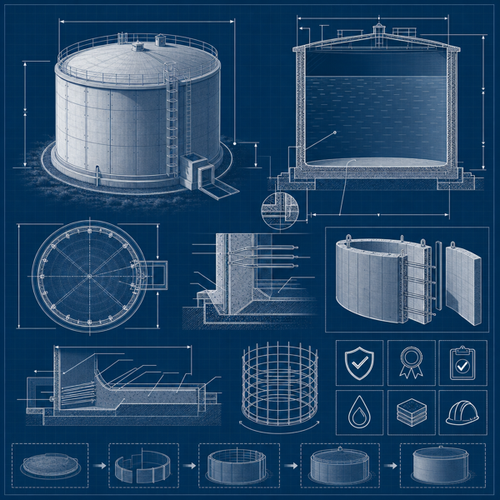
June 2026: New ISO Standard for Prestressed Concrete Water Tanks in Construction Materials
The Construction Materials industry has reached a pivotal milestone in June 2026 with the publication of ISO 18407:2026, a comprehensive standard that defines the simplified design and construction process for ground-level prestressed concrete tanks used for potable water. With safety, resilience, and economic efficiency at its core, this revised international standard introduces critical updates and clarity for civil engineers, quality managers, contractors, and compliance officers working with potable water infrastructure. Only one but highly impactful standard is covered in this release, setting a new best-practice benchmark in the field.
Overview / Introduction
Water storage infrastructure forms the backbone of modern civil engineering, ensuring accessible, safe, and reliable potable water supplies for communities worldwide. Prestressed concrete tanks, particularly those used for potable water, require meticulous planning, rigorous calculation, and robust safeguards against environmental and operational stresses such as seismic activity, hydrostatic loading, and long-term material degradation.
Standards in this sector provide a universal language and set of expectations, enabling consistent quality, interoperability, and public safety across regions and organizations. The June 2026 release of ISO 18407:2026 ushers in an updated framework for the design and construction of prestressed concrete water tanks, consolidating technical expertise, global best practices, and recent learnings into one authoritative document.
In this article, we will:
- Deconstruct the new ISO 18407:2026 standard,
- Highlight its key technical requirements and implications,
- Clarify who needs to comply and how,
- Discuss the industry-wide impact and best practices for compliance and implementation.
Detailed Standards Coverage
ISO 18407:2026 - Simplified Design of Prestressed Concrete Tanks for Potable Water
Full Standard Title: Simplified design of prestressed concrete tanks for potable water
The ISO 18407:2026 standard offers an end-to-end guideline for the planning, analysis, design, and construction of prestressed concrete (PC) cylindrical tanks specifically intended for potable water storage. The scope is limited to ground-based tanks with capacities up to 30,000 m³ and diameter-to-height ratios (D/H) from 1.0 to 3.0, aligning with optimal geometric ratios for structural stability and economy. The standard is also a valuable reference for atypical tank designs not directly covered, including those exceeding the prescribed D/H ratios.
What This Standard Covers
- Comprehensive requirements and recommendations for design principles, load considerations, structural analysis, material quality, and construction practices.
- Mandatory consideration of various loading types: deadweight, hydrostatic pressure, imposed loads, seismic loads, wind, snow, earth pressure, and temperature effects.
- Detailed seismic design procedures, reflecting the need to preserve water supply even during major earthquakes.
- Requirements for prestress calculation, reinforcement detailing, and material testing.
- Provisions for watertightness, operational functionality (manholes, vents, piping), and maintenance access.
Key Requirements and Specifications
- Applicability: Cylindrical, ground-level prestressed concrete tanks for potable water; capacity ≤30,000 m³; D/H ratio 1.0–3.0 (with flexibility for larger ratios under certain limitations).
- Design Loads: All relevant load scenarios must be evaluated, including deadweight, hydrostatic, seismic (Level 1 and Level 2), wind, snow, temperature, and uplift forces. Load combinations must be considered for worst-case scenarios.
- Seismic Resistance: Includes rigorous procedures for earthquake resistance, using methods such as the seismic coefficient method, and factoring in both impulsive and convective water pressure during seismic events.
- Material Specifications: Minimum concrete characteristic compressive strengths (≥30 MPa for post-tensioned, ≥35 MPa for pre-tensioned), reinforcement steel must comply with ISO standards (e.g., ISO 6935, ISO 6934), and strict provisions for quality of mixing water, grout, epoxy coatings, and anchorage devices.
- Prestressing Detailing: Thorough calculation of prestress losses, arrangement of circumferential and vertical prestressing steel, and explicit rules for friction, creep, shrinkage, and temperature effects.
- Structural Detailing: Specification of minimum thickness, concrete cover, joint detailing (including waterstops), reinforcement for openings, and protective elements against corrosion and environmental exposure.
- Watertightness: Explicit design steps and checking criteria to avoid through-cracking and water leakage.
- Appurtenances: Requirements for access (ladders, manholes), sampling outlets, vents, lightning protection, drainage, and monitoring equipment.
Who Needs to Comply
- Civil/Structural Engineers responsible for design and calculation of potable water tanks.
- Contractors and Builders constructing or retrofitting water tanks.
- Quality Managers overseeing compliance of construction materials and finished tanks.
- Municipal Authorities and water utilities specifying potable water storage projects.
- Procurement teams sourcing compliant tank systems for infrastructure projects.
Practical Implications for Implementation
- Ensures consistency and reliability in potable water tank construction, reducing risk of failure due to under-designed tanks.
- Offers step-by-step procedural flow (including investigation, load assessment, design checks, and seismic verification) that streamlines project workflows.
- Facilitates international alignment: aids in cross-border projects, supplier assessment, and risk management.
- Enhances public safety by mandating higher degrees of seismic readiness and watertightness assurance.
- Reduces litigation and downtime by aligning with the latest best practices and scientific understanding.
Notable Changes from Previous Edition
- Expanded and clarified design flow with systematic procedural guidance.
- Correction of terms, symbols, and formulae for consistent application.
- Removal of outdated annexes and adaptation to regional application.
- Enhanced earthquake resistance and watertightness provisions.
Key highlights:
- Updated design procedures for seismic safety (Level 1 and Level 2 events)
- Clear material and workmanship specifications for concrete and steel
- Practical construction details for appurtenances, joints, and anchorage
Access the full standard:View ISO 18407:2026 on iTeh Standards
Industry Impact & Compliance
The introduction of ISO 18407:2026 will have a profound impact on how potable water tanks are both specified and constructed in the Construction Materials field. By raising the standard for material performance, seismic safety, and watertightness, it delivers a robust framework for safeguarding public health and critical infrastructure resilience.
How These Standards Affect Businesses
- Engineering Firms: Must update design practices and calculation tools to reflect the new formulas, verification methods, and material demands.
- Builders and Contractors: Construction methodologies and quality control protocols will need to align with the updated requirements.
- Public Utilities and Water Authorities: Will need to ensure procurement and inspection routines reference ISO 18407:2026 for all upcoming projects.
- Materials and Product Manufacturers: Steel and concrete suppliers must meet the revised specifications for strength and durability, supporting higher-performing structures.
Compliance Considerations and Timelines
- Transition Period: Organizations should plan a phased transition for projects in design or pre-construction phases to align with the new requirements. Regulatory authorities may define grace periods or required project review checkpoints.
- Documentation: Compliance demands full project documentation to demonstrate adherence at each step (design calculations, load assumptions, material certifications, construction inspection records).
- Certification & Testing: Testing laboratories and certification bodies will assess compliance against the updated criteria, including seismic safety and watertightness tests.
- Staff Training: Continuous education for staff on the updated standard is critical, especially for personnel directly involved in design, supervision, and inspection.
Benefits of Adopting This Standard
- Reduced Risk: Lower probability of tank failure due to underestimation of seismic loads or material flaws.
- Regulatory Alignment: Easier approval from local and international authorities when ISO standards are recognized.
- Operational Longevity: Tanks built per ISO 18407:2026 are likely to offer longer service lives and reduced need for unscheduled maintenance.
- Reputational Advantage: Organizations adopting the standard early can market their projects as benchmarks for safety, reliability, and international best practice.
Risks of Non-Compliance
- Regulatory penalties or refusal of operating licenses
- Increased liability and insurance costs
- Higher failure rates or repair costs post-construction
- Litigation over public safety or contractual non-conformance
Technical Insights
Common Technical Requirements & Engineering Challenges
- Design for Serviceability and Ultimate Safety: Members must satisfy stress limits for both normal use and extreme event conditions, including maintaining watertightness.
- Load Combinations: All relevant load conditions (dead, live, hydrostatic, seismic, wind, snow, temperature, earth pressure) must be evaluated in combination for worst-case effects.
- Seismic Analysis: Different levels of ground motion must be considered and the tank's capacity to withstand both minor and major seismic events must be proven using specific calculation methods.
- Prestress Calculation: Account for all sources of prestress loss (friction, creep, shrinkage, relaxation), and ensure tendons are specified and detailed for their full lifecycle performance.
- Material Quality Control: Certification and testing of concrete, prestressing steel, coating materials, and joints is mandatory. Only materials complying with specified ISO standards are permitted.
- Construction Detailing: Joints (including waterstops), anchorage zones, concrete cover, and placement tolerances are tightly controlled to assure long-term durability and integrity.
Implementation Best Practices
- Pre-Design Site Investigation: Assess geology, topography, and historical disaster risks prior to any structural calculations.
- Collaborative Design Validation: Involve both design engineers and onsite construction professionals in reviewing load paths, construction sequencing, and waterproofing strategies.
- Material Sourcing: Prequalify concrete suppliers, steel producers, and third-party testing agencies for compliance with ISO quality systems.
- Construction Supervision: Schedule systematic inspections at critical construction phases—foundation, formwork, reinforcement, prestressing, and final assembly.
- Quality Assurance: Document and track all batch test results, installation procedures, and as-built geometry for lifetime asset management.
Testing and Certification Considerations
- Concrete strength and modulus: 28-day cylinder testing per international norms.
- Steel tensile and relaxation properties: Full traceability and batch testing to ISO 6935 and ISO 6934 series.
- Watertightness: Hydrostatic and crack-width testing during commissioning.
- Seismic performance: Structural calculations must be subject to peer review and, where appropriate, simulation.
Conclusion / Next Steps
The June 2026 release of ISO 18407:2026 marks a significant step forward in the standardization of prestressed concrete potable water tanks within the Construction Materials field. By focusing on both safety and simplicity, the standard empowers designers, builders, and operators to deliver more resilient, cost-effective, and compliant potable water infrastructure.
Key Takeaways
- Immediate update of potable water tank projects to meet ISO 18407:2026 is recommended.
- Broad compliance—not just for new tanks, but as a reference for upgrades and maintenance on existing facilities.
- Proactive industry education and supply chain coordination will maximize the benefits of this standard.
Recommendations:
- Review the new ISO 18407:2026 in full detail for all teams involved in water infrastructure projects.
- Initiate organizational training sessions and update internal documentation.
- Consult with certifying bodies to ensure understanding of compliance pathways and testing requirements.
- Follow iTeh Standards for ongoing updates and access to the latest international standards.
Stay ahead of regulatory and technical changes by integrating new standards into your organizational strategy and project workflows. For direct access to ISO 18407:2026 and to stay updated on future guidance, visit:
Access the full standard:View ISO 18407:2026 on iTeh Standards
Categories
- Latest News
- New Arrivals
- Generalities
- Services and Management
- Natural Sciences
- Health Care
- Environment
- Metrology and Measurement
- Testing
- Mechanical Systems
- Fluid Systems
- Manufacturing
- Energy and Heat
- Electrical Engineering
- Electronics
- Telecommunications
- Information Technology
- Image Technology
- Precision Mechanics
- Road Vehicles
- Railway Engineering
- Shipbuilding
- Aircraft and Space
- Materials Handling
- Packaging
- Textile and Leather
- Clothing
- Agriculture
- Food technology
- Chemical Technology
- Mining and Minerals
- Petroleum
- Metallurgy
- Wood technology
- Glass and Ceramics
- Rubber and Plastics
- Paper Technology
- Paint Industries
- Construction
- Civil Engineering
- Military Engineering
- Entertainment