

New Photovoltaic System Standard Enhances Solar Grid Integration – September 2026
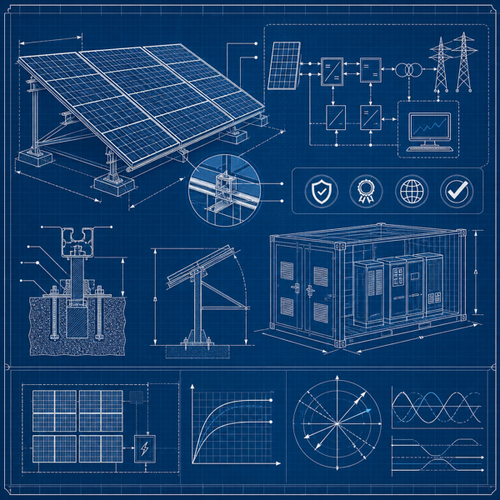
The publication of prEN IEC 62446-1:2025 in September 2026 marks a significant leap forward for professionals working in energy and heat transfer engineering—especially those focused on the design, installation, and maintenance of photovoltaic (PV) grid-connected systems. As the sole standard released in this cycle, it sets a comprehensive baseline for documentation, commissioning tests, and ongoing inspection, bolstering safety, performance, and grid compliance throughout the solar sector.
Overview / Introduction
As solar power cements itself as a backbone of global energy transition, reliable technical standards ensure both safety and operational efficiency. The solar energy sector is highly dynamic, with rapid technological evolution making adherence to up-to-date standards essential for asset longevity, investment assurance, and regulatory approval.
The new prEN IEC 62446-1:2025 (from CLC) addresses key pain points for the industry—offering detailed requirements and checklists for system documentation, initial commissioning, and periodic verification. In this article, solar energy professionals, quality managers, and compliance officers will find actionable insights into the standard’s requirements, its impact across the value chain, and best practices for adopting its guidelines.
Detailed Standards Coverage
prEN IEC 62446-1:2025 – Testing, Documentation, and Maintenance for Grid-Connected PV Systems
Photovoltaic (PV) systems – Requirements for testing, documentation and maintenance – Part 1: Grid connected systems – Documentation, commissioning tests and inspection
What the Standard Covers and Its Scope
prEN IEC 62446-1:2025 prescribes the minimum information and documentation to be provided to customers following the installation of a grid-connected PV system. It also establishes systematic processes for:
- Commissioning tests and inspection criteria for safe installation and operation
- Templates and requirements for system documentation
- Periodic re-testing and ongoing system verification
Adoption of IEC 62446-1 is instrumental for:
- System designers: Ensures comprehensive design documentation, traceable system information, and regulatory alignment
- Installers and maintenance providers: Clarifies necessary commissioning checks, functional tests, and safety considerations
- Owners and operators: Facilitates transparent handover, warranty compliance, and operational readiness
This standard is applicable to rooftop, ground-mounted, and hybrid (PV + DC battery)—with explicit requirements focused on the DC-connected systems (AC-coupled batteries are referenced but out of direct scope).
Key Requirements and Specifications
- System Documentation: Specifies content and structure, covering project identification, system configuration, module and inverter data, wiring diagrams, string layouts, AC and DC component details, and all relevant manufacturer data sheets.
- Verification and Inspection: Defines procedures for:
- Initial (commissioning) verification
- Periodic re-verification (with recommended intervals and record-keeping)
- Safety checks—earthing, overcurrent, insulation, labelling, and shutdown procedures
- Testing Regimes: Mandates both Category 1 (basic) and Category 2 (advanced) testing, including:
- Continuity and polarity tests
- Voltage, current, and insulation testing per PV string/array
- Functional checks for protective equipment and safety features
- Infrared inspections, IV curve tracing, and additional grid interface tests as required
- Safety and Compliance: Outlines hazards such as arc flash and electric shock and prescribes necessary personal protective equipment (PPE), qualified personnel requirements, and emergency/SOP documentation.
- Labelling & Identification: Stresses site labelling for disconnection points, dual supply warnings, and emergency guidance—supporting both operational safety and firefighting/SAR operations.
- Maintenance: Recommends maintenance procedures, record-keeping for changes/upgrades, and warranty management.
Notable Changes from Previous Editions
This second edition replaces the 2016 edition and its 2018 amendment, introducing significant technical upgrades:
- Enhanced test regimes for modern PV configurations, module-level electronics, and hybrid systems
- New provisions for rapid shutdown, anti-PID (Potential Induced Degradation) systems, and grid code settings
- Expanded annexes for report templates, IV curve diagnostics, and supplementary test protocols
- Updated alignment with the latest IEC, ISO, and national codes for installation and verification
Who Needs to Comply
- Solar PV system designers, EPCs, and installers
- Maintenance providers and O&M contractors
- Facility managers and building owners with grid-connected solar assets
- Inspectors, certifiers, and regulatory bodies
- Procurement and project managers ensuring long-term warranty and insurance fulfillment
Practical Implications
Implementing this standard streamlines the entire project lifecycle—from initial design and commissioning, through operational handover, and on to maintenance and periodic re-testing. Its robust templates and procedural checklists reduce risk and improve predictability during grid integration, ensuring:
- Smoother regulatory approvals
- Faster troubleshooting and maintenance
- Enhanced system safety for technicians and users
- Stronger documentation in support of warranty and liability claims
Key highlights:
- Comprehensive system and component documentation aligned with IEC best practices
- Expanded inspection and test protocols for modern, complex PV arrays
- Actionable maintenance and safety guidance for lifecycle assurance
Access the full standard:View prEN IEC 62446-1:2025 on iTeh Standards
Industry Impact & Compliance
The updated prEN IEC 62446-1:2025 will have a significant influence across the solar value chain:
For Businesses:
- Ensures regulatory compliance and smooth grid connection approvals
- Protects asset value through improved documentation, repeatable verification, and minimized downtime
- Reduces O&M costs by streamlining troubleshooting and clarifying inspection schedules
Compliance Considerations:
- Timely adoption is key for new builds and retrofits; existing systems should be upgraded as feasible
- The standard aligns with major IEC and national codes; adaptation will facilitate multi-jurisdictional approval, insurance coverage, and investment assurance
- Adopting recommended maintenance and verification intervals not only meets statutory requirements but also optimizes asset health
Benefits:
- Enhanced safety for installers, operators, and end users
- Greater system transparency and reliability
- Easier pre-qualification for incentive schemes, financing, and green certifications
Risks of Non-Compliance:
- Increased likelihood of system failures, safety incidents, or regulatory delays
- Potential voiding of warranties or insurance coverage due to inadequate documentation or missed inspection intervals
- Difficulties demonstrating due diligence in case of incidents or under audit conditions
Technical Insights
Common Technical Requirements
- Comprehensive Documentation: Systems must provide full traceability, with detailed single-line diagrams, equipment specs, performance assumptions, and grid interface settings.
- Stringent Testing Protocols: Both AC and DC testing—including insulation resistance, continuity, polarity, IV curve tracing, and functional safety checks—are mandated.
- Inspection and Reporting: Inspection checklists must cover equipment integrity, labelling, array layout, overcurrent and surge protection, and ensure enclosure/weatherproofing meet environmental demands.
- Periodic Verification: Regular re-testing—aligned with AC electrical system checks—is required, including updating documentation for any modifications or component swaps.
Implementation Best Practices
- Early Documentation Integration: Begin creating the system documentation backbone during the design stage, updating throughout installation and commissioning.
- Training and Certification: Ensure all personnel performing testing and verification are trained to the standard, using properly rated measurement and safety equipment (in line with IEC 61010 and 61557).
- Leverage Standardized Templates: Use the annexed model certificates, reporting forms, and test sheets to increase consistency and audit readiness.
- Digital Asset Management: Adopt digital tools for gathering, storing, and updating documentation, making periodic verification and repairs easier to track and evidence.
Testing and Certification Notes
- Category 1 Tests serve as the foundation and must be completed before system energization.
- Category 2 and Additional Tests—like IR inspections and IV curve measurement—should be considered for large, high-value assets or when required by client specification or regulatory mandate.
- Module-Level Electronics: Special consideration is recommended where optimizers, rapid shutdown, or micro-inverters are in use—consult manufacturer documentation to avoid damaging equipment during testing.
- Shutdown and Emergency Procedures: As rapid shut-down and emergency site labelling grow in regulatory requirement, ensure these are not overlooked—both for incident safety and compliance.
Conclusion / Next Steps
The September 2026 release of prEN IEC 62446-1:2025 sets a new global benchmark for the design, commissioning, documentation, and maintenance of grid-connected photovoltaic systems. Solar professionals should work proactively to:
- Review and integrate standard requirements into their design, procurement, and QA workflows
- Train teams on documentation, testing, and inspection protocols
- Schedule periodic verification for existing assets
- Leverage the robust reporting and documentation tools provided in the standard
As the solar industry continues rapid growth and grid-code complexity rises, embracing this standard is both a strategic and practical advantage—giving stakeholders confidence in the safety, performance, and regulatory standing of their PV assets.
Stay current and ensure compliance—explore the full text of prEN IEC 62446-1:2025 and other key solar engineering standards at iTeh Standards.
Categories
- Latest News
- New Arrivals
- Generalities
- Services and Management
- Natural Sciences
- Health Care
- Environment
- Metrology and Measurement
- Testing
- Mechanical Systems
- Fluid Systems
- Manufacturing
- Energy and Heat
- Electrical Engineering
- Electronics
- Telecommunications
- Information Technology
- Image Technology
- Precision Mechanics
- Road Vehicles
- Railway Engineering
- Shipbuilding
- Aircraft and Space
- Materials Handling
- Packaging
- Textile and Leather
- Clothing
- Agriculture
- Food technology
- Chemical Technology
- Mining and Minerals
- Petroleum
- Metallurgy
- Wood technology
- Glass and Ceramics
- Rubber and Plastics
- Paper Technology
- Paint Industries
- Construction
- Civil Engineering
- Military Engineering
- Entertainment