


July 2026: New Standards Guide Material Innovation and Resilience in Railway Engineering
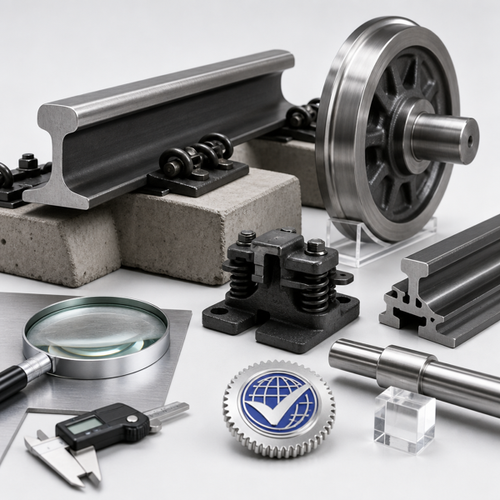
Railway Engineering Standards: July 2026 Brings Innovation and Reliability
With the publication of two new international standards in July 2026, the field of railway engineering continues its transformation toward increased innovation and resilience. Professionals throughout the industry now have updated, harmonized frameworks to validate new materials, improve processes, and ensure that rolling stock equipment withstands the demanding operational environment unique to railways.
This month’s standards, EN 18128-1:2026 and IEC 61373:2026, offer comprehensive guidance for introducing novel materials in rolling stock (trains and their components), and outline rigorous shock and vibration testing protocols for railway equipment. Whether you’re an engineer, quality manager, procurement specialist, or compliance officer, understanding these standards is critical for driving safe, sustainable, and competitive rail operations.
Overview / Introduction
Shaping the Future of Railway Engineering
Railway engineering sits at the nexus of tradition and innovation, balancing the need for durable, reliable systems with the pressure to embrace advances in materials science, digitalization, and sustainability. As rolling stock designs become more complex and operational demands intensify, standards are essential tools for ensuring interoperability, passenger safety, lifecycle management, and regulatory compliance.
This article explores two freshly published standards for July 2026:
- EN 18128-1:2026 sets a structured methodology for validating new materials in railway applications, bridging gaps present in conventional metallic material standards.
- IEC 61373:2026 updates the global benchmark for shock and vibration testing of rolling stock equipment, incorporating the latest measurement methods and reflecting today’s multi-modal rail systems.
Read on for an in-depth look at the requirements, practical implications, and industry impact—and why timely adoption of these standards will matter for your business and technical operations.
Detailed Standards Coverage
EN 18128-1:2026 – Guideline and Validation Methodology for New Materials
Railway applications – New materials – Part 1: Guideline and validation methodology
Railways are evolving, with manufacturers increasingly exploring composites, advanced alloys, multi-layer materials, and other innovative substances to design lighter, more efficient, and sustainable rolling stock. However, these materials are often not covered by traditional railway standards, which predominantly focus on metallic and isotropic materials. EN 18128-1:2026 addresses this gap by delivering a structured guideline and validation methodology tailored to the unique requirements of new and emerging materials.
What Does EN 18128-1:2026 Cover?
This CEN standard specifies a process guideline to support the safe, efficient approval and introduction of new materials and processes for all kinds of rolling stock and onboard equipment—encompassing everything described in EN 17343. The document helps organizations align innovative solutions with minimum industry requirements, supporting acceptance and confidence throughout the supply chain.
Key Requirements and Specifications
- Comprehensive Validation Process: Establishes a flowchart-based methodology for introducing novel materials or processes, from preliminary concept to compliance validation.
- Specification and Prioritization: Guides users in identifying and prioritizing requirements (static, fatigue, crashworthiness, fire, smoke toxicity, electromagnetic compatibility, etc.) based on application, location, and contract needs.
- Iterative Testing and Correlation: Emphasizes the need for iterative full-scale or subset testing, adjusting design/material/process parameters until all requirements are satisfied and validated.
- Static and Fatigue Validation: Outlines dedicated methods for non-metallic or multi-layer materials, where traditional metallic standards may not suffice—incorporates adjusted stress/strain calculations and safety factors.
- Lifecycle Focus: Mandates consideration of manufacturing methods, maintenance requirements, and environmental exposures.
Who Needs to Comply?
- Rolling Stock Manufacturers and Integrators
- Suppliers of Materials and Advanced Components
- Certification and Test Laboratories
- Rail Operator Maintenance/Engineering Divisions
Practical Implications for Implementation
- Streamlines complex approval processes, shortening time-to-market for new technologies.
- Reduces project risk, as validation steps are clearly defined and traceable.
- Enhances safety margins by accounting for non-isotropic and novel material behaviors (including fire, crash, and fatigue properties).
- Encourages innovation with a clear, industry-accepted framework for validating cutting-edge solutions.
Notable Changes
As a first-of-its-kind guideline in the European context, EN 18128-1:2026 fills a longstanding void for systematic validation of new materials—supporting next-generation railway vehicles and components.
Key highlights:
- Structured methodology for new material/process validation
- Requirements prioritization (static, fatigue, crash, fire, EMC, etc.)
- Iterative testing/correlation for robust approval and acceptance
Access the full standard:View EN 18128-1:2026 on iTeh Standards
IEC 61373:2026 – Shock and Vibration Tests for Rolling Stock Equipment
Railway applications – Rolling stock equipment – Shock and vibration tests
The operational environment for railway vehicles is harsh—vibrations, shocks, and occasional impacts are routine, presenting major engineering challenges for onboard electrical, electronic, and pneumatic equipment. IEC 61373:2026 is the latest international standard defining the tests that simulate and evaluate the endurance of these items throughout their service lifecycle.
Scope and Core Content
IEC 61373:2026 prescribes standardized requirements and procedures for:
- Random Vibration Testing: Ensuring equipment withstands expected vibrational stresses from rail movement.
- Simulated Long-Life Testing: Exposes equipment to amplified test levels to simulate years of operational life within a test bench environment (amplitude/time compression methods).
- Shock Testing: Simulates rare but severe mechanical shocks, such as those caused by operational incidents or abnormal events.
- Testing Categories: Test severities are categorized by location—body-mounted (Class A/B), bogie-mounted, or axle-mounted equipment—with test points and spectra grounded in real-world operational data.
Key Requirements and Specifications
- Default Test Procedures: Dictates the use of single-axis (optionally multi-axis) testing, applying specific acceleration spectral density (ASD) spectra rooted in comprehensive global service data.
- Fixture Qualification: Mandates that test fixtures be qualified to avoid resonance, ensuring test results are representative and reliable.
- Test Levels and Exemptions: Adjusts frequencies, durations, and acceleration ratios for simulated long-life tests (test durations from 5 to 100 hours per axis, with corresponding acceleration ratios).
- Functional Assessments: Functional random vibration tests require demonstrating operational integrity under prescribed loads; long-life tests require mechanical endurance without performance loss.
- Applicability Notes: While focused on fixed-rail systems, the standard extends, with adaptations, to urban vehicles on pneumatic tyres or other transport systems. Special annexes explain adaptations for these cases.
- Scope Exclusions: Traction motors and mechanical substructures without electrical, electronic, or pneumatic components now excluded for clarity and focus.
Who Needs to Comply?
- Manufacturers of Rolling Stock Equipment (electrical, electronic, pneumatic)
- Component and System Suppliers for Railway Vehicles
- Railway Operator Maintenance and Engineering Teams
- Certification and Testing Organizations
Practical Implications for Implementation
- Demonstrates regulatory and technical compliance in procurement and supply processes
- Consistent, repeatable testing for interoperability and component certification
- Reduces warranty costs and field failures by ensuring robust, vibration-resilient products
- Facilitates entry into international markets thanks to globally harmonized criteria
Notable Changes from Previous Editions
This third edition introduces significant technical updates:
- Use of actual onboard ASD spectra for tailored certification
- Updated exclusions (traction motors, non-equipped mechanical substructures)
- Detailed sequence/order of testing and multi-axis options
- Improved guidance for fixture devices, removal of resilient mounts during tests, and calculation of acceleration ratios
- Extended test spectra and frequency range; new annexes for pneumatic-tyre vehicles and FEA support
Key highlights:
- Updated global reference for railway shock and vibration tests
- Expanded applicability (including pneumatic-tyre vehicles)
- New technical detail in testing setup and validation
Access the full standard:View IEC 61373:2026 on iTeh Standards
Industry Impact & Compliance
How the July 2026 Standards Shape Railway Business
As rail networks modernize and global competition intensifies, the alignment of product development with international standards becomes a commercial necessity. For businesses across the railway value chain, these standards have immediate implications:
- Accelerated Approval of Innovative Solutions: EN 18128-1:2026 clears a pathway for new materials—particularly composites, 3D-printed parts, and high-performance polymers—by offering explicit validation steps previously missing from legacy standards.
- Assured Reliability and Safety: IEC 61373:2026 ensures that suppliers meet stringent vibration and shock criteria, reducing the risk of in-service failures and incidents.
- Market Access and International Acceptance: Compliance with these standards is often a precondition for contracts with rail operators or government procurement, opening access to new markets.
- Supply Chain Consistency: Harmonized requirements support globalized supply chains, fostering efficiency and reducing project risk.
- Risk Mitigation and Legal Protection: Adhering to fully documented, repeatable test methods gives companies strong defenses in liability, warranty, or regulatory disputes.
Compliance Considerations and Timelines
- Immediate Effect: For projects initiated post-publication, use of the newest standards is typically mandated by rail operators and certification bodies.
- Legacy System Considerations: Transition plans should be created for existing designs due for major overhaul or recertification.
- Training and Documentation: Staff and suppliers should be briefed on new procedures and validation requirements.
Benefits of Adopting These Standards
- Accelerated time-to-market for innovative rolling stock
- Fewer design cycles and prototype failures
- Lowered costs for warranty/service due to increased reliability
- Confidence in regulatory and cross-border technical compliance
Risks of Non-Compliance
- Potential loss of major contracts or market exclusion
- Increased risk of failure in service (leading to recalls or downtime)
- Legal/regulatory penalties and impaired reputation
Technical Insights
Implementing the New Standards in Practice
Common Technical Requirements
Both standards emphasize:
- Iterative Validation: Prototype testing and measurement, revisiting results per requirement until all conditions are satisfied.
- Full-Scale or Subset Testing: Physical specimen (prototype or test pieces) must represent final manufacturing processes to ensure validity of results.
- Realistic Lifecycle Simulation: Test criteria (loads, vibration spectra, fatigue cycles) are based on real-world data from running trains and operational environments.
- Safety Factors and Material-Specific Criteria: For new materials, safety factors and acceptance criteria must be adjusted based on proven test data, not generic assumptions from metallics.
Implementation Best Practices
- Start Early: Integrate standard requirements at the concept phase of new projects.
- Select Representative Materials and Processes: Utilize material suppliers who can support validation steps defined in EN 18128-1:2026.
- Laboratory and Field Testing: Combine bench/lab verification with in-service field validation as needed.
- Document Everything: Maintain complete traceability from specification through to test results and compliance declarations.
- Continuous Training: Ensure engineering and quality teams are skilled in applying new validation and test techniques.
Testing and Certification Considerations
- Use Accredited Labs: Testing must be undertaken by facilities qualified for IEC 61373 and recognized by railway authorities.
- Apply Latest Methods: For shock/vibration, the standard now urges the use of updated ASD spectra and test sequences reflective of today’s operational realities.
- Integrate with Digital Tools: FEA and simulation (Annex E, IEC 61373:2026) can supplement physical testing, providing added assurance and speeding design cycles.
- Adapt for Non-Standard Applications: For equipment mounted on urban vehicles (pneumatic-tyred), refer to specialized annexes for tailored procedures.
Conclusion / Next Steps
Key Takeaways for Railway Professionals
The dual release of EN 18128-1:2026 and IEC 61373:2026 marks a significant milestone for railway engineering. Together, they provide:
- A unified framework for validating next-generation materials and ensuring robust, shock-resistant rolling stock equipment.
- Clear mandates for iterative, risk-based approval and data-driven testing—encouraging innovation without compromising safety.
- Updated requirements that facilitate market access, compliance, and reduced lifecycle costs.
Recommendations
- Review Ongoing Projects: Audit current design and supply efforts for alignment with new standards.
- Engage with Suppliers: Ensure partners are familiar and prepared for the validated material and updated shock/vibration requirements.
- Invest in Training: Upskill teams and onboard testing/certification resources as needed.
- Stay Informed: Monitor iTeh Standards for future updates to keep your compliance strategy robust.
Explore these and other railway engineering standards to futureproof your operations:
Stay ahead, stay compliant, and drive innovation in rail.
Categories
- Latest News
- New Arrivals
- Generalities
- Services and Management
- Natural Sciences
- Health Care
- Environment
- Metrology and Measurement
- Testing
- Mechanical Systems
- Fluid Systems
- Manufacturing
- Energy and Heat
- Electrical Engineering
- Electronics
- Telecommunications
- Information Technology
- Image Technology
- Precision Mechanics
- Road Vehicles
- Railway Engineering
- Shipbuilding
- Aircraft and Space
- Materials Handling
- Packaging
- Textile and Leather
- Clothing
- Agriculture
- Food technology
- Chemical Technology
- Mining and Minerals
- Petroleum
- Metallurgy
- Wood technology
- Glass and Ceramics
- Rubber and Plastics
- Paper Technology
- Paint Industries
- Construction
- Civil Engineering
- Military Engineering
- Entertainment