

September 2026: New Standard Advances RF Exposure Measurement Methods
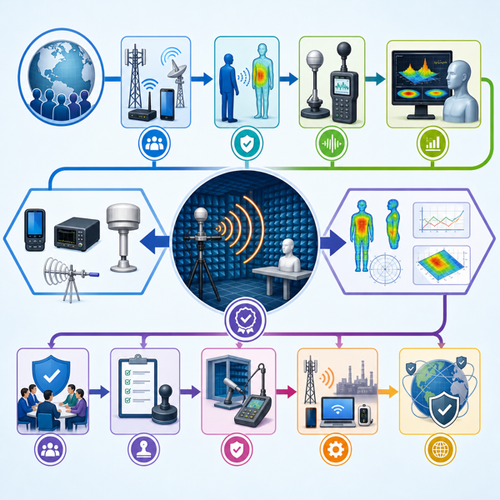
The landscape for evaluating human exposure to radio frequency (RF) fields has evolved with the September 2026 release of a major international standard for metrology and measurement in physical phenomena. The latest publication, IEC/IEEE 62209-1528:2020, consolidates and expands established testing protocols for specific absorption rate (SAR) in wireless devices, catering to the industry’s growing complexity and commitment to user safety. This update marks a significant milestone for manufacturers, test houses, and regulatory compliance teams, influencing how hand-held and body-mounted wireless devices are assessed and certified across global markets.
Overview
The field of metrology and measurement of physical phenomena plays a crucial role in ensuring safety, interoperability, and performance of modern electronic devices. With the ever-increasing deployment of wireless technologies, international standards are fundamental in defining assessment protocols, harmonizing safety limits, and supporting regulatory requirements for human exposure to electromagnetic fields.
This article provides:
- An introduction to the importance of SAR measurement standards in RF device compliance
- In-depth coverage of the newly published IEC/IEEE 62209-1528:2020
- Insights into technical advancements, compliance pathways, and implementation considerations for industry professionals
- Practical guidance on how organizations can benefit from these updates and maintain best-in-class safety assurance
Detailed Standards Coverage
IEC/IEEE 62209-1528:2020 – Assessment of Human Exposure to RF Fields from Wireless Devices
Measurement Procedure for the Assessment of Specific Absorption Rate of Human Exposure to Radio Frequency Fields from Hand-Held and Body-Mounted Wireless Communication Devices – Part 1528: Human Models, Instrumentation, and Procedures (Frequency Range of 4 MHz to 10 GHz)
This international standard, jointly developed by IEC and IEEE and published in September 2026, lays out comprehensive testing procedures for the measurement of specific absorption rate (SAR)—the rate at which RF energy is absorbed in human tissue. Designed to evaluate devices like mobile phones, tablets, wearable electronics, body-worn sensors, and even wireless power transfer systems, the standard codifies best practices for reproducible, repeatable, and conservative exposure assessments.
Scope and Objectives
- Applicable Devices: Mobile phones, cordless microphones, push-to-talk radios, laptop transmitters, wearables, and accessories operating between 4 MHz and 10 GHz. Wireless power transfer devices above 4 MHz are also included. Implanted medical devices are excluded.
- Target Demographics: Procedures address exposure for a broad population spectrum, including children, ensuring inclusive safety evaluation.
- Test Scenarios: Coverage includes devices used at the ear, on the face, worn on the body or limbs, devices with accessories, and those embedded in garments. Both single and multi-antenna configurations are in scope, with proximity up to 200 mm from the body.
Key Requirements and Specifications
- Phantom Models: Utilizes tissue-equivalent physical models of the head and torso, including application-specific configurations for various device types. Detailed specifications for phantoms (e.g., head, flat, wrist) and media recipes ensure measurement fidelity.
- SAR Measurement Protocols: Procedures for conservative peak spatial-average SAR (psSAR) using probes with high isotropy, automated scanning systems, and calibrated readout electronics. Protocols delineate preparations, positioning, operating modes, frequency/channel considerations, and test reduction strategies.
- Extended Frequency Range: Now spans from 4 MHz (covering low-frequency wireless power transfer) to 10 GHz (encompassing latest RF technologies).
- Testing of Proximity/Motion Sensors: Accommodates devices employing proximity sensors (to reduce transmitted RF power when close to the body) and motion sensors, including triggering distance and coverage area validations.
- Fast SAR Testing and Reductions: Introduces accelerated procedures (Class 1 and 2 fast SAR) and data-driven test reduction methods to enhance throughput without sacrificing safety assurance.
- Uncertainty Analysis: Comprehensive models and strict reporting on measurement uncertainty, including calibration, probe positioning, tissue medium variability, and device positioning.
- Validation Procedures: System checks with reference dipoles, waveguides, meander dipoles, loop antennas, and computational validation for specific frequency bands, plus detailed phantom calibration.
- Reporting and Documentation: Standardized requirements for measurement reports, uncertainty budgets, and test configurations, supporting transparent regulatory submissions.
Notable Changes from Prior Editions
- Unifies and supersedes IEC 62209-1:2016, IEC 62209-2:2010 (+AMD1:2019), and IEEE 1528:2013
- Extends frequency range: Now 4 MHz to 10 GHz for widest applicability
- Explicit inclusion of proximity/motion sensor evaluation procedures
- Application-specific phantoms and improved device holder specs
- Advanced fast SAR and test reduction protocols for efficiency gains
- Refined approaches to LTE device assessment
- In-depth validation and uncertainty analysis procedures
Stakeholders and Intended Users
- Wireless device manufacturers and OEMs
- Test laboratories and certification facilities
- Regulatory compliance and certification officers
- Engineering and R&D teams in communications technology
- Quality managers and consultants involved in RF safety
- Procurement professionals seeking compliant products
Practical Implementation
Transitioning to the new standard requires attention to laboratory capability, updated compliance checklists, re-training on new phantom setups, and realignment of test protocols for covered devices. Given the adoption of fast SAR and test reduction tactics, organizations can realize both risk mitigation and operational efficiency.
Key highlights:
- Supports inclusive safety for diverse demographics, including children
- Enables assessment for devices with sensors and accessories in a single protocol
- Introduces fast, reduced-cost SAR testing without compromising accuracy
Access the full standard:View IEC/IEEE 62209-1528:2020 on iTeh Standards
Industry Impact & Compliance
How the New Standard Shapes the Field
With its rigorous methodologies and advanced test protocols, the IEC/IEEE 62209-1528:2020 standard significantly impacts:
- Device Approval Pipeline: Regulators and national authorities will update approval procedures to reference this new edition, making conformance a pre-requisite for market entry.
- Laboratory Operations: Accredited labs must upgrade equipment, update phantom models, and retrain staff. Enhanced fast SAR and test reduction methods mean higher throughput and greater cost-effectiveness.
- Manufacturer Responsibilities: OEMs must align internal compliance programs and documentation to reflect the latest requirements, especially around sensor-enabled devices and extended frequency applications.
- Downstream Supply Chain: Procurement teams gain clarity when sourcing RF-compliant components through standardized international criteria, supporting safer final products.
Compliance Considerations and Timelines
- Transition Periods: Most jurisdictions will establish transition windows—devices certified under older editions may require recertification for new models or significant modifications after the cutover date.
- Documentation: Measurement reports must clearly align with the standard’s reporting schema, including detailed uncertainty budgets, test setups, and device configurations.
- Ongoing Surveillance: Certification bodies will increase scrutiny on laboratory validation records, especially for fast SAR and test reduction approaches.
Benefits of Adoption
- Improved Safety: Harmonized, population-inclusive measurement procedures reduce risk for end users
- Global Market Access: Supports a universal compliance language for regulatory authorities worldwide
- Efficiency: Test reductions and fast SAR options lower time and cost for both labs and manufacturers
- Transparency: Thorough reporting and uncertainty analysis foster regulator and public trust
Risks of Non-Compliance
- Market Denial: Non-compliant devices may be barred from key jurisdictions
- Legal/Financial Liability: Inadequate assessment could result in device recalls or litigation
- Brand Reputation: Failing to meet the latest international safety standard may undermine consumer or partner confidence
Technical Insights
Common Technical Requirements
The standard enforces:
- Use of tissue-equivalent phantoms validated per the exact dielectric property recipes
- Strict probe calibration and orientation specifications for full and fast SAR measurements
- Automated scanning system accuracy, probe positioning tolerance, and system drift checks
- Consistent device holder and accessory use during test to simulate intended operation
- Comprehensive frequency/channel/mode coverage, including multi-band and multi-mode device support
- Accessories and sensor systems (e.g., proximity, motion) to be tested under real-use scenarios
Implementation Best Practices
- Upgrade Calibration Laboratories: Ensure SAR probes, phantoms, and validation antennas meet or exceed all updated criteria and are regularly revalidated
- Retrain Test Engineers: Education on fast SAR, test reduction protocols, and sensor evaluation is paramount for maintaining validity and efficiency
- Document Everything: Maintain clear, version-controlled test plans, raw data, and final uncertainty budgets as required by Clause 9
- Stay Connected to Regulatory Updates: As authorities reference IEC/IEEE 62209-1528:2020, proactively manage product lifecycle plans
- Collaborate with Suppliers: Ensure vendors understand and support new requirements for device accessories, firmware, and hardware impacting RF output or proximity detection
Certification and Testing
- Validation Annually or per Test Campaign: Use reference antennas (dipole, waveguide, loop) and run cross-checks as per the annexes
- Testing Reductions: Assess if your device qualifies for test reduction strategies to save time without risking non-detection of peak SAR
- Uncertainty Budgets: Apply both Type A (statistical) and Type B (systematic/documented) evaluations for each measurement campaign
Conclusion & Next Steps
The 2026 revision of IEC/IEEE 62209-1528 delivers a comprehensive and flexible platform for assessing RF exposure across a wide range of devices and usages. Industry professionals are encouraged to:
- Download and study the full standard via the official iTeh Standards portal
- Audit current testing equipment and protocols for conformance with the new methods
- Invest in training and validation to ensure laboratory and engineering teams are up-to-date
- Align regulatory submissions and procurement with the new requirements for seamless market access
Staying ahead of evolving SAR measurement protocols is now more critical—and achievable—than ever. For more detailed guidance or to access the newly published standard, visit iTeh Standards and ensure your operations are futureproofed against international compliance needs.
Categories
- Latest News
- New Arrivals
- Generalities
- Services and Management
- Natural Sciences
- Health Care
- Environment
- Metrology and Measurement
- Testing
- Mechanical Systems
- Fluid Systems
- Manufacturing
- Energy and Heat
- Electrical Engineering
- Electronics
- Telecommunications
- Information Technology
- Image Technology
- Precision Mechanics
- Road Vehicles
- Railway Engineering
- Shipbuilding
- Aircraft and Space
- Materials Handling
- Packaging
- Textile and Leather
- Clothing
- Agriculture
- Food technology
- Chemical Technology
- Mining and Minerals
- Petroleum
- Metallurgy
- Wood technology
- Glass and Ceramics
- Rubber and Plastics
- Paper Technology
- Paint Industries
- Construction
- Civil Engineering
- Military Engineering
- Entertainment