

RFID in Plastic Transport Packaging: ISO Standard Update for September 2026
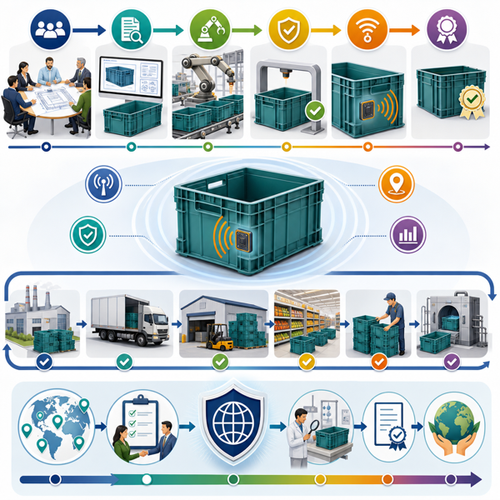
The packaging and distribution of goods sector marks a significant milestone this September 2026 with the release of a groundbreaking standard: ISO/TR 22251-2:2026. This update brings new clarity and actionable measurement results for the use of RFID on plastic returnable transport items (RTIs). As RFID technology becomes central to efficient logistics and traceability, this standard provides essential technical data, reliability assessments, and compliance guidance for organizations across automotive, food, and general distribution sectors. Professionals responsible for supply chain quality, compliance, and engineering will find actionable insights in this in-depth coverage.
Overview
The packaging and distribution of goods industry relies increasingly on smart logistics systems, with traceability and efficiency driving competitiveness. Returnable transport items—especially those made from plastic like containers and pallets—are the backbone of modern global supply chains. RFID (Radio-Frequency Identification) technologies now provide real-time tracking, loss prevention, and process automation advantages, but their performance and reliability on plastic RTIs have lacked detailed global guidelines—until now.
Standards such as ISO/TR 22251-2:2026 play a key role in:
- Reducing loss of valuable RTIs across networks
- Ensuring reliable data capture for traceability
- Minimizing expensive ordering and search operations
- Enabling seamless interoperability in international supply chains
In this article, you’ll find:
- What’s new in RFID guidance for plastic RTIs
- Technical requirements and test methodologies
- Who should comply and why it matters
- Best practices for implementation and compliance
Detailed Standards Coverage
ISO/TR 22251-2:2026 - RFID Measurement in Plastic RTIs
Packaging — Measurement results for the use of RFID on returnable transport items — Part 2: Plastic returnable transport items
This ISO technical report introduces groundbreaking research and evaluation methods for assessing RFID tag use on plastic returnable transport items (RTIs). The document focuses on understanding the interaction between RFID tags and diverse plastic RTI materials—primarily polypropylene (PP) and polyethylene (PE)—and evaluates RFID performance under realistic distribution and operational stresses.
Scope and Objectives
- Summarizes empirical measurement results for RFID on plastic RTIs
- Details the physical and communication reliability of various commercially available RFID tags under practical logistics conditions
- Provides test methodologies targeting primary environmental and operational factors: water immersion, chemical exposure, extreme temperatures, mechanical impact, washing, and more
- Offers comprehensive insights into the material compatibility, expected tag durability, and scenarios where RFID may fail or degrade
Key Requirements and Specifications
- Material Coverage: Focused on PP and PE, the dominant plastics in RTIs for automotive, food, and logistics sectors
- RFID Types: Seven types of general-purpose RFID tags—each tested for substrate compatibility, label adhesive, and environmental robustness
- Evaluation Tests: Fourteen distinct tests, spanning water and chemical exposure, thermal cycling, humidity, UV light, impact (vibration/shock), salt spray, washing, and electrostatic discharge
- Performance Metrics: Communication reliability, data retention, visual and physical integrity (print legibility, substrate peeling, substrate aging)
- Simulated Operational Use: Test scenarios mirror conveyor, forklift, and manual handling in industry, covering both normal wear and worst-case events
Who Needs to Comply
This standard is essential for:
- Automotive parts manufacturers and logistics providers using plastic RTIs
- Food and pharmaceutical distribution chains utilizing reusable plastic containers
- Logistics and third-party warehousing organizations investing in RFID-based inventory solutions
- Engineering and procurement teams responsible for specifying RTIs and integrating RFID
- Quality and compliance professionals verifying RTI systems’ reliability and traceability
Practical Implementation and Industry Impact
Companies must consider RFID compatibility and reliability when sourcing plastic RTIs or planning RFID deployments. The report’s exhaustive test data enables:
- Smarter selection of RFID/tag types and attachment methods based on operating environment
- Improved preventive maintenance protocols, especially for RTIs facing chemical or physical stresses
- Enhanced root-cause analysis for tag failures and supply chain disruptions
Notable Changes and Value
- Offers the first detailed, multi-test measurement compilation for RFID tags in plastic RTIs
- Clearly outlines potential RFID vulnerabilities: e.g., certain adhesives degrade after water or chemical exposure; substrate material impacts tag longevity
- Provides traceability and compliance checklists grounded in real-world logistics
Key highlights:
- Fourteen comprehensive environmental and mechanical tests applied to RFID-tagged plastic RTIs
- Guidance on material selection (PP vs PE) and their effect on RFID tag survival
- Actionable recommendations for ensuring data integrity and communication reliability in operational use environments
Access the full standard:View ISO/TR 22251-2:2026 on iTeh Standards
Industry Impact & Compliance
The adoption of ISO/TR 22251-2:2026 ensures that the risks associated with failed or unreliable RFID tag performance on plastic RTIs are minimized. For sectors such as automotive and food distribution, where RTIs are reused multiple times in harsh environments, this standard provides definitive proof points for compliance and supply chain dependability.
How Businesses Are Affected
- Procurement and Quality: Improved confidence in purchasing decisions for RTIs and associated RFID solutions
- Logistics Management: Enhanced ability to prevent loss, theft, or misplacement of containers and pallets
- Regulatory Compliance: Provides a structured basis for fulfilling industry audit and traceability requirements
- Cost Efficiency: Reduced losses from failed tags and better RTI lifecycle management translate directly into lower operating costs
Compliance Considerations
- Businesses should review their RFID deployment strategies, ensuring that selected tag and adhesive types are tested and validated per the scenarios outlined in the standard
- Update purchasing specifications for plastic RTIs to require ISO/TR 22251-2:2026-aligned RFID compatibility/performance
- Implement periodic verification testing—especially in environments with substantial washing, chemical, or temperature cycling
- Develop clear incident management protocols for RFID failures, backed by the test methodologies in the standard
Timelines and Risk Mitigation
- Early adoption is highly recommended. As more sectors incorporate RFID in RTIs, compliance and interoperability based on ISO guidance will become an expectation—and likely a requirement in contracts and certifications
- Risks of non-compliance include increased RTI loss, higher inventory shrinkage, failed audits, and extra costs related to resupply and downtime
Technical Insights
Common Technical Requirements
- Substrate and Adhesive Performance: Tag substrate and adhesive selection is critical—resistance to penetration by water, chemicals, and cleaning agents directly impacts tag lifespan
- Environmental Stress Endurance: Tags must survive repeated exposure to low (-40°C) and high (up to 100°C) temperatures, UV light, humidity, and washing
- Test Methodology: Testing approaches outlined include:
- Pre- and post-exposure evaluation of communication availability using RFID readers
- Visual inspection for physical substrate, delamination, or print failure
- Sensitivity (m) measurements across relevant RF frequency bands
- Replication of operational stresses such as vibration, drop, and washing in both PE and PP environments
- Data Integrity: Encoded tag data must be verified after every stress test; communication failure rates and potential data loss inform operational handling and batch validation protocols
Best Practices for Implementation
- Select RFID tags with material and adhesive properties validated by ISO/TR 22251-2:2026 test cases relevant to your RTI operation profiles
- Establish standard operating procedures for RTI cleaning, ensuring that cleaning agents and methods do not compromise RFID performance
- Periodically audit deployed RFID-tagged RTIs for common failure modes documented in the standard—focus on delamination, print legibility, and communication loss
- Educate logistics personnel on correct handling and environmental exposure to maximize RFID tag and RTI service life
Testing and Certification Considerations
- Collaborate with suppliers who can provide certification of tag/RTI assemblies per ISO/TR 22251-2:2026
- Integrate routine sampling of RTIs for test-exposure to water, chemicals, and impact, following the Annex B methodologies
- Maintain test records for audit and customer assurance purposes
Conclusion / Next Steps
ISO/TR 22251-2:2026 is a pivotal resource for every stakeholder in the modern packaging and distribution of goods. It assures that investment in plastic RTIs and RFID tagging yields long-term traceability, reliability, and compliance, tying technical reliability directly to operational excellence in supply chains.
Key takeaways:
- This standard gives actionable, real-world tested data on RFID tag durability in plastic RTIs
- Provides industry-aligned methodologies for validating RFID deployment on plastic packaging
- Directly supports smarter procurement, lifecycle management, and compliance for logistics professionals
Recommendations for organizations:
- Audit your current RTI and RFID deployments against the test results and recommendations of ISO/TR 22251-2:2026
- Update specifications for new plastic RTIs and RFID tags to align with standard requirements
- Leverage the documented test methodologies for ongoing quality assurance and failure analysis
- Stay engaged with standards development to futureproof your supply chain practices
To ensure state-of-the-art traceability and loss prevention, organizations are encouraged to access and review the full ISO/TR 22251-2:2026 standard.
Explore this and other essential standards for packaging and distribution at iTeh Standards.
Categories
- Latest News
- New Arrivals
- Generalities
- Services and Management
- Natural Sciences
- Health Care
- Environment
- Metrology and Measurement
- Testing
- Mechanical Systems
- Fluid Systems
- Manufacturing
- Energy and Heat
- Electrical Engineering
- Electronics
- Telecommunications
- Information Technology
- Image Technology
- Precision Mechanics
- Road Vehicles
- Railway Engineering
- Shipbuilding
- Aircraft and Space
- Materials Handling
- Packaging
- Textile and Leather
- Clothing
- Agriculture
- Food technology
- Chemical Technology
- Mining and Minerals
- Petroleum
- Metallurgy
- Wood technology
- Glass and Ceramics
- Rubber and Plastics
- Paper Technology
- Paint Industries
- Construction
- Civil Engineering
- Military Engineering
- Entertainment