

September 2026: New Standard Enhances Rotor Balancing Precision in Mechanical Systems
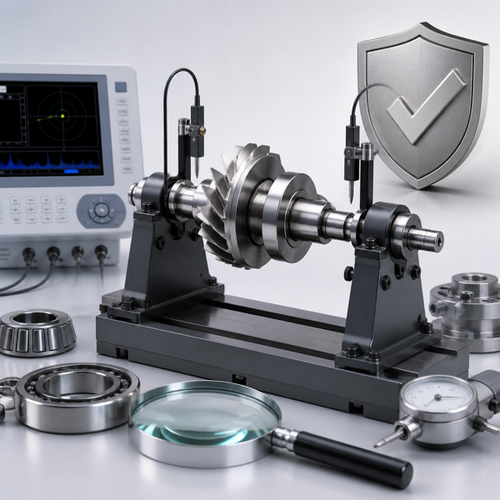
The landscape of mechanical systems and components for general use continues to evolve with new standards shaping the way professionals approach quality, reliability, and precision. September 2026 marks the publication of an essential new international standard for rotor balancing: ISO 21940-14:2026. This update sets forth robust procedures for identifying and managing balance errors across a wide range of rotating equipment.
With stringent new requirements for error identification, assessment, and mitigation, this standard is set to impact manufacturers, engineers, quality managers, and maintenance professionals across industries relying on accurate rotor operation.
Overview
In the field of mechanical engineering, proper balancing of rotors is fundamental to maintaining equipment integrity, safety, and efficiency. Whether in industrial fans, pumps, electric motors, turbines, or precision machinery, imbalance can lead to excessive vibration, premature wear, and catastrophic failure.
The latest international standards strive not only to define acceptable balance tolerances, but also to address the various error sources that can distort measurement and correction processes. As organizations seek to maximize uptime and minimize maintenance costs, adherence to updated balancing standards is becoming a critical aspect of operational excellence.
In this article, you'll explore:
- The core scope and requirements introduced in ISO 21940-14:2026
- How these guidelines affect your day-to-day balancing practices
- The practical steps for implementation and error management
- The wider industry implications and compliance needs
Detailed Standards Coverage
ISO 21940-14:2026 – Procedures for Assessing Balance Errors
Mechanical vibration — Rotor balancing — Part 14: Procedures for assessing balance errors
ISO 21940-14:2026 introduces a comprehensive framework for identifying, quantifying, and reducing errors in the rotor unbalance measuring process. Applicable to a broad array of rotating machinery, this standard sets out to ensure that the balancing of rotors—both rigid and flexible—is carried out with the highest possible level of precision.
Scope and Application
This standard is designed for organizations engaged in:
- Manufacturing and maintaining rotating machinery
- Quality assurance of rotor assemblies
- Vibration analysis and diagnostics
- Servicing of equipment involving balance-sensitive components
ISO 21940-14:2026 is particularly relevant to industries where small deviations can result in significant operational inefficiencies and increased safety risks. Sectors include power generation, aerospace, automotive, process industries, HVAC, and more.
Key Requirements and Guidelines
Broadly, the standard sets requirements for:
- Identifying error sources: Including systematic, randomly variable, and scalar errors arising from balancing equipment, assembly deviations, component runout, and more.
- Assessing errors: Providing detailed procedures to evaluate the impact of identified errors on balancing precision.
- Incorporating errors into the balancing process: Ensuring that both measurement and correction processes account for detectable and predictable errors.
- Evaluating residual unbalance: Applying methodical assessment of errors in the evaluation of remaining unbalance post-balancing.
- Cataloging mitigation strategies: Annex A details practical methods to reduce or eliminate typical errors in balancing.
ISO 21940-14:2026 also formalizes:
- Classification of errors (systematic, randomly variable, scalar)
- Procedures for experimental error assessment through repeat measurements
- Mathematical techniques for evaluating the combined impact of multiple error sources
- Updated terminology aligned with related standards (ISO 21940-2, -11, -21)
Key highlights:
- Expanded definition of balance errors now includes rotor assembly deviations on the balancing machine versus the in-service configuration
- Stepwise procedures to identify, measure, and mitigate errors
- Emphasis on reporting both measured and corrected unbalance values for full traceability
Access the full standard:View ISO 21940-14:2026 on iTeh Standards
Practical Implications and Industry Relevance
For balancing professionals and quality managers, ISO 21940-14:2026 means:
- More rigorous balance error documentation and reporting
- Systematic reduction of sources of error, improving final rotor balance quality
- Increased confidence in balancing results, supporting regulatory and customer requirements
- Reduced vibration-related failures and extended service intervals
Organizations implementing this standard can expect increased machine reliability, decreased maintenance costs, and improved safety outcomes.
Industry Impact & Compliance
Shaping Business Practices
ISO 21940-14:2026 is more than a technical guideline—it reshapes best practices in the mechanical systems sector. Businesses adopting this standard will benefit from:
- Higher operational stability and equipment uptime
- Lower warranty claim rates thanks to improved product quality
- Enhanced reputation for delivering reliable, precisely balanced rotors
Compliance Considerations
Compliance with ISO 21940-14:2026 is likely to be mandated by customers or regulatory bodies in safety-critical industries. Companies should:
- Update internal procedures to reflect new error identification and reduction methods
- Train staff on recognizing and documenting balance errors
- Revise acceptance criteria and quality metrics to include error-adjusted measurements
Timelines
Given its publication in September 2026, organizations are encouraged to:
- Begin gap assessments immediately
- Implement procedural changes within 6–12 months
- Re-certify balancing operations as required
Risks of Non-Compliance
Failure to adhere to ISO 21940-14:2026 could result in:
- Increased equipment downtime due to undetected unbalance issues
- Non-conformity with contractual or regulatory requirements
- Elevated safety risk and potential liability for vibration-related failures
Technical Insights
Common Requirements Across Balancing Operations
A unifying theme of the new standard is systematic error management. Key technical requirements include:
- Thorough error source mapping (equipment, assembly, environmental)
- Repeatable, statistically robust measurement procedures
- Standardized documentation and reporting
- Alignment with ISO 21940-2 (vocabulary), -11 and -21 (procedures and machine evaluation)
Implementation Best Practices
Professionals should:
- Use precision fixturing and minimize reassembly between balancing and service
- Regularly calibrate balancing machines and instrumentation
- Apply multi-step balancing runs with varied start positions to surface random errors
- Leverage the guidance in Annex A for common error diagnostics and mitigation
Testing and Certification Considerations
Certifying compliance with ISO 21940-14:2026 may involve:
- Internal or third-party audits
- Documentation of balance procedures and error assessments
- Demonstration of updated training and competency processes
Leveraging modern data acquisition and analysis tools can further enhance compliance and support ongoing improvements.
Conclusion / Next Steps
ISO 21940-14:2026 is a milestone standard for any organization committed to best-in-class rotor balancing. By defining detailed procedures for error identification, assessment, and management, it lays the foundation for consistent, reliable, and safe operation of mechanical systems.
Key takeaways:
- Balancing errors are now more systematically managed and reported
- Industry professionals should update processes to reflect new requirements
- Early adoption positions your organization for compliance, performance, and customer trust
Next steps:
- Review and download the full standard from iTeh Standards
- Perform a balancing process audit against the new requirements
- Train staff and update documentation as needed
- Stay informed about continuing developments in rotor balancing standards
Stay ahead by exploring iTeh Standards' extensive catalog and subscribing for the latest updates on international standards in mechanical systems and components for general use.
Categories
- Latest News
- New Arrivals
- Generalities
- Services and Management
- Natural Sciences
- Health Care
- Environment
- Metrology and Measurement
- Testing
- Mechanical Systems
- Fluid Systems
- Manufacturing
- Energy and Heat
- Electrical Engineering
- Electronics
- Telecommunications
- Information Technology
- Image Technology
- Precision Mechanics
- Road Vehicles
- Railway Engineering
- Shipbuilding
- Aircraft and Space
- Materials Handling
- Packaging
- Textile and Leather
- Clothing
- Agriculture
- Food technology
- Chemical Technology
- Mining and Minerals
- Petroleum
- Metallurgy
- Wood technology
- Glass and Ceramics
- Rubber and Plastics
- Paper Technology
- Paint Industries
- Construction
- Civil Engineering
- Military Engineering
- Entertainment